Charlotte’s office vacancy rate sees stabilization, especially with job growth
While Charlotte’s office vacancy rate is still higher than the national average, the market is seeing some stabilization.
The vacancy rate is sitting at 22.4%, according to an April report from commercial real estate firm JLL. The year’s first-quarter numbers align with what the city has seen since mid-2024.
The national average is 19.7%, according to a May National Office Report from real estate research firm Yardi Matrix.
But this is the third consecutive quarter the Charlotte market has seen a positive absorption in vacancies, meaning fewer businesses are moving out and more companies are moving in, according to Chuck McShane, the director of market analytics with real estate research firm CoStar.
It’s the first time the city has seen a continued positive absorption since 2022, McShane added.
“There’s a long way to go and some buildings won’t make it. But in general the COVID and remote work downturn is behind us now,” McShane said. “We’re turning the corner.”
And around that corner the market is seeing newer buildings gain tenants, a 12-year historic low in office space construction and an increase in the city’s office-using job sector.
Here’s a dive into what we’re seeing in the market.
110 East’s new tenant
Last summer, office vacancy rates spiked to 24.7%, an all-time high for the city.
Part of the spike was the completion of 110 East in South End. The 24-story tower opened last April with 370,000 square feet of office, retail and restaurant space.
But it didn’t have any pre-signed tenants, the Charlotte Business Journal previously reported.
Now, 110 East is about 16% occupied and more tenants are on the horizon, according to Rhea Greene, a managing partner at Trinity Partners, which handles leasing for the building.
The building’s newest tenant is SouthState Bank. The Florida-based bank leased a 40,000-square-foot space, the largest leasing deal the building has seen since it opened, Greene said.
SouthState was looking for a new space for its regional headquarters, Greene said. The bank chose to relocate to 110 East from the Roxborough Building on Carnegie Boulevard in SouthPark, CBJ reported.
“110 East fit what (SouthState) was looking for,” Greene said.
And many other tenants are interested.
“Our activity pipeline is probably what’s most exciting,” Greene said. Of the 150,000 square feet remaining, we have over a million square feet of active prospects.”
Some of that excitement has to do with 110 East’s location. It’s an urban area near transportation, Greene said. And then there’s the amenities.
The building was voted “most intelligent office building” by RealComm, a real-estate tech company. The Iberian Pig, an Atlanta-based Spanish tapas restaurant, will occupy the first floor next year.
110 East also has lounge areas and a fitness center.
“There is a general return to office culture that is happening… And the desire is when we do come back to the office, we want a more elevated experience,” Greene said. “We want more engagement… more vibrant, walkable urban areas. There is more emphasis on quality products right now.”
Charlotte office renovation and construction
The move to make office spaces into destinations worth the travel is easing the vacancy rate. Amenities help employers entice workers back into the office, Greene said.
And older buildings will need to step up in order to compete with the newer spaces. About 82% of vacant office spaces are in buildings constructed prior to 2015, according to JLL.
Already Charlotte has seen numerous older buildings take the leap to renovate. There’s One Independence Center at 101 N. Tryon St., along with the adjacent One South building and 550 South, the former NASCAR Plaza building.
The office market can also add 525 North Tryon St. to the list.
Highland Ventures, a Tennessee-based real estate firm, purchased the property this month at the heavily lowered price of $24 million, according to a news release. That’s about a 75% reduction from the appraised value of almost $100 million, the release said.
The previous owner, New York Life Real Estate Investors, paid $60 million for the property in 2014.
The 19-story building is nearly half leased, according to the release. Highland, along with leasing firm Legacy Commercial Properties, plan to renovate the space to bring people back to the 27-year-old building.
Legacy will work on amenity and common area upgrades, including the addition of a possible terrace. It’s unclear when that work will begin.
Some of those older buildings are turning to residential conversions, including the 100-year-old Johnston Building on Tryon Street, which is set to become a hotel.
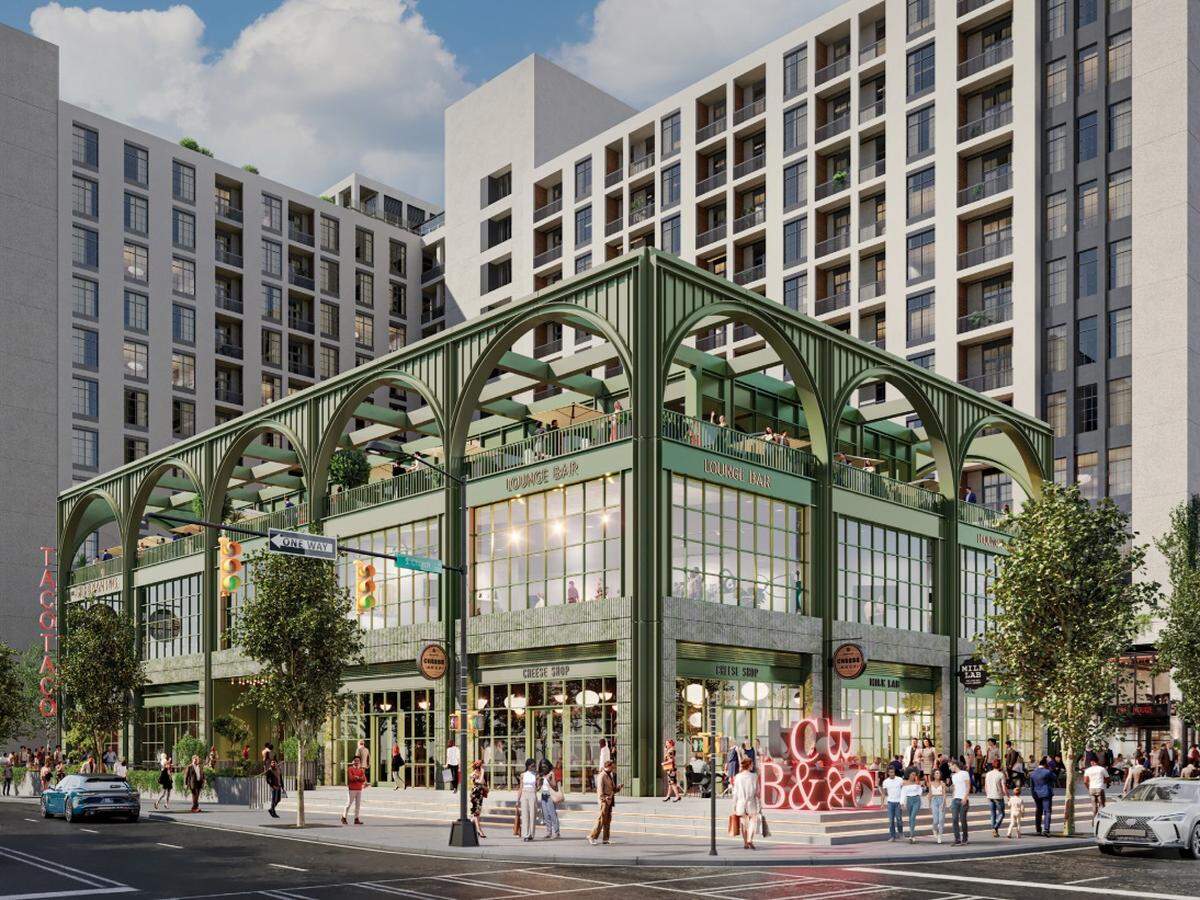
There’s also the Brooklyn & Church redevelopment, which broke ground this month. It’s a $250 million conversion of Duke Energy’s former headquarters at 526 S. Church St.
The plan is to convert the 13-story, 800,000-square-foot tower into 460 loft-style apartments and add 25,000 square feet of retail space. Another building will be added where the front lobby and atrium were located, creating 30,000-square-feet of retail space.
If older buildings can’t renovate or convert, there is one silver lining — office space construction has slowed significantly.
There’s only one office building currently under construction, according to JLL, an all-time low for the city since 2013.
It’s a 150,000 square foot space that’s part of the 12-acre redevelopment of the Central Square shopping center. The mixed-used Commonwealth project is by Charlotte developer Crosland Southeast and investment firm Nuveen Real Estate in Plaza Midwood.
The building is set to be completed by the end of June, meaning no new office spaces will open in the second half of the year, JLL added.
Return to office in Charlotte
The decrease in office space construction will give older buildings a chance to compete when employers come looking for new spaces. And they are coming as the office job sector continues growing.
“We had a recovery in office-using job growth at the back half of last year,” McShane said. “A lot of professional services firms were hiring. Financial services firms were hiring as well. It’s pretty clear in the data that we’re getting back to more traditional fundamentals where office-using job growth means office-using space is taken.”
Nationally, that job growth is slow, according the Yardi Matrix report.
In April, the office-using job sector added about 31,000 new jobs nationally, the report read, the highest monthly increase since December. But overall, the sector has only increased by 0.2% year-over-year.
On a metro level, seven of the top 25 markets Yardi Matrix covers saw positive growth in the sector for March. Charlotte led that list with almost 4% growth in the sector.
It’s that increase in the job sector, along with the incentive to return to the office, that will help stabilize the office vacancy rate as the year progresses, McShane said.
“Barring a major job loss, which I don’t think is projected, the office market is at an inflection point,” McShane said. “Job growth is going to be the key driver for office use. That’s historically what we always saw. When we added jobs in the financial services, professional services or tech sector, we added office space.”
This story was originally published May 28, 2025 at 5:52 AM.