NC Democrat backlash could create 2 of Charlotte area’s competitive 2026 elections
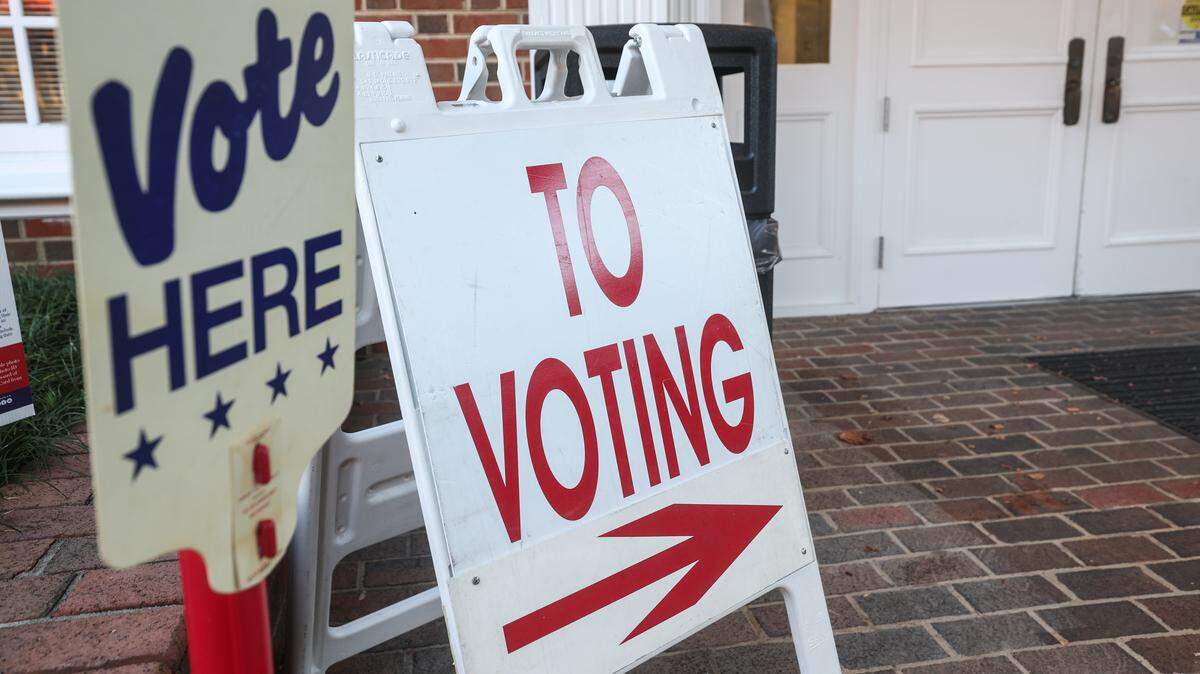
Marquee races for state and local offices are scattered across the Charlotte area in 2026.
Candidate filing closed Dec. 19 for the March primary elections and November general election and set the stage for a potentially eventful election cycle in the Charlotte area.
Despite Mecklenburg’s heavy Democratic lean, swing districts for the North Carolina Senate and House of Representatives may once again draw statewide attention. Some incumbents face formidable primary challengers, and there’s intrigue in a pair of Cabarrus County legislative races, too.
Political scientist Chris Cooper predicted plenty of focus statewide on the Charlotte area’s legislative districts in 2026.
“There’s just not that many competitive districts under any definition of the word competitive in the state. And so anytime you’re anywhere near competitive, you’re going to get a lot of attention,” said Cooper, a professor at Western Carolina University.
Cunningham, Majeed face challengers after controversial votes
The backlash against a pair of Democratic state representatives for siding with the GOP on veto overrides in 2025 manifested multiple primary challengers.
Rev. Rodney Sadler, known for his work with the Moral Monday movement, is running against District 106 Rep. Carla Cunningham, who drew ire for her veto vote and ensuing comments about immigration. Vermanno Bowman, who Cunningham beat in 2024 is also running in the north Charlotte district.
Sadler’s campaign said in a mid-December news release it had “passed its year-end fundraising goal of $100,000.”
Fellow Mecklenburg Rep. Nasif Majeed also faces Democratic Party challengers after breaking with his party on a veto override vote. Majeed was the only Democrat to side with Republicans to override Gov. Josh Stein’s veto of a controversial bill regarding sexuality, religion in schools and school libraries.
“I had some moral issues and I had to lean on my values,” he told reporters in July of his vote.
He faces Veleria Levy — who’s worked in health care, run for office in Rowan County and served in local and state Democratic leadership roles — and college student Tucker Neal in a Democratic primary for state House District 99 in the University City area.
Both primaries are “hugely important,” Cooper said, for “trying to understand the degree to which the Democratic Party can sort of enforce the party orthodoxy on its members.”
To have a chance at ousting the incumbents, Cooper said Cunningham and Majeeds’ challengers will have to succeed at educating voters about what happened in 2025 at a time when many don’t follow the legislature closely.
“It’s a matter of relighting the fire and making people aware and causing voters to look down ballot, because the vast majority of them just don’t,” he said.
The winner of both primaries will be unopposed in November.
Another fight in Cotham’s district
State Rep. Tricia Cotham narrowly survived an expensive battle to keep her seat in the House in 2024 after giving Republicans a veto-proof supermajority in Raleigh by switching political parties.
She’s had another eventful year in 2025 after shepherding a bill through the General Assembly that allowed for a sales tax referendum to fund transportation projects.
Cotham will have to defeat teacher Kelly VanHorn, who recently switched her party affiliation to Republican, in a primary to get to the general election.
Her Democratic opponent in the southeast Mecklenburg District 105, Ken McCool, is a former Matthews town commissioner.
While Cotham may have to “spend a little bit more money than she would have otherwise” with a primary opponent, Cooper predicted she’ll “skate right through the primary.”
But, he added, Cotham “may be more vulnerable” in 2026 than she was in 2024.
Cotham was the only Republican state legislator to win a district that broke for Democratic presidential candidate Kamala Harris, Cooper noted. And 2024 was “by and large a good year for the Republican Party” in North Carolina, he said.
“The political tides are going to be different” in 2026, he said, with Democrats predicted to be on course for a better performance statewide and former Gov. Roy Cooper running in the high-interest U.S. Senate race.
Demographics could also be shifting from Cotham’s favor, according to Cooper.
The district is 51.3% Republican to 46.6% Democrat, according to Dave’s Redistricting, which analyzes voter data to determine districts’ party lean. But some data indicate the district is becoming slightly younger and more left-leaning, Cooper said.
“She’s as vulnerable as she’s ever been,” he said of Cotham.
An important factor in the race, Cooper added, will be how much money state parties are willing to put into the district after a costly fight in 2024.
Runoff rematch for NC Senate
Also in southeast Mecklenburg, Democratic state Sen. Woodson Bradley will again face Republican Stacie McGinn as Bradley looks to secure a second term in Raleigh.
Their 2024 race in Senate District 42 went to a recount, with Bradley emerging victorious by a final margin of 209 votes.
Things grew heated during the previous campaign when McGinn targeted Bradley over claims she scammed consumers as part of a pyramid scheme shut down by the Federal Trade Commission over a decade ago. Mailers sent out by the North Carolina Senate Majority Fund and authorized by McGinn’s campaign call Bradley “pyramid queen.”
Bradley’s campaign called the accusation completely false, the Observer reported at the time. They said Bradley was not a party in the FTC’s case and was a contractor, not an owner, of the company in question.
Democrats hold a narrow advantage in the district, according to Dave’s Redistricting.
Cooper predicted another close race in 2026 given the district’s voter make-up hasn’t changed dramatically since the last election.
“Anytime you’ve got these close rematches, you’re almost certainly going to see close outcomes,” he said.
Intriguing races in Cabarrus County
The potentially interesting legislative races don’t stop at the Mecklenburg County line.
In North Carolina House District 73, which includes Concord and parts of northeastern Cabarrus County, Republican incumbent Jonathan Almond is running to keep the seat he flipped to the GOP in 2024.
Almond previously defeated Democratic incumbent Diamond Staton-Williams after redistricting shook up the make-up of the district. In 2026, he’ll face the winner of a Democratic primary between small business owner Kim DeLaney and Thomas Monks, who works in marketing.
In Cabarrus’s 34th Senate District, Republican Chris Measmer faces a primary challenge from a former state House representative. Measmer, a former Cabarrus County commissioner, was appointed to his seat in April after then-Sen. Paul Newton stepped down to become general counsel for UNC-Chapel Hill.
Measmer’s now running in a GOP primary against former state Rep. Kevin Crutchfield, who lost his old seat in a close primary in 2024 to Brian Echevarria. Crutchfield filed a complaint with the Cabarrus Board of Elections after his 2024 loss alleging the local Republican Party unfairly influenced the outcome of his race, but that protest was dismissed.
The winner of the primary between Measmer and Crutchfield will face Democrat April Cook in November.
Mecklenburg County Commission primaries, open seats
Mecklenburg voters will also see competitive Democratic primaries for the Board of County Commissioners in 2026.
All three at-large incumbents — Leigh Altman, Arthur Griffin and Yvette Townsend-Ingram — filed to run for another term. They face seven challengers in the Democratic primary, where voters can choose up to three candidates.
No Republican or third-party candidates filed to run for an at-large seat. Those who advance through the Democratic primary are guaranteed spots on the board.
The competitive primaries extend beyond the at-large race.
Longtime District 2 representative Vilma Leake faces a challenge from veteran political strategist Monifa Drayton in the Democratic primary.
Leake, a former school board member, has held her seat on the county board since 2008. Her tenure in public office has included controversial moments, including a heated exchange last year at the dais with fellow Commissioner George Dunlap and accusations of repeatedly calling a judge to discuss a sensitive juvenile court case involving a constituent, drawing a letter from a state attorney asking her to stop.
Drayton made headlines when she resigned as executive director of the Mecklenburg County Democratic Party in 2024 with a letter alleging “intolerable” working conditions.
It’s the second-straight election cycle in which Leake faces a high–profile challenge. She defeated Charles Osborne in the 2024 Democratic primary despite him picking up notable endorsements and donations from the influential Black Political Caucus of Charlotte-Mecklenburg and two of Leake’s fellow commissioners.
The winner of the District 2 primary will face Republican Angela White Edwards, who lost to Leake in 2024.
In north Mecklenburg’s District 1, three Democrats filed to try and succeed the retiring Elaine Powell. The field includes Adam Pasiak, former chair of Democrats of North Mecklenburg, attorney and former state legislative candidate Morris McAdoo and activist Jessica Finkel.
The eventual Democratic nominee in District 1 will go up against Aaron Marin in the general election. Powell defeated Marin in 2024.
Dunlap, the longtime chair of the county board, faces primary challenger Phil Carey, in District 3. The owner of a property management company, Carey has served on the Mecklenburg County Board of Equalization and Review and Mecklenburg County Park and Recreation Board. He’s also a former vice chair of the Mecklenburg County Democratic Party.
The winner of the District 3 primary is unopposed in the general election.
Crowded field for Mecklenburg sheriff
Longtime Mecklenburg County Sheriff Garry McFadden faces multiple Democratic primary challengers after a tumultuous year for public safety in Charlotte.
McFadden clashed with state leaders over new legislation requiring sheriff’s offices to cooperate with federal immigration officials and was critical of U.S. Border Patrol’s November operation in Charlotte.
The sheriff has also faced criticism from high-ranking staff, including an outgoing employee who alleged verbal abuse, racism and other misconduct in his resignation letter.
McFadden’s challengers include Rodney Collins, who retired in 2024 as chief deputy of the sheriff’s office. Collins told the Observer in September his first priority if elected would be “reestablishing a healthy workplace culture.”
Other candidates include Charlotte-Mecklenburg Police Sgt. Ricky Robbins, who picked up early endorsements from Carolina Panthers players, a former police chief and judges, and Antwain Nance, a labor union steward and former detention officer.
Whoever wins the Democratic primary will be unopposed in the general election.