
‘It’s ground zero.’ How fear gripped an NC prison as COVID-19 infected hundreds.
COVID-19 was closing in on Christopher Johnson.
Johnson, an inmate at Neuse Correctional Institution in Goldsboro, said he could hear the prisoner in the bunk next to his coughing all night long. He could hear the inmate in the bunk below him “getting the symptoms - runny nose and sneezing.”
“I’m just kind of sitting around, waiting to get sick,” he told a Charlotte Observer reporter during a telephone interview. “....There’s definitely a war out here. That’s how it feels. It’s kind of ground zero.”
That was a week ago.
Now, more than 460 of the 770 inmates at the Eastern North Carolina prison have tested positive for COVID-19, making it one of the hardest-hit prisons in the nation. State officials are now testing every inmate there, and more results are pending.
As cases soar at Neuse, interviews reveal that some inmates are living in fear — and asking whether enough was done to protect them from the outbreak.
Up until Thursday afternoon, only 55 of the inmates at the prison in Goldsboro had been tested, according to state data.

Doing time for auto theft and other offenses, Johnson, 33, is scheduled to be released from prison this summer. He told the Observer he was living in a dorm with about 50 other inmates, who all slept in bunk beds about three feet apart from one another. Some of the inmates, he said, had runny noses, coughs and glassy eyes.
By Friday, Johnson himself was coughing and appeared to be among those who were sick, his brother, Ron, said.
“He said, ‘I’m sick. Everybody’s sick now,’ ” Ron Johnson said.
State officials say they are doing all they can to curb the spread of the coronavirus at Neuse and the state’s other 52 prisons.
At Neuse, they are separating inmates who test positive from those who test negative. All of the prison’s staff members and inmates have been issued masks, they say.
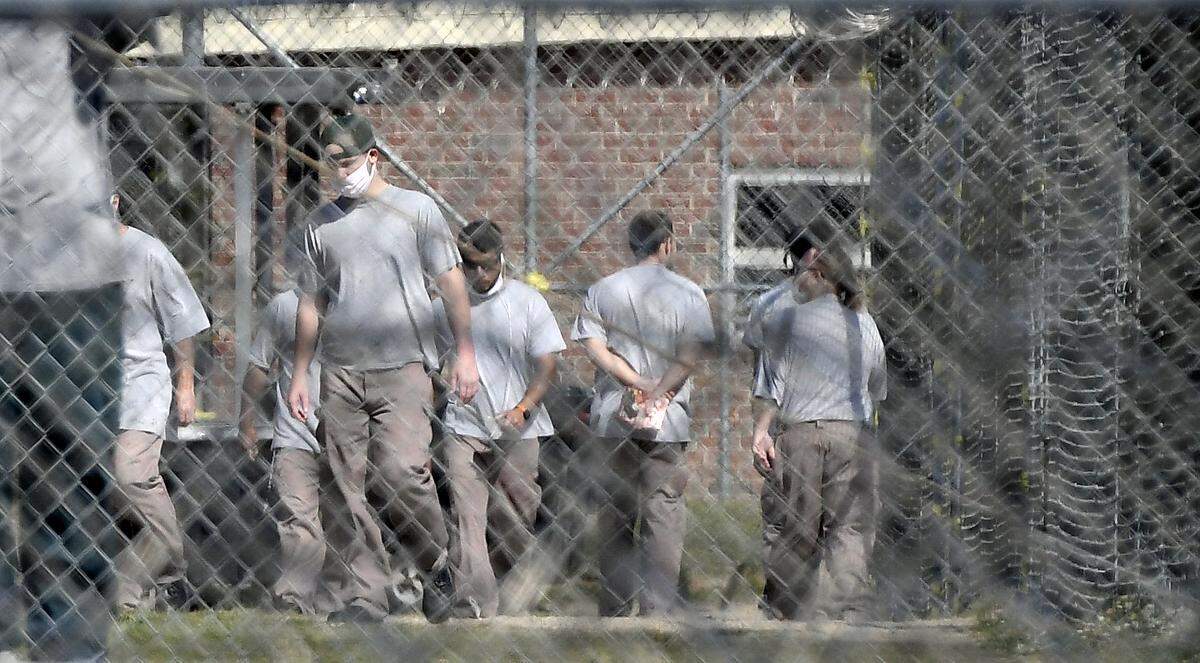
And they have offered testing to all 250 of the prison’s staff members. Eight staff members at Neuse have reported that they’ve tested positive so far, state Department of Public Safety officials say.
Scott Davenport, another inmate at Neuse, suffers from the lung disease COPD, high blood pressure and other ailments. Now 56, he has served most of his sentence for murder.
“I’m worried about dying before I get out of here,” he told the Observer Monday. “I have about 18 months left on my sentence. I’d like to go home to my family. I’ve worked really hard to stay out of trouble.”
About three weeks ago, Davenport said, the prison moved a number of inmates from another dorm into his.
“It doesn’t make sense that they’d keep moving people around during a pandemic,” Davenport said.

On Tuesday night, Davenport called his daughter, Destiny Akers, with unsettling news. He was sick, too. He was exhausted, short of breath and had a 102-degree fever.
After several anxious days, Akers got a report on Friday from the lab, which said that her father had tested negative. Still, she’s unhappy with the way public officials are handling the epidemic.
“This is a public health crisis that’s being pushed under the rug,” Akers said. “I don’t think the government is putting a lot of attention on these inmates.”
The origins of an outbreak
State officials say it’s unclear how the coronavirus entered Neuse. But Akers said she heard from her father that the first inmate to be diagnosed at the prison was transferred there in late March. The inmate reportedly had a fever while he was on the transport bus to the prison, she said.
Asked about Akers’ account, a spokesman for the state prisons did not comment.
On March 27, prison officials said, two inmates living in the same housing unit reported to medical with symptoms of a viral infection. They were quarantined and tested.
And on April 2, the test results came back: positive.
Early that afternoon, after learning that the two inmates had been diagnosed, prison officials placed new restrictions on the inmates at Neuse to try to contain the virus. About 200 inmates in the prison’s recreation yard staged a protest, refusing to go back to their dorms.
Some of the inmates threatened violence, state prisons commissioner Todd Ishee told the Observer. Prison officers, assisted by outside law enforcement, used force to return the inmates to their dorms.
Prison officials identified 36 ringleaders, Ishee said, and determined that they needed to be moved to a maximum-security prison. (Neuse houses minimum- and medium-security inmates.)
Prison officials didn’t test the 36 inmates for COVID-19 before transferring them. But after taking their temperatures and asking them screening questions, prison officials determined they had no symptoms. They were put on a bus that evening and shipped to Pasquotank Correctional Institution, about 140 miles to the northeast.
The inmates were quarantined at Pasquotank, which at the time had no COVID-19 cases. Four of the prisoners subsequently tested positive for the coronavirus.
By Tuesday, 19 inmates had tested positive for COVID-19 at Pasquotank, according to DPS.
One staff member at Pasquotank, who asked not to be named because of concerns for his job, questioned why prison officials ran the risk of importing the coronavirus to a new prison.
“I think it just increases the spread of the virus,” he said. “Staff members may get it now and possibly bring it home to their families.”
His wife agreed.
“Why bring in inmates that were exposed to it to a prison that didn’t have any?” she asked.
Back at Neuse, the number of inmates diagnosed was gradually climbing.
But on Thursday, after state officials ordered testing for all inmates at Neuse, the number of cases there exploded. By Monday afternoon, there were 458 cases, according to the Wayne County Health Department.
State officials say they are working as rapidly as possible to curb the spread of the virus in Neuse and all the other state prisons.
They’ve suspended visitation. They’ve begun releasing some inmates early. And they say they are taking the temperatures of all staff members before they enter prisons each day.
But state officials are under no illusion the battle will be easy.
Said prison spokesman John Bull: “This is a pretty insidious virus.”
This story was originally published April 18, 2020 at 12:48 PM with the headline "‘It’s ground zero.’ How fear gripped an NC prison as COVID-19 infected hundreds.."
.JPG)