As federal unemployment aid expires, Charlotte renters face a ‘looming catastrophe’
It took Britney Andrews almost three weeks to receive unemployment benefits after she was furloughed from her bartending job at the Charlotte airport in mid-March, near the start of the new coronavirus pandemic.
Since then, the money has been a lifeline for the 32-year-old, her husband and their four children.
But this week, Andrews received her last check with an extra $600 a week from the federal government’s stimulus bill. Congress is now gridlocked over its next relief package, largely over whether to extend the $600 payments.
Republicans argue that generous benefits will discourage people from going back to work, while Democrats say the payments are vital lifelines as industries are slow to recover and COVID-19 cases are still rising.
For Andrews, the political battles in Washington mean anxiety over how to pay the couple’s $1,000 monthly rent, utilities, car insurance and other expenses. And with her children attending school virtually, she needs to find the money to buy another computer for the family.
“I’m not looking for a handout,” she said, “but I got family to feed.”
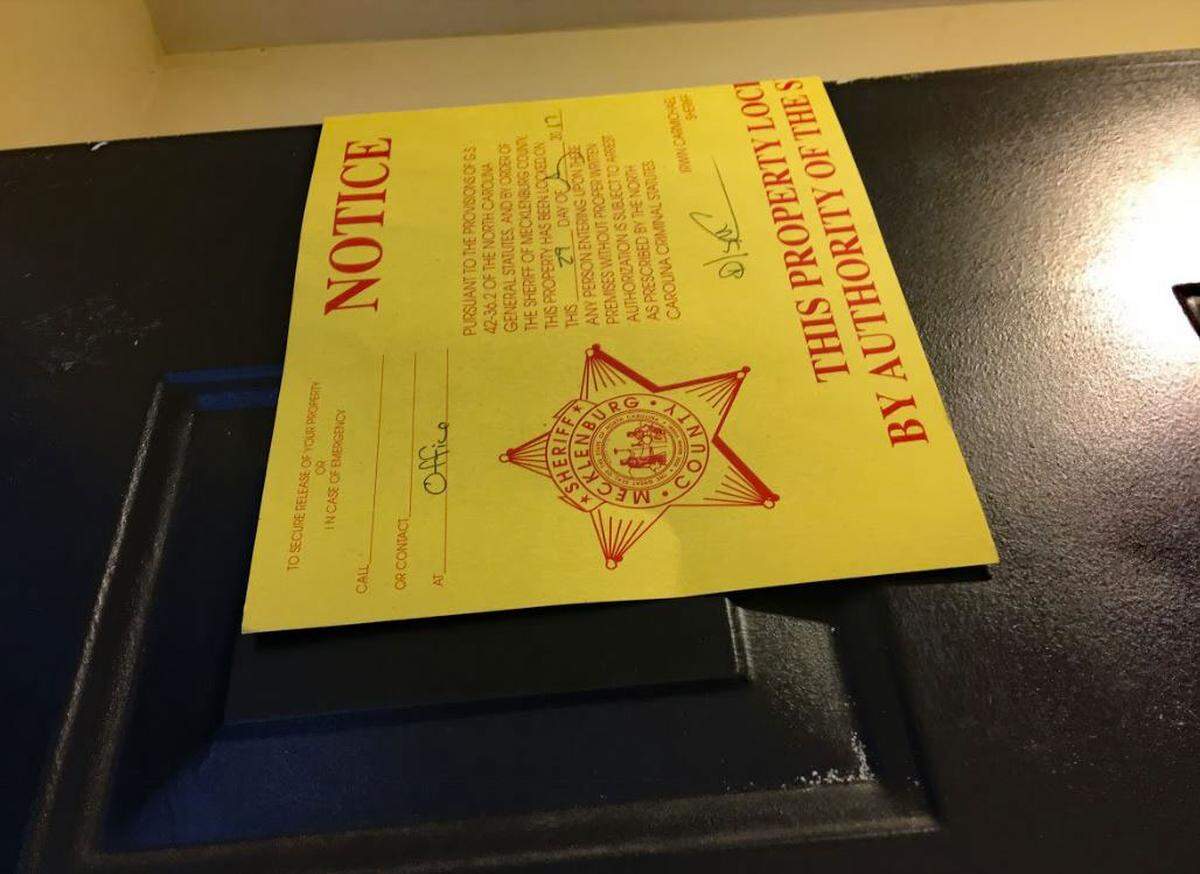
Millions of workers like Andrews are set to lose a substantial amount of income when the federal boost expires just as August rent payments are due. And for the first time during the pandemic, evictions have resumed in Mecklenburg County after a four-month hiatus.
That combination creates the potential for widespread financial hardship and missed rent payments, affordable housing advocates say. The crisis could have wider implications too, as the unemployment money has helped keep money flowing through the economy, experts say.
For workers in sectors most impacted by the pandemic, the loss of federal benefits will be particularly challenging for renters, a new study from Zillow found. Defined by the Federal Reserve Bank of St. Louis as “contact-intensive” occupations, those jobs have frequent face-to-face interactions, such as barbers, home health care aides, teachers, and food and beverage workers.

In Charlotte, without any additional federal unemployment benefits, 60% of workers in those industries who rent would be “cost-burdened” — a household paying more than 30% of its income toward housing costs, including rent and utilities. Another 43% would be “severely cost-burdened,” meaning they would pay over half of their income for housing costs.
“This is a looming catastrophe for millions of people,” said Jeff Tucker, an economist with Zillow.
National, local rent relief
On Monday, Senate Republicans unveiled a proposal that would cut the extra federal unemployment benefits to $200. Democrats proposed continuing the full $600 supplement.
North Carolina workers would be particularly hard-hit by the cutbacks, as the state pays among the lowest unemployment benefits in the country, at a maximum of $350 per week.
National affordable housing advocates are calling for $100 billion in rental assistance be included in the recovery package under debate in Congress.
Meanwhile, Charlotte area leaders are working to administer millions of dollars from the first federal relief package allocated for rent and mortgage assistance.

The Charlotte-Mecklenburg Housing Partnership, the nonprofit designated to allocate rent, mortgage and utility relief payments from federal and philanthropic COVID-19 relief funds, has distributed more than $1.5 million to nearly 1,600 households with COVID-19 related income loss or illness.
But that’s a small share of the nearly $13 million that city council and Mecklenburg commissioners have allocated from federal relief funds for rent, mortgage, security deposit and utility payments.
Unlike cities like Houston, where $15 million in rent relief ran out in less than two hours, millions of dollars are still available in Charlotte.
So local officials are working to get the word out to more households, said Julie Porter, president of the Charlotte-Mecklenburg Housing Partnership, which is administering the funds on behalf of the city and county.
Families also have had some lifelines to stay afloat early in the pandemic, including the one-time $1,200 stimulus payments, the federal unemployment boost, and state and federal eviction moratoriums that kept people in their homes.
But without them, housing advocates see a new sense of urgency.
“I think you’ll really see an avalanche of people coming in” for help without additional unemployment payments, Porter said.
In Mecklenburg, low- and moderate-income tenants behind on rent due to coronavirus-related hardship, as well as landlords whose tenants have missed payments, are eligible to apply for assistance through the Housing Partnership. Residents who live in hotels are also eligible for help.
Homeowners with incomes up to 80% of the area median income, or $66,800 for a family of four, are eligible for mortgage assistance.
More information about housing assistance and eligibility is available at rampclt.com.
Even before the pandemic, 44% Mecklenburg renters were cost-burdened, county data show. That rate is higher for Black and Latino households in the county.
Households that spend too much on housing costs have less money left over for other necessities like food, medications, transportation and savings, a factor experts say is a key contributor to housing instability and risk of eviction or homelessness.
Economic impacts
Economists say taking away the federal unemployment subsidy would also deal a major blow to the economy.
Low-income households spend a larger share of their income than those with higher incomes, meaning they are critical to consumer spending.
In North Carolina, total consumer spending has dropped 7.7% since January, according to research from economists at Opportunity Insights, including Raj Chetty. Chetty authored the study that ranked Charlotte last among 50 cities for upward mobility.
For low-income workers, consumer spending fell just 5.3%, declining most severely at the start of the coronavirus pandemic. It started to rebound just as stimulus payments began, the data show.
“It’s really important that that money get into the hands of people who will spend it,” said Chuck McShane, senior vice president of economic research at the Charlotte Regional Business Alliance. “They’ll spend it on rent, they’ll spend it on groceries. That all flows through the economy in a number of ways.”
And amid concerns about workers refusing to go back to work because they might make more on unemployment, there are still a number of people who don’t have jobs to go back to.
According to the U.S. Department of Labor, 365,770 people in North Carolina filed continued claims in the week ending July 11. Continued claims mean a worker has already filed for unemployment initially, and is seeking to claim benefits for a week of unemployment.
Andrews, the bartender at Charlotte Douglas International Airport, is one of those workers.
The union representing airline catering company HMSHost employees says that the company has brought back several hundred people, out of the 1,100 furloughed.
Andrews is eager to go back to work, and she doesn’t want to have to look for another job. But she said she might have to in order to help support her family if Congress doesn’t extend unemployment.
“I like working at the airport,” she said. “I can’t sit around forever.”
This story was originally published July 29, 2020 at 10:22 AM with the headline "As federal unemployment aid expires, Charlotte renters face a ‘looming catastrophe’."
%20Cropped.jpg)