Do snake repellents work? Can a dead snake bite you? Fact-checking 15 NC snake beliefs
With spring’s warm evenings and even warmer days, we’re all bound to begin encountering the snakes of the Triangle.
Social media sites can be a treasure trove of falsehoods about our region’s snakes, and products on store shelves claim to keep them out of your yard.
So we took our questions to the experts: Dr. Ben German, snake expert and emergency physician at WakeMed; and Falyn Owens, wildlife biologist and the NC Wildlife Resources Commission.
Here’s what they said about 15 commonly held beliefs about snakes — especially our region’s venomous copperheads — to set the record straight.
But before we dive in, let’s refresh on best snake practices:
- Keep a sharp eye open for snakes while outside.
- Watch where you step (especially when wearing sandals or flip-flops).
- Wear gloves when reaching into weeds, bushes or pine straw.
- Keep a much closer watch on nosy dogs who might poke their snouts into spots where copperheads and other snakes might like to rest.
- If you see one, leave it alone.
Myth #1: You can use snake repellents, essential oils and/or moth balls to make sure snakes don’t come into your yard.
False. There’s no way to avoid having snakes come into your yard, despite several products that claim otherwise.
“These products will not keep snakes out of specific areas, nor will any method other than completely containing the area and eliminating gaps and holes that allow snakes (and their prey) to enter, such as an enclosed building,” Owens said.
Essential oils, such as cinnamon oil and clove oil, also don’t deter snakes.
Moth balls, used indoors for insects, also do not work. Plus, they’re illegal if placed outside, as they’re made from pesticides that are harmful to humans, pets, wildlife and the environment, Owens said.
The best way to reduce the presents of snakes outdoors is to:
Keep grass mowed and trees/shrubs trimmed off the ground.
Remove ivy and low-growing plants from areas where you don’t want snakes to linger.
Remove piles of wood or rocks that provide crevices and other hiding places for snakes and their prey.
Remove food sources that attract rodents, such as bird feeders or pet food.
Caveat: None. Repellents just don’t work.
Myth #2: Construction and development push snakes into nearby neighborhoods.
False. This actually often kills snakes.
You don’t see a huge exodus of snakes from one area into anther during construction projects, and most snakes will try to hunker down and stay safe during the construction, but industrial equipment kills many that stick around.
Caveat: Construction can relocate snakes on a small scale, but snakes often move back into their “old” area once the projects wrap up. These snakes can even breed in the interim, sending their snake babies into the “new” location, German said.
But remember, if you’re in the Triangle, there are already copperheads and other snakes nearby.
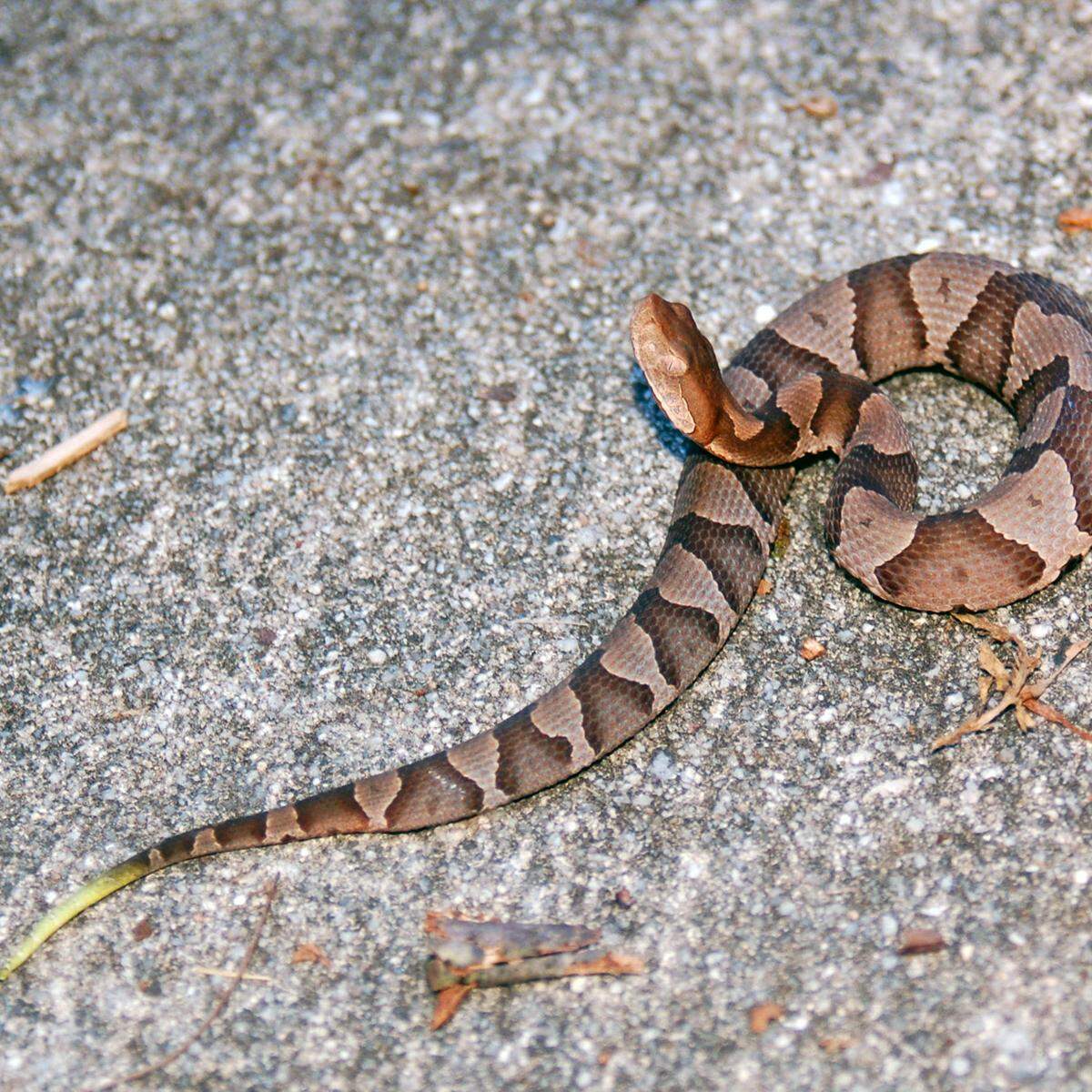
Myth #3: Baby copperhead bites are more dangerous than adult copperhead bites.
Mostly false.
The false belief here is baby copperheads can’t control their venom, so you’d get envenomated on a greater scale. But studies have shown baby copperheads can control their venom, German said.
“If I had the choice between getting bit by a baby copperhead, usually eight to ten inches, versus a full-size adult, which can be three to four feet, it would be a very easy decision. I’d always take the smaller snake,” he said.
“The quantity is so much greater in an adult snake, that’s what really gets you. Just the amount of toxins being injected.”
Baby snakes can give you a significant envenomation, so that doesn’t mean a baby copperhead bite isn’t dangerous, but they’re not more dangerous than adults.
Caveat: Some studies show baby copperheads can sometimes have more toxic venom, based on their diets.
Myth #4: Snake bites often need antibiotics.
Not often true. Emergency rooms see dog and cat bites much more frequently than snake bites, and a lot of the time, snake bites just require wound care.
Dog and cat bites, however, often get badly infected and require heavy antibiotics. Also, dog attacks kill many more people than snake bites in the United States every year, German said.
Caveat: North Carolina does have rattlesnakes (but not in the Triangle), and their bites can be deadly. While it’s much more common, and can be more dangerous, to be bitten by another animal — and usually the one in your own home! — venomous snakes do pose a legitimate danger, especially our rattlesnakes.
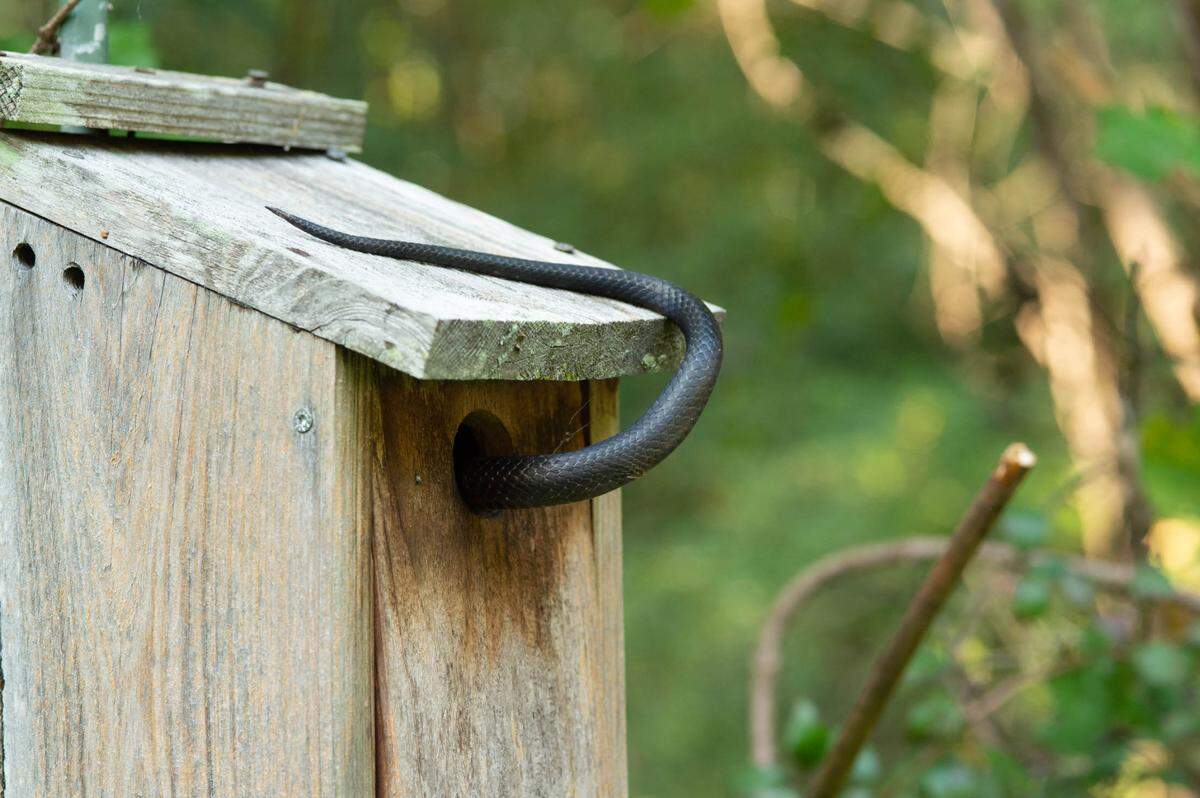
Myth #5: Snakes are probably underground around your property.
Mostly false.
While snakes can absolutely move across your yard, and a snake might stay for more than a moment when it’s dark outside, snakes likely aren’t burrowing to build longtime homes for themselves.
Snakes want leaf litter, piles of logs and other dense, hidden spots above ground to camouflage and have some cover. Manicured lawns don’t provide these shelters. Plus, the lawns we have grow in such a way that don’t provide entry points.
“For the best defense around your home, don’t give the snakes a place to hide,” German said.
Caveat: If you have burrowing rodents, like moles or mice, snakes might be able to get underground — especially rat snakes, aptly named for their rodent diets. But even that is to grab their dinner then move on.
Myth #6: Copperheads want to bite you.
False. Copperheads and other snakes don’t want to be near you, and they often bolt in the other direction when they see a human near them.
Caveat: Copperheads are ambush hunters, so they like to find a spot with good ground covering and rely on their camouflage to hunker down and wait for prey to come along. While the most common way to get bitten by a snake is to try to handle or kill it, it’s possible to get bitten by sticking your hand or foot into an area with thick ground cover. This is often because they think a hand or foot — or sometimes a paw or snout — is their food, but it can also be because the snake feels cornered and threatened.
Remember: Always look where you’re putting your hands and feet, and wear closed shoes when outside. When doing yard work or gardening, wear thick gloves for extra protection.
Myth #7: Snakes can still bite you, even after they’re dead.
True. While this myth absolutely sounds like one that would be quickly busted, it’s actually possible for snakes to bite after they’ve been beheaded and killed.
Bites sometimes happen because a person beheaded a snake then quickly went to pick it up, not knowing snakes can whip their heads around (even from just a few inches of remaining neck) and deliver a quick bite to the hand. Snakes can bite for up to an hour after being beheaded, German said.
While it’s widely agreed that you should not kill snakes to begin with, remember that even a supposedly dead snake can still bite.
Caveat: Bites from a decapitated snake head very rarely happen, but you should still know this to stay safe.
Myth #8: If you see one snake, others are nearby.
Sometimes true.
You might see two or three in one location, but that’s probably because it has great shelter and food sources. Or you might find a male and a female together to mate, but that’s only for a short time, German said.
In general, snakes fly solo.
Sometimes, snake behavior makes great theater: Two male snakes might be seen fighting over a nearby female for the opportunity to mate. German calls it a “wrestling match,” as they wriggle around to pin the other down. They don’t bite or try to kill one another. The losing snake will slither along, while the winner stays around to mate, then slithers along itself shortly after.
Caveat: None. Many snakes might be in one area, especially in the Triangle which already has many snakes.
Myth #9: If there’s a copperhead on your property, you might have a nest.
False. Copperheads don’t “nest” or “hive.”
In the warm months when it’s not uncommon to see a copperhead on your property, snakes live on their own to mate and find food.
Caveat: In the western part of the state, snakes might “den” in the fall, usually finding a rocky, south-facing area to stick together. The snakes can travel miles to do this, as they have for thousands of years, knowing they’ll freeze to death if they don’t. When the weather warms again, they’ll disperse and continue living solo. But this doesn’t happen in the Triangle.
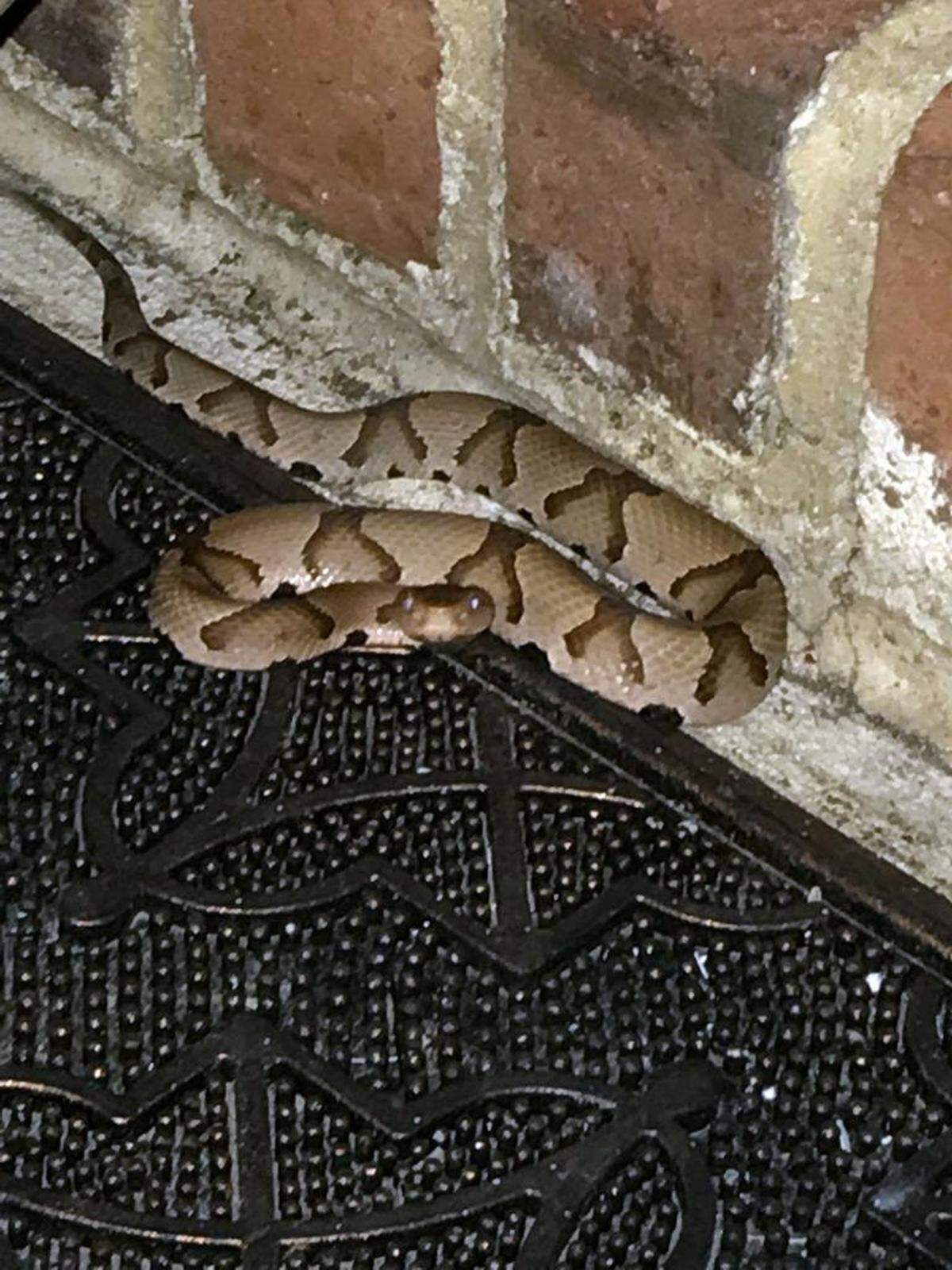
Myth #10: Venomous snakes are the only snakes with teeth/fangs.
False. All snakes have some kind of teeth to hold and eat their prey.
“If you think about it, snakes don’t have arms or legs, and they can’t grab their prey with claws, like a cat might. They typically do rely on their teeth to at least hold their prey, that way it can’t get away,” German said.
Even if you can correctly identify a snake as a non-venomous one, don’t try to handle it. It’ll likely bite you, and you might, at the least, need wound care.
Caveat: None. All snakes have teeth.
Myth #11: If a snake has oblong pupils, it’s venomous.
Not always true.
Venomous snakes have been said to have oblong pupils that look like a slit in the center of the eye, whereas non-venomous snakes will have a round pupil. Copperheads do have vertical, cat-shaped pupils, but a snake’s pupil can dilate just like a human’s can and appear round.
Venomous coral snakes (which are in the southeast part of North Carolina) have round pupils, while non-venomous boas and pythons have slit pupils. (These snakes aren’t native in our state, but they’re popular pets and sometimes escape captivity, Owens said.)
Caveat: None. Don’t rely on pupil shape alone to determine if a snake is venomous. Plus, Owens says: “If you’re close enough to see the shape of a snake’s pupil, you’re probably far too close!”
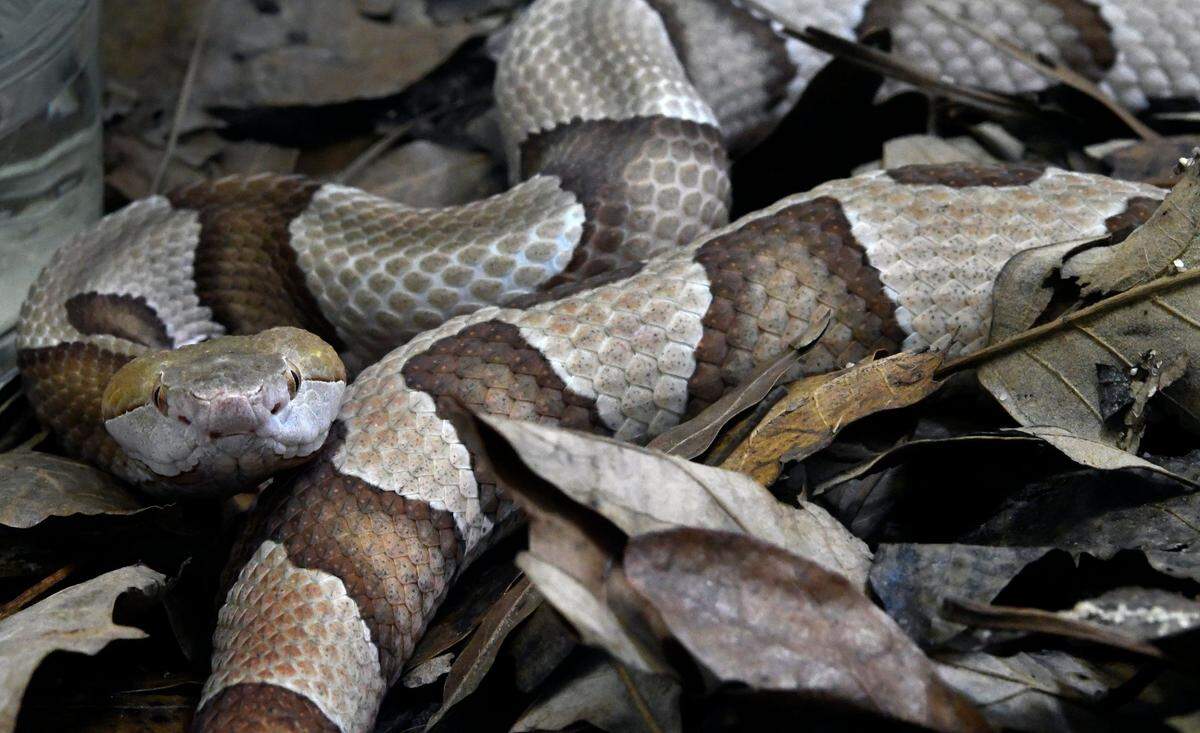
Myth #12: If a snake has a triangular-shaped head, it’s venomous.
False. A wide or triangular-shaped head does not mean a snake is venomous.
Several non-venomous snakes (such as a rat snake) can mimic the triangular shape of venomous snakes. They do this by flattening their heads when threatened to avoid becoming the prey of another animal.
Caveat: None. Don’t rely on head shape alone to determine if a snake is venomous.
Myth #13: Rattlesnakes are the only snakes that shake their tails and ‘rattle.’
False. In the Triangle, racer snakes also shake their tails and make sounds.
Yes, rattlesnakes do rattle, but other non-venomous snakes can make sounds that, to the unfamiliar ear, can sound like a rattle and scare someone into thinking a rattlesnake is nearby.
Rattlesnakes are the only snakes to have rattles on the end of their tails, so when other snakes do this, they make an audible buzzing, vibrating sound instead of that signature dry rattle, Owens said.
Racer snakes are one of the more common ones to do this, German said. If they feel threatened, they’ll “rattle their tails” and make noise as a safety protocol: “To somebody not familiar with the rattlesnake rattle, if they see a snake shaking its tail and making a noise, it makes sense they’d get really scared.”
There are three species of rattlesnakes in North Carolina, and none are in the Triangle.
Caveat: A rattlesnake’s rattle sounds distinctly dry and can be heard from up to 50 yards away, which is very different from how the Triangle’s snakes sound. But other snakes are known to shake their tails and also make noises.
Myth #14: Snakes chase after you.
False. Snakes always see humans as a threat and want to get away. They usually go the opposite direction or hide if they see a person nearby, Owens said.
“If snakes wanted to chase humans, then every time a human walked outside, they would be chased by snakes,” Jeff Beane, herpetology expert with the NC Museum of Natural Sciences, previously told The N&O.
Caveat: Some species may stand their ground when confronted, or crawl rapidly toward a person who happens to be between the snake and where it wants to go, Beane said.
Water snakes also might swim toward boats, making people scared the snake is charging at them threateningly, but these snakes just see the boat as a floating object on which to rest, German said. The snake usually swims away when it recognizes people are there.
Myth #15: The only good snake is a dead snake.
False. All snakes play an important role in our local ecosystem, including the venomous ones. Most snakes are harmless to humans, and all snakes want nothing to do with us.
In fact, most snake bites occur when people are trying to handle or kill a snake.
“Rather than trying to eliminate all snakes from an area, the best way to prevent snake bites is to learn how to accurately identify copperheads and keep a respectful distance from any snakes you do come across,” Owens said.
“With any snake, regardless of the species, my advice is to enjoy and admire from a safe distance!”
Caveat: Venomous snakes can be dangerous and should be avoided. But by trying to kill a snake, you’re putting yourself in an even more dangerous position than keeping a safe distance and doing nothing at all.
This story was originally published May 16, 2024 at 7:00 AM with the headline "Do snake repellents work? Can a dead snake bite you? Fact-checking 15 NC snake beliefs."