Pledge of bipartisan support for repairs of still damaged Interstate 40 in Western NC
AI-generated summary reviewed by our newsroom.
- Quarry access in Pisgah Forest will speed I-40 rebuild and cut material costs
- $1.15B in new federal aid supports NCDOT’s $5B post-Helene recovery plan
- I-40 eastbound lanes set to reopen in late 2028 after retaining wall rebuild
A year after the eastbound lanes of Interstate 40 fell into the Pigeon River after Hurricane Helene, Democratic Gov. Josh Stein and Trump administration officials gathered Friday near the site of a quarry that will help rebuild the highway.
State officials say the quarry, made possible with help from the Trump administration, will let the N.C. Department of Transportation rebuild the highway far faster and for hundreds of millions of dollars less than if it had to ship the stone in from commercial quarries. The trucks that carry stone blasted from the steep mountains in Pisgah National Forest will be able to reach the I-40 construction site without getting on the highway.
As it is, NCDOT officials expect it will be late 2028 before the two eastbound lanes of I-40 are rebuilt through the gorge and ready for traffic, at a cost of more than $1 billion.
“We know how crucial this roadway is for travel and commerce,” said Sean McMaster, the new Federal Highway Administrator. “And we’re doing everything we can to get it reopened fully as quickly as possible.”
More than a mile of the eastbound lanes of I-40 in North Carolina collapsed on Sept. 27, 2024, after the swollen Pigeon River washed away the earth and rock underneath them. More of the road fell into the river on the Tennessee side of the state line.
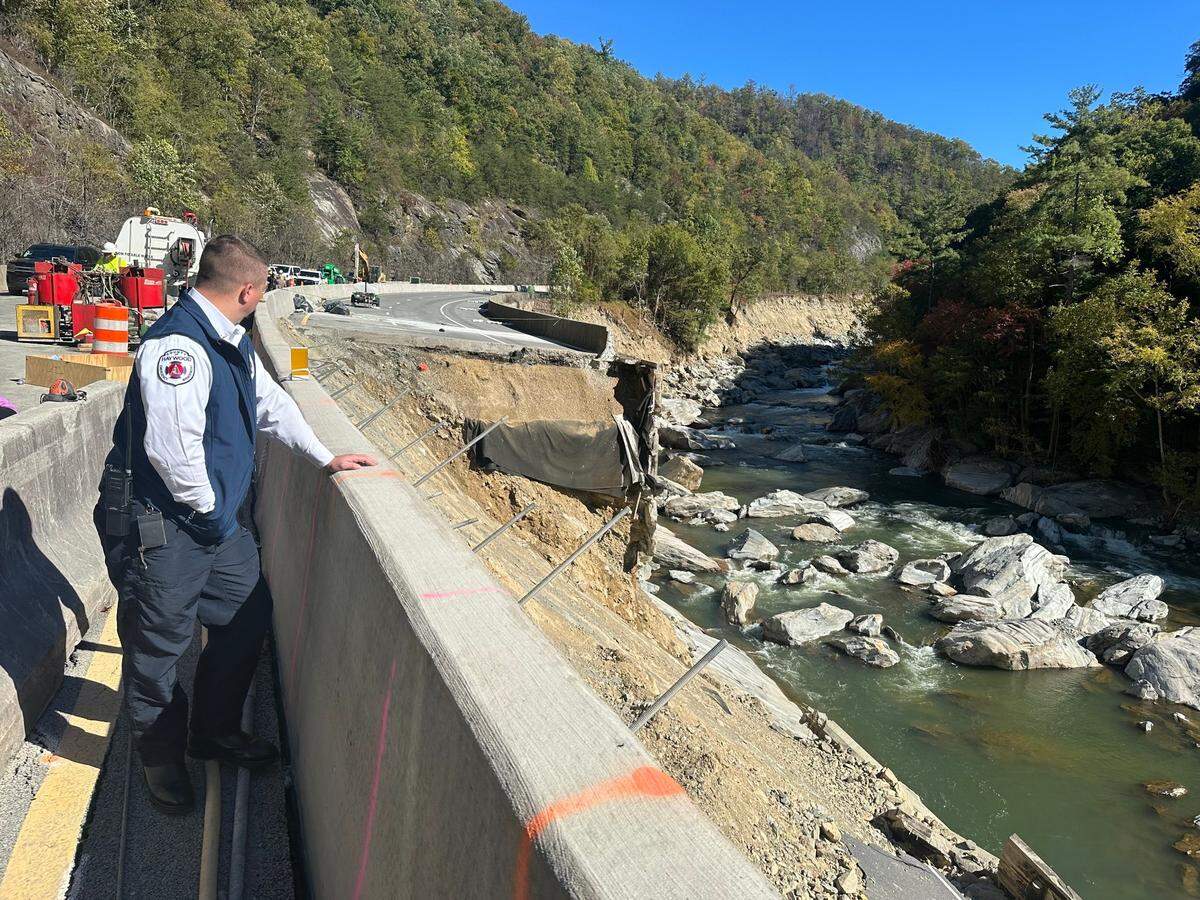
The two states worked to stabilize the surviving westbound lanes and convert them to two-way traffic. They opened the road through the gorge on March 1, a single lane in each direction separated by a low-concrete median and short plastic posts. NCDOT signs warn drivers to expect delays.
Rebuilding the eastbound lanes will mean re-establishing the roadbed and building retaining walls as tall as 70 feet, which will require lots of stone. Last spring, NCDOT received permission from federal officials to mine up to 3 million cubic yards from the forest and this summer received the state and federal environmental permits needed to begin extracting and moving rock.
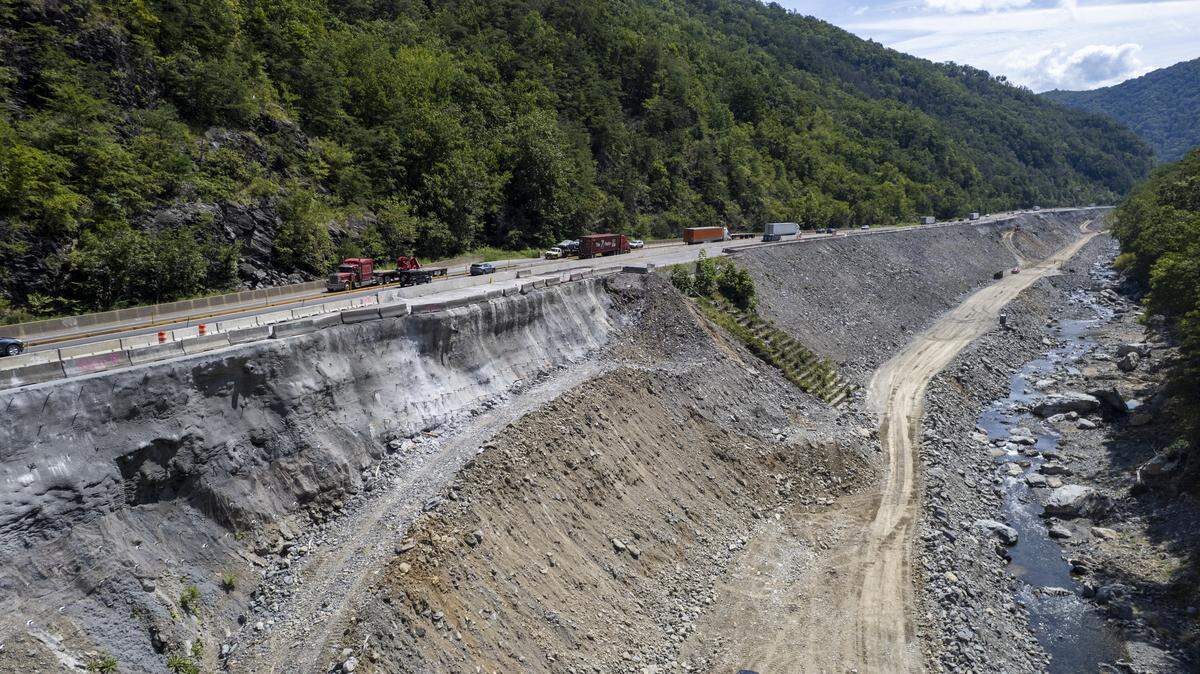
As they spoke to reporters Friday, Stein and McMaster stood on the foundation of two temporary bridges that by mid-December will cross the Pigeon River. Behind them, earth-moving equipment worked on the steep road that trucks will use to haul stone from the quarry site down to a four-mile causeway along the river at the base of I-40.
Joining them was James Melonas, supervisor of National Forests in North Carolina. The National Forest Service helped make the quarry possible and will oversee reclamation of the site when the road is done.
“The work to rebuild I-40 is easily one of the most important recovery projects in Western North Carolina, if not the single most important,” Melonas said.
Feds provide financial help rebuilding I-40
Beyond permitting, the federal government’s primary role in rebuilding roads after Helene is providing money. NCDOT estimates it will cost $5 billion to reconstruct roads and bridges damaged or destroyed by Helene and that it expects the federal government to provide at least 80%.
It received a big chunk of that this week when U.S. Transportation Secretary Sean Duffy pledged $1.15 billion for NCDOT’s Helene recovery work from the Federal Highway Administration’s emergency relief program. The agency had already pledged $400 million to NCDOT from that fund for Helene reconstruction earlier this year.
“These dollars are going to make a big difference in moving this effort forward across the region,” Stein said Friday.
Duffy visited Pigeon River Gorge in February and stood at the edge where pavement had dropped into the river.
“He said this trip impacted him deeply,” McMaster said. “He made it clear that rebuilding I-40 was one of our chief concerns, and we took that to heart.”
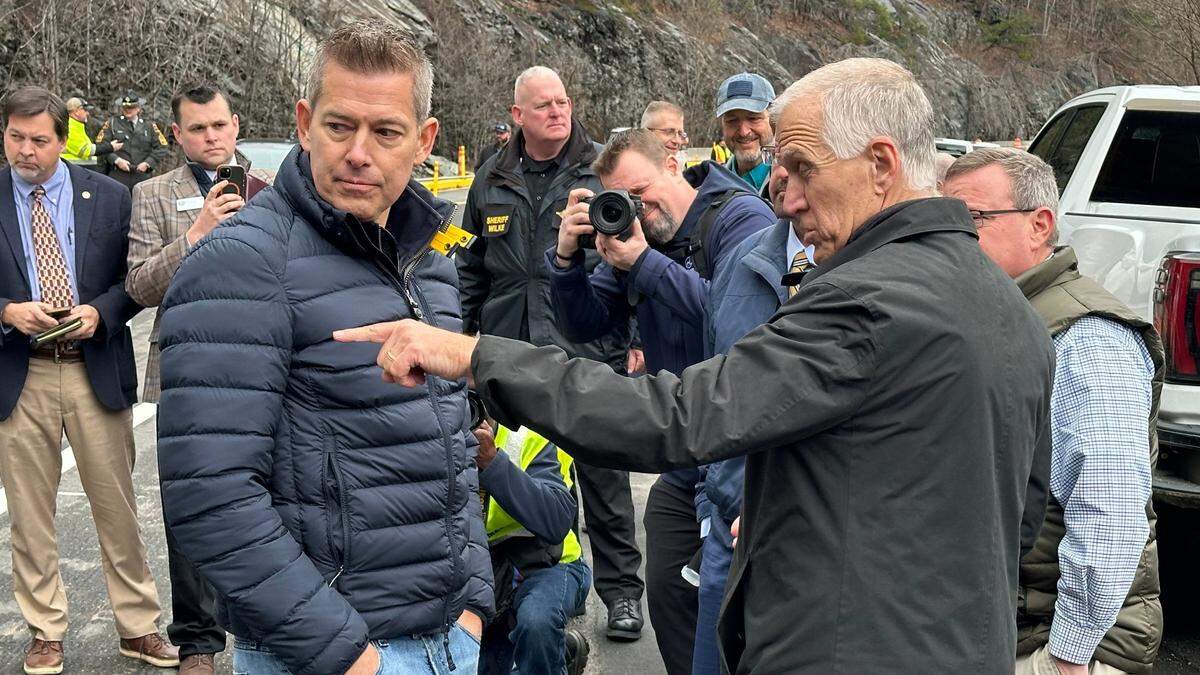
Earlier this year, Stein and state Transportation Secretary Joey Hopkins asked Duffy, Homeland Security Secretary Kristi Noem and other federal officials to cover 100% of Helene-related road repairs in North Carolina, rather than roughly 80% under normal formulas. They cited precedents in other states and the effect on roads throughout North Carolina if the state must cover an estimated $900 million in repairs.
Duffy responded in April that Congress would need to authorize the additional help for North Carolina. Stein has made that part of his request for more money from Washington, Hopkins said.
Stein said he believes he and the Trump administration agree that the people of Western North Carolina are a top priority.
“There are always going to be moments of tension where we want things to move faster, or we want more or we want better,” he said. “That is natural in any kind of process as massive as this Western North Carolina recovery. But I’ve been very gratified with our partnership with our federal agencies.”
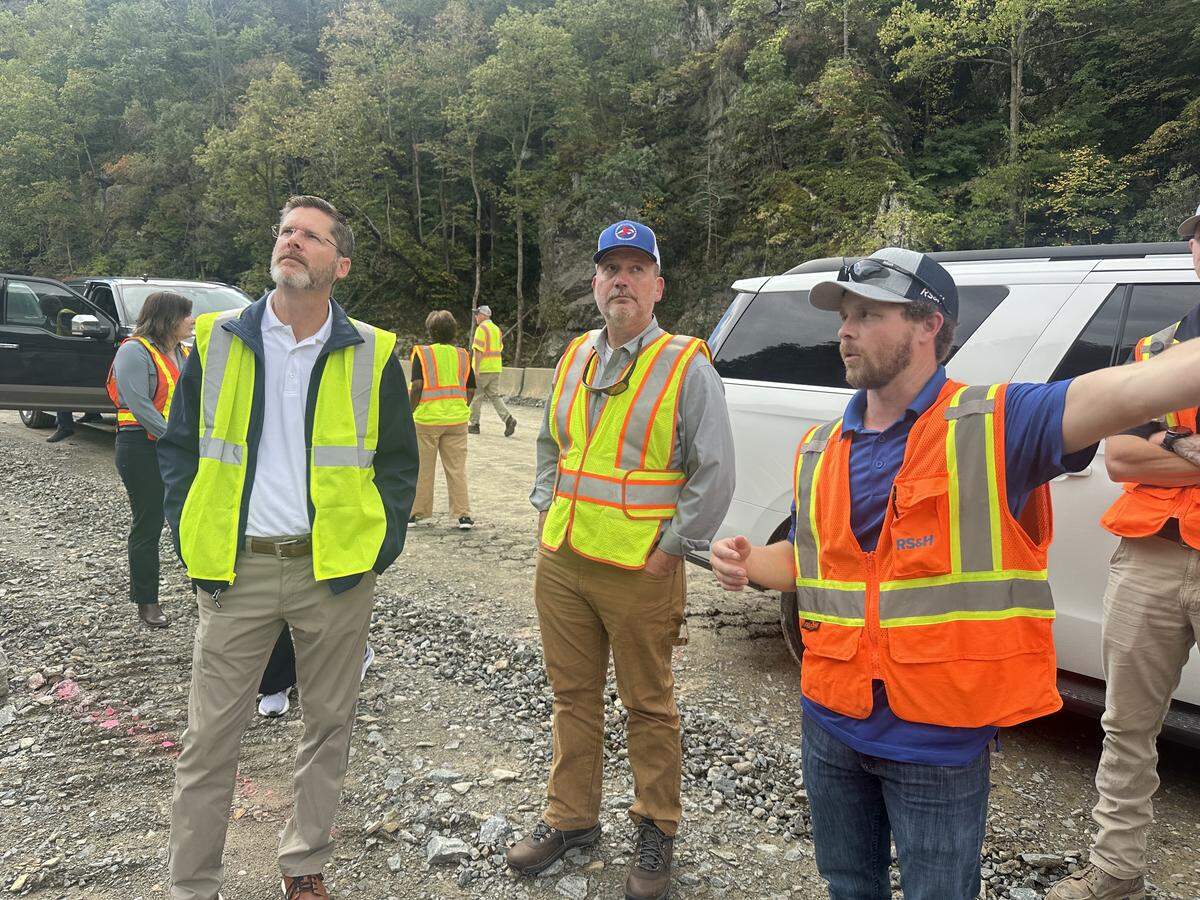
The press conference in Pigeon River Gorge kicked off a weekend of events to commemorate the one-year anniversary of Helene. Stein planned to visit eight places, including towns of Lansing and Burnsville and ending Sunday afternoon with a remembrance service at a church in Swannanoa.
McMaster attended a ribbon-cutting ceremony Friday on a section of the Blue Ridge Parkway that reopened last week.
This story was originally published September 26, 2025 at 3:45 PM with the headline "Pledge of bipartisan support for repairs of still damaged Interstate 40 in Western NC."