The LSAT isn’t just another test; it’s one of the biggest hurdles on the path to law school. According to recent data, the average score sits around 150, which usually isn’t high enough for competitive schools. That means every point matters, and the right LSAT prep course can make the difference between landing in your dream program or falling short.
Blueprint and Princeton Review are two of the most recognized names in LSAT prep, but they give students very different experiences. I tried both platforms to see how they really stack up, from practice materials and course design to tech features and support. Each has strong points, and one definitely stood out more for me, but the better choice really depends on how you like to study. Let’s break it down.
Key Takeaways
- If you’re a visual learner, Blueprint’s video lessons break down tough concepts in an engaging way.
- If you want a study plan that Blueprint’s AI-powered platform adjusts as you progress.
- If you need plenty of time, Princeton Review gives you a full year of course materials and 90+ official PrepTests through LawHub.
- If you like adaptive learning, Blueprint’s platform automatically adjusts your study plan to focus on the areas you need most.
- If you prefer traditional classroom structure, Princeton Review provides long, live classes with direct instructor interaction.
Overview: Blueprint vs. Princeton Review LSAT
Prepping for the LSAT isn’t one-size-fits-all; some students need structure and accountability, while others do better with flexible tools they can use on their own time. That’s why the real question isn’t “Blueprint or Princeton Review?”, but “Which approach is going to help me stay consistent and actually improve my LSAT score?”
When I tested both, Blueprint came across like a modern study app—clean design, adaptive features, and short, visual lessons that kept me engaged. It gave me the flexibility to study at my own pace while still tracking progress. The Princeton Review felt very different. The focus is on structure, with long live classes, steady assignments, and a setup that mirrors a traditional classroom. That’s great if you want accountability, but it can feel rigid if you prefer more flexibility.
If your goal is to raise your LSAT score, the real question isn’t which brand is bigger; it’s which approach matches the way you learn best.
Blueprint LSAT: The Adaptive Edge

Blueprint was founded in 2005 when three college students decided LSAT prep didn’t have to feel dull or overwhelming. The program is designed to make studying more effective while keeping you engaged, and that came through right away when I tested it.
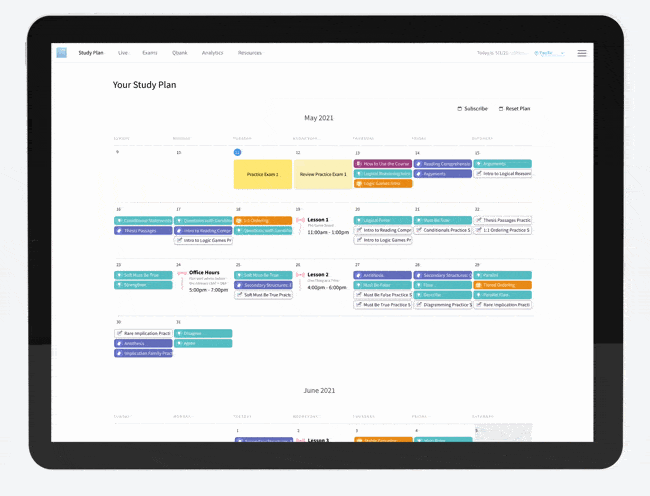
The dashboard was simple, the navigation clear, and the Study Plan tool built a schedule that felt manageable instead of stressful. I could switch between lessons, practice sets, and progress reports without confusion. It had the polish of a modern app rather than the clunky feel of a prep course, which made it easier to stick with day after day.
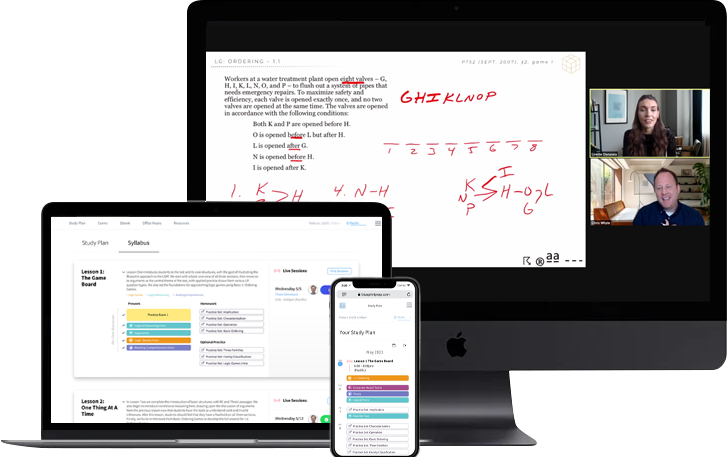
The video lessons were a highlight. They’re short, visual, and straightforward, with some light humor mixed in to keep things from dragging. On average, Blueprint students see about an 11-point boost on LSAT practice tests, which is a strong measure of the program’s effectiveness.
What impressed me most was how adaptive the platform felt. After each quiz or practice exam, Blueprint targeted my weaker areas and built them back into the plan. The QBank of 6,000+ official LSAT questions let me create custom sets, and even quick study sessions on my phone felt worthwhile.
Blueprint Package Options
Blueprint LSAT Review offers four main options. The Self-Paced Course includes 61+ modules, 6,000+ LSAT questions, 57 practice exams, advanced analytics, and unlimited live review sessions, best for flexible, independent study. The Live Course adds 30 hours of live classes over 4 months for more structure. The 170+ Course extends to 6 months with 60 live hours, 50+ review sessions, and a 170+ Guarantee for ambitious scorers. Finally, Tutoring offers personalized one-on-one prep with an expert.
“Townes and Jacob are great instructors! They make learning the LSAT fun. They were great at explaining concepts in depth, answered our questions, and supported our LSAT journey.”
Student Review.
Course Highlights
- Live Review Sessions with LSAT experts (plus recordings)
- AI-powered QBank with 6,000+ official LSAT questions
- 57 full-length practice exams with proctored options
- 61+ interactive video modules and quizzes
- Advanced performance analytics to track progress
- Score Increase Guarantee
Pros
- Engaging Video Lessons: The lessons use visuals and examples that actually made tough concepts click for me instead of feeling like another dry lecture.
- Adaptive Learning Technology: The study plan adjusted whenever I fell behind, so I always felt like I had a realistic path forward.
- Flexible Course Options: Whether I wanted to study at my own pace, join live classes, or get one-on-one tutoring, there was an option that fit.
- Advanced Analytics: The breakdown of timing, accuracy, and missed question patterns gave me a clear picture of where I needed to improve.
Cons
- No Physical Prep Books: Everything is online, which wasn’t a problem for me, but students who like having printed materials might miss them.
Blueprint LSAT Review
Princeton Review LSAT: The Traditional Classroom Experience
The Princeton Review was founded in 1981 on the idea that test prep should focus on strategy rather than rote memorization. Since then, it has helped more than 400 million students worldwide. When I tested their LSAT course, the structure stood out right away. The live online classes ran for about three hours, with instructors walking us through Logical Reasoning, Reading Comprehension, and the updated three-section format. Each class came with homework and drills, which made it clear what I needed to do in between sessions. Princeton’s long classes felt a little like being back in college, not always exciting, but they forced me to sit down and do the work.
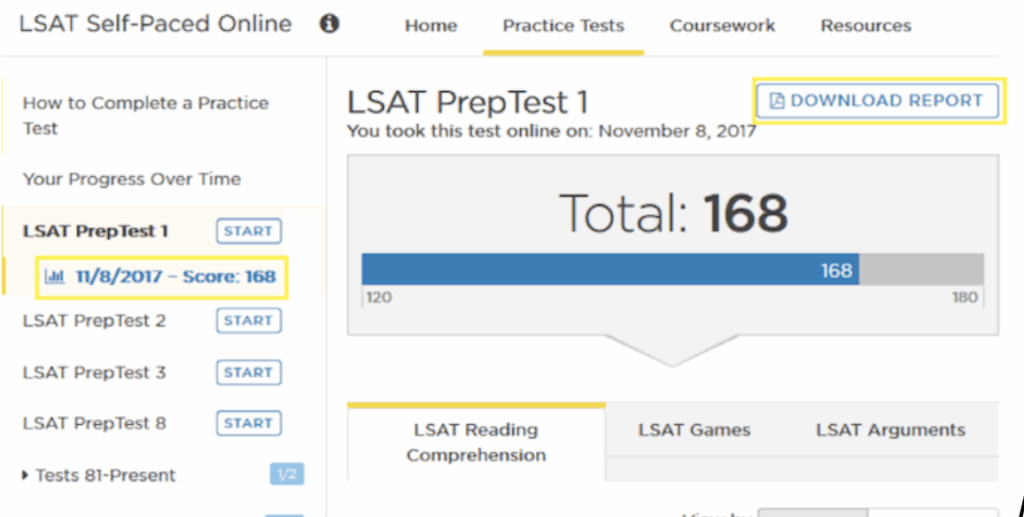
Beyond class, I had access to a huge pool of official LSAT questions and 90+ PrepTests through LSAC’s LawHub Advantage. The proctored practice exams felt close to test day, which helped me get used to the pressure. The lecture-style videos were clear but not as lively as Blueprint’s shorter lessons. Still, if you want structure, clear routines, and plenty of practice, Princeton Review gives you that traditional classroom feel.
Package Options
Princeton Review offers five options. The Self-Paced Course is flexible with recorded lessons and 90+ PrepTests. The Fundamentals Course adds 30 hours of live instruction, while the LSAT 170+ Course includes 65 hours and a 170+ score guarantee. The Immersion Program delivers 130 live hours plus workshops, and Private Tutoring provides a custom one-on-one study plan.
Course Highlights
- 90+ official LSAT PrepTests™ via LawHub Advantage
- Access to all released LSAT questions
- 365 days of online course access
- Live or recorded instruction from LSAT experts
- Money-back and satisfaction guarantee
Pros
- Structured Live Instruction: Classes felt like a real classroom, with strong instructors who provided clear, step-by-step guidance.
- Extensive Practice Resources: Large question bank with detailed explanations
- Proctored Exams: Sitting for these practice tests really did feel like test day, which helped me manage nerves.
Cons
- Rigid Schedules: The set times made it tough to balance work and other commitments; missing a class meant playing catch-up.
- Less Engaging Videos: Compared to Blueprint’s short, visual lessons, Princeton Review’s lecture style just didn’t hold my attention as well.
- Outdated Platform Feel: The interface wasn’t as smooth or modern as other competitors.
One student shared a similar thought, saying, “The instructors are incredible, but the interface is lacking compared to competitors.”
Michael
Princeton Review LSAT
Blueprint vs Princeton Review Course Feature Comparison
| Feature |  | |
|---|---|---|
| Price | $99–$2,699 | $799–$3,999 |
| Course Access | 4–6 months | 12 months |
| Adaptive Tech |  AI-powered study plan with personalized adjustments |  Not adaptive |
| Practice Exams | 57 full-length exams (with live online proctoring) | 90+ official PrepTests via LSAC LawHub |
| Video Lessons | 60+ interactive, visual, and engaging modules | 150+ hours, lecture-style |
| Live Classes | 30–60 hours | 30–130 hours |
| Mobile App | Dedicated mobile app | Mobile browser only |
| Printed Books | No printed books (digital resources only) | Includes printed prep books and manuals |
| Community | Discord group + unlimited live review sessions (recordings available) | No built-in community (rely on class/instructor only) |
| Get Started | Start Now | Start Now |
Blueprint vs. Princeton Review: Which LSAT Course Fits You?
Why choose Blueprint or Princeton Review? Blueprint and Princeton Review are two of the top providers in LSAT prep, but they don’t take the same approach. Blueprint leans modern, with adaptive study plans and engaging video lessons, while Princeton Review leans traditional, focusing on long, live classes and steady structure.
From my time using both, it was clear each has its own strengths; one feels more flexible and app-like, the other more like a classroom. Which one works best really depends on how you like to study.
Next, I’ll break down how they compare on content, technology, support, and value so you can see which course actually matches your learning style.
Side-by-Side Comparison: Blueprint or Princeton Review
Course Content and Structure
- Blueprint offers a balance of flexibility and depth, with self-paced modules, live instruction, and tutoring. The adaptive platform makes it easy to build a personalized study plan and track your progress with advanced analytics.
- Princeton Review leans heavily on live classes, with up to 80+ hours of structured lessons. This is great if you like accountability, but it can feel overwhelming for students who prefer learning at their own pace.
The Winner: Blueprint– Has a better mix of flexibility and structure.
Tech and Video Quality
- Blueprint feels modern from the start. The video lessons are short, visual, and even throw in some humor, which makes tough LSAT topics easier to understand. I liked that the platform worked just as smoothly on my phone as on a laptop, so it was easy to squeeze in practice whenever I had a few minutes.
- Princeton Review takes a more traditional approach. The videos are clear and detailed, but they lean toward lecture-style. At times, it felt a bit like being back in a college classroom, helpful for structure, but not as engaging if you prefer interactive learning.
Winner: Blueprint– more engaging and modern.
Support and Course Access
- Blueprint gives students multiple ways to get help, including live chat, email, and tutoring hours. The platform’s instant feedback through analytics also points you toward weak spots, which makes self-study more efficient.
- Princeton Review takes the edge here. You get direct access to instructors during live classes, plus a full year of course access to review materials and practice whenever you need.
Winner: Princeton Review– instructor access and extended course time give it an advantage for students who want more hands-on support.
Value: What You Get for the Price
- Blueprint stands out by including core features like unlimited live review sessions, advanced analytics, thousands of official LSAT questions, and full-length practice exams in every plan. You get the essentials no matter which option you choose.
- Princeton Review offers strong resources, but many extras are tied to specific packages, so you may need to pay more to unlock everything.
Winner: Blueprint- consistent features across all plans make it a better value.
My Final Verdict
Both Blueprint and Princeton Review offer strong LSAT prep with real questions, full-length practice exams, and score guarantees. Blueprint stands out for its modern, flexible design. The adaptive tools and short, visual lessons make studying feel approachable and easier to fit into a busy schedule. Princeton Review shines with its structured live classes and steady routine, giving you plenty of support and accountability along the way. Both have clear strengths—it really depends on whether you prefer flexibility or structure.
Overall Winner: Blueprint. It’s more engaging, easier to use, and the kind of course you’ll actually want to stick with when the study grind gets tough. That said, if you’re the type who thrives on set schedules and a classroom vibe, Princeton Review still delivers solid results.
FAQs
Yes. Blueprint offers adaptive learning, 6,000+ official questions, and flexible study plans. It’s perfect for visual learners.
Blueprint has interactive, entertaining video lessons that make studying less overwhelming.
Instead of a refund, Blueprint offers a Higher Score Guarantee that is flexible and student-friendly.
Blueprint’s self-paced and live hybrid options make it the better fit for students balancing law school prep with other responsibilities.
Yes. The platform builds a personalized study plan that adapts as you go. You can move lessons, adjust the pace, and even study in quick sessions on your phone.