The FE exam is a major milestone for aspiring professional engineers, but preparing for it doesn’t have to be overwhelming. As a test prep expert who’s helped thousands of students succeed on high-stakes exams, I’ve seen what actually works (and what wastes your time).
According to Columbia University’s academic support team, the best study plans don’t just focus on content—they also include mental breaks, structure, and a sense of community.
This guide isn’t just a list of obvious tips. It’s a practical plan to help you figure out how to pass the FE exam on your first (or final) try and earn your professional engineering license.
Key Takeaways
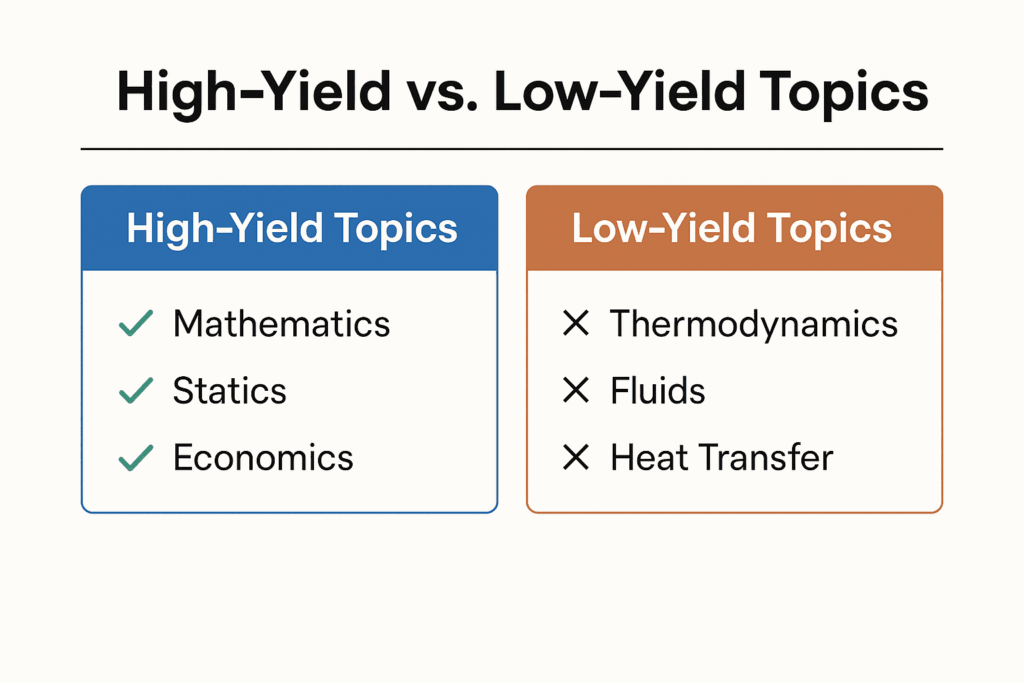
- Prioritize the 80/20 Rule + Focus on High-Yield Topics: Master the 11–12 topics you’re strongest in and don’t waste time chasing perfection in low-yield subjects like Thermodynamics or Fluids.
- Master the NCEES Handbook + Use the Official Practice Exam Wisely: Learn to search the FE Reference Handbook efficiently and use the NCEES practice exam as a benchmark—not your only prep tool. Supplement with third-party resources for deeper coverage.
- Practice Like It’s the Real Thing + Simulate Test Conditions: Use the same calculator, graph paper, and timing as the actual exam. Stick to 2–3 minute question pacing and simulate full-length exams regularly.
- Build Your Own Study Materials + Learn Smart Test Strategies: Create personalized reference sheets to reinforce key equations, and apply multiple-choice tactics like unit checks and educated guessing when you’re unsure.
- Stick to a Structured, Flexible Schedule + Don’t Wait Too Long: Aim for 10–12 study hours per week over several months. Start while you’re still in school, if possible—and if not, build consistency into your post-grad schedule.
1. Focus on Mastering 80% of the Material
You don’t need to ace every subject to pass the FE exam—you just need a solid majority. Focus on 11–12 of the 14 main topics, especially the ones that align with your background or feel intuitive to you. Don’t get stuck trying to fully master subjects that have always felt confusing (like Thermodynamics or Fluids, for many test-takers). That time is better spent reinforcing what you already understand well.
You don’t need to get every question right to pass the FE exam—just enough to meet the passing score. That means it’s perfectly okay to make educated guesses on the tougher questions, especially in topics you struggle with. Instead of spreading yourself thin, focus on the subjects you already have a solid grasp on.
Think about what came easiest in school, where you’ve had hands-on experience, or which topics you score highest on in practice tests. Use that insight to shape your study plan. Prioritizing your strengths not only boosts your confidence but also helps you study more efficiently without burning out.
2. Know the NCEES Handbook Inside and Out
You’ll have access to a searchable PDF version of the official NCEES Reference Handbook during the FE exam. This isn’t just a resource—it’s your lifeline. Every equation you need is in there, but finding it quickly under time pressure is a skill in itself.
Use the Ctrl+F (or Ctrl+Shift+F) function regularly as you study so you become fluent in how terms and formulas are labeled. Even small differences—like searching for “beam deflection” vs “deflection of beam”—can make or break your momentum during the exam.

Example (Civil FE Exam): Let’s say you’re working on a structural analysis question that requires calculating the moment of inertia for a beam. If you haven’t practiced navigating the handbook, you might waste valuable minutes trying to find the correct formula. But if you already know it’s under the “Mechanics of Materials” section and can instantly search “moment of inertia,” you’ll stay in control of your time and reduce test-day stress.
Tip: During practice, treat the handbook like part of the question—don’t solve a single problem without it. Build that muscle memory now so the handbook feels like second nature by exam day.
3. Use the NCEES Practice Exam—But Don’t Rely on It Alone
The official NCEES practice exam is the most accurate representation of what you’ll see on test day. It’s a must-have for familiarizing yourself with the question format, difficulty level, and pacing. But it’s just one exam, and you’ll need more practice than that to truly feel prepared.
That’s where third-party FE prep courses (like my top picks here) come into play. Trusted providers offer full-length practice exams, topic-specific drills, and guided review tools to help you master concepts, not just memorize answers during exam preparation.
- Start with third-party resources to build your foundation and practice under exam-like conditions.
- Use the NCEES exam as a final benchmark in the weeks leading up to your test.
- Always review your incorrect answers and track where you need improvement.
4. Simulate Exam Conditions During Practice
Studying is important, but how you study matters just as much as what you study. To build real exam-day confidence, practice under conditions that mimic the actual FE testing experience as closely as possible.
- Use the exact calculator you’ll bring to the exam—don’t switch between models.
- Work problems on graph paper or a whiteboard, just like you’ll use the digital whiteboard or scratch pad during the exam.
- Time yourself—practice solving problems in 2–3 minute intervals to sharpen your pacing.
These habits don’t just prepare you for the FE—they lay the foundation for the PE exam as well, where testing strategy and familiarity with tools play a huge role in passing.

5. Take Weekly Full-Length Practice Tests
How many practice hours you need to pass the FE exam on the actual test day depends on many factors. However, I do know that ramming doesn’t work well for the FE. Spacing out full-length practice exams weekly will build stamina and improve pacing.
- Don’t just study chapters—simulate 110-question test days.
- Use different sources for practice problems for variety.
- Save the NCEES exam for the final stretch.
6. Create Personal Reference Sheets
Even though you can’t bring notes into the exam, creating your own formula and topic summaries boosts memory and helps identify gaps.
- Use the FE review manual to write summary sheets for each topic.
- Include equations, units, and common errors.
- Revisit and revise them every week up to your exam date.
7. Don’t Waste Time on Over-Studying the Hardest Topics
If Thermodynamics or Fluids never made sense to you, don’t sink weeks into trying to master them. Focus instead on high-yield topics like math and economics. This will help you avoid second or third attempts.
- Passing the FE exam is about score, not perfection.
- Strong fundamentals are more valuable than niche topics.
8. Learn Multiple-Choice Strategy
You’ll face a few questions you simply don’t know. That’s okay. Learn how to guess smart as a way to raise your FE exam score.
- Eliminate obviously wrong answers.
- Choose answers with correct units.
- When in doubt, pick the value closest to others or the longest response in word-based questions.
9. Use a Structured Study Schedule (But Stay Flexible)
Too many people make unrealistic study schedules and give up after missing a few days. Build a structure, but don’t beat yourself up if life gets in the way.
- Aim for 10–12 hours of study per week over 3–4 months.
- Break subjects into 2–3 day blocks.
- Catch up on weekends if needed.

10. Study While You’re Still in School (If Possible)
The best time to take the FE is before the knowledge fades. If you’re close to graduation, sign up. If you’re out of school, be prepared to review study materials more thoroughly, as it is a tough exam.
- Subjects fade fast post-graduation—don’t wait years.
- If you’re working, try studying during lunch or after dinner in short sessions.
Final Thoughts
The FE exam isn’t a test of brilliance—it’s a test of consistency, endurance, and strategy. You don’t need to master every topic. You do need to study smart, use the right materials, and practice under real conditions.
Whether you pass on your first try or your seventh, what matters most is that you keep going.
FAQs
The TI-36X Pro and TI-30XS are both allowed and highly recommended. Stick with what you’re comfortable using and practice with it ahead of time.
No, but you’ll have access to the NCEES Reference Handbook as a searchable PDF during the exam. This is your only reference material.
Plan for 100–150 total hours spread over 8 to 16 weeks, depending on how long it’s been since you studied engineering topics.
Yes. Focus your time on what you can master. It’s better to be strong in most areas than average in all.
You can retake the FE exam. Many pass on their second or third try. Analyze your weak areas, adjust your study plan, and try again.
FE pass rates currently range from 59-71%, with the FE Civil exam being the easiest and FE Chemical the hardest.