Wondering how to improve your LSAT score without wasting time on strategies that don’t work?
The average LSAT score is about 152, which falls short of what many competitive law schools expect. From my own research on how test takers prepare, I’ve noticed one thing: most people want a high score but fail to follow effective strategies.
Since the LSAT is one of the most critical parts of law school admission, even a few extra points can change your target schools and scholarship chances.
In this guide, I’ll break down the test structure, explain what counts as a good score, show you how to set your baseline, and share the most effective prep strategies to help you raise your LSAT score and feel confident on test day.
Key Takeaways
- LSAT Format Changed: Logic Games are gone, with Logical Reasoning and Reading Comprehension now most important.
- Good Score Depends: 170+ for elite schools, 160s for competitive programs, 150s for regional schools.
- Baseline Test First: A timed practice exam sets your starting point and realistic goals.
- Review Everything: Checking both wrong and correct answers prevents repeated mistakes.
- Consistency Wins: Regular practice, enjoyable study habits, and stress control raise scores.
Understand the Updated Format
The LSAT now has four sections, each 35 minutes long. Three of them count toward your score, while one is an unscored experimental section that’s mixed in so you won’t know which it is. After the multiple-choice sections, you’ll also complete a separate writing sample that isn’t scored. Since Logic Games have been removed, the test now leans even more heavily on Logical Reasoning and Reading Comprehension.
Here’s the breakdown:
- 4 sections total, 35 minutes each
- 3 scored, 1 unscored (hidden experimental)
- Writing sample after, unscored
- Logical Reasoning = about half your LSAT score
- Reading Comprehension = one full section, often toughest
- Experimental = mixed in, treat every section like it counts
💡 Pro Tip: Don’t waste energy guessing which section is experimental. The students who treat every section as real are the ones who avoid score drops.
Set Your Sights On a Solid Score
LSAT scores fall between 120 at the lowest and 180 at the highest. What qualifies as “good” depends on your law school goals:
- 170–180: Top 10 schools, elite admissions
- 160–169: Competitive at top 25 schools, often scholarship-worthy
- 150–159: Regional schools, moderately selective
- Below 150: Below average for most ABA-approved schools
Find Your Baseline
Before you even think about a study plan or choosing an LSAT prep course, take a full practice test under timed conditions. This first score, your baseline, shows where you are now and sets a realistic goal.
Reviewer Insight: I’ve seen too many LSAT test takers dive straight into prep materials without knowing their baseline. They end up wasting weeks on the wrong strategies. The students who test early and measure progress are the ones who improve their scores the fastest.
Revisit Both Wrong and Correct Answers
I have noticed that most test takers only analyze wrong answers, but reviewing correct answers matters just as much.
- For wrong answers: identify the trap and study why the right answer works
- For correct answers: confirm you can explain your reasoning out loud
- Track repeated mistakes: they usually cluster around Logical Reasoning or Reading Comprehension
Master Logical Reasoning
Since Logical Reasoning makes up half your LSAT score, this is the section where you can improve the fastest.
- Spot the conclusion first, then check how the evidence supports it
- Watch for recurring flaws and assumptions
- Mix question types so you’re not only practicing your comfort zone
💡Pro Tip: Daily drilling builds the reasoning habits that admissions officers want to see in your scores.
Improve Reading Comprehension
Reading Comprehension often surprises students with its difficulty. Long, dense passages require sharp focus and endurance.
- Practice reading legal, scientific, and humanities passages to build flexibility
- Underline key transitions and author viewpoints
- Summarize each paragraph in a few words before answering questions
Strong reading skills not only help on the LSAT but also mirror the reading demands in law school.
Make Studying Fun
Studying for the LSAT doesn’t have to feel like a grind. Here are simple ways to keep it engaging:
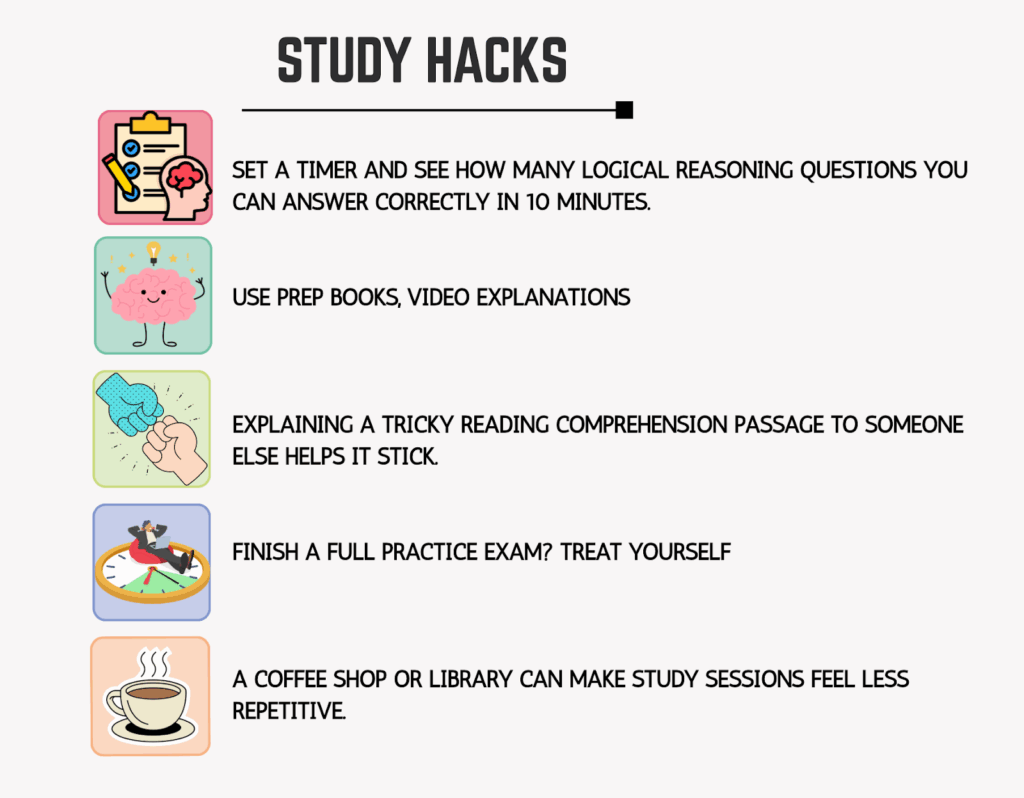
- Gamify your drills: Set a timer and see how many Logical Reasoning questions you can answer correctly in 10 minutes.
- Mix up materials: Use prep books, video explanations, and even podcasts to avoid burnout.
- Study with a buddy: Explaining a tricky Reading Comprehension passage to someone else helps it stick.
- Reward yourself: Finish a full practice exam? Treat yourself to something small.
- Switch locations: A coffee shop or library can make long study sessions feel less repetitive.
The LSAT is a serious test, but the students who find small ways to enjoy prep are usually the ones who stick to their study schedule. Keeping it fun helps you build consistency, and consistency is what raises scores.
Should You Consider an LSAT Tutor?
If you’ve been studying on your own and your score isn’t moving, an LSAT tutor can be worth it. A good tutor spots patterns in your mistakes that you might miss and keeps you accountable with a clear study plan. From my review of different prep approaches, students who work with a tutor often see faster improvement because they get targeted feedback instead of wasting time guessing what went wrong.
💡Pro Tip: Consider a tutor if your score has plateaued after multiple practice exams.
Control Stress Levels on Test Day
Intense prep can be wasted if nerves take over. To keep stress under control:
- Get proper sleep the night before
- Arrive early at the test center, or do a full tech check if testing remotely
- Use calming routines like deep breathing or stretching
- Stick to familiar snacks, water, and routines
Final Thoughts
Improving your LSAT score isn’t about cramming or chasing shortcuts; it’s about steady practice and smart strategy. From what I’ve seen, the students who actually move their score up are the ones who start with a baseline test, learn from both wrong and right answers, and put extra focus into Logical Reasoning and Reading Comprehension since that’s where the most points live.
It’s not always easy, but the LSAT rewards consistency. Every hour you put in builds the habits law schools want to see in your score.
Stay disciplined, keep your stress in check on test day, and earn a higher LSAT score!
FAQs
Two to three months of studying is typical, depending on your baseline.
Yes, if you need structure and guided strategies.
Six to eight full tests under timed conditions are ideal.
Reading Comprehension challenges most test takers.
Yes, you can retake the LSAT up to three times a year and seven times total.