


Let’s talk about money, specifically how much you can make as a Professional Engineer, or PE. If you’re a professional looking into getting your PE license, you’re probably wondering what kind of financial boost it brings.
A 2024 report by the American Society of Civil Engineers (ASCE) found that Professional Engineers in the civil field earn an average of about $140,000 per year, which is nearly $42,000 more than their non-licensed civil engineering counterparts.
That’s a pretty compelling reason to pursue licensure, wouldn’t you agree?
In this article, I’m going to break down the average professional engineer salaries, look at what makes those numbers change, and even peek into future salary trends.
Key Takeaways
- PE License Boosts Pay: Professional Engineer salaries are significantly higher than non-licensed engineer salaries.
- Salary Varies Widely: Professional engineer salaries vary widely based on experience, engineering discipline, geographic location, and industry sector.
- Experience Pays Off: Senior-level professional engineers make considerably more than entry-level or mid-career professional engineers.
- Beyond Base Salary: Engineers receive additional compensation like bonuses, health benefits, and retirement plans, adding significant value to their total package.
- Positive Outlook: Future salary trends indicate continued growth for PEs due to increasing demand for engineering skills in various sectors.
The Value of a Professional Engineer License
First off, what exactly is a Professional Engineer? It’s more than just a fancy title. A PE license is a legal credential that shows you’ve met specific education, experience, and examination standards in engineering.
It means you’re recognized by the state as competent to practice engineering independently. This usually involves:
- Earning an ABET-accredited engineering degree.
- Passing the Fundamentals of Engineering (FE) exam.
- Gaining at least four years of progressive engineering experience under a licensed PE.
- Passing the Principles and Practice of Engineering (PE) exam in your chosen discipline.
Why go through all that effort?
Well, beyond the salary bump, a PE license gives you some serious advantages. You’ll have the authority to sign and seal engineering drawings and reports, which is often required by law for public projects.
It opens doors to leadership roles, provides greater career flexibility, and, frankly, earns you a ton of respect in the industry. It’s a hallmark of expertise and ethical practice.
What’s the Average PE Engineer Salary?
So, let’s get down to brass tacks: how much do professional engineers make? The average professional engineer salary can vary significantly, but recent data provides a clear picture of the PE salary range overview.
According to the U.S. Bureau of Labor Statistics, the median pay for engineers in May 2024 was about $97,310 per year. This is nearly twice the median for all jobs nationwide, highlighting that engineering is a well-compensated profession.
Even entry-level engineers do well – the average starting salary for engineering graduates in the Class of 2024 is projected to be around $76,736. Salaries only go up from there with experience. In short, professional engineer salaries tend to be comfortably in the five or six figures, even at the start of a career.
PE salary range overview
Once licensed, PE engineers often see a bump in pay. Many employers might give you a raise when you earn your PE. Beyond that immediate bump, PEs advance into higher-paying roles over time – for example, moving up to lead engineer or project manager positions.
A senior-level professional engineer with years of experience can easily earn a six-figure salary. In fact, the top 10% of engineers earn well over $150,000 annually.
Factors Influencing Professional Engineer Salaries
When we talk about PE salaries, it’s never a one-size-fits-all number. Many things influence how much a professional engineer can expect to make. Understanding these factors can help you steer your career toward higher earning potential. I like to think of it as customizing your salary!
Let’s explore some of the key elements influencing professional engineer salaries.
Experience Level
It probably won’t surprise you that the more experience you have, the more you’re likely to earn. Think about it: a seasoned pro brings more knowledge, problem-solving skills, and a proven track record to the table.
Here’s a general idea of how engineer salaries can grow with experience:
| Career Level | Salary Range |
|---|---|
| Entry-Level | $62,000 – $75,000 |
| Mid-Career | $85,000 – $110,000 |
| Senior Level | $110,000 – $150,000+ |
Senior-level professional engineers, especially those in leadership roles, often command the highest salaries because their expertise is invaluable for complex projects and guiding teams.
Engineering Discipline
The type of engineering you specialize in also plays a big role in your earning power. Some fields naturally command higher salaries due to demand, complexity, or industry profitability.
Here’s a look at typical median salaries for various engineering disciplines. While these are general engineering salaries, remember that a PE license typically adds a significant premium to these figures.
| Engineering Discipline | Median Annual Salary (May 2024 BLS Data) |
|---|---|
| Petroleum Engineers | $156,040 |
| Computer Hardware Engineers | $136,560 |
| Aerospace Engineers | $129,560 |
| Chemical Engineers | $119,770 |
| Electrical Engineers | $109,720 |
| Mechanical Engineers | $108,820 |
| Civil Engineers | $100,280 |
| Industrial Engineers | $99,750 |
As you can see, how much you make can differ widely depending on your specific area of expertise.
Geographic Location
Location, location, location! Just like real estate, where you work can heavily influence your paycheck. Salaries for professional engineers vary widely across different states and cities in the US. This is usually due to the cost of living, local demand for engineering skills, and the concentration of engineering firms.
For instance, major metropolitan areas or regions with a high concentration of engineering projects often offer higher salaries. Think about it: if there’s a boom in infrastructure development or tech innovation in a particular city, the demand for engineering skills will push salaries up.
States and cities with higher average professional engineer salary rates often include:
- California: Especially in tech hubs like the Bay Area.
- Texas: Driven by oil and gas, and a growing tech sector.
- New York: Home to large consulting firms and diverse industries.
- Washington: Strong aerospace and tech industries.
Meanwhile, areas with lower costs of living or less industry demand might offer comparatively lower salaries.
Industry Sector
The industry you work in also impacts how much you can earn as a PE. Some sectors simply have more money to pay their engineers than others. For example, a PE working in a cutting-edge tech firm might earn differently than one working for a municipal government.
For civil engineers specifically, the industry you choose can make a big difference:
- Manufacturing: PEs in manufacturing can earn around $166,000.
- Aerospace: PEs in aerospace might see salaries near $161,000.
- Facilities Engineering: This sector offers salaries of around $155,000 for PEs.
- Utilities: PEs in utility companies can expect around $140,000.
- Government (Federal, State, Local): While offering good benefits and stability, government roles sometimes have slightly lower base salaries compared to the private sector, though a PE license is often highly valued for these roles.
The demand for engineering skills within specific industries drives these numbers. Industries undergoing rapid growth or those requiring specialized, high-risk expertise often offer higher compensation to attract top talent.
Education and Certifications
While a bachelor’s degree and a PE license are the standard, adding more education or specialized certifications can also boost your earnings.
Advanced Degrees
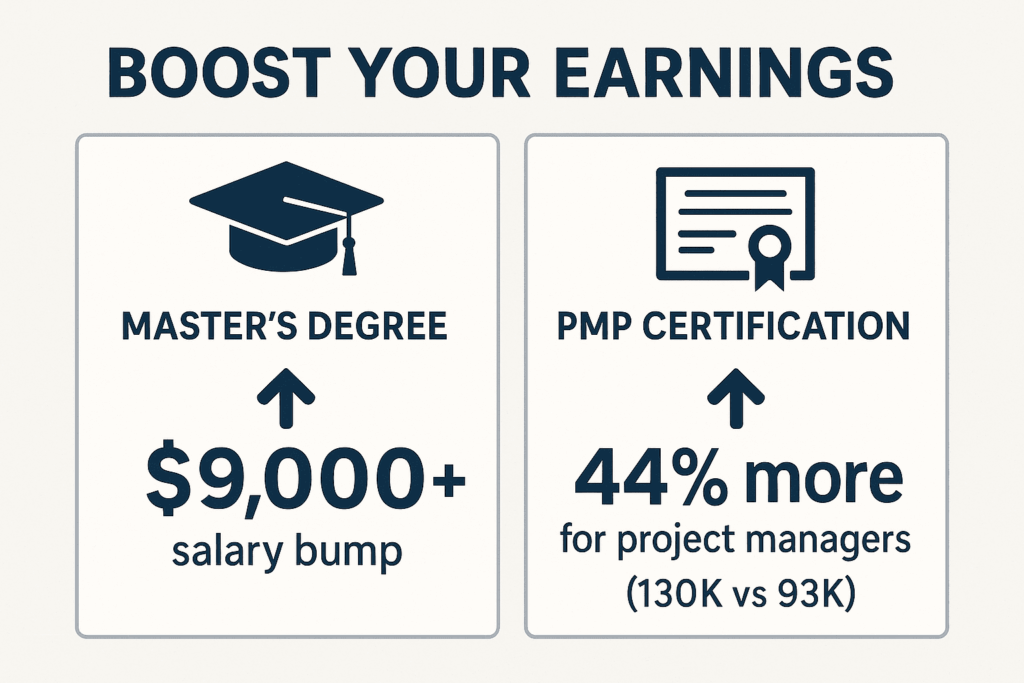
Getting a Master’s degree or a Ph.D. in engineering can lead to higher professional engineer salaries. A Master’s degree can potentially add an extra $9,000 or more to your annual salary compared to a bachelor’s degree alone.
For many engineers, especially those looking to specialize or move into research and development, a Master’s or Ph.D. can significantly increase earning potential.
Additional Certifications
Beyond your PE, other certifications can make you more valuable. For example, if you’re a professional engineer looking to move into project leadership, a Project Management Professional (PMP) certification can be a game-changer.
PMP-certified professionals in the U.S. can earn about 44% more than their non-certified counterparts, with salaries around $130,000 compared to $93,000. This kind of certification shows you’re not just technically skilled but also capable of managing complex projects and teams, which is a huge plus for senior-level professional engineers.
These added qualifications demonstrate a deeper level of knowledge and a commitment to your craft, making you a more attractive candidate for higher-paying roles and increasing demand for engineering skills.
Benefits and Future Trends: What a Professional Engineer Can Expect
It’s not just about the base salary, right? When you’re looking at career paths, you also want to know about the whole package. Professional engineers receive additional compensation beyond their annual salary, and it’s important to consider these as part of the total compensation picture. Plus, what do salary projections for professional engineers look like?
Additional Compensation and Benefits
Beyond the base salary, engineers receive additional compensation in various forms. This can significantly increase your overall earnings and job satisfaction.

We’re talking about things like:
- Bonuses: Many companies offer annual performance bonuses, project completion bonuses, or profit-sharing plans. These can add a substantial amount to your yearly income.
- Health and Wellness: Comprehensive health insurance, dental, vision, and life insurance are standard benefits that save you a lot of money out of pocket.
- Retirement Plans: Most employers offer 401(k) plans, often with a matching contribution, which is essentially free money for your future.
- Paid Time Off: This includes vacation days, sick leave, and paid holidays. It’s vital for work-life balance and overall well-being.
- Professional Development: Many companies invest in their engineers by providing funds for continuing education, professional society memberships, and even tuition reimbursement for advanced degrees. This helps you stay sharp and grow your skills, which can lead to higher salaries down the line.
In 2023, the average non-salary compensation for engineers was estimated to be around $24,081, which shows just how much these benefits can add up.
Demand for Engineering Skills and Future Projections
Good news! The demand for engineering skills remains strong, and future salary trends indicate continued growth for professional engineers. The job outlook for engineers is generally positive.
- The U.S. Bureau of Labor Statistics projects overall employment in architecture and engineering occupations to grow about as fast as the average for all occupations from 2023 to 2033. This translates to roughly 195,000 job openings each year, on average, over the decade.
- Specifically, for civil engineers, a common field for PEs, employment is projected to grow 6% from 2022 to 2032. This is about as fast as the average for all occupations.
- The increasing demand for engineering is driven by the need for advanced technical solutions in areas like renewable energy, artificial intelligence, data centers, and sustainable infrastructure. Companies are always on the lookout for skilled engineers who can solve complex problems and drive innovation.
What does this mean for salary projections for professional engineers?
It suggests that salaries will likely continue to rise, especially for those with specialized skills and, of course, that valuable PE license. The competition for top engineering talent means companies are willing to pay competitive salaries and offer attractive benefits to attract and retain the best.
Job Satisfaction Among Professional Engineers
Beyond the numbers, how do professional engineers feel about their careers? It’s not all about the money, right? Job satisfaction is a huge part of a fulfilling career, and I’ve found that engineers, particularly those with a PE license, generally report high levels of satisfaction.
For instance, ASCE’s 2024 salary survey found that 85.6% of civil engineers were either satisfied or very satisfied with their jobs. That’s a strong endorsement!
What makes a professional engineer happy in their role? It often goes beyond just a high base salary. Here are some key factors behind professional engineer salaries and overall job satisfaction:
- Autonomy: PEs often have significant independence in their work, making key decisions and overseeing projects. This level of trust and responsibility can be very satisfying.
- Growth and Recognition: The opportunity to constantly learn new things, tackle challenging problems, and be recognized for your contributions is a big motivator.
- Work-Life Balance: While engineering can be demanding, many roles offer a reasonable work-life balance, which is increasingly important to professionals.
- Positive Work Environment: A supportive team, good management, and a culture that values collaboration can greatly enhance daily job enjoyment.
- Making an Impact: Many engineers find deep satisfaction in knowing their work directly contributes to building a better, safer, or more efficient world, whether it’s designing a new bridge or developing sustainable energy solutions.
So, while salary for a professional is certainly a huge motivator, the comprehensive benefits and high levels of job satisfaction truly paint the full picture of a rewarding career as a Professional Engineer.
Conclusion
Phew! We’ve covered a lot about PE engineer salaries, haven’t we? I hope this deep dive has given you a clearer picture of what a career as a Professional Engineer can offer, financially and otherwise.
You’ve learned that getting your PE license isn’t just about gaining prestige; it’s a smart financial move that can significantly boost your earnings, often by tens of thousands of dollars.
Remember, the demand for engineering skills is strong and expected to grow, indicating continued positive salary trends. And while the financial rewards are certainly attractive, the high levels of job satisfaction truly make being a PE a fulfilling career choice. If you’re considering taking those PE exams, I’d say the evidence points to a bright future ahead!
FAQs
The average professional engineer salary in the U.S. is typically around $97,000 to $105,000 per year, but this can vary based on many factors.
Professional engineers can expect to earn substantially more than non-licensed engineers; for example, civil PEs earn about $42,000 more annually than their unlicensed counterparts.
The most important factors influencing professional engineer salaries include years of experience, specific engineering discipline, geographic location, and the industry sector you work in.
Yes, professional engineers receive additional compensation like bonuses and comprehensive benefits, and future salary projections indicate continued growth due to the high demand for engineering skills.
Job satisfaction among professional engineers is generally high, driven not just by salary but also by autonomy, opportunities for growth, recognition, and a positive work environment.

![PPI2Pass Discounts [$50 Amazon Gift Card Included]](https://www.charlotteobserver.com/careers-education/wp-content/uploads/sites/8/2025/04/PPI2Pass-Coupons-1024x569.png)


