Getting ready for the LSAT? You’re not alone.
The average LSAT score sits at 152, right in the middle of the pack. With more than 176,000 students registered for the LSAT in the 2024–2025 cycle, the competition is steep, and choosing the right LSAT prep course can make all the difference.
Kaplan and Princeton Review are two of the best-known test prep companies for LSAT students. Both offer higher score guarantees and a wide range of prep packages, but the experience you’ll get from each is very different. I tried both Kaplan LSAT prep and Princeton Review LSAT prep to see how they compare, and in this guide,I’ll break down what each course does well (and where it falls short) so you can find the one that suits your learning style best.
Which LSAT Prep Course Fits Your Learning Style?
- If you want a modern, flexible LSAT prep course with exclusive resources, Kaplan LSAT is the clear choice.
- If you prefer a traditional classroom style with more live instruction, Princeton Review LSAT has you covered.
- If you value nearly 8,000 official LSAT questions and 55+ real PrepTests, Kaplan delivers unmatched practice.
- If you’re aiming for a 170+ score guarantee, both test prep companies offer it.
- If you’re choosing between convenience and structure, Kaplan leans flexible while Princeton Review leans intensive.
Quick Take: Kaplan vs Princeton Review
When I tried both, the difference came down to experience and results. Kaplan feels built for today’s students: a polished dashboard, interactive quizzes, instant feedback, and the exclusive LSAT Channel with 60+ hours of live and on-demand lessons. It’s the kind of course that adapts to you, not the other way around.
Princeton Review offers heavy live instruction hours and a money-back guarantee, which can be motivating if you like classroom-style accountability. The drawback for TPR is that its platform feels dated compared to Kaplan, and the structure can be overwhelming if you’re studying around a job or classes.
Kaplan LSAT: Structured and Reliable Prep

Kaplan has been helping students prep for the LSAT for over 50 years, blending modern tech with proven methods. When I tested the Kaplan LSAT course, I found it easy to get into a study routine. The layout made sense, the video lessons were clear, and the instructors explained strategies without overcomplicating them. Everything tied back to official LSAT questions through LSAC’s LawHub Advantage, so I knew the practice was authentic. With on-demand courses, live online classes, and the LSAT Channel, I always had something useful to dive into.
The analytics showed me where I was slipping and gave me clear areas to focus on, while the practice exams and quizzes felt like the real LSAT. Interactive hints also helped me break down tough questions instead of just memorizing. Overall, Kaplan LSAT prep gave me structure without being rigid, and I could tell the Kaplan LSAT review tools were built to actually raise scores, not just keep students busy.
“All of my instructors were extremely supportive and helpful while I was preparing for the LSAT. Kaplan provides extensive options for preparation where you can always find what works for you.”
Student Feedback.

Best Features
- Nearly 8,000 official LSAT questions with explanations.
- 55+ official practice tests through LSAC’s LawHub.
- The exclusive LSAT Channel
- Performance tracking and personalized recommendations.
- Prep ebooks.
- Private online community for support.
- Higher Score Guarantee

Kaplan LSAT Package Options
- On-Demand Course – Best for self-starters who want maximum flexibility with pre-recorded lessons and full practice access.
- Live Online Course– Best for students who want live instruction and real-time support but still need schedule flexibility.
- In-Person Course – Best for learners who benefit most from face-to-face instruction and a structured classroom setting.
- Tutoring Add-On – Best for students who need personalized 1:1 guidance to target weaknesses.
“Very hands on for the live classes LSAT and premium tutoring options. Highly recommend! Thank you.”
Student Feedback.
Pros
- LSAT Channel Access: 60+ hours of extra sessions gave me quick ways to tackle weak areas.
- Thousands of Real Questions: Kaplan’s official LSAT questions made practice feel exactly like the real exam
- User-Friendly Platform: The layout was smooth and easy to use, so studying didn’t feel clunky.
- Score Gains Backed by Data: Kaplan shows an average 15-point increase for students who put in the work
- Interactive Hints: Step-by-step guidance built into practice questions to prevent getting stuck.
Cons
- Lots of Material at First: The amount of resources can feel like too much, but once I narrowed in on what I needed, it clicked.
Kaplan LSAT Review
Princeton Review LSAT: Extensive Guided Prep
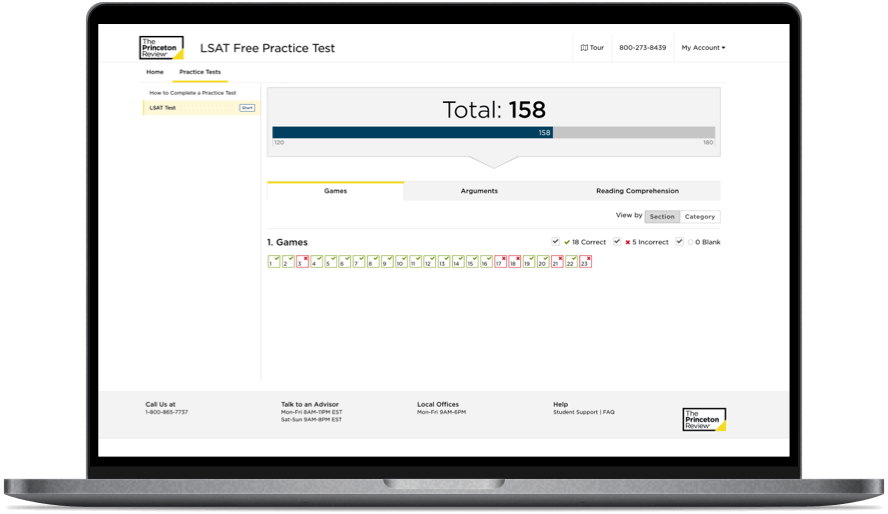
When I tested Princeton Review’s LSAT prep course, what stood out most was the sheer amount of instruction. Between live online classes, recorded video lessons, practice exams, and drills, it’s one of the most time-intensive LSAT prep options out there. I liked that Princeton Review LSAT prep ties directly into official practice tests through LawHub Advantage, giving students access to 90+ PrepTests and thousands of practice questions. For LSAT test takers who want to dive deep, the combination of prep books, online drills, and expert instructors definitely makes the course feel comprehensive.
That said, I found the experience heavier compared to Kaplan LSAT prep. The amount of live instruction and study materials can be helpful, but at times it felt overwhelming. Princeton Review offers solid prep resources and score guarantees, but in my experience, it’s best suited for students who want constant structure and don’t mind a demanding schedule
Best Features
- 365 days of online access
- LSAT Course Manual eBook
- 90+ official LSAT PrepTests™ via LawHub Advantage
- Access to all previously released LSAT questions
- Money Back and Satisfaction Guarantee (terms apply)
Princeton Review LSAT Package Options
- 170+ Immersion Course – Best for students who want the most intensive, hands-on prep with a 170+ score guarantee.
- 170+ Course – Best for students targeting high scores with structured live instruction.
- Fundamentals Course – Best for students who want targeted prep with a moderate amount of live class time.
- Self-Paced Course– Best for independent learners who prefer full flexibility with video lessons and practice materials.
- Tutoring – Best for students who want personalized 1:1 instruction tailored to their needs.
Also, check out my comparison of Blueprint and Princeton Review LSAT courses.
“Very nice tutor, personalized focus on specific topics, easy to access materials. A few tech problems here and there but nothing drastic”
Student Feedback.
Pros
- Official LSAT Content: Every course includes 90+ real PrepTests through LawHub Advantage.
- Clear Explanations: Practice drills and lessons felt updated and useful, not just filler.
- Money-Back Guarantee: Having a score guarantee made the commitment less stressful.
- Instructor Support: Strong access to teachers during and outside of live classes for extra help.
Cons
- Time-Intensive: The Immersion course demands a lot of hours each week, which may not fit busy schedules.
- Interface and Pacing Issues: The platform feels clunky compared to other providers, and I felt instructors moved too quickly.
“the teacher was great, but i think the class times are a little long because its super draining to be at school all day and then another 3 hr course right after.”
Student Feedback
Princeton Review LSAT
Kaplan vs Princeton Review Course Feature Comparison
| Feature |  | |
|---|---|---|
| Price | $899–$3,999 | $167/hr–$3,999 |
| Access Length | 4–12 Months | 12 Months |
| Live vs On-Demand | On-Demand, Live Online, In-Person, Tutoring | Heavy Live Instruction, Immersion |
| Practice Questions & Exams | 8,000 Official LSAT Questions + 55+ PrepTests | 90+ Official PrepTests via LawHub |
| Video Content | Polished, Flexible Lessons with Live and On-Demand Options | Extensive Library of Recorded Lessons for Deeper Study |
| Technology |  Modern, Smooth, Mobile-Friendly |  Less Polished, More Traditional |
| Guarantees | Higher Score Guarantee | 170+ Score Guarantee (Select Packages) |
| Study Notes & Prep Books | eBooks Included (Optional Physical Books) | 1,800+ Pages of Study Materials |
| Support | Quick Chat/Email + Peer Community | Strong Instructor Access Outside Class |
| Get Started | Start Now | Start Now |
Why Choose Kaplan or Princeton Review?
Both Kaplan LSAT and Princeton Review LSAT prep courses bring serious resources to the table, but they shine in different ways. Kaplan stands out for flexibility and polished tools, while Princeton Review is built around more live instruction and structure. Below, I’ll break down the main features side by side so you can see which fits your learning style. I’ll go into more detail in the next sections so you can make the right call for your LSAT prep.
Content & Structure: Who Teaches You Best?
- Kaplan gives you on-demand, live online, and in-person options with nearly 8,000 official LSAT questions and custom quizzes. The LSAT Channel adds extra targeted sessions when you need them.
- Princeton Review leans heavily on live instruction, with the 170+ Immersion course offering 130+ hours plus recorded lessons and practice exams. Great for accountability, but can feel intense.
The Winner: Kaplan for balanced structure and flexibility
Tech & Videos: Which Platform Feels Better?
- Kaplan feels modern and smooth on both desktop and mobile, with clear video lessons and play-speed controls. Instructors explain LSAT sections in a way that’s easy to follow.
- The Princeton Review covers every LSAT section with plenty of hours of video. It works best if you like longer live lectures, though the platform is more traditional.
The Winner: Kaplan for smoother video delivery and better usability
Support & Access: Who’s Got Your Back?
- Kaplan offers quick support by chat or email, plus access to a private LSAT community. You also get one full year of access to course materials.
- Princeton Review provides strong instructor access in live classes and includes eBooks, drills, and tutoring options for personalized guidance.
The Winner: Princeton Review for stronger direct instructor support
Value & Guarantees: Which Feels Safer?
- Kaplan comes with a Higher Score Guarantee, flexible financing, and one year of access. Tutoring packages are available if you want more support.
- Princeton Review offers a 170+ score guarantee in select courses, with extensive resources and one year of access included.
The Winner: Kaplan for broader guarantees and more flexibility
My Final Verdict
Both Kaplan and Princeton Review bring strong LSAT prep options, but one stands out. Kaplan comes out on top for most students thanks to its polished platform, flexible learning styles, nearly 8,000 official LSAT practice questions, and a higher score guarantee backed by tutoring support.
Princeton Review LSAT prep is still a solid option, especially for students who want more live instruction and a highly structured approach. But overall, Kaplan LSAT offers a better balance of resources, technology, and flexibility for today’s test takers.
Looking for a structured LSAT prep course with reliable tools? Click below to learn more about Kaplan. Prefer heavier live instruction with added guidance? Go with Princeton Review.
FAQs
Yes. Kaplan LSAT offers one-on-one tutoring packages that can be added to any course.
Yes. Kaplan LSAT prep includes nearly 8,000 official LSAT practice questions and 55+ real PrepTests through LSAC’s LawHub Advantage.
Yes. Princeton Review LSAT courses include a 170+ score guarantee in select packages, but Kaplan also offers a Higher Score Guarantee along with tutoring options for added support..
Yes. Princeton Review LSAT prep offers live online classes with expert instructors
Yes. Kaplan provides digital prep eBooks with every course, and students can add physical prep books if they prefer studying offline.