Getting ready for the CFP® exam and starting to feel overwhelmed? You’re not alone, and the good news is, it doesn’t have to be that way.
Research shows that exam success depends less on when or how long you study, and more on how effectively you study. Using active strategies and cutting distractions leads to stronger results.
The Certified Financial Planner (CFP®) exam covers a wide range of subjects. That’s a lot to juggle, which is why a smart approach matters more than sheer study hours. By breaking your prep into manageable pieces, practicing with real exam-style questions, and reviewing where you go wrong, you’ll strengthen your technical knowledge and test-day stamina at the same time.
In this guide, I’ll break down proven strategies, practical tips, and study tools that will help you prepare for the CFP® exam step by step.
Key Takeaways
- Know the CFP® Exam Basics: Understand the topics tested and what the CFP® Board expects.
- Find Your Learning Style: Use a prep format that matches how you learn best.
- Start Early for Less Stress: Give yourself months, not weeks, to prepare.
- Switch It Up: Rotate between topics to keep prep fresh and engaging.
- Use Exam Prep Resources: Rely on review courses and online programs that provide structure.
Understanding the CFP® Exam Basics
When I first opened up the CFP® exam review materials, I realized how wide the scope really was. The CFP® Board doesn’t just test definitions; it tests whether you can apply the entire financial planning process like a real financial planner. You’ll see questions on insurance planning, investments, taxes, retirement, and estate planning, often tied together in client-style case studies.
Before you dive into prep, check the examination requirements from the CFP® Board. You’ll need approved coursework from an accredited college or online program, plus the required professional experience or an apprenticeship experience under a certified financial planner.
Finding Your Learning Style
Every CFP® candidate studies differently, so finding your fit makes exam prep smoother:
- Visual learners → charts, outlines, and review materials
- Hands-on learners → practice questions and multiple practice exams
- Structure seekers → a guided review course or online program
Figure out what clicks early in your CFP® exam review and stick with it. I found that the Boston Institute of Finance CFP® course checked all the boxes for my learning style.
Start Early and Prep Ahead
When I reviewed CFP® prep programs, I noticed CFP® candidates who started months ahead felt calmer on exam day. Spreading out prep gave them time for multiple practice exams and steady exam review without cramming.
💡 Pro Tip: Begin with a baseline test to determine how much time you’ll need and where to focus.
Switch It Up with a Study Schedule
Spending too long on one topic leads to burnout. The candidates I’ve reviewed made better progress by rotating subjects, which also mirrors how the CFP® exam jumps between areas.
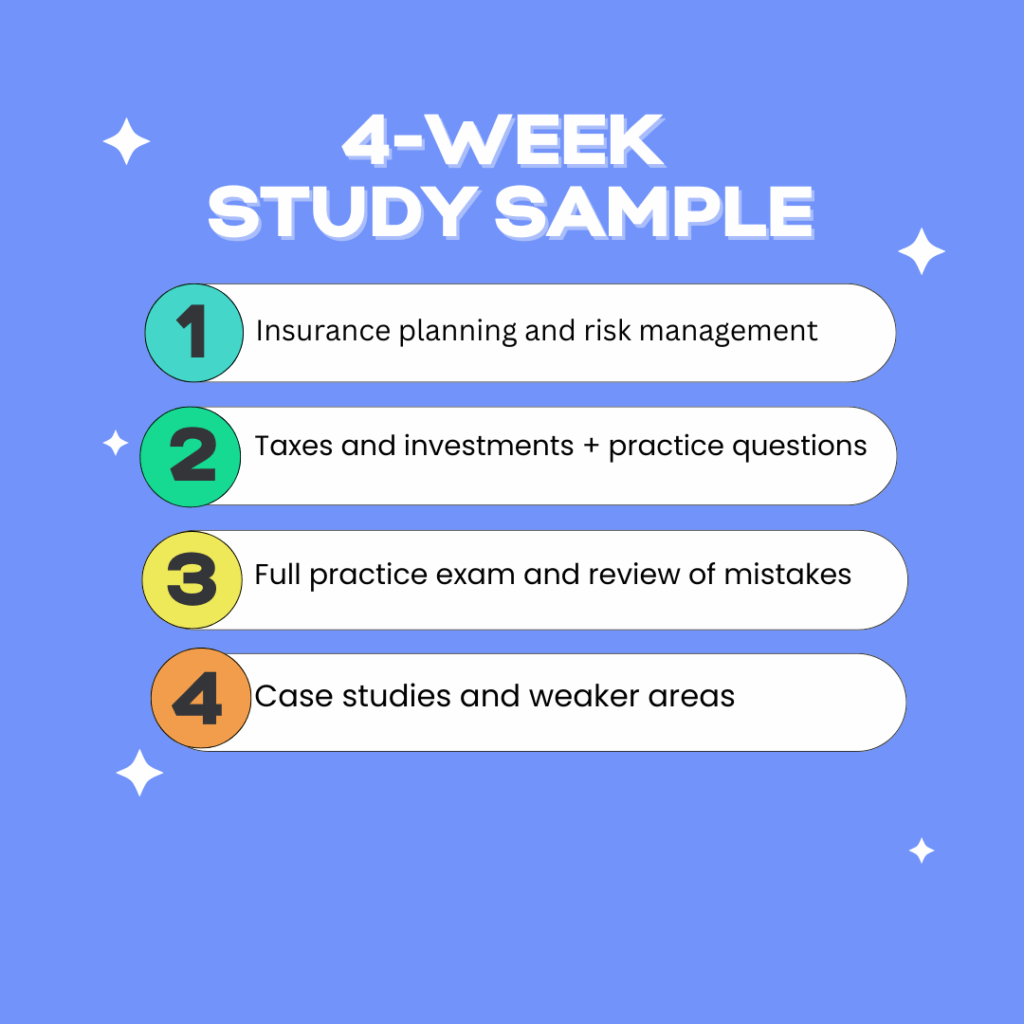
Here’s a simple weekly flow:
- Week 1: Insurance planning and risk management
- Week 2: Taxes and investments with lots of practice questions
- Week 3: Full practice exam and review of mistakes
- Week 4: Case studies and weaker areas
This rotation keeps prep fresh, builds stamina, and avoids overload.
Stay on Track with an Exam Prep Course
From reviewing different CFP® exam prep options, I noticed candidates who relied only on self-study often drifted off schedule. Those who used a review course or online program stayed more consistent. The mix of review materials, practice questions, and structured support made exam prep feel less overwhelming.
Give Your Brain Time to Recharge
Too many CFP® candidates try to grind through as many practice questions as possible in one sitting, but that usually backfires.
I’ve seen students burn out fast when they don’t pace themselves. Short breaks during prep actually improve retention. Even stepping away from review materials for ten minutes made it easier to come back with focus and confidence.
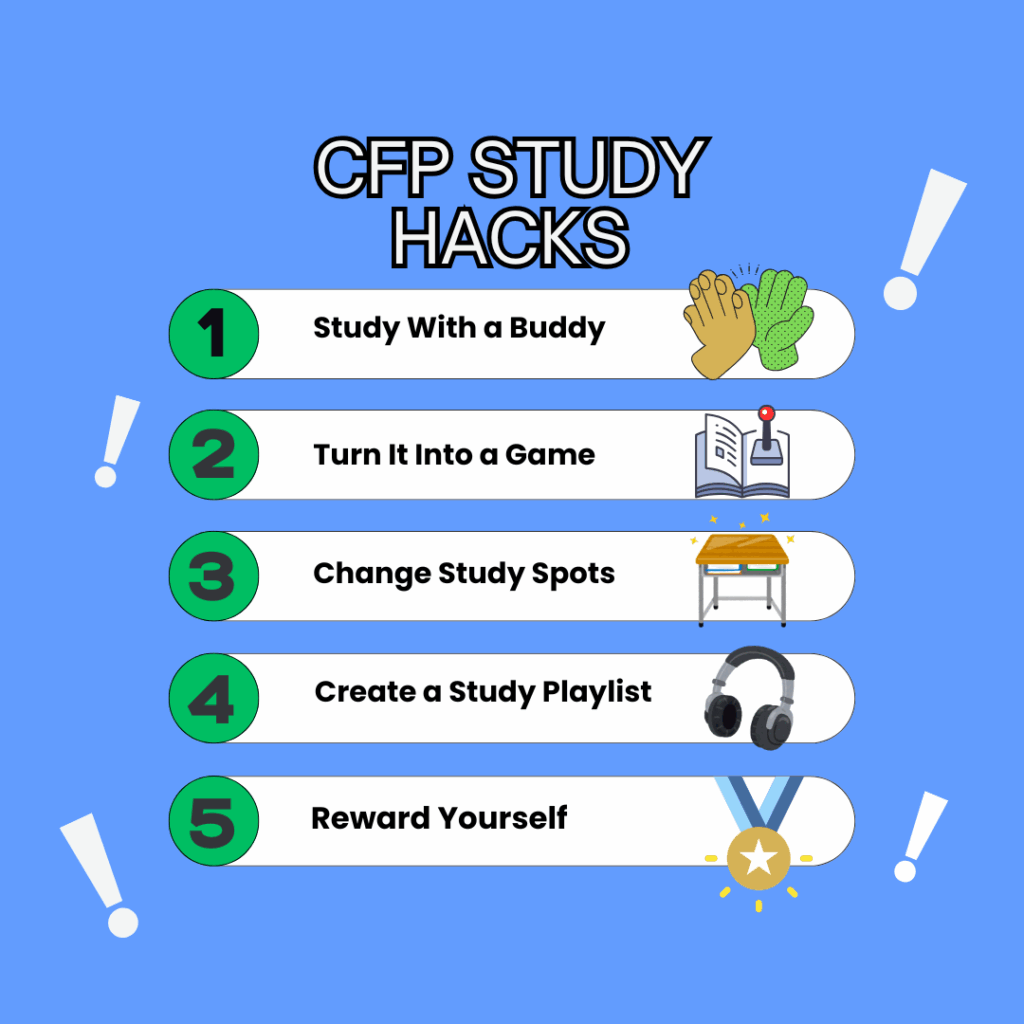
5 Fun Study Hacks
- Study With a Buddy: Team up with another CFP® candidate or even a friend. Quizzing each other keeps you engaged.
- Turn It Into a Game: Try flashcard battles or “CFP® Jeopardy” with topics like insurance planning.
- Change Study Spots: Switch between your desk, a coffee shop, or the library for a mental reset.
- Reward Yourself: After a practice exam or tough case study, take a break or treat yourself.
- Create a Playlist: Build a mix for study sessions, calm tracks for reading, upbeat ones.
The Week Before Exam Day
The final week before the CFP® exam isn’t the time to cram new material. From what I’ve seen, candidates who stay calm, focus on review, and handle logistics ahead of time walk into exam day with more confidence. Small details like knowing your schedule and setting up what you need can make a big difference.
- Review familiar topics instead of learning something new
- Run through a short, timed section to keep pacing sharp
- Lay out your ID, calculator, snacks, and anything else the night before
- Confirm test-day details like location and check-in requirements
My Final Verdict
After reviewing multiple CFP® exam prep resources, I’ve seen what really helps candidates succeed. The exam is tough, but not impossible if you build a clear study plan, use plenty of practice questions, and stay consistent with your preparation.
Completing the CFP® program and passing the exam can open new doors as a financial planner. The key isn’t just studying for hours but learning how to apply the financial planning process with confidence.
Study smart, stay consistent, and take the CFP® exam ready to succeed. Get started with a top course like Boston Institute of Finance CFP® and be on your way to becoming a CFP®.
FAQs
Most candidates spend three to six months preparing, depending on background and schedule.
They’re essential. Multiple practice exams build speed, stamina, and confidence.
Yes. A bachelor’s degree from an accredited college is part of the education requirement, but it can be completed within five years of passing.
Many candidates retake the exam. Learn from your results, adjust your study plan, and focus on weak areas.
Yes. CFP® professionals must complete ongoing continuing education to maintain certification.