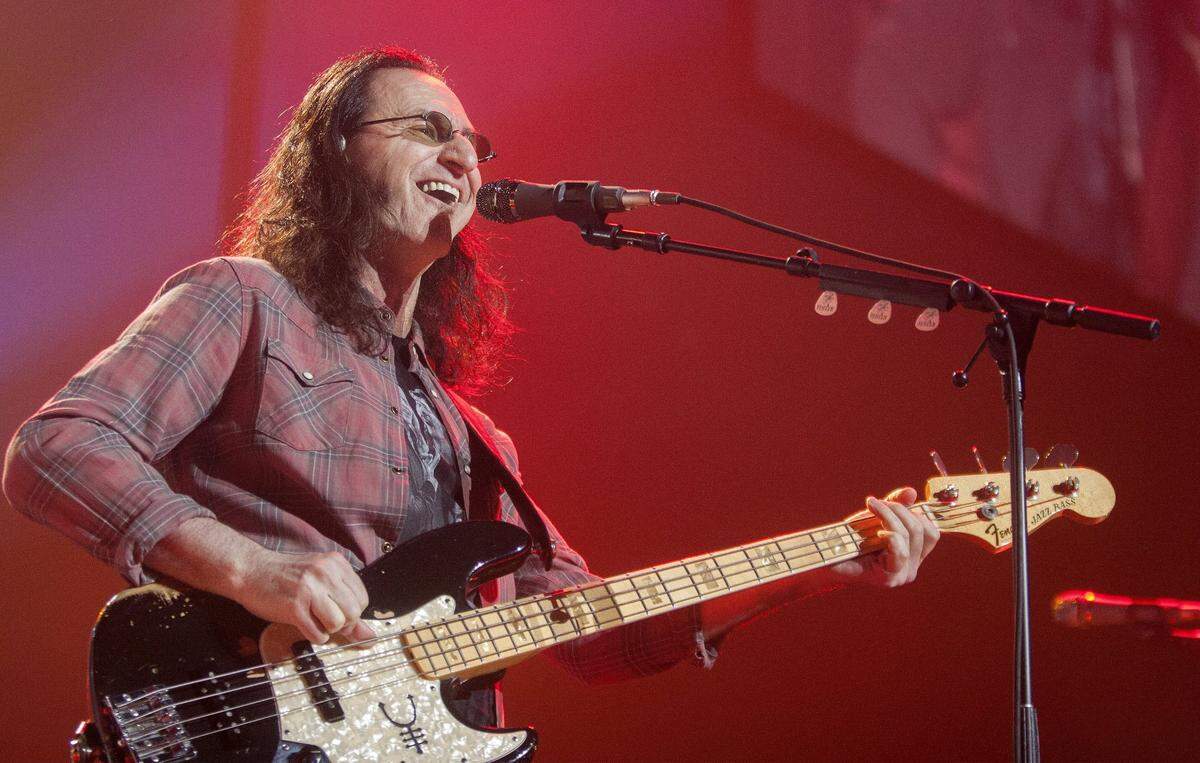
Observer Q&A: Rush rocker Geddy Lee to speak in Charlotte on Holocaust Remembrance Day
Geddy Lee, singer and bassist from the rock group Rush, will speak in Charlotte on Monday evening at an International Holocaust Remembrance Day event.
His late parents, Mary and Morris Weinrib, were Holocaust survivors from Poland who emigrated to Canada, where Lee helped form the three-man progressive rock band that was inducted into the Rock & Roll Hall of Fame in 2013. He published his autobiography, My Effin’ Life, in 2023.
The event is hosted by The Stan Greenspon Holocaust and Social Justice Education Center and takes place at 7 p.m. in the Sarah Belk Gambrell Center for the Arts and Civic Engagement at Queens University. Ticket information is at www.stangreensponcenter.org/
Here is a lightly-edited Q&A with Lee from Monday, Jan. 20:
You’ll be speaking at Queens University on International Holocaust Remembrance Day. Could you give us a preview of what you plan to address?
I’ve done about 25 of these book events since my memoir came out, and because of the fact that I always use a different moderator, you never really know what direction in the conversation will go. But because of the importance of the day of this event, I’m sure we’ll talk a lot about my parents’ experiences during the war and growing up in a household of Holocaust survivors. And from there, I’m sure it will leak out into how I came from that kind of household into a band like the one I spent over 40 years performing in. So I suspect we’ll cover quite a range of topics.
In your book, you provided a lot of detail about your parents and how they actually met in a slave labor camp during World War II. Could you tell us about your parents and who they were?
Well, my parents were Polish Jewish citizens. My mother came from a town called Wierzbnik, which is right next to the town of Starachowice, which was the big city, and Wierzbnik was the shtetl — the Jewish neighborhood that was next to the big city. And my dad came from a small town less than an hour away from that. When war broke out and the Nazis marched into Poland and started rounding up the Jews and ghettoizing the Jews, eventually that led to liquidation day. And on that day, they were assigned to different camps, which were work camps. …
Starachowice was a factory town. There was big munitions factory there and a big lumber yard. So there was a lot of importance in that area to feed the war machine. They used the labor of the local Jewish citizens, the ones that they didn’t eliminate immediately, of course, and after my father’s town was largely liquidated, him and I think about 90 other able-bodied men were shipped into the same camp or group of camps. It was actually three camps.
And along the way he had met my mother, and they started a, you know, bit of a flirtation, I guess you could say. But anyway, they were young. My mom was, I think, around 12 or 13 when she was incarcerated in the labor camp. And so they fortunately, through various means and ways and adventures, they did survive the Holocaust.
And my father discovered that my mom was still alive … He made his way to the camp that she was in. He was liberated, I think, in Dachau. …They used to have daily postings of who had survived and who hadn’t and he saw my mother’s name. So he traveled by foot and train, and was reunited with my mom. They eventually got married in that displaced persons camp that my mother was living in, in Bergen-Belsen in Germany.
You wrote in your book that hearing your mother’s stories about the Holocaust when you were young made you angry. How did hearing those stories as a young person shape you as a person and as a musician?
So after the war, after they were married, my parents emigrated to Canada because my father had a sister who had come to Canada before the war, and she had missed the ravages of war. They started a new life in Canada, and they were immigrants, and they sort of dreamt of a simple, suburban, you know, stress-free, violent-free life, and they did their best to do that.
And my dad never spoke about the war, never spoke about his experiences. But my mother was all too willing to talk about her experiences, and she would tell us these stories, I think, without realizing it was scaring the bejesus out of us. So it became kind of normal. So you had these nightmares or daydreams filled with anger for what they had gone through.
So how did that shape me? It’s really hard to say. I was obviously very sensitive to antisemitism, and I experienced quite a lot of it growing up. You become wary, I think, as a person — like any minority that feels prejudice against them or some bias against them — you grow up wary and very aware of your surroundings and your situation, and a bit mistrustful, I would say that comes to me naturally.
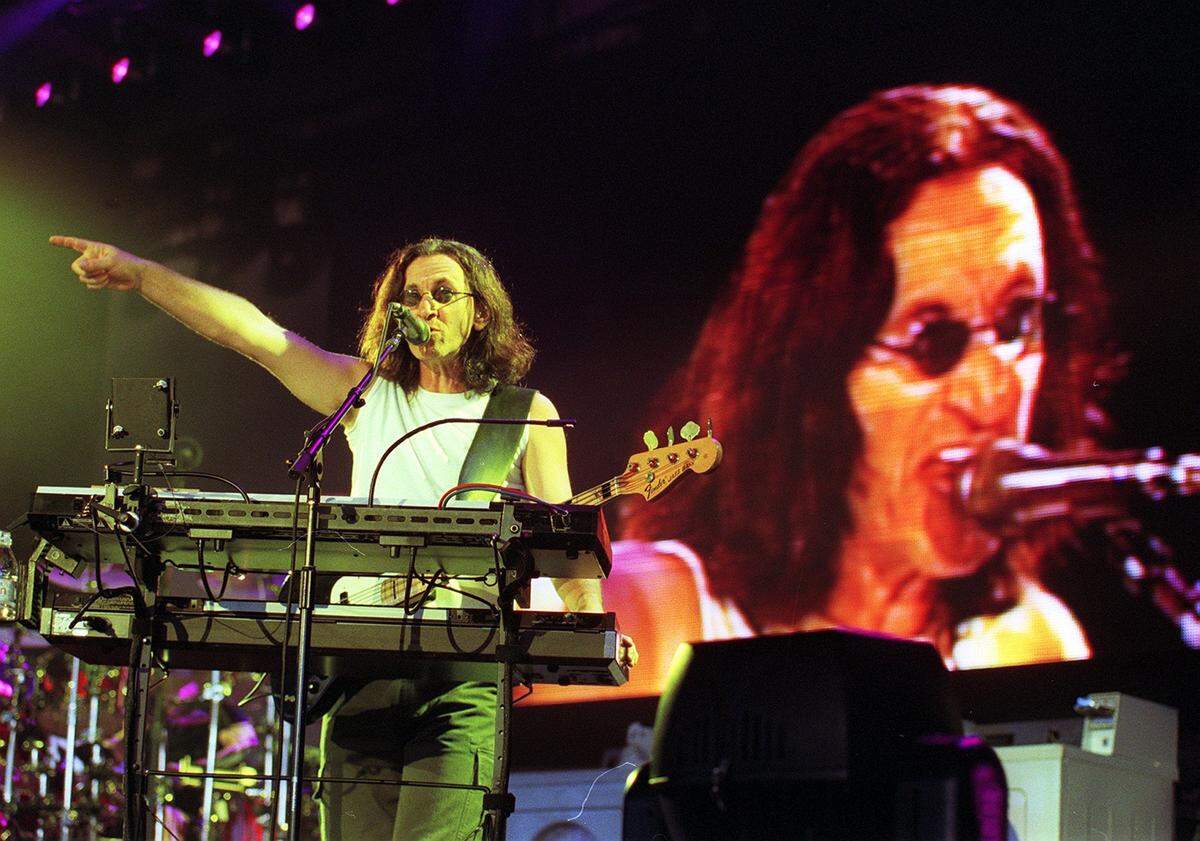
As for a musician, I don’t know how much it affected me. You’d have to say that being affected as a human being obviously affects you at whatever your given job is, right? It’s part of the fabric of who you are. But I spent a lot of my early teens, mid-teens, escaping from those stories and the horror of my household after my father prematurely passed away at the age of 45. I wanted to leave all that behind me. So I think being a musician, in a way, was a reaction to a household full of tales like that, and also sadness from the loss of my dad. Being in a rock and roll band was kind of like running away and joining the circus. You didn’t want to think about anything else but the circus.
You wrote in your book, “We’re living in an era that seems to have forgotten what can and will happen when fascism rears its head. I think we all need reminding of it in the face of those who deny the past or never knew about it in the first place.” What have you seen in recent years that makes you think the public needs to learn more about this and be better educated?
Well, I think we’re living in a terrible moment for the Jewish people because of what transpired in the Middle East. And that has set ablaze a new wave of antisemitism around the world and in particularly in my home country of Canada, where I believe I read an article saying that antisemitic incidents have grown 670% in the last year. That’s quite a lot. So I think, unfortunately, my people have — this is a weight that they’ve dragged along with them over centuries and centuries, and we are, just always come up with a period where history begins to feel like it’s repeating itself.
So I think the best way to combat that, from my perspective, is to remind people what happens when fascism gets out of control. And whether it’s my particular minority that suffers at the hands of that or some other minority, you know, fascists love to have a scapegoat. I don’t think any minority is immune from that kind of treatment if the political circumstances suit the people in power. So that’s why I said that. I feel, especially since my mom is no longer with us, I feel I owe it to her and to all those that died in the Holocaust to keep the flame burning as an object lesson not just for Jewish people, because Jewish people are aware of it.
There are the things I read and I’m sure everybody reads about younger generations that don’t even believe it occurred. That think it’s just another bit of fake news. So I feel obligated to remind them that, no, those Holocaust survivors are dying out. There are not many left. Part of my inheritance is their story, and I feel obligated to pass that on, to keep that fresh in the minds of other people.
As far as the war between Israel and Hamas, there is a ceasefire right now. Do you have any hope for how that war can come to an end, or how that could be resolved?
If I did, I would not have this job, I’d have some other job. Look, it’s been a horrible year and a quarter since the atrocities of October 7th, and I feel for those people that were killed at that moment, and I feel for the propaganda war that has been begun, which was, I think, a very important part of the strategy of those terrorists was to spread antisemitism. And I feel for those that have been killed on both sides, of course, because nobody wants a war. And to see the first three hostages released yesterday was very emotional, and I just hope they get the rest of them out, and they get those babies back. The idea of two little babies being in a terror tunnel for over a year is kind of heartbreaking. But there’s heartbreak, I’m sure, for families in Palestine as well, or in Gaza, shall I say. So I don’t know. It’s terrible, and I want it over with, as do most normal people, and I hope that they can reach some sort of agreement where the war stops.
Turning to music, do you miss performing on tour?
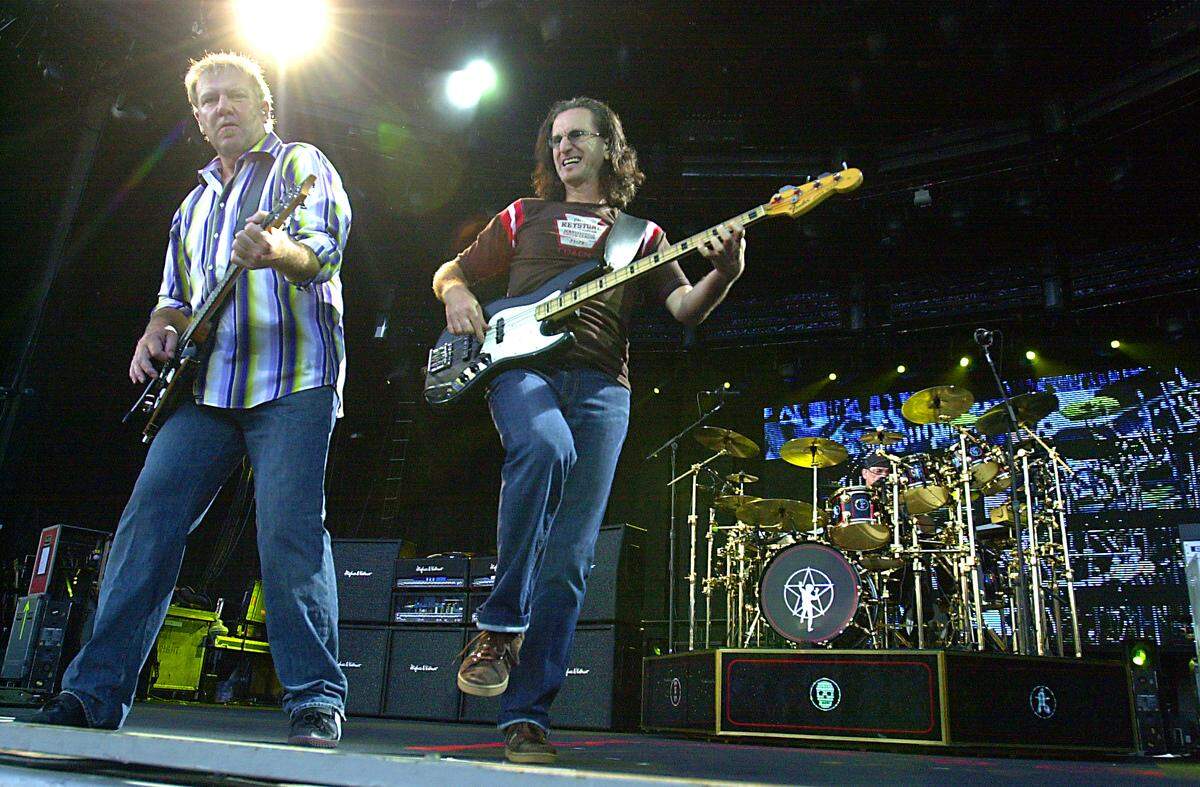
I miss playing with my two partners. I don’t miss the lifestyle because I travel all the time anyway, and it’s a bit more fun to travel when you’re not on a tour, but I missed those three hours on stage with Alex and Neil when things were just clicking and you were in the middle of a sort of sublime maelstrom of sound. And that experience was unique and very special, and that’s what I really miss.
Are you writing anything new or recording anything new?
I’ve spent the last, I guess, eight months since my book tour ended, and all the other projects, I have a lot of projects going on, aside from music that are all based on, of course, my history as a musician, etc. And I’ve really fallen in love with writing.
And I did manage to write another book in the interim, since my memoir, which is about some of my favorite memories from my baseball collection, and that book is called 72 Stories that will come out in America during spring training, I hope, which should be fun. But I have sort of dedicated myself, after three very busy years, to staying home, getting my body in shape, getting my fingers in shape, going down in the studio and playing a lot, and doing a bit of free-form writing. But I don’t really have any master plan for that.
You mentioned travel. Have you gone anywhere interesting lately for fun or for business?
Oh, yeah. I mean, I’m always on the go. My wife and I are walkers, so we look for different places we can go walking. In the past year, oh my God. We’ve recently finished two weeks walking in the Scottish Highlands, which was fantastic. And it was at a very quiet time, so there were very few people about. And that was even more spectacular than I had hoped it would be.
In the last couple of years, we’ve gone adventuring to the Faroe Islands. It was really a fantastic trip and a really interesting and beautiful landscape. You know, I’m a bit of a fanatical birder and amateur bird photographer. So I’ve always got some new place to go where I might find a species I haven’t photographed before. Spent about four weeks last winter in Australia, which is one of the great countries in the world for birding. So my wife and I, we get around.
Anything else you’d want to add?
I just feel very appreciative that I was asked to come to speak in Charlotte, especially on that day, which is an important day to me personally and my family. This makes the Charlotte gig a little special for me, so I’m appreciative of the opportunity to reminisce about my family.