Does Charlotte have an LGBTQ neighborhood? Yes. Maybe? It’s complicated.
What is Charlotte’s LGBTQ neighborhood? It’s a simple question that’s likely to spark debate and result in one of three answers, with a caveat:
Dilworth, Plaza Midwood, or NoDa. But actually, most would say, Charlotte doesn’t have an LGBTQ neighborhood.
“Gay and heterosexual people here, especially in Charlotte, blend very well now,” said Jimmy Cobb, a longtime resident of Charlotte, in an interview at the White Rabbit novelty shop. “Would it be nice to have a predominantly gay section? Yeah. But will we ever have it? No. And it’ll be because of that.”
In the 1970s, Dilworth was that predominantly gay section of the city, Cobb said. But over time, the community spread out.
And Charlotte, unlike Chicago or San Francisco, didn’t develop a historic LGBTQ neighborhood with rows of gay bars on one street, pride flags draped from the facade of dozens of businesses, or rainbows painted on crosswalks.
In fact, Charlotte doesn’t even have an LGBTQ center anymore after one closed in 2014. It’s a city that’s lacking cohesion and unity in its LGBTQ community, said Cobb, who has been active in Charlotte’s LGBTQ community, and others interviewed for this story.
Like its gay bars, Charlotte’s LGBTQ community is dotted throughout the Queen City. But that’s not to say the community isn’t active.
Charlotte Pride is the second-largest pride event in the southeast aside from Atlanta. There are nonprofits like Time Out Youth and Charlotte Trans Health that provide services through the city. People pack gay bars on the weekends, and businesses like White Rabbit in Plaza Midwood display rainbows and pride flags with, well, pride in and out of the store.
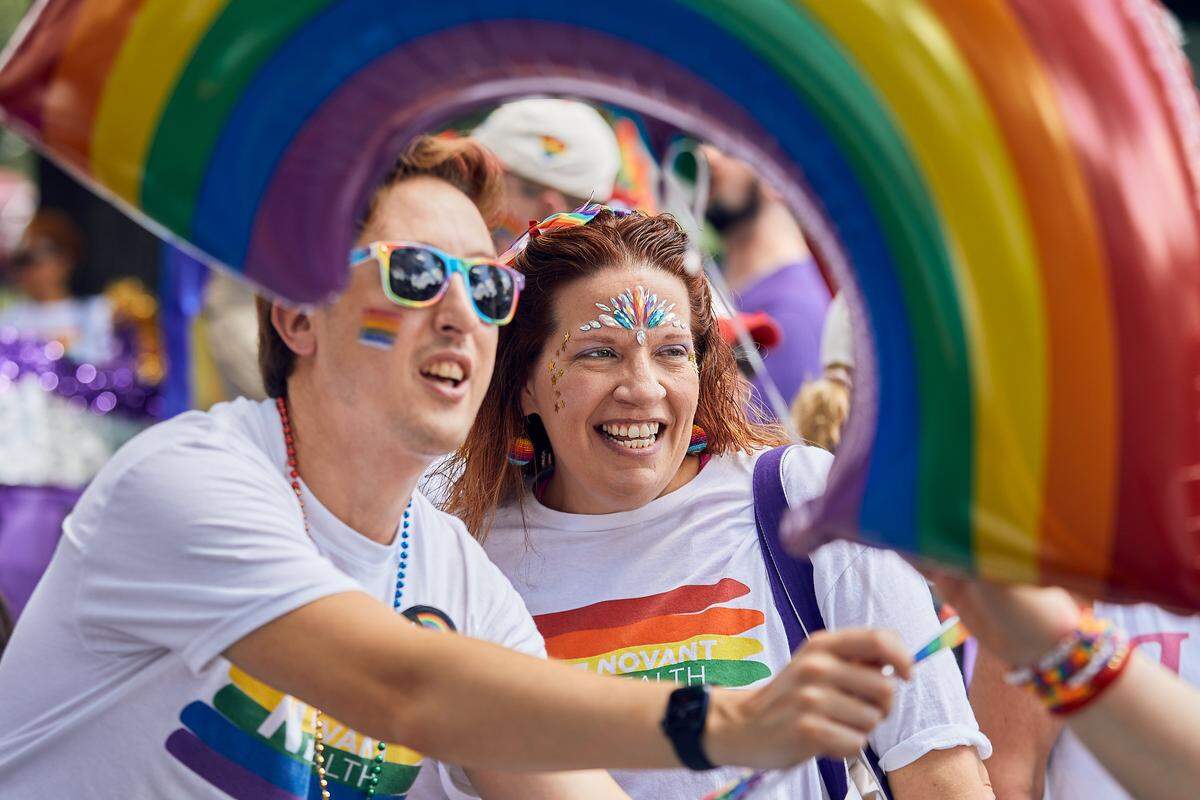
And there is some political power within the community as well, with the LGBTQ+ Democrats of Mecklenburg County lobbying for LGBTQ-friendly policies and making key endorsements during elections.
But the city and its LGBTQ community overall lack a connecting thread, Cobb and others said. Something that ties the community together.
Could that be a singular LGBTQ neighborhood? Some think yes, while others aren’t as convinced.
But it begs more questions, like: does Charlotte even need an LGBTQ neighborhood? Where would it go? Would it even be possible at this point? And why doesn’t one exist already?
The answers to those questions varied. But one person, Ralph Martin, said the closest Charlotte came to having a gay neighborhood was in the 1980s and 90s.
Gayer in the 80s and 90s
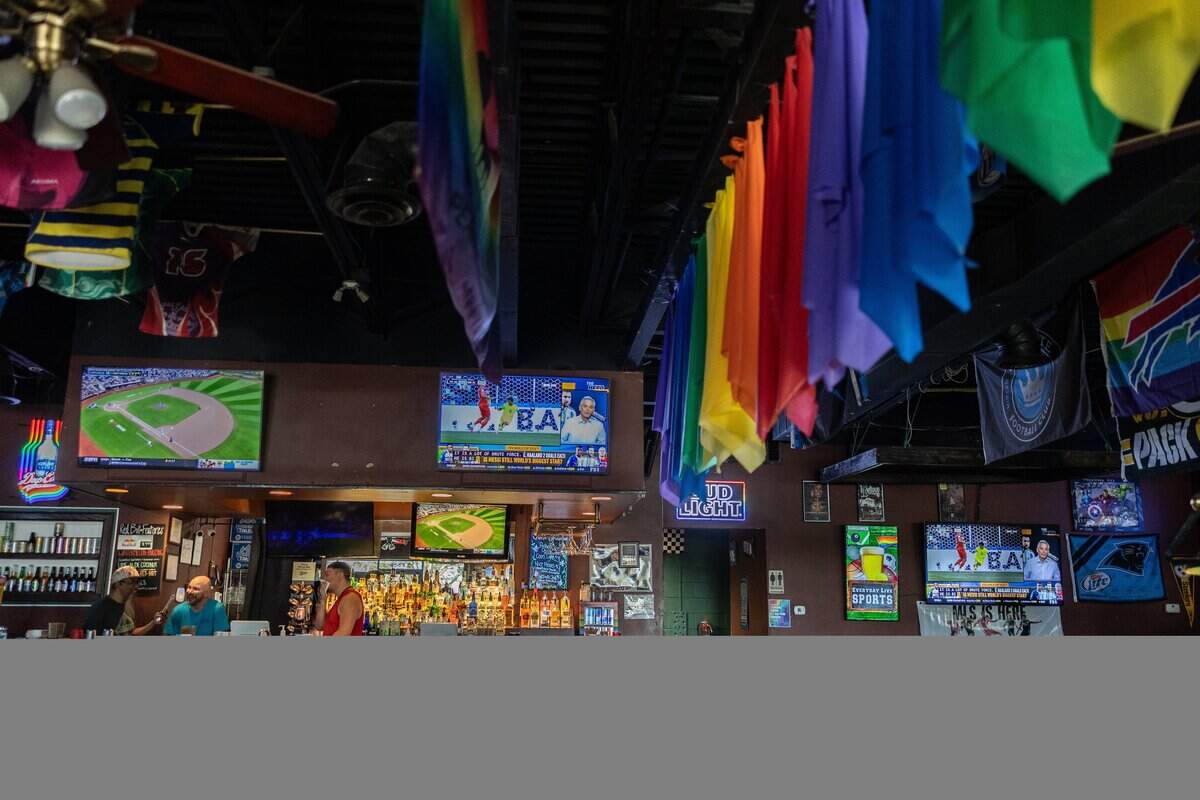
Martin, who is the manager of Sidelines Sports Bar and Billiards, a gay sports bar in Lower South End, has lived in the Charlotte area for most of his life. Asked which neighborhood is Charlotte’s LGBTQ neighborhood, Martin said Plaza Midwood.
But that’s because Martin lived it, he said. He can remember an apartment complex on The Plaza that was between two gay bars almost entirely occupied by LGBTQ tenants.
There were gay bookshops, bathhouses, and adult theaters, he said. Gay people found each other, by either word of mouth or the back pages of QNotes Carolinas, a local LGBTQ newspaper, and congregated in those areas. And for a long time, Plaza Midwood was at the center of those areas, Martin said.
“It was gayer in the 80s and 90s,” Martin said. “We had gayer things back then.”
But conservative politicians dismantled those things over time, Martin said. LGBTQ spaces and businesses became targeted by anti-LGBTQ policies, and many closed over time.
Due to this, Charlotte never really recovered and Plaza Midwood and other areas were never able to develop LGBTQ-centric districts.
“It slowly regressed back into where everybody went in the closet,” Martin said.
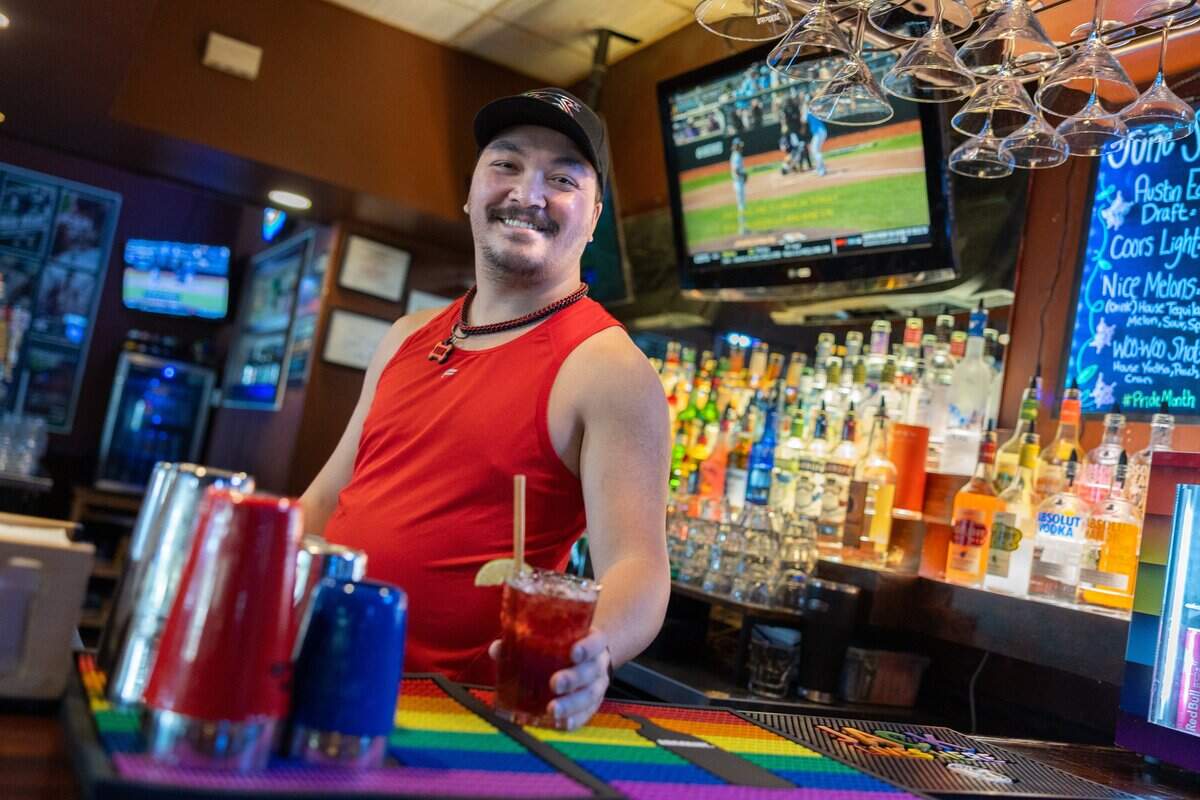
While he would be happy to have an LGBTQ neighborhood in Charlotte, Martin said he doesn’t think it’s possible at this time.
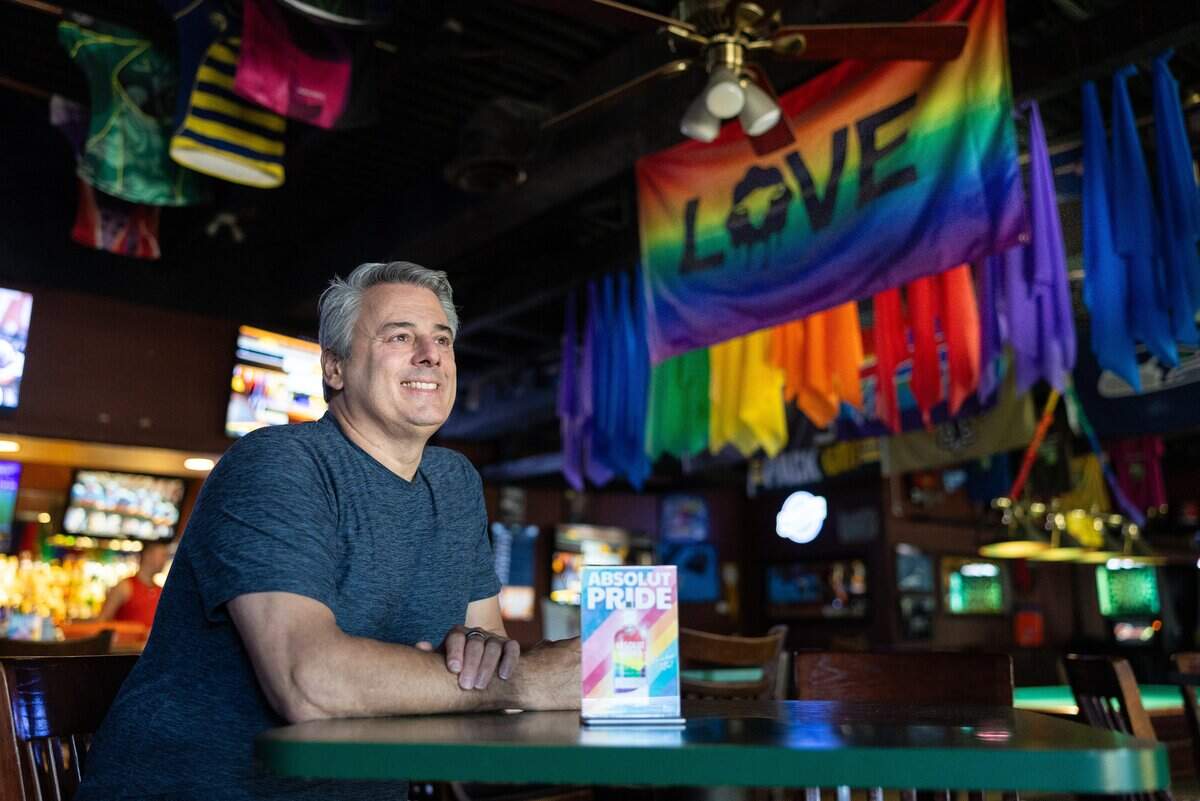
But that isn’t for a lack of trying, said Kevin Cooper, owner of Sidelines. He and other gay bar owners often talk about trying to move gay bars closer to each other in Charlotte, but so far, that hasn’t happened.
Difficult to rent bar space
In the past, homophobia made it difficult for gay bars and businesses to congregate in one area, Cooper said. And many were forced to open in small, rundown buildings.
Cooper, whose friendship with Martin stretches back to the 1990s when he moved from Kentucky to the Queen City, said he struggled to find places to rent to open his bar.
Cooper opened Sidelines in 2007 and then Argon, just down the sidewalk, in 2017. He previously ran Masquerade, which opened in 1997 and closed about four years ago, in Plaza Midwood.
“There were a lot of places that wouldn’t even talk to us, because we said it was going to be a gay bar,” Cooper said. “Even places that … nothing was in there for a while they wouldn’t rent to us if we said it was going to be a gay bar.”
It’s gotten better over time, Cooper said. And many of the gay bar owners have good relationships with each other. They coordinate to make sure their events, like leather nights, don’t overlap with each other. But it would be easier if they could all be next to each other, he said.
“The bars could do things together, and people could flow from bar to bar,” he said. “It wouldn’t seem like you have to pick where you want to go tonight, because the bars are so spread out.”
For now, they’re all settled into their respective spots, Cooper said.
Finding each other
Asked which neighborhood he thinks is Charlotte’s queerest, Cooper said he would have said NoDa a few years ago. When he lived there it was filled with artists and LGBTQ people, still somewhat affordable, and very gay-friendly.
“I lived right across the street from Chasers,” Cooper said. He could walk to the NoDa gay bar, he said. “I lived there for 11 years when I first moved here.”
But now the community is more spread out and NoDa has become one of several places where gay people live, he said.
People and businesses are more accepting now and social media spreads information about gay and LGBT-friendly hotspots fast, he said. But in the 1990s and early 2000s, gay people would meet and live in places they knew they would find other LGBTQ people.
He and others knew, for example, that 300 East, a restaurant in Dilworth, was a safe place to go on a date. A Caribou Coffee on East Boulevard, before it closed, would have gay nights on Wednesdays. And people would start their own clubs or activities like run clubs or rugby teams, Cooper said.
Those spots became popular because LGBTQ people knew they would be safe from mistreatment or dirty looks. When Cooper first started bartending, many of his customers told him stories about being queer in Charlotte in the 1970s, going to gay bars like Oleens on South Boulevard.
“It was a tiny little bar, no windows, and they let the trees kind of grow up around the parking lot, so it was as dark as possible,” Cooper said.
People would pull in and back up their car so no one could see their license plate. And they would wait until no one was nearby before running into the bar. They didn’t want anyone seeing them go to a gay bar.
When Cooper opened his first gay bar, Masquerade, in the 90s, people wouldn’t want to show their IDs.
“You had to keep track of your customers, you had to be a member,” Cooper said. “But to be a member meant there was a list of who was a member, which means the state could come in and take that list, and now they know who’s gay.”
People would ask to be identified by a middle name or fake name instead, Cooper said. Because of those experiences, Cooper and Martin try to make Sidelines and Argon feel as safe and welcoming as possible for all people.
That means that, every once in a while, when someone is saying bigoted things or acting aggressively around other customers, they get kicked out.
However, it’s not just a lack of neighborhood that presents a problem in Charlotte. There are some internal divisions that make unifying Charlotte’s LGBTQ community difficult as well, Martin said.
Need to be more inclusive
Aside from the main Charlotte Pride event, which is celebrated in August to avoid scheduling conflicts, the city is also home to Charlotte Black Pride, which centers celebrating the city’s Black LGBTQ residents.
For Martin, Black Pride was born out of a need to give Black LGBTQ people more representation, which is sometimes lacking in the larger community.
“It’s important for our Black kids because they can see it’s okay to be Black and proud and gay,” Martin said.
City Council member JD Mazuera Arias said the lack of inclusivity presents a problem when trying to establish a connecting thread for the rest of the community. Not just in gay bars, Mazuera Arias said, but in business partnerships, events, and neighborhood leadership.
It’s also why he’s hesitant to say one neighborhood is queerer than another.
“I think that visibility can look different depending on income, race, culture, immigration status, age, safety, whatever you want to call it, some neighborhoods may have more visible queer spaces, but that doesn’t mean queer people are not deeply present in others,” Mazuera Arias said.
Want better support from city
Mazuera Arias can envision a stronger and more connected LGBTQ community in Charlotte, but it needs to embrace the LGBTQ community, like Atlanta and Washington, D.C., beyond pride events.
One way could be a return of an LGBTQ center in Charlotte, Mazuera Arias said. The city would be a partner in helping secure a space and funding so the center doesn’t have to rely solely on corporate partnerships, he said. And that center could function as an LGBTQ-business incubator, organizing space, and a space for events and programming.
It’s something he would be happy to advocate for, but he would not want the city making decisions on what the LGBTQ community needs, Mazuera Arias said.
But until those things happen, Cooper said Charlotte’s queer bars, nonprofits and businesses will act as the anchors of the community. Charlotte queers have gone without a singular gay neighborhood up to this point and will be fine without one, he said.
People can find community, camaraderie and safety at places like Sidelines where — near a bowl of condoms and breath mints — people can leave business cards, advertisements, and pamphlets, Cooper said.
“The community will find a way,” Cooper said. “It just takes time.”