Here’s a chance to revisit iconic music venues: Double Door, Excelsior and Tremont
By Melissa Oyler
What does the daily routine of an average Charlotte resident resemble? In many cases, it means traveling from work to home and back again — except for that in-between stop. The third place is a bright spot on what is otherwise the daily grind.
For many Charlotteans, that third place is a music venue, said Adria Focht, president and CEO of The Charlotte Museum of History.
The term third place was coined by sociologist Ray Oldenburg, who stated that these informal gathering spaces are vital to a community. You know the place: you’re thinking of it right now. It has your favorite parking spot (by the side door), favorite seat (the one with the perfect view of the game) or favorite order (the barista starts making your pistachio rose latte before you even sit down).
So it makes it all the more heartbreaking when those venues are gone.
Double Door, Excelsior, Tremont
Now, there’s a way to reminisce: The “Unforgettable Music Venues of Charlotte” opens Saturday at the museum as a tribute to three Charlotte music venues that have closed down.
Sit in the seats of The Double Door Inn one last time, remember the acts that you saw at The Excelsior Club, or take another look at the graffiti Gwar once etched into a wall at Tremont Music Hall.
“This is a little out of the wheelhouse of the museum,” said education associate Ian Pasquini, the exhibit’s creator and curator. “In trying to focus on Charlotte history, people think this is a cultural wasteland. All these places are closed now. Granted, the waves from these places are like ripples on a still pond.”
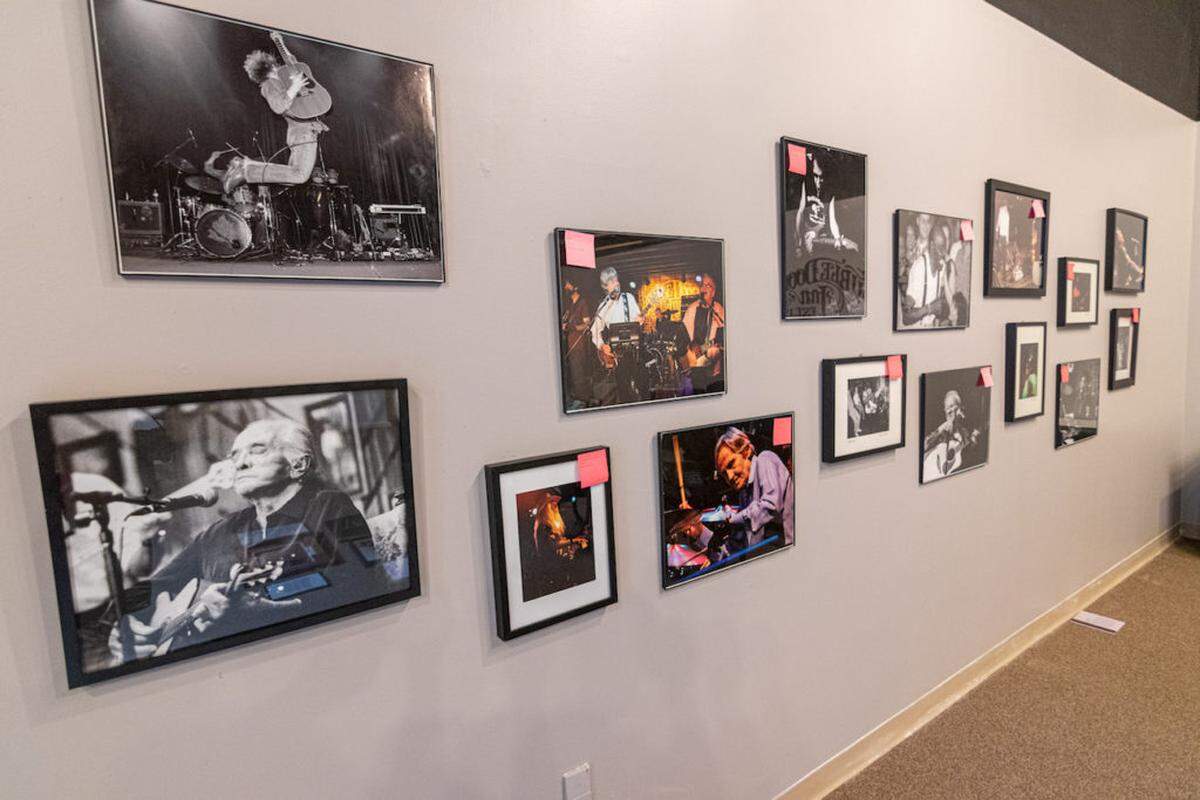
Photos by Daniel Coston are on display in The Charlotte Museum of History’s newest exhibit on three iconic music venues in the Queen City that have closed. Alex Cason Photography CharlotteFive
‘Music Everywhere’
This exhibit opens on the heels of the Music Everywhere initiative, designed to enhance the scene, turning Charlotte into a music destination city.
“It’s a different story that hasn’t been told — Neighborhood Theater, Visulite, Milestone are still around. We need those venues.” Focht said. Photos from the Milestone are also on display at the exhibit.
The message here is more than just that important places have closed. It’s also a wakeup call to support those that remain open, Focht said. She and Pasquini listed other important venues of today, including Evening Muse, Snug Harbor, Petras, Skylark, EBs, Common Market, Jack Beagles, Tommy’s Pub, local breweries and U.S. National Whitewater Center.
Many of the people that worked at these iconic places are still active in the local music scene. “That’s the fabric of the community that I think of,” Pasquini said. He is also a musician, and he works nights managing the sound at Skylark, a rock ‘n’ roll bar known for its musical acts.
The green room door from Double Door Inn on display at The Charlotte Museum of History. Alex Cason Photography CharlotteFive
Save the music venues that are left
“We wanted to talk about both the history of music and the art scene and hopefully inspire people to want to go out, go see a band. Buy a T-shirt, buy a ticket, go support local musicians,” Focht said.
“With this exhibit, we’re promoting both historic preservation and the importance of music venues as that third place in Charlotte, and hopefully getting people to think about some places that are in peril now, like the Excelsior Club, that still has the potential to be an excellent, amazing music venue for Charlotte and continue for future generations,” she said.
The Excelsior Club, closed in 2016, was recently added to the nation’s 11 most endangered historic places. It is listed for sale for $1.5 million and is owned by Carla Cunningham, a Democratic state representative. Cunningham has filed paperwork to permit demolition — and after Wednesday, Cunningham or whoever buys the property can tear down the building.
Artifacts will be on display from the following venues:
The Double Door Inn
1973-2017
A register from Double Door Inn on display at The Charlotte Museum of History. Alex Cason Photography CharlotteFive
In its heyday, the Double Door Inn was such an intimate venue, a music fan couldn’t help but feel like an insider. Sit in the old rows of wooden chairs one more time at the museum and think about the time Eric Clapton stopped by to play.
Not to miss:
The green room door: Most patrons never got the chance to see the graffiti-embellished door to the green room, with artistic expressions ranging from the silly to the profane.
The Excelsior Club
1944-2016
A mini address book from The Excelsior Club is on display at The Charlotte Museum of History. Alex Cason Photography CharlotteFive
The building once belonging to Excelsior Club is still standing with its future is to be determined. The Excelsior was essentially the African-American country club of Charlotte, Pasquini said. “It serviced a part of the community that wasn’t getting the attention it deserved.” Louis Armstrong and James Brown played there. Bill Clinton and Al Gore campaigned there.
Not to miss:
Mini address book: Serving as a club membership of sorts, this tiny address book captures a pre-smart-phone moment in time. It was the perfect token for networking.
Tremont Music Hall
1995-2015
Memorabilia from Tremont Music Hall on display at The Charlotte Museum of History. Alex Cason Photography CharlotteFive
Tremontbecame a proving ground for rock ‘n’ roll musicians on their way to a national rise, according to Pasquini. It was where Focht saw the band of Montreal before they were famous. “I remember the crowd there saying, ‘Why haven’t I heard of this band before?’” she said. Maroon 5 and Iggy Pop played there.
Not to miss:
Gwar graffiti: Lead vocalist Dave Brockie once etched graffiti into a wall at Tremont, and the wall was cut out, framed and is on display in the exhibit.
A newspaper article about The Excelsior Club’s creator, Jimmy McKee, is on display at The Charlotte Museum of History. Alex Cason Photography CharlotteFive

 "Photo by: Alex Cason Photography (www.alexcasonphotography.com)")