How a Western NC chef is healing the hurt of Helene through food
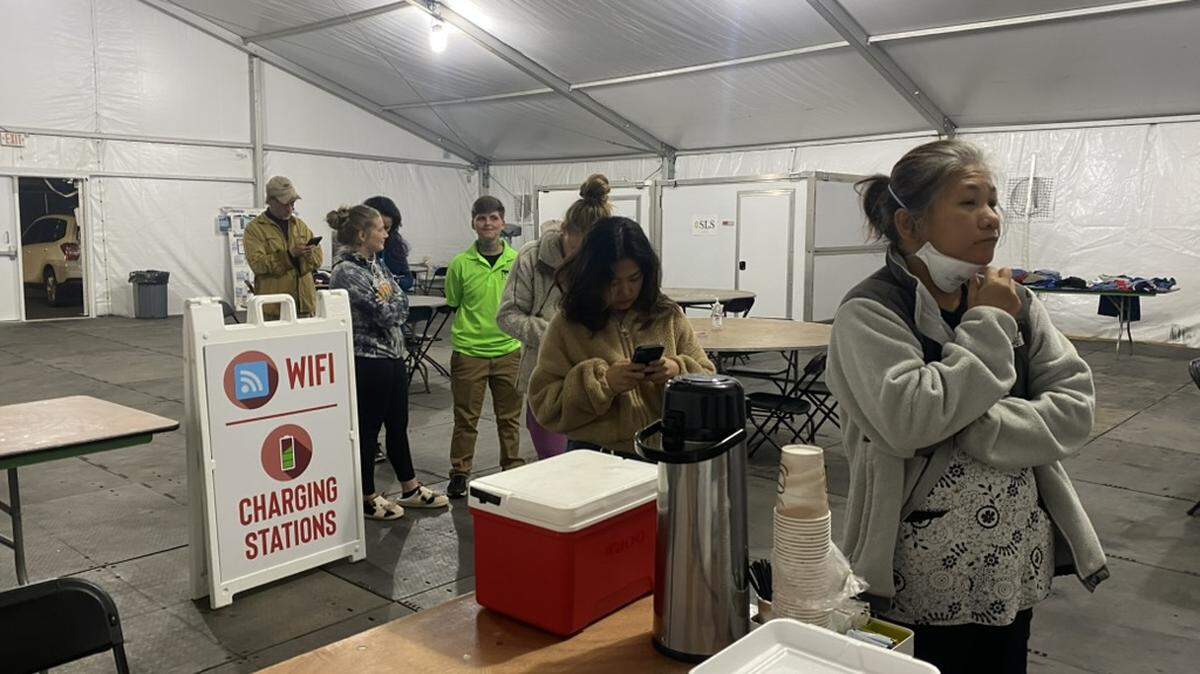
The spring sky darkened over the parking lot of the Swannanoa Ingles. Closed since Hurricane Helene, the lot had few cars. At one end, a car spun donuts, leaving the burning rubber acrid in the dry air.
By the disused car wash, people waited patiently inside their vehicles until a white Subaru pulled into the first bay.
It was Tuesday, and Indian food was on the menu: chicken tikka, saag made from collard greens, fragrant dal (lentils cooked in spices) and cumin-flavored basmati rice. All gluten- and dairy-free with vegan options, as Cayte Gowan – a chef with 14 years’ experience – has cooked since four days after the storm.
And, equally important for the families who rely on her food, it’s all free.
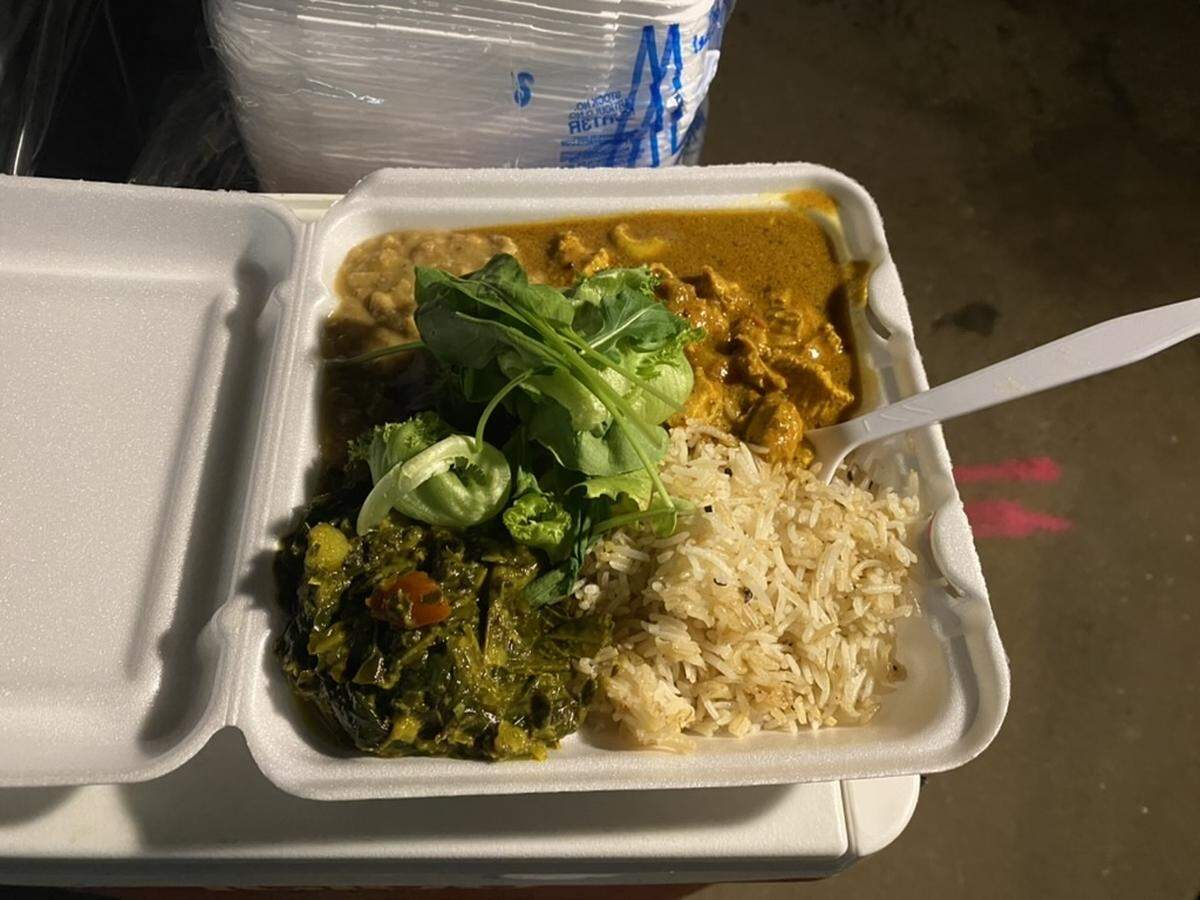
Many of Gowan’s regulars live in hotel rooms or campers where it’s tough to cook. Others struggle to afford allergy-conscious food. Gowan regularly drops off meals to still more people who don’t have cars.
People living in Helene’s aftermath depend on her for food — it’s that simple. So although Gowan has depleted her savings, she hasn’t returned to her job at downtown Asheville’s The Market Place restaurant since it reopened after the storm. Instead, she still drives from her home in Mars Hill to Swannanoa five nights a week and unloads her tables, portable stoves and pans simmering with delicious, nourishing dishes.
“I’m doing this not just because it’s the right thing to do, but because I know that this is something that I would have wanted,” she said.
“I’m here to heal through food.”
Supporting storm victims
Diagnosed with celiac disease at 3, Gowan learned to cook out of necessity as much as enjoyment. Until fairly recently, gluten-free options were both scarce and unappetizing.
“If I wanted to try something, I had to go find a recipe book at the local library and try to figure out how to make it,” she said.
Gowan’s motivation to provide free allergy-safe meals after Helene stemmed from watching television coverage of Hurricane Katrina in 2005. She saw barbecue trucks and hot dog carts serving free food and wondered, “If I was down there, what would I eat?”
As soon as Helene’s waters receded, she turned on her gas stove and started cooking. (Because Mars Hill is on a different watershed, she had access to fresh water.)
She first set up at the Family Dollar in Swannanoa on U.S. 70 and later moved to the Ingles lot. In those first weeks, she was one of dozens of volunteers – from church groups and local restaurants to World Central Kitchen – serving hot meals.
Six months on, she said, few remain: a couple of churches, Blunt Pretzels and her. But she’s the only one serving food in the evenings to accommodate those who cannot leave work to get food during the daytime.
Finding safe food after Helene
“I consistently have 15 families that I see every single day,” Gowan said, as well as “around 20 different individuals that rotate through.”
One of her regulars is Amelia Ray, who lives in Swannanoa and needs both gluten- and dairy-free food.
“I’ve been coming to see Cayte since October,” she said. “There weren’t many other people bringing food that could accommodate that,” she said, adding that “Cayte’s food never made me sick.”
Gowan has even made her medicinal broths with ingredients that target her specific health issues.
Asha Wild wished she had discovered Gowan in the chef’s first days at the Family Dollar. As a vegetarian with celiac disease, finding safe food was nearly impossible.
“We cooked out of our freezer for longer than they said we should,” Wild said. And that was on a portable stove by headlamp in her mother’s apartment, where she and her family had gone after 9 feet of water flooded her home on the Swannanoa River.
As someone who enjoys cooking, Wild appreciates the quality of Gowan’s food: “It’s not just food that I can eat, but it’s food that I want to eat.”
For many of Gowan’s regulars, it’s their first exposure to heavily-spiced international cuisines. She’s served Middle Eastern shawarma, Thai-style curry, Korean braised tofu and kimchi, and East African – now a community favorite.
For one local man, that Tuesday’s Indian night was his first taste of Indian food. He’s a relatively late arrival to Gowan’s meals, having discovered them two months ago. But he comes every night to feed his wife and two children in Black Mountain.
Food needs continue after Helene
When I first visited Gowan on a Saturday night, she was at the Owen Pool Comfort Station, the only remaining facility offering free hot showers, restrooms and laundry services.
She had switched to that location in mid-December after a few dicey experiences at the Ingles parking lot. (It was also warmer.) Even though traffic on I-26 usually delayed her arrival to after the 7 a.m. to 7 p.m. weekend hours and 9 a.m. to 9 p.m. weekday hours, the staff who supervise the Owen station 24/7 let her serve — even though she sometimes cut it close or got there after shutdown. They often ate the food, too.
The following week, however, she returned to the Ingles lot after being told that she would have to stick to the closing times. She’s less worried for her own safety than the fate of the station.
“I know that me being there was a draw,“ she said.
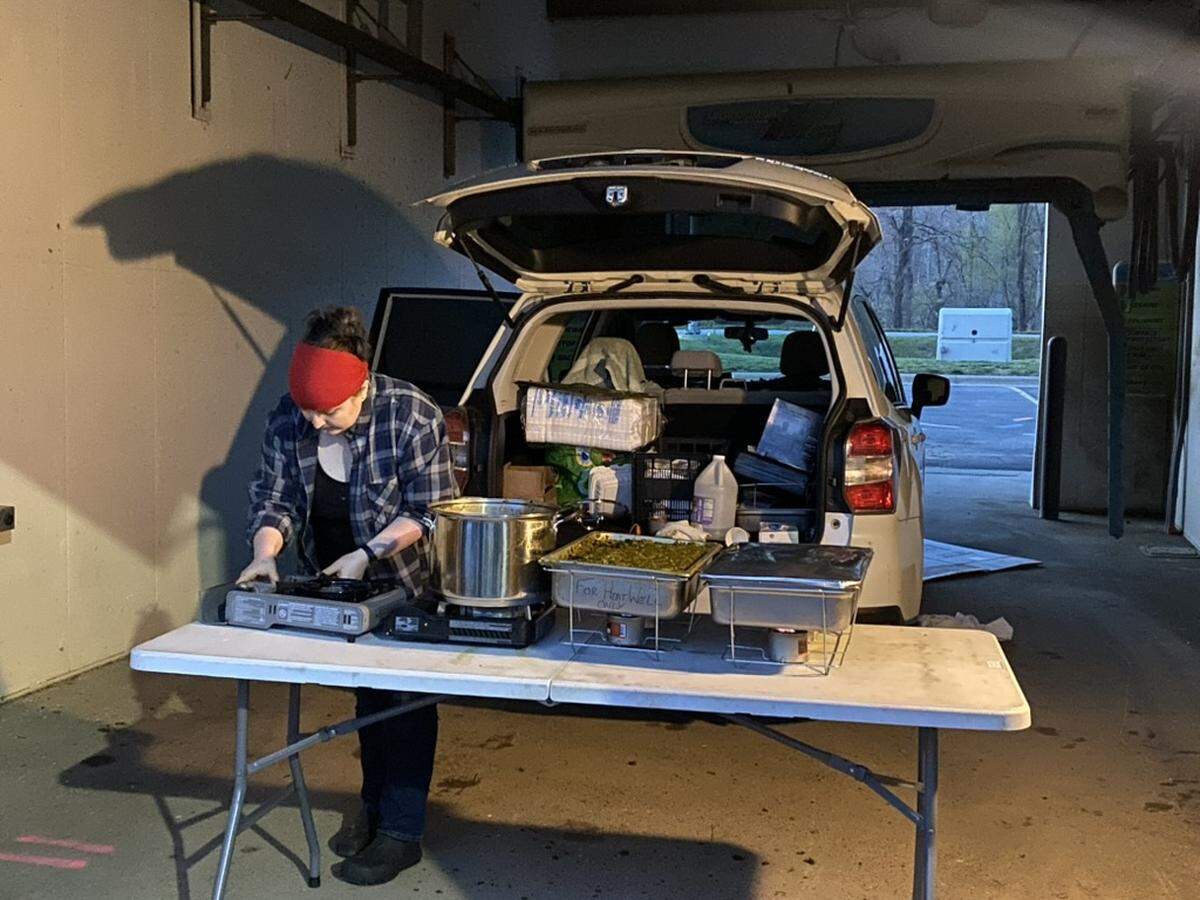
Ideally, Gowan would have a working food truck. She could arrive earlier and finish preparing food in the truck. She recently purchased a 1979 Chevy food truck from a smoothie and coffee business that had shut after Helene, but it needs work that she currently can’t afford.
“I have officially run out of my own savings,” Gowan said. And after an impromptu visit from Environmental Health staff, she cannot even have a donation jar or display donation links without a permit. That’s a chief reason why her GoFundMe to raise funds for her food truck has stalled.
“While we know the availability of food is still not back to pre-Helene levels in this area, it is incumbent upon the County to make sure everyone who would like to offer their services is aware of statutory guidelines for food preparation, handling, and distribution, especially on County-owned property,” said Buncombe County spokeswoman Kassi L. Day.
Despite these challenges, Gowan has no intention of quitting. She plans to register as a nonprofit organization.
“This isn’t just about aiding people after a disaster,” she said. The goal is far greater: “to provide nutrient-dense, allergy-considerate free, hot meals to people forever.”
Editor’s note: This story was updated on April 29, 2025.
This story was originally published April 14, 2025 at 5:00 AM.