Why Charlotte’s Enat restaurant wants you to eat with your hands — and linger
From the moment you walk into Enat Ethiopian Restaurant in East Charlotte, chef Tina Tedla wants you to feel like you’re being transported to her home country.
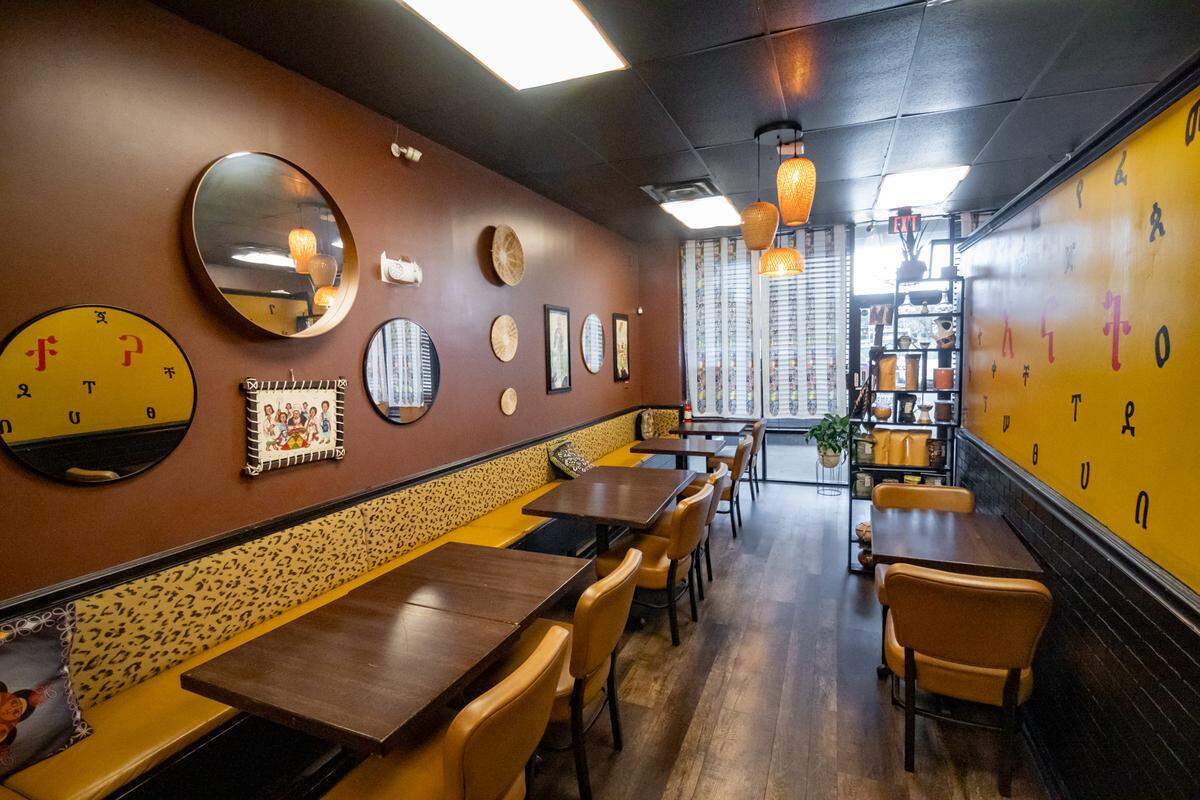
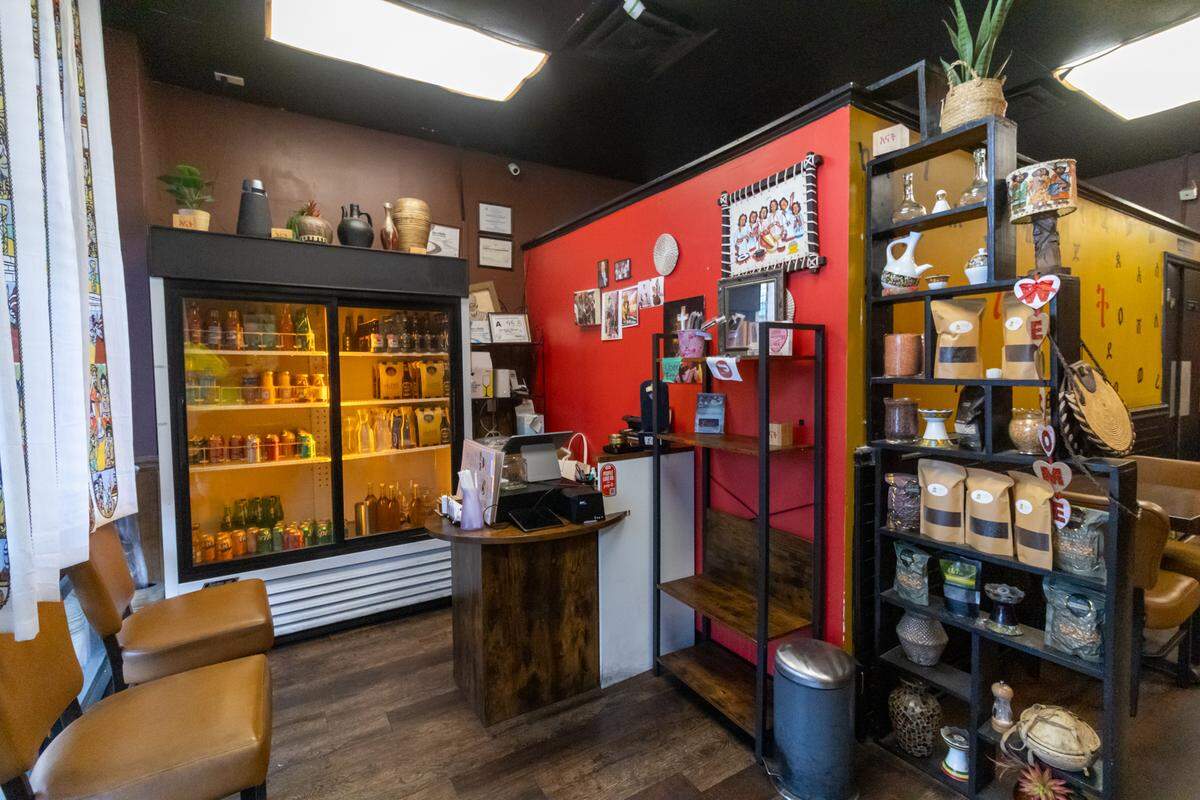
Incense greets you in the entrance of the cozy spot, while Ethiopian music plays and artwork from Tedla’s own childhood home line the walls.
Tedla has owned and operated the restaurant in The Plaza since 2017, as well as a sister spot in Optimist Hall, which opened in 2022.
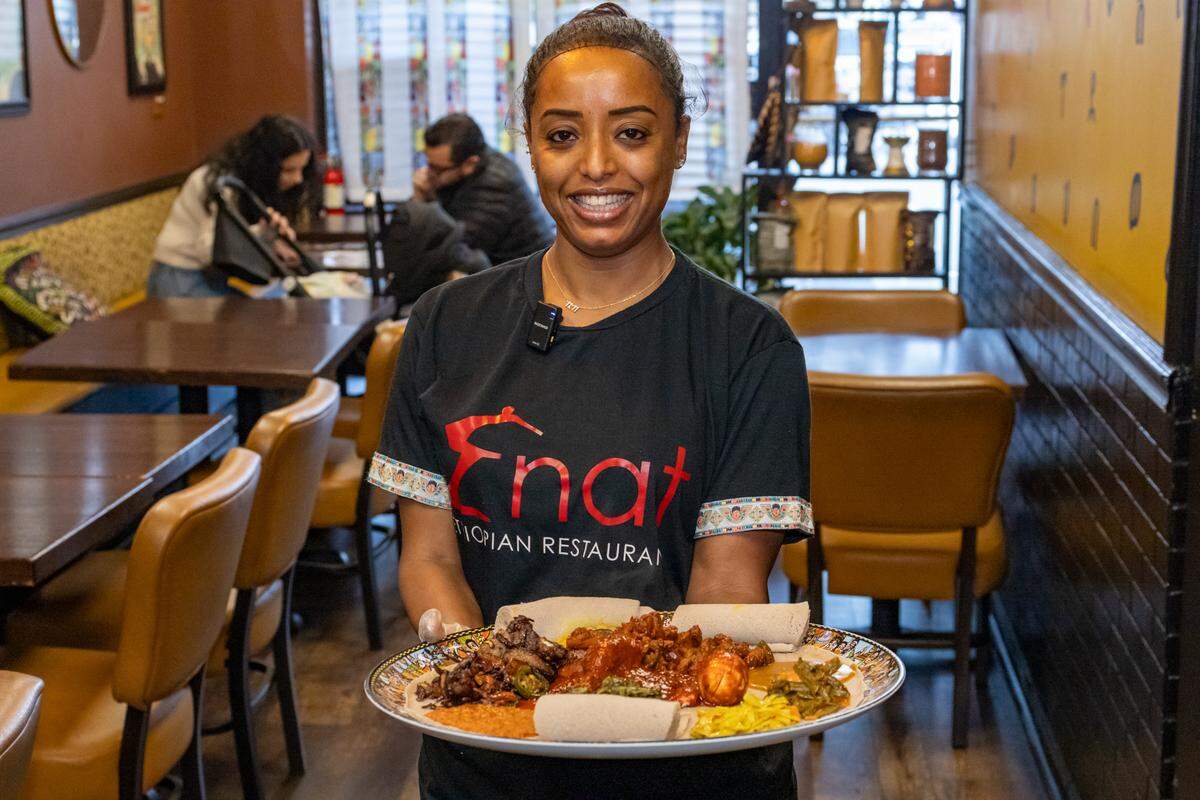
For anyone new to Ethiopian food, Tedla compares it to Indian cuisine. The two culinary traditions share many similar ingredients and spices, she said.
“Everybody thinks Ethiopian food is always spicy,” Tedla said, “but you have options.”
Whether you’re craving hot or mild flavors, you’re a fan of grilled meats and stews or you’re seeking gluten free, high protein or vegan dishes, Enat offers a dining experience with something for just about every palate.
Tedla gave CharlotteFive a behind-the-scenes look at three of her favorite dishes and what makes them special, along with tips on Ethiopian cultural traditions surrounding meal time.
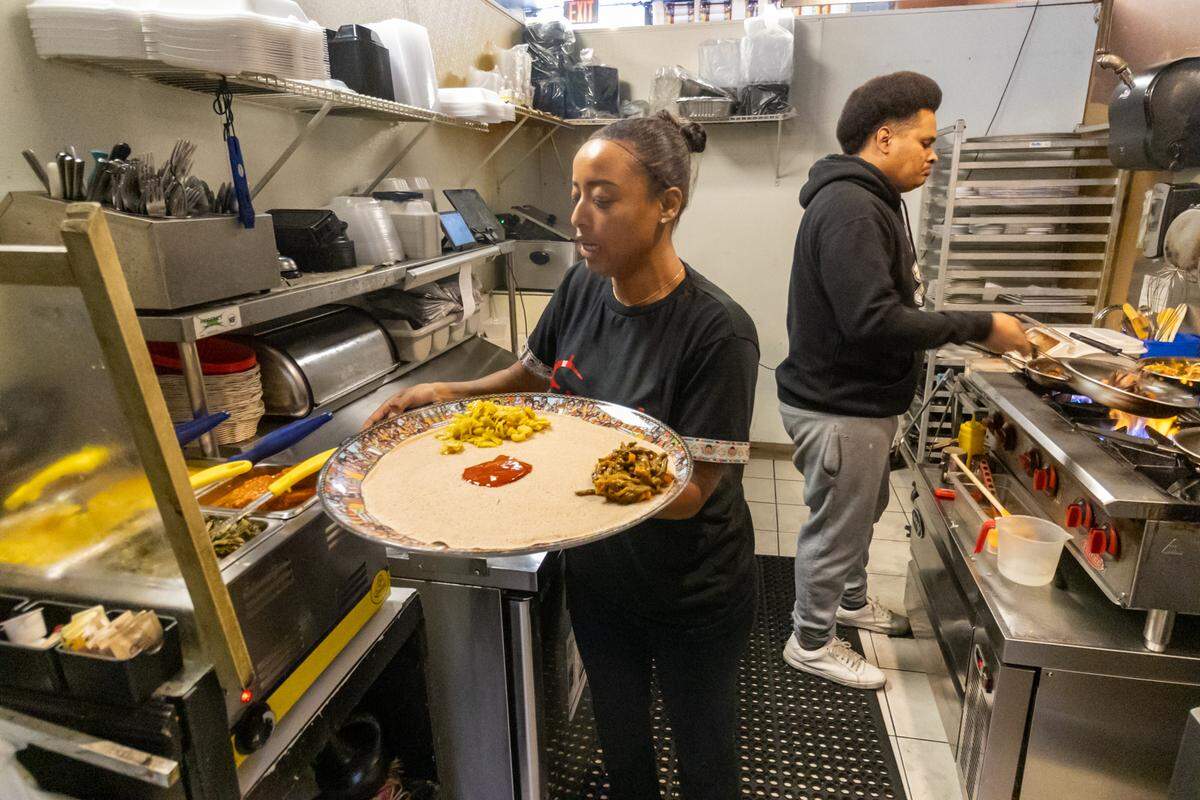
Three chef faves
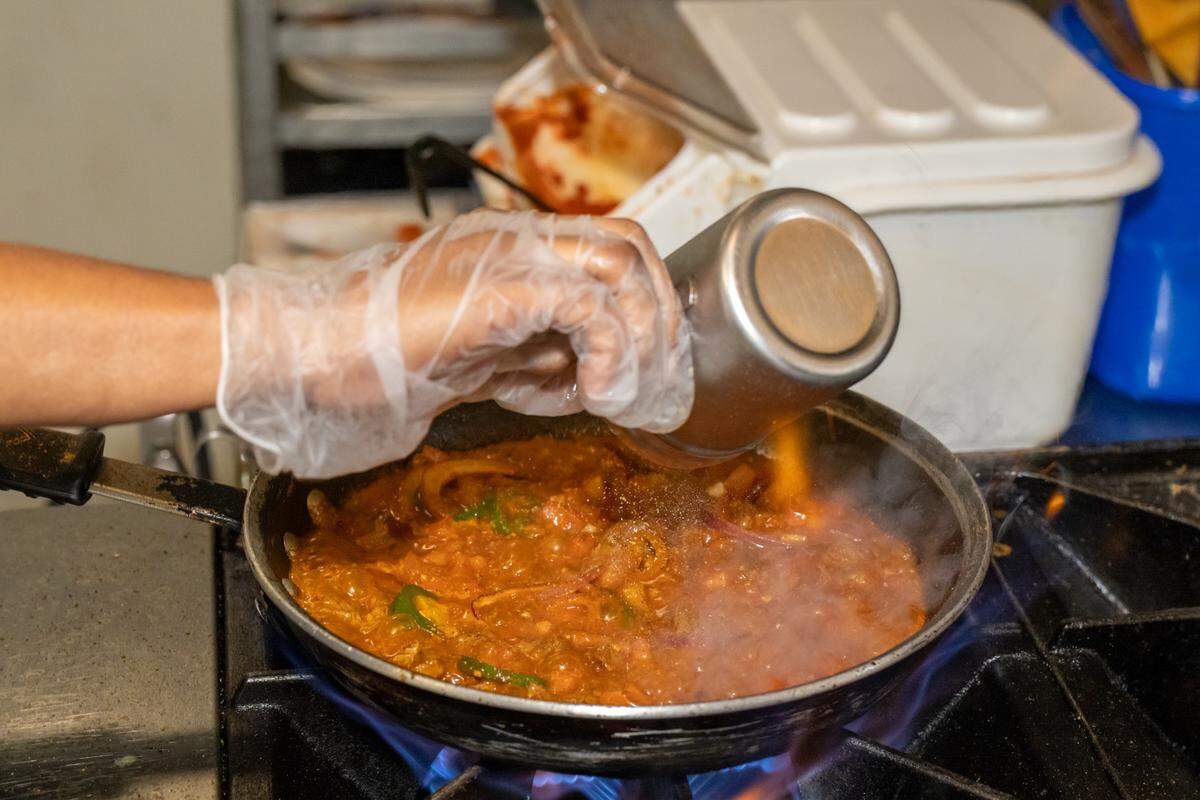
Pans sizzled on the stove as Tedla spoke and put the final touches on these three featured items, which also are among the most popular dishes served at the restaurant.
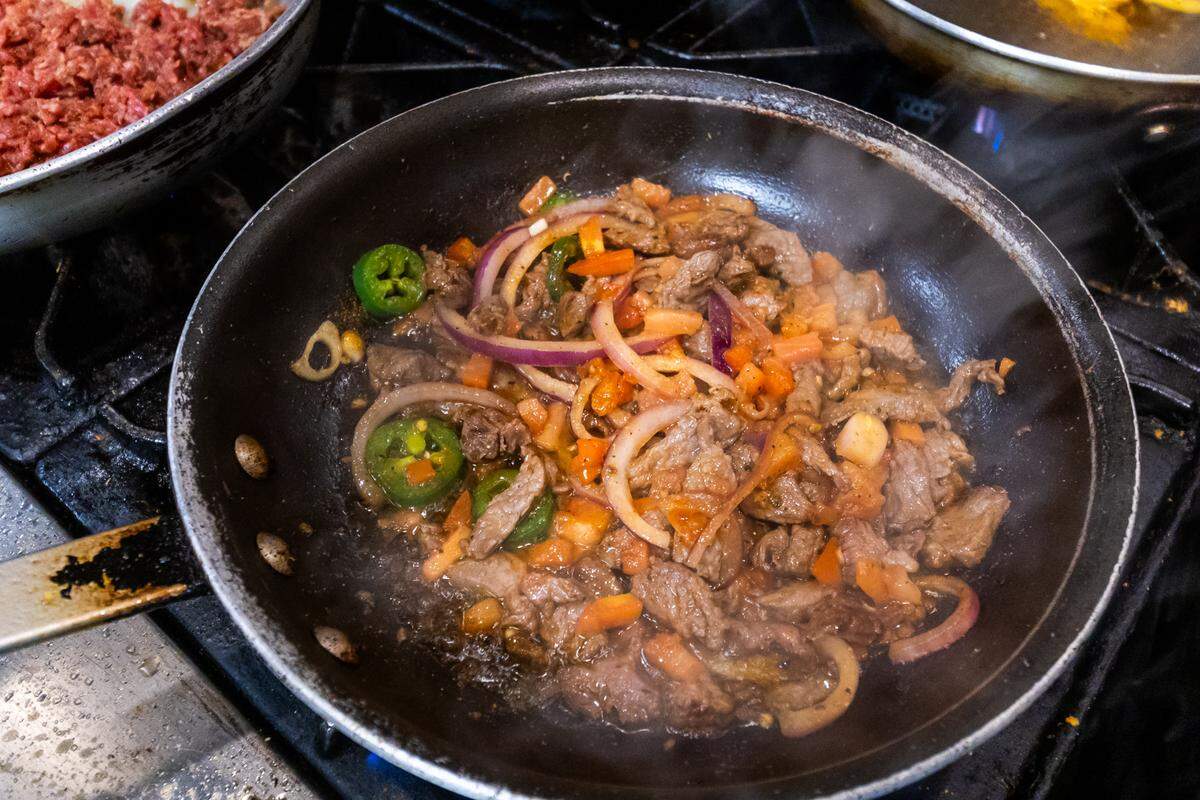
Lamb Awaze Tibs: This dish is made with diced cubes of lamb cooked with berbere (a spice mix that has a base of cayenne pepper), before adding tomatoes, onions and a little bit of jalapeno. Garlic and ginger also season the dish. Many people like Awaze sauce and its spicy kick, Tedla said.
Tibs are the easiest and fastest of the three dishes to make, she added. Additional seasonings — including Ethiopian butter (clarified butter infused with koseret, an aromatic herb), korarima (a.k.a., Ethiopian cardamom), rosemary and salt — come at the end.
The dish is made to order, so you can leave out ingredients or customize quantities to adjust the spice level. Tibs can also be prepared with beef, chicken, fish and mushrooms. Classic tibs, a less spicy option, is also available on the menu.
Derek Goden Tibs: In these flavorful beef short ribs, sauteed until they are a crisp brown, you can really taste the charred onions. The dish also includes tomatoes and jalapeno peppers. Like the lamb above, the dish is made to order.
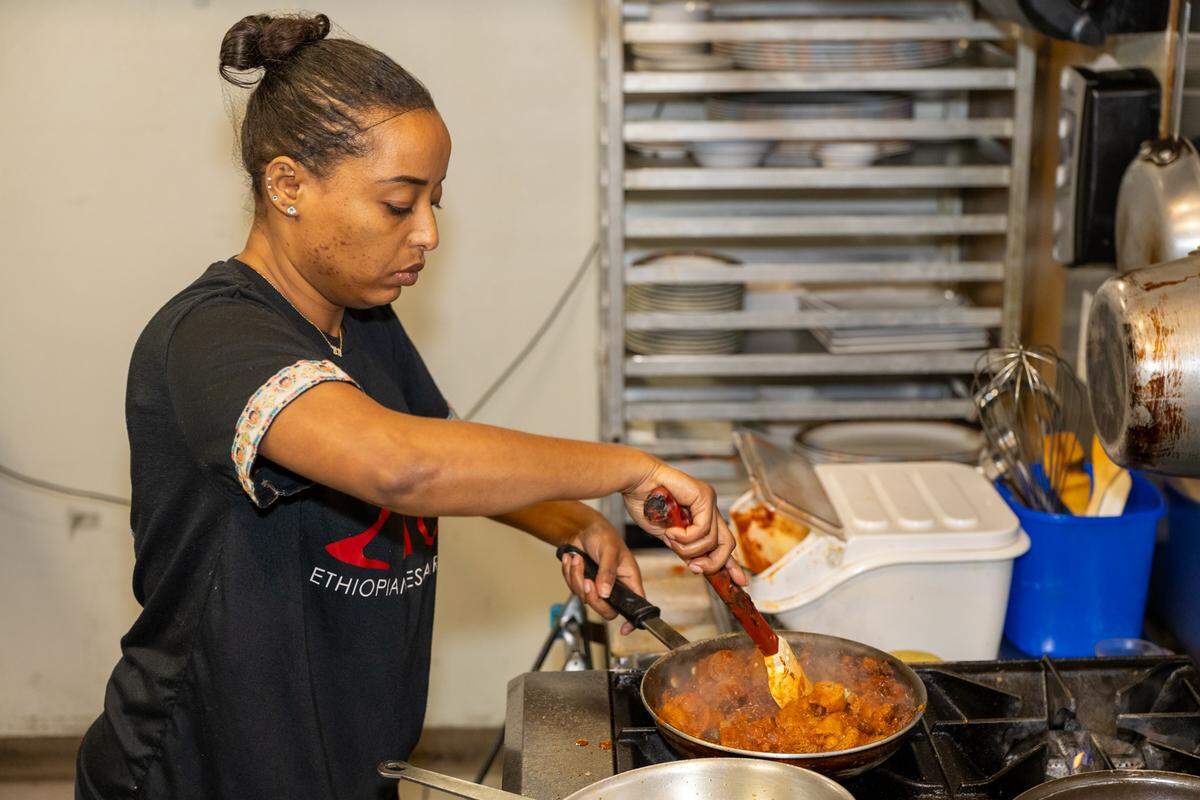
Doro Wot: A spicy stew of chicken and hard boiled egg takes the longest to make. Tedla said a base of onions and berbere, sauteed for several hours, help create the dish’s rich flavor. It’s served with Ayib, a cheese similar to feta that provides a cool complement to balance the dish’s spicy flavor.
Childhood memories tied to food
For Tedla, stews like Doro Wot are closely associated with her memories of holiday meals growing up.
In the Ethiopian Orthodox Church, there are multiple fasts throughout the year. Some last as long as 55 days. During these periods, traditionally no meat or dairy is consumed.
“It’s all solely vegan. So, you know, it’s not just for the religion. Even for your body, it’s really good. And you look forward to that fast and then breaking fast … Eventually, you want to eat your favorite food, right, after a while. So, yeah, I look forward to that and eating the traditional food.
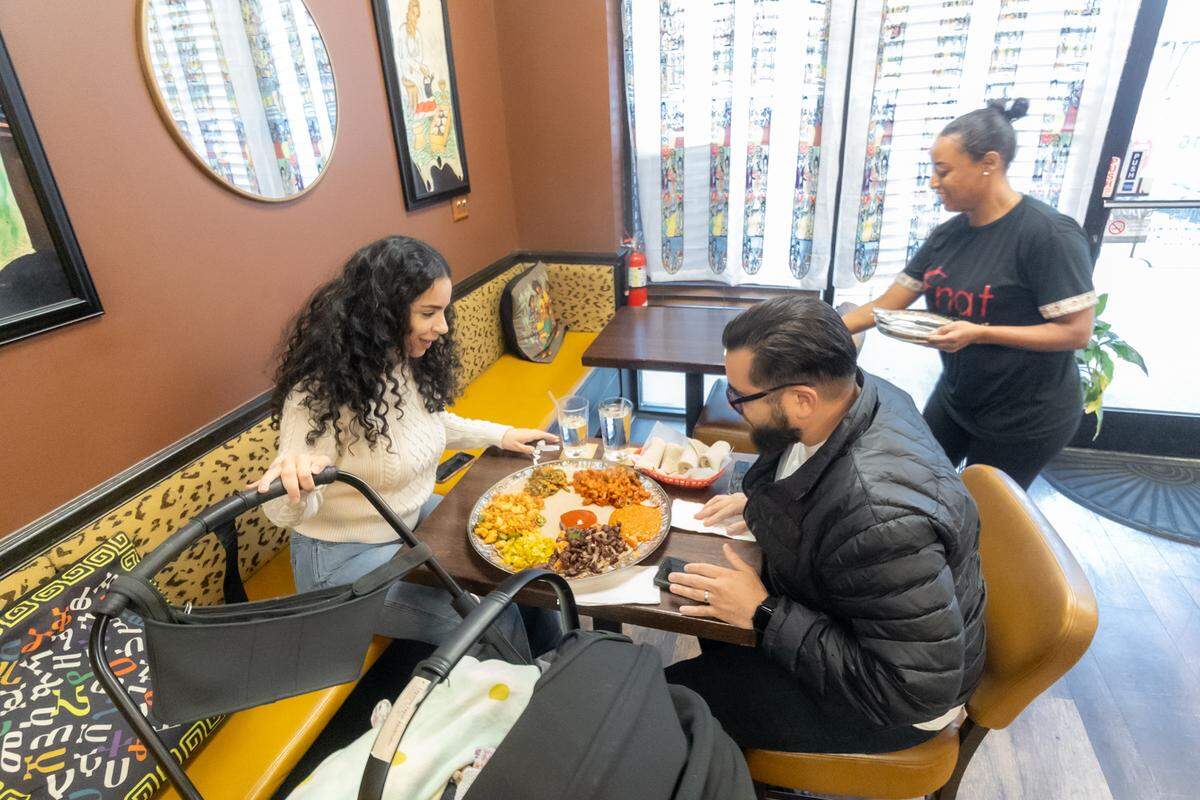
“I grew up (with) my mom making it all the time. It’s always in the center of any holiday, anytime we break fast … whether it’s Easter or the Christmas break. So my mom always had these different types of stew. She had the beef stew, lamb stew, the Doro Wot stew, which is chicken and egg. So I grew up eating these rich flavored cuisine, it’s beautiful.”

Tedla recommends trying one of the above meat mains as part of the Passport plate. Served on a platter, it includes an assortment of vegan dishes such as:
- miser (a red lentil stew)
- tikel gomen (a seasoned mix of cabbage and carrots)
- gomen (collard greens sauteed with onion and garlic)
- shiro (a stew of ground chickpeas)
- fosolia (sauteed string beans and carrots with caramelized onions)
- ater (mild yellow split peas seasoned with onion and garlic)
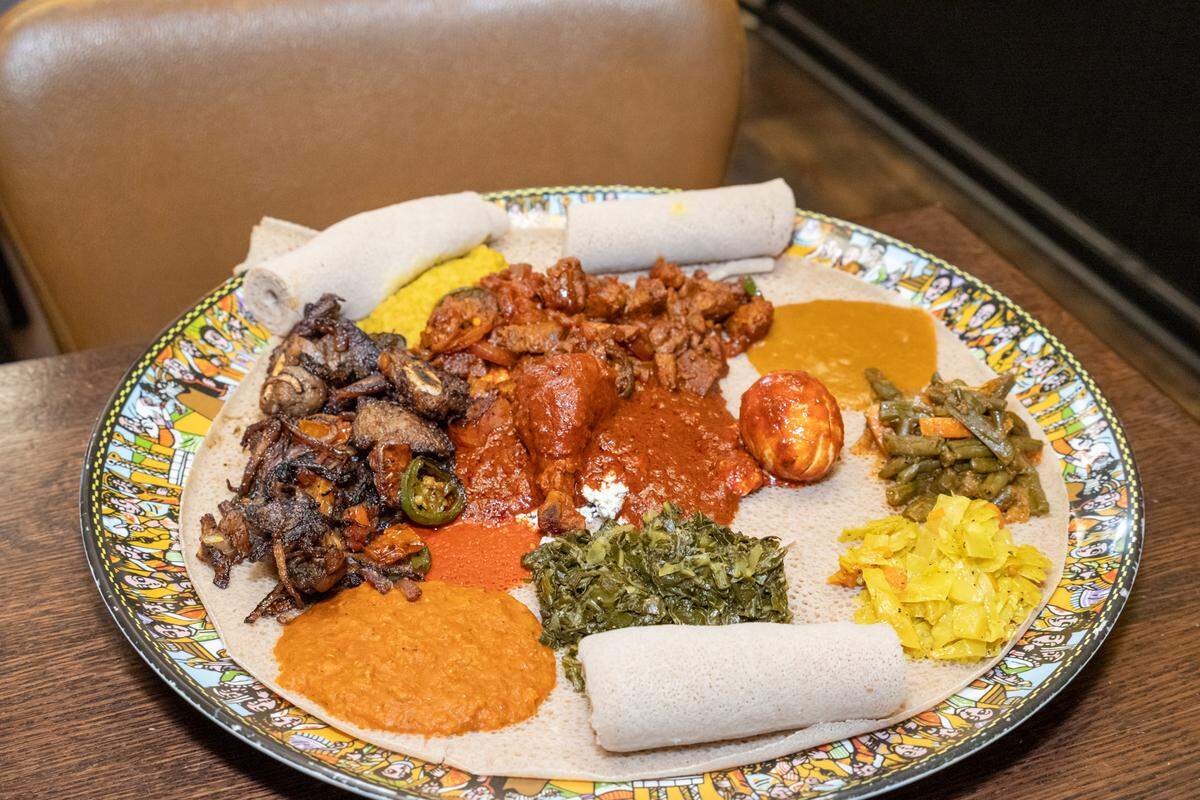
If you need help with names, a handy glossary is available on Enat’s website.
Mom’s cooking is at the heart of the restaurant
Tedla named the restaurant “Enat,” which means mother in Ethiopian.
“My mom is behind the restaurant, really. She was the reason why I started going and opened up in 2017. And I thought it was very fitting to name it Enat, because it’s pretty much my mom’s cooking. Everybody loves mom’s cooking, and she’s the backbone, absolutely. It’s her recipes and everything.”
For many years prior to Tedla opening the restaurant, her mother made and sold injera, the Ethiopian spongy bread, and ran a catering business in Charlotte. She was a driving force, encouraging Tedla every step of the way. She played a hands-on role there too, preparing injera and roasting coffee for the restaurant before her death in 2025.
Tips for eating Ethiopian food
Tedla strives to find the right balance between authenticity for natives alongside choice for people who are curious but nervous about trying a new food. (By the way, I usually avoid overly spicy cuisine, but I was able to enjoy all of the dishes without problem.)
Hands-on eating: Traditionally, Ethiopian food is eaten with your hands. Diners tear off pieces of rolled injera, a thin, spongy sour bread, and use it to grab morsels of meat and veggies. But it’s never eaten on its own.
“We want everyone to be comfortable,” Tedla said. “We do offer utensils if you need it just so people won’t get too overwhelmed if it’s their first time. But it’s like an experience, and we want you to really try the most authentic way, if you can.”
If you don’t care for injera, you can also sub in brown rice or pita bread at Enat.
Spicy vs. mild flavors: Two spices are used extensively in Ethiopian cuisine and their distinctive colors can help guide your choices. Red dishes, made with cayenne pepper, are spicy. Food that’s yellow is typically made with turmeric and much more mild. Remember, many dishes can also be prepared to order.
Take your time: The rich, earthy-colored cuisine is often served family style and meant to be enjoyed with family or friends. Meals are usually eaten at a slower pace. But if you’re in a hurry, Enat’s Optimist Hall location has an abbreviated menu with items that can be quickly prepared.
A window into Ethiopian history and culture
Tedla, who also waits on tables, loves teaching guests about Ethiopia, from its alphabet and number system (both on the wall) to its 80 different tribes and independent history, free of European colonization.
“To be able to see the different art pieces, the culture — not just the food — but be able to learn about the history of Ethiopia because it is one of the oldest (civilizations) and there is so much rich culture and a lot of people don’t know much about it … I feel like here, I get to … bring Ethiopia to you.”
Finish your meal the traditional way
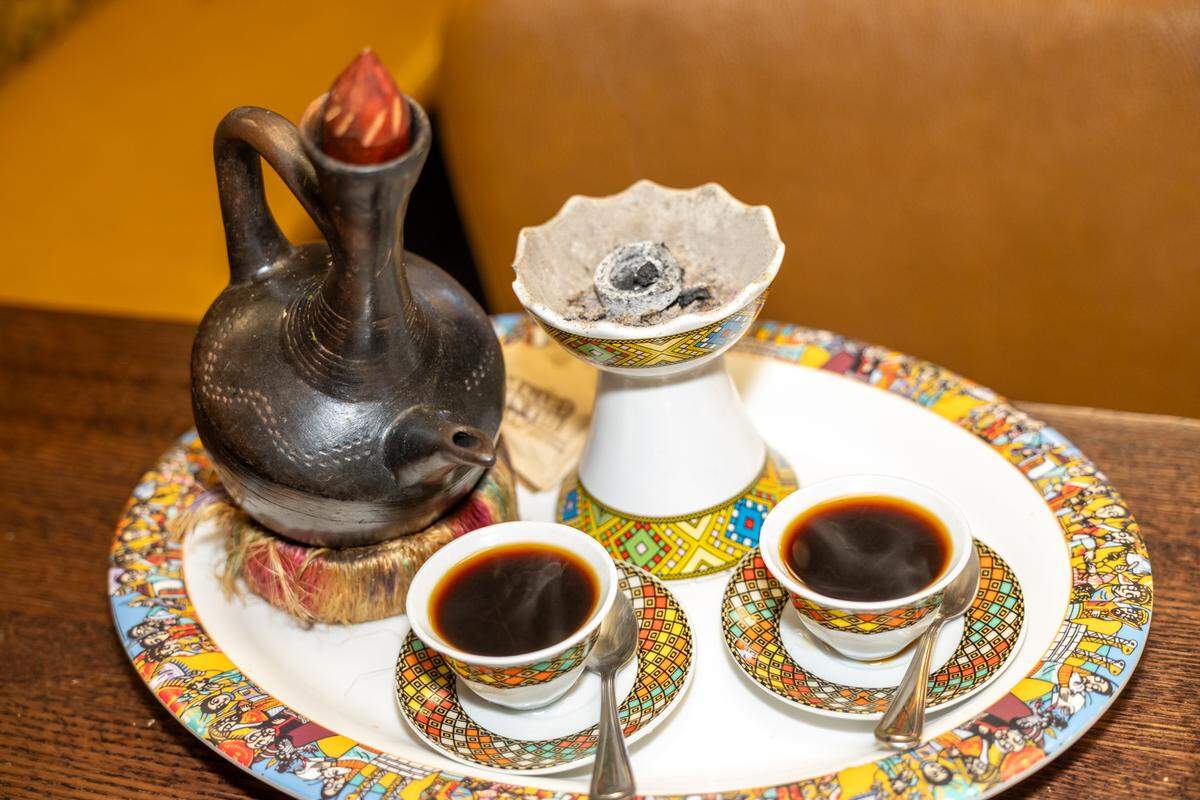
Coffee is an important part of Ethiopian culture. In Ethiopian homes, people enjoy it two or three times a day with family and friends. It’s served from a special clay pot, called a jebena, that self-filters the grounds as you pour and is accompanied by incense.
“It’s not supposed to be rushed,” said Tedla, comparing it to a coffee shop experience, except “you’re going to someone’s home and you get the whole service.”
If you’re not into coffee, spiced tea is also a traditional way to end your meal.
Everything is homemade
Tedla said a lot of people don’t realize that everything is made from scratch in Ethiopian cuisine.
She imports some of her spices and select ingredients from Ethiopia to ensure the most authentic flavors. If you want to try a recipe at home and don’t have family or friends in Ethiopia to help you out, you can also find specialized ingredients at several shops in Charlotte, including Balageru Mart, a short drive from Enat’s original location.
Ethiopian food encompasses many different dishes and ingredients, Tedla said. Although her menu at the main restaurant is extensive, it’s still only a sampling of Ethiopian cuisine.
“It’s a lot of labor that goes into it, a lot of love.”
Enat Ethiopian Restaurant
Location: 4450 The Plaza, Suite D, Charlotte, NC 28215
Location: 1115 N Brevard St Enat Ethiopian, Charlotte, NC 28206
Menu: The Plaza | Optimist Hall
Cuisine: Ethiopian, East African
Instagram: @enatcharlotte