Take these 5 steps to create your tiny home office
By Vanessa Infanzon
I had been using the dining room table as my office for too long. Each evening before dinner, I cleared everything off, using precious time to clean up and set up every day. I needed my own space.
Danielle McKim, owner of TUFT (Today’s Unique Furnishing Trends), is a self-taught decorator with a gift for design and function. She came highly recommended, but our Long Island connection sealed the deal. Several months ago, McKim came over to help me find space for my home office. I write this piece from my new desk. I am beyond thrilled. If you are thinking about creating a special space for yourself, here are some tips to help you develop a plan:
(1) Think outside the norm
Imagine a space with a new look. Envision a place in your apartment or house with a different purpose. Turn a small room into your art studio. Find a closet that works for your home office.
McKim saw potential in a room in our house that was part playroom, part hallway. We agreed that one wall could accommodate my needs without sacrificing the other uses for that area.
Consider: How can you carve space into another part of your apartment or house? What area is used the least?
(2) Everything is a process.
Once we chose the location of my tiny office, it still took a few months to get the space ready. We removed the mantle and toy shelves, then painted and tiled the floor in front of the mantle. (Let me be clear here, when I say “we,” I mean, my husband, Ryan. I did absolutely nothing.)
Consider: What is your timeline? How much work are you willing to do?
(3) Give everything a purpose
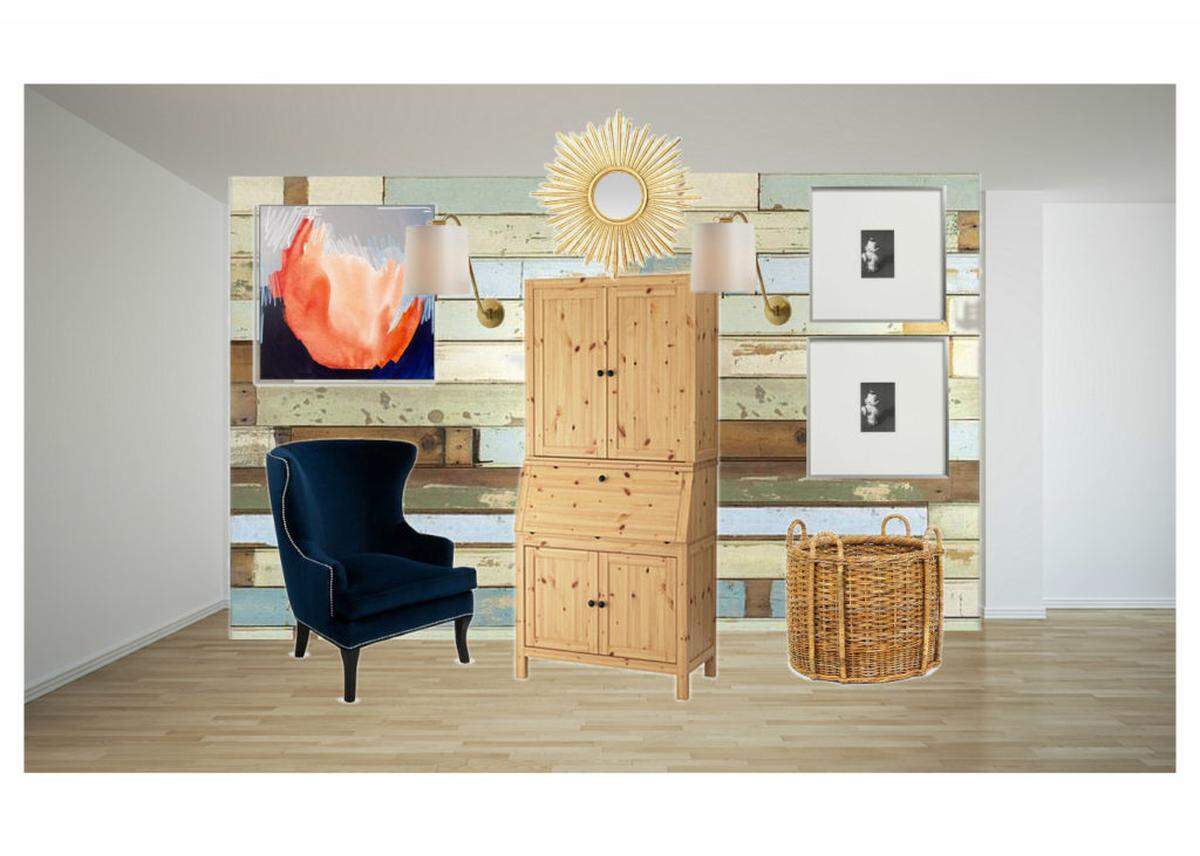
I shared my storage and space needs with McKim. She created a mood board that reflected my style and personal preferences. She suggested a secretary desk because it would be highly functional and offer the advantage of being tucked away.
Consider: What pieces can serve a function and add to the aesthetic value of the space? What tools will you need to accommodate – printer, laptop, books?
(4) Mix old with new
Next Door posts, dumpster diving, family attic, friends’ donation piles and curb alerts are great ways to find original pieces for your space. Bookcases, shelves, chalkboards and crates can add character and function in an office.
McKim said, “I love vintage pieces, but sometimes you need to go to a big box store to truly find the right piece for the space.”
My desk is from Ikea. I hesitated at first, but McKim promised to personalize it with paint and funky knobs. McKim paired the desk with a chair she found at a yard sale years ago.
Consider: What is your budget? Which items are you willing to purchase in thrift stores or yard sales?
(5) Repurpose and personalize.
Pieces that express your style, inspire you or challenge your thought process need to be included. I gave McKim three special items to incorporate into the design: small plates from my trip to Italy, Central Park photographs and Frank Lloyd Wright-inspired stain glass windows.
Consider: How can this space reflect your personality? What will you move from another part of your home for the new space?
My results:
The design is beautiful. The distressed-painted plank wood adds a focus feature. The chalkboard helps remind me of my deadlines and the plastic file folders keep the papers off the floor. It is a blend of old and new, function and frivolity – a little bit of me in this tiny space.

 "Photo 2 Credit VMI (2)")
 "Photo 3 Credit VMI (1)")
 "Photo 5 Credit VMI (1)")