
Inclusive restroom signs pop up in the unlikeliest of Charlotte places: church
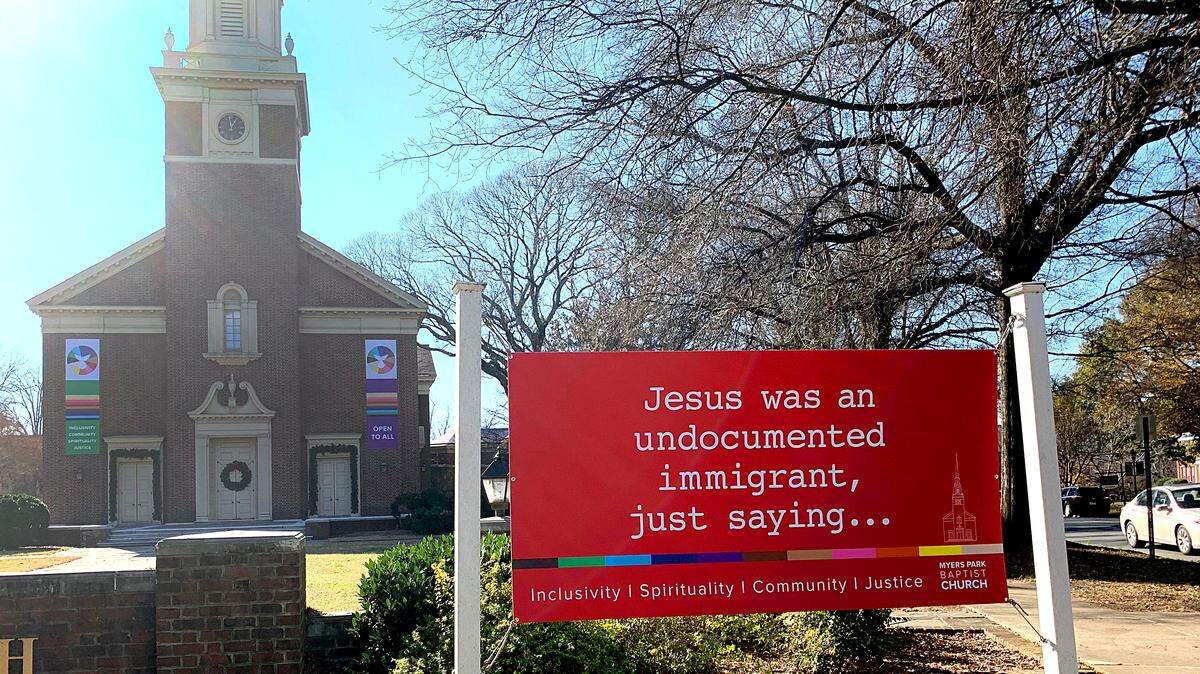
“Jesus was an undocumented immigrant. Just saying.”
Myers Park Baptist Church wants people to better understand its historically progressive and inclusive nature. And it’s making it known loud and clear.
Starting in December, Myers Park began displaying two banners outside the church, one with the aforementioned bold statement about Jesus and another addressing environmental justice.
The banners are part of a series that the church will continue to display outside over the coming year, the result of a yearslong strategic process undertaken by the church to assess its purpose and identity.
Similar poster versions of the banners will be displayed inside the church. In addition to addressing undocumented immigration and environmental justice, the banners will cover topics including social justice, religious freedom, racial equality, sexual identity and women’s empowerment — all issues the church has embraced for decades.
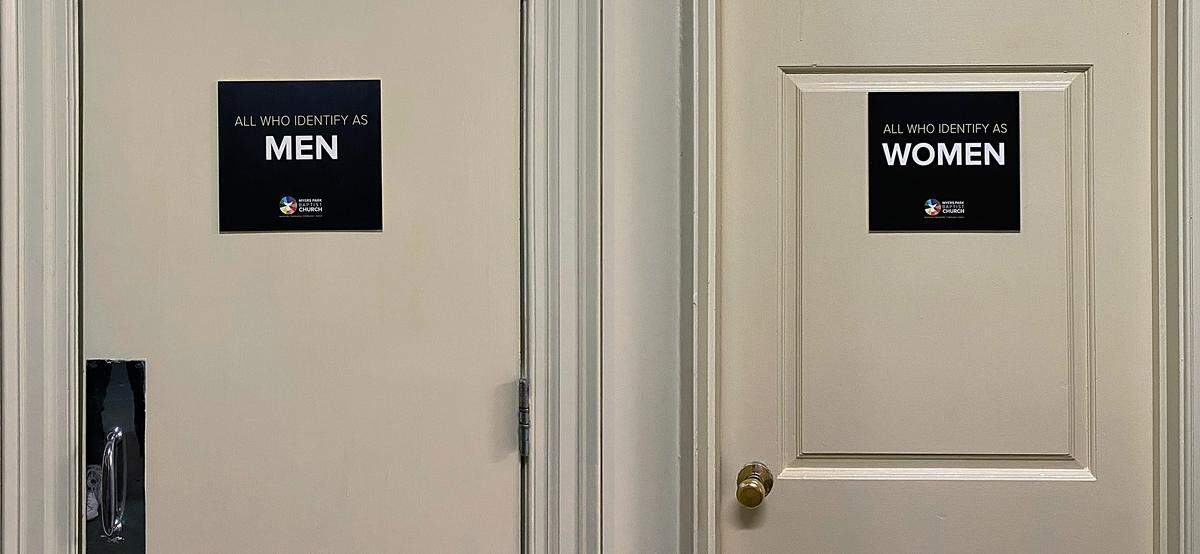
The latest in the church’s social justice campaign? Inclusive restoom signs, which read “All Those Who Identify As Men” and “All Those Who Identify As Women.”
‘We needed to be bolder and louder’
Myers Park has been a part of the Charlotte community since 1943. And while it’s Baptist in name and in other senses — being congregation-led, embracing freedom of thought and freedom of pulpit — it is far from traditional Baptist churches in other ways. The church considers itself a diverse ecumenical one, with 20 faith communities comprising the congregation of more than 2,000 members.
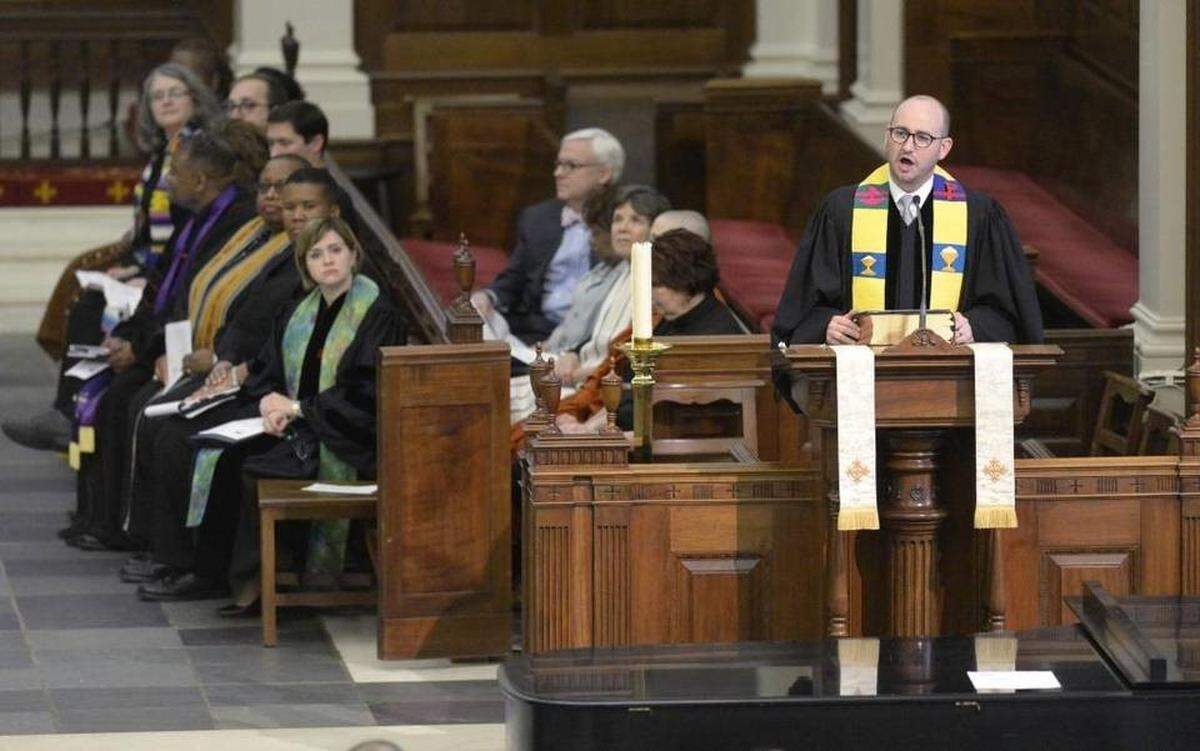
Rev. Benjamin Boswell, Myers Park’s senior minister, said the church has been historically inclusive and positive about “the rights of people.” It’s embraced women leaders and vocal ministers. And while this should resonate with young people and new members of the Charlotte community today, the church wasn’t reaching them.
“This church has been a prophetic witness for 75 years,” Boswell said. “And we truly feel the things we believe in — LGBT inclusivity, racial inclusivity, justice, reform for immigrants, trying to effect change with the climate — this is something we focus on, and this is something millennials care about. We felt like they would connect with this. But they weren’t.”
After gathering a group of people within the church, working with a company with experience with branding and establishing identity and studying the people in their community, Boswell said church leaders learned about a larger disconnect between Myers Park and Charlotte.
“We came to realize was that: We know who we are. And we thought the city did — and they don’t,” Boswell said. “If you’re a lifelong Charlottean, you know who we are and you’ve had your whole life to decide whether to be with us. ... But with new people, young people coming into the city, they don’t know who we are. We haven’t been able to break through.”
The rapid population growth in Charlotte, as well as the broader decline in Christianity, has likely played a factor in this disconnect, Boswell said. Conflicting perceptions about the church’s Baptist name, steepled appearance and progressive message further muddied the waters.
“We had some secret worshippers — like secret shoppers — come to our service,” Boswell said. “They were making a lot of assumptions based on the name and based on the architecture. … These people said things like, ‘Where are the photos of the civil rights activists that were a part of this church back in the day? Where are the powerful things they said?’”
“That made us say, ‘Wow, we need to get our message past the curb,’” Boswell said. “We needed to be louder, honestly. We needed to be bolder and louder.”
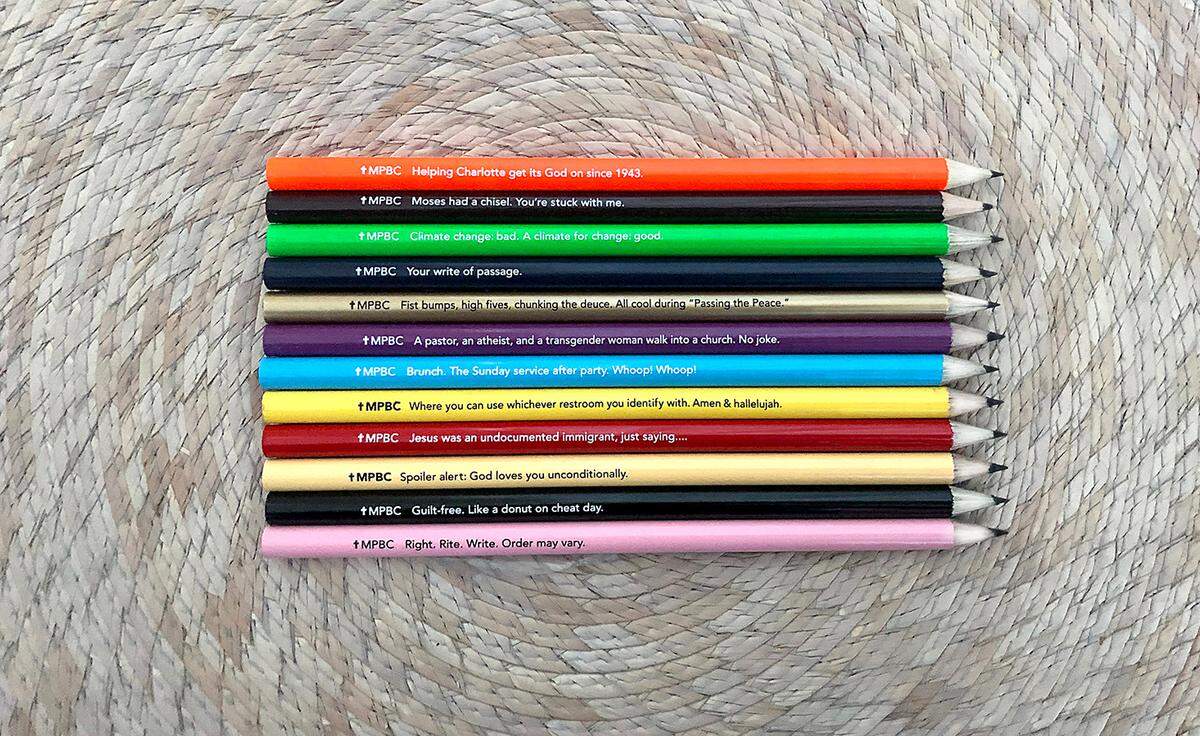
What resulted was a vibrant campaign, spearheaded by congregant Laurie Donato and her partner, Ruben Lopez, that consists of the bold banners you’ll see outside Myers Park, as well as other subtle touches, including rainbow-colored pencils in the church’s pews, gender inclusive restroom signs and a logo redesign.
The pencils that were added to the church pews are embossed with phrases like “A pastor, an atheist and a transgender woman walk into a church. No joke,” and “Climate change: bad. A climate for change: good.” The pencils have been walking out of the sanctuary after services, and that’s OK, Boswell said in a statement in January, even welcomed.
We want everyone here, no matter who you are
Chaz Seale, chair of the task force behind Myers Park’s strategic assessment, said the church is excited to shed its image as a traditional Baptist church and showcase its true identity.
“Here it is, this traditional looking church with this steeple,” Seale said, describing Myers Park. “It looks pretty old-fashioned. Well, we’re going to make it sparkle with color. When people drive by and see us, they’re going to see who we are. We’re open and affirming here. We want everyone here, no matter who you are.”
How will the church measure success in this new venture? Seale said they’re certainly going to be paying close attention to whether awareness and attendance levels go up – online and in person. But it’s more than crunching numbers, both Seale and Boswell said.
“We feel like, if we do our job, if we do what we’re called to do – which is to help the city and help the community know us like we know ourselves – that’s how we’re going to mark success,” Boswell said.
And while the campaign is primarily outward-focused, Boswell and Seale foresee benefits for the Myers Park’s already committed congregation.
“We want them to say, ‘We’re the people with the pencils. We’re the people with the posters,’” Boswell said. “We want them to know that there are other people out there in the world that want to be with us.”
Seeing the Bible in the vision
Biblical stories about a clarity of purpose and a love for community are the most reflective of this new chapter for Myers Park, Boswell and Seale said.
To Boswell, the obscure prophet Habakkuk reflects the campaign’s intent to be clear and straightforward with the community. In one biblical account, Habakkuk is told by God to write down a vision and inscribe it so clearly “that a runner may read it.”
“God saying, ‘Write it down, make it plain, make sure everyone understands it,’” Boswell said. “I’m making that my motto behind the campaign.”
When it comes to the “why” behind the campaign, Boswell cites Matthew 25:35-40, in which Jesus identifies himself with the weakest and most vulnerable.
“‘You saw me sick, you saw me hungry, you visited me,’” Boswell said, summarizing Jesus’ words in the section. “‘You saw me thirsty, you saw me imprisoned.’ People said, ‘When did we see you like that?’ And he says, ‘Anytime you did it to the least of these, you did it to me.’ … Just like that, I think our church has always been a community called to care for those who are the most vulnerable and marginalized. We welcome those that other churches would not take in.”
Similarly, the neighborly message of Mark 12:31 resonates with Seale.
“To me, it’s absolutely simple, it’s simply, ‘Love thy neighbor,’” Seale said. “Love thy neighbor and everything else follows.”
Editor’s note: A version of this story first appeared in December 2019. This article has been updated to include new details.