Instagram accounts publish testimonies about being Black in Charlotte schools
Kennedy Manyika was raised to look in the mirror and see himself — see Kennedy.
“Somewhere along the world, when I was getting older and realizing what was going on in this world, when my parents told me about the protocol when I get pulled over by the police … and when Trayvon Martin was killed — the first thing that I started to see was my blackness,” he said.
Manyika, a 2016 graduate of Charlotte Christian School, said this is an experience that many students from minority backgrounds have. “You’re fully loved and fully known and accepted as a child growing up in your house, and the second you step outside, you realize that’s not the way the world works,” Manyika said.
What is the experience of being Black in Charlotte’s public and private schools? Thanks to new local Instagram accounts, we can begin to understand.
Black at Weddington, Black at Marvin, Black at Providence Day and Black at Charlotte Christian are just some of the platforms that highlight the stories of students who have experienced or witnessed racism at school. On Instagram, posters are offered anonymity.
These accounts join others across the country, dedicated to sharing anonymous testimonies about the experience of being Black in schools.
“During my 10th grade year, while in a political argument, another student told me ‘If this was the 60s you wouldn’t even be able to sit this desk next to me in class.’ He later apologized for his actions after a chat with my brother,” reads one post on Black At Charlotte Christian from an alumni from the class of 2015.
In the bio of the account, an anonymous Google Form allows alumni, faculty, students and more to share quotes, experiences or events that “sums up being black at Charlotte Christian.” For those who are non-Black, the form offers space for people to share what they have witnessed that impacts their Black friends.
Another account, @cms4racialjustice features submissions from CMS students and resources to advocate for change, such as an email template to send to faculty, petitions to remove police from school and reading lists.
Students, alumni share their stories
Claire Tandoh, a Black woman, graduated from Providence High School in 2020 and is the founder of the organization Kidz Fed Up. Tandoh recalled a time in seventh grade when a white student was brushing her hair in class, while her friend, a Black student, was putting on lip gloss. The teacher singled out Tandoh’s friend and said, “This isn’t a beauty salon,” Tandoh recalled.
“Teachers and staff just have to understand that there are students that don’t feel comfortable in your classrooms, they don’t feel comfortable with the things that you’re saying, but they don’t feel confident enough for fear of backlash and getting in trouble or being targeted,” Tandoh said.
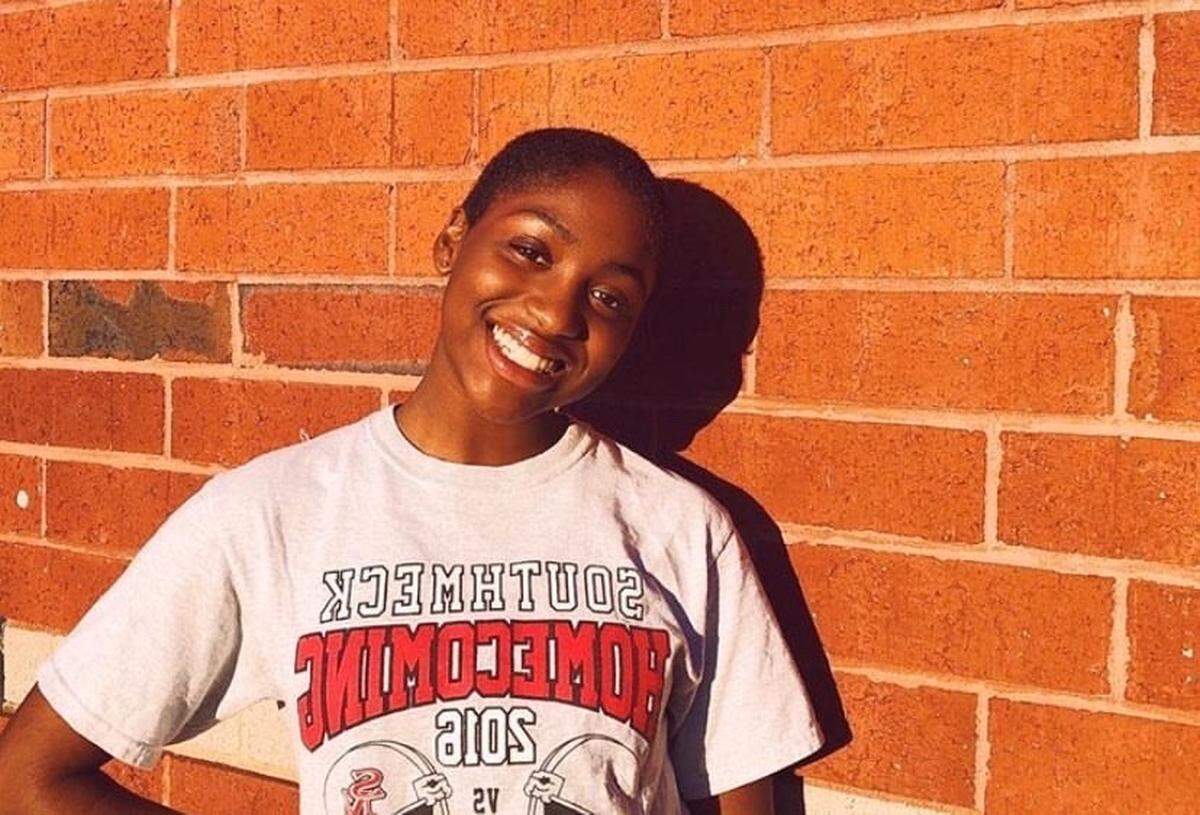
Jessica Jant graduated from Providence Day School in 2017 and is a rising senior at East Carolina University. Jant, a Black woman, said when she first saw the Instagram page @blackatprovidenceday, she was happy that the racism that has occurred is being described on a public platform. Jant wasn’t shocked at the content of the posts. “It doesn’t surprise me that stuff like this is still happening to students that go there now.”
One post in particular resonated with Jant: “A teacher called me and another Black girl each other’s names on multiple occasions even though we look nothing alike. Her excuse was that our hair was similar, but I had twists and the other girl had cornrows.”
Jant also submitted a testimony to Black At Providence Day. Jant said she was walking down the school hallway with her sister. Her sister asked Jant to put something in her bag. While doing this, a teacher stopped and questioned her actions. “I really didn’t think anything of it until I got home later that day and realized he probably thought I was trying to steal,” the post stated.
Eva Bower, a biracial woman, graduated from Charlotte Christian in 2017 and now attends UNC Charlotte. She said seeing the account and reading the testimonies of students and alumni gave her a sense of validation.
One testimony from a student from the class of 2024 described the experience of being a biracial student of color. “I experienced a lot of what they mentioned, it was almost like reading out of my diary if I had one, because the things they were saying, a lot of it happened to me to a tee,” Bower said.
For students who are still attending Charlotte Christian, Bower said the Instagram account serves as an outlet that she herself didn’t have. “I know that it can feel very intimidating and they may feel a little trapped and silenced, and it’s just a really good outlet to vent, get frustration out and be heard for maybe the first time,” she said.
Manyika said he was often complimented for being “eloquent,” when he was simply saying similar things in class to his white classmates. “I wasn’t doing anything extraordinary, I was just speaking normal English,” he said.
Manyika said these posts illuminate how at a predominately white institution, people say insensitive things without seeing the harm behind it. “It’s hard to also have to deal with that every day and then explain why that’s harmful and insensitive,” he said.
Charlotte Agenda reporter Paige Hopkins, an alumna of Marvin Ridge High School, reflected on the Black at Marvin Instagram account. “Incidents of white students using racial slurs, monkey noises, and confederate flags, are unfortunately consistent throughout,” she wrote in Agenda.
Calling out racism directly
Most of the accounts redact names of students, faculty and even schools. Some commenters have encouraged those who make submissions to include student names and have called on account administrators to leave the names up.
Tandoh said genuine allyship is “calling out the racism in your classroom,” such as the differences in language used when talking to students.
Tandoh said calling people out is part of unlearning racism. For allies, “You have to unlearn your racism as a white person, and you have to dedicate yourself to accepting and acknowledging your white privilege,” she said.
Jant did not name the teacher who addressed her in the hallway in her submission to Black at Providence Day. But now she wishes she had. “Maybe the teacher who said that to me didn’t realize it was racist or that I felt some type of way about it,” she said.
Bower said she hopes the focus stays on sharing the experience itself, instead of on name dropping, especially when students are still in middle or high school. “That’s just another way to take the focus off of the pain that I and so many of my classmates have felt,” Bower said.
Public response
Glyn Cowlishaw, head of school, and Chris Mullis, chair of the Board of Trustees, wrote a letter to the Providence Day community, posted on June 27, addressing the Instagram account.
“The experiences of current students, alumni, parents, and employees leave no doubt that we must take action to move from not being racist to being an anti-racist school. For the Black members of our community, we see you, we hear you and we will act. We are truly sorry,” they stated in the letter.
Some of the actions that Providence Day pledged to make in this statement include creating a form that allows students, faculty and staff to report “incidents of racial bias,” reviewing how history, culture and marginalized groups are taught, anti-racist training for staff and reviewing hiring processes.
But not all responses have been supportive.
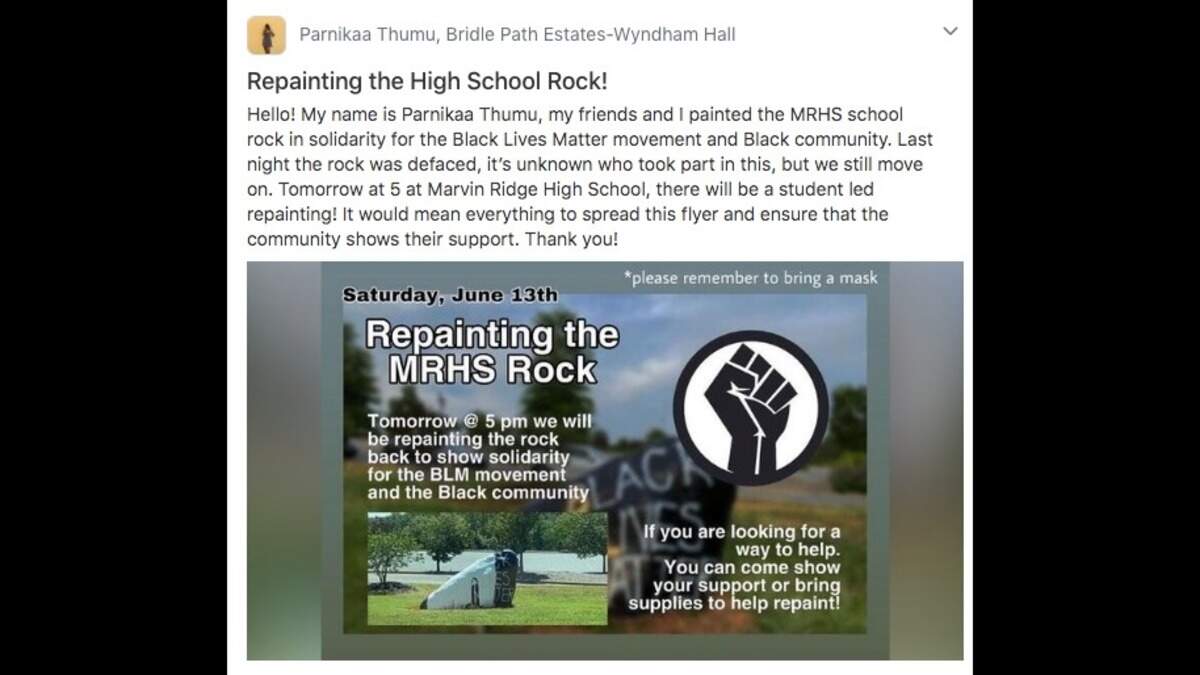
An Instagram account @spamatmarvin first posted on June 19 an image of a rock painted with Black Lives Matter at Marvin Ridge High School, defaced with white paint. The account then commented on posts from Black At Marvin, implying the anonymous testimonies were not true.
Another Instagram account, @truthatcharlottechristian, was started on June 28 with a post that stated “Trump 2020.” Originally under the username @whiteatcharlottechristian, the bio on the Instagram account stated it will “point out the truth at CCS.” The account is still up, but posts have been deleted.
Bower said the account appeared to be made in retaliation to Black at Charlotte Christian and to “try to invalidate and fact check the stories that were being told on Black at Charlotte Christian,” she said.
“To me, it was like the Black Lives Matter movement getting ‘All Lives Matter-ed,’” Bower said.
What happens next?
Tandoh said she hopes these accounts can serve as forces for change.
“Hopefully CMS takes [the Instagram account] into consideration and understands that they can’t push it under the rug anymore,” she said. “There’s just no more acting like this isn’t happening or it doesn’t exist, because students are calling it out now.”
But Tandoh said there is no straightforward path to addressing racism in CMS schools. “There’s just so many things you can tackle,” she said.
The CMS Board of Education issued a statement on June 23, denouncing bias and racism in CMS schools.
“Now is the time to fight actively and comprehensively against racism so that our children feel safe and nurtured and unconditional love for one another is valued,” member Lenora Shipp read on behalf of the board.
What doesn’t need to happen are more town halls, Tandoh said. Instead of more discussions, Tandoh hopes to see action. “People are just going to keep on talking, and that’s not what we want.”
But at Charlotte Christian, Bower hopes talking is the next step.
“I think people are really looking for a conversation and a dialogue to be open, because there really hasn’t been much of that … it’s been a lot of nothing, honestly,” she said.
Head of School Barry Giller sent a letter to the Charlotte Christian community on July 2. In the letter, Giller outlined the steps and programs the school plans to take to address racism, such as implementing processes for students to report incidents of racism, the formation of an alumni of color advisory council and researching the hiring of a director of diversity.
“The leadership team and I are aware of and monitoring the various accounts on social media that are sharing experiences of current and past students,” Giller said in the letter. “Please know that we aim to learn from what is being posted; however, we do not feel social media is the proper venue for us to respond.“
Manyika said one step that Charlotte Christian can take is to add more perspectives to history curricula. “I feel like a lot of times we are learning the same information from the same two continents over and over and over again,” Manyika said.
Manyika said institutions beyond just Charlotte Christian are at a reckoning. “If you are over a body of people, whether it’s at a workplace or at a school or at a college, and these things are happening, you have to create an environment where accountability and difficult conversations are encouraged,” he said.
What Bower can say with confidence, is that this is a moment to spark true change.
“They can’t say, ‘Oh we didn’t know, we didn’t see it’ — it’s all over the internet,” Bower said. “This is a nationwide movement … and sooner or later someone is going to wake up and realize there’s a problem that needs to be fixed immediately.”
Black at Charlotte schools
Black at CLS (Charlotte Latin School)
Students for Racial Justice @cms4racialjustice
This story was originally published July 7, 2020 at 10:05 AM.