Trailblazing Charlotte sommelier ‘made everyone feel like royalty’ — even with a $10 wine

Fond recollections of Anthony “Wes” Wesley have flowed like wine from the mouths of those who knew him best since McNinch House Restaurant’s legendary sommelier died at age 74 last Saturday, after a months-long battle with lymphoma.
This story, however, might encapsulate him best:
One day, many years ago, as the staff at the fine-dining restaurant in Charlotte’s Fourth Ward was preparing to host a chef’s table, Wesley walked in with a bottle of Apothic Red that cost maybe $10. The 5-foot-5-on-a-good-day native of the West African country of Liberia announced that he planned to pair it that night with a chocolate dessert then-head chef Chris Coleman had created for the dinner — and Coleman responded by chuckling in disbelief and shaking his head.
“Man, that’s like a grocery-store wine,” the chef told the wine director. “We can’t do that.”
To which Wesley told him, “You know what, Chris? Good wine, or the perfect pairing, doesn’t always have to be the fanciest.”
Wesley went ahead with his plan, and added a twist — by pouring the Apothic Red alongside a Duckhorn Cab-Syrah blend worth more than 20 times as much, presenting both blind, and asking diners to try them and state their preference.
Of the 10 people at the table, all but two picked the Apothic Red.
“That summed up Wes. That, like, was Wes,” says Coleman, who left McNinch House in 2013 after working with Wesley for 10 years but had remained close friends with him (and who today is a partner at Built On Hospitality, which owns Charlotte restaurants Goodyear House, Old Town Kitchen & Cocktails, and Haymaker). “It’s the old ‘don’t judge a book by its cover.’
“‘Don’t judge a wine by its label, or its price tag, or where you buy it;’ and for Wes, it was: ‘Don’t judge this icon of Charlotte restaurants by his short stature. The fact he was from Africa. The fact that he didn’t come up through the traditional systems of wine knowledge and education.’
“He really broke down barriers.”
But while Wesley will be immortalized by many as a pioneer — an African-American in a traditionally white field — those closest to him say that above all else, he’d want to be remembered as someone who was extraordinarily passionate about his job.
And that he went to great lengths, even when he was seriously ill, to try to get it done.
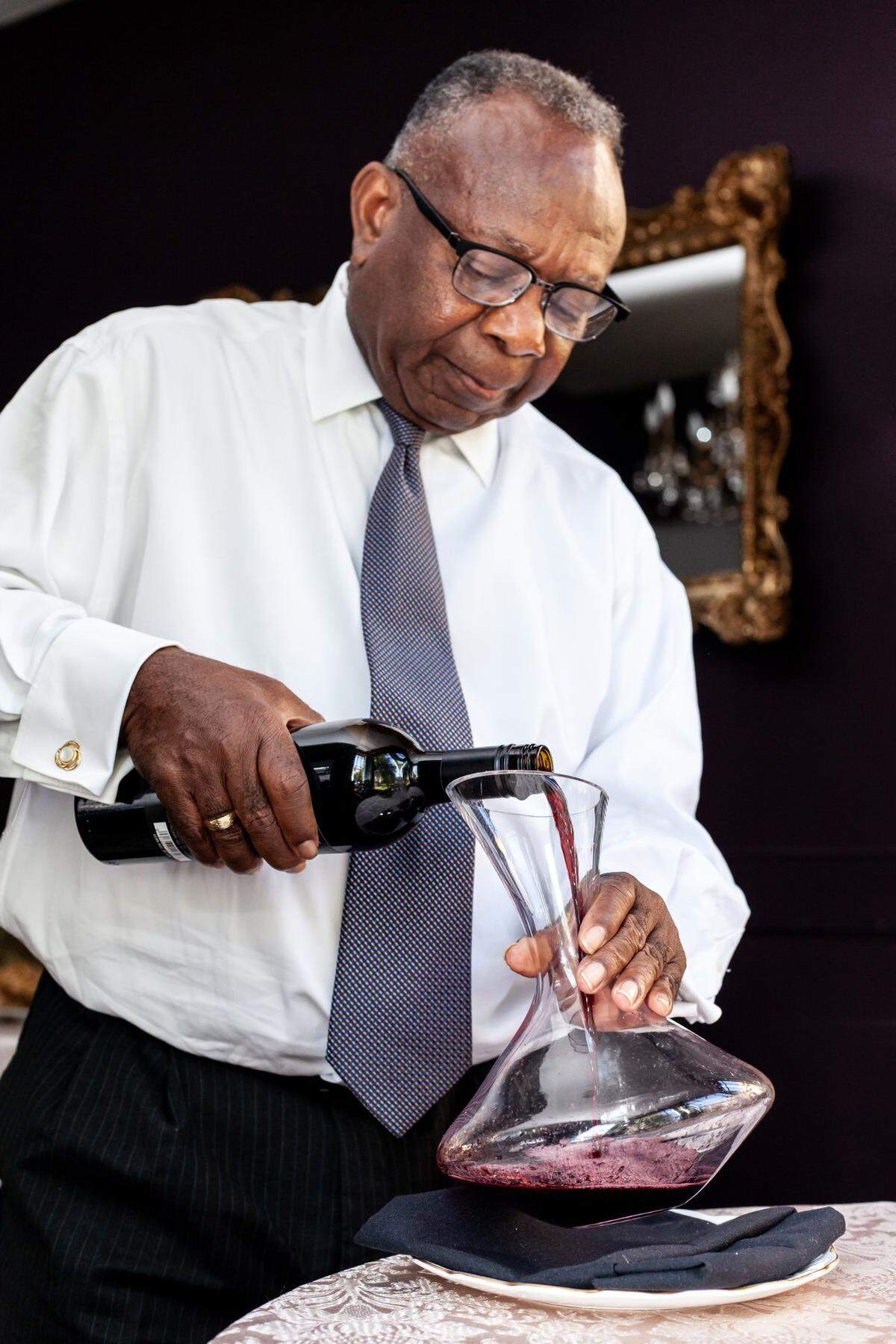
From Liberia to Lamplighter to legend status
In a 2014 interview with former Charlotte Observer food editor Kathleen Purvis, Wesley detailed his unusual path to the profession:
Born in Liberia and raised by twin aunts in nearby Sierra Leone and the U.K. (where he developed his British accent), he came to the U.S. to attend Rutgers University in 1971. He spent his 20s and 30s trying different careers, including stockbroking and insurance sales. He got married and had four children (though he would eventually get divorced). Then, after many years living in New Jersey and commuting to New York City, in 1987, he moved his family to Charlotte believing it would be a better place to raise it.
His job search here went in an unexpected direction when friends happened to introduce him to the manager of The Lamplighter, then one of the city’s best restaurants. He needed a maître d. He thought Wesley would do.
Wesley learned a fair amount about wine there. He learned a lot more after decided to enroll at the Windows on the World Wine School at the top of the World Trade Center in New York in 1992.
By the time The Lamplighter closed in 2001, Wesley was all-in on wine, and as he looked for a new position somehow got fixated on the McNinch House, a high-end staple of the Charlotte dining scene then owned by the late Ellen Davis.
Persistence paid off, the restaurant took a chance on him, and once in the door of Davis’ restored Victorian home on North Church Street he got fixated again — on convincing her to let him develop a wine program for McNinch House, which at the time, he told the Observer, had “one white, one red. The white was Chardonnay, the red was Pinot Noir.”
Davis decided to give him a shot.
Dee Dee Clark, who today owns McNinch House along with her husband Mitch Clark (Davis’ nephew), believes Davis did so in part because of her background as a single mother who bucked the odds.
“She was very much a for-the-underdog person,” Dee Dee Clark says. “She was for bringing people up with her. You saw that in how she hired people ... and with Wes, she wanted to see an African American man become an elite sommelier. ... Even though having an African American man as a sommelier wasn’t a thing, she was like, ‘I’m gonna be a part of making it one.’”
And Wesley relished his role.
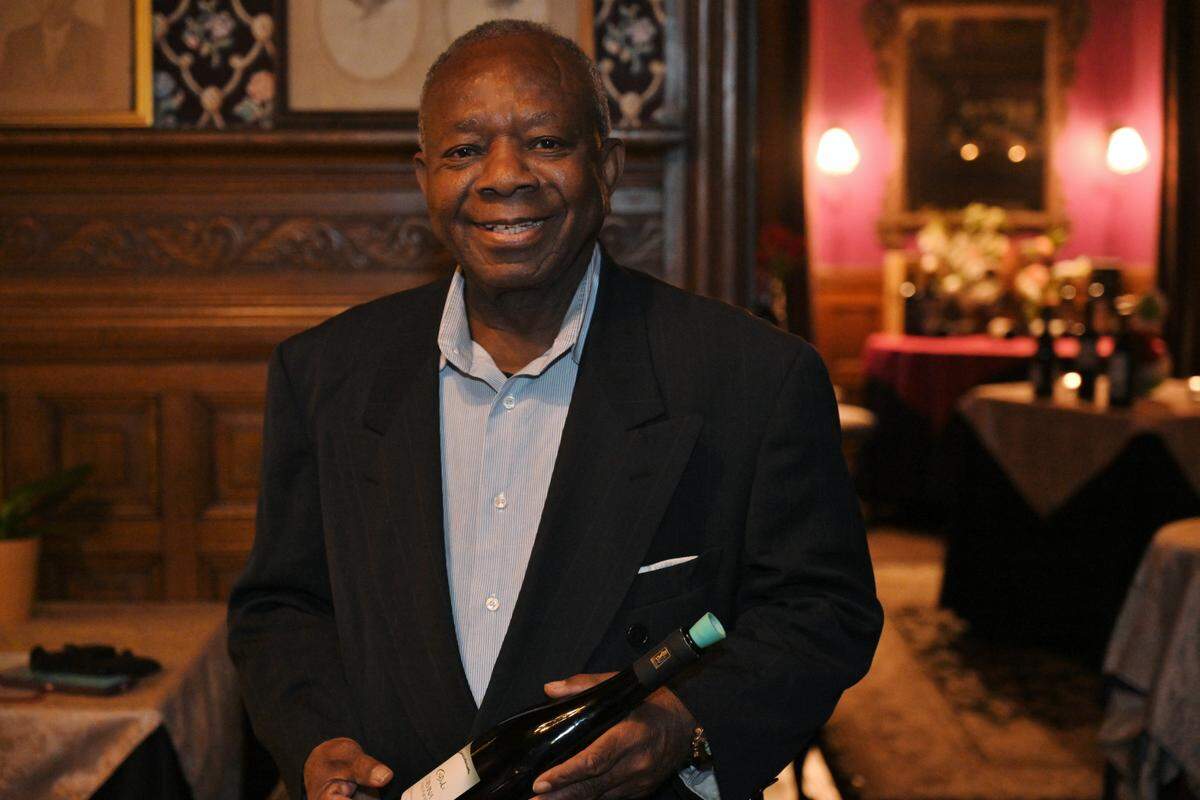
“He would come up to the table, and he’d say, ‘What kind of wine would you guys be interested in drinking tonight?’” Mitch Clark recalls. “(Someone) would say, ‘Well, what do you recommend?’ And oh my word … you could see Wes — he looked like a 747 getting ready to take off, ’cause he was in his element. He would steer them through different wines. He tried to make it more of an experience.
“I mean it’s not cheap to eat there, and some people would really have to save up ... and he just went above and beyond to make everyone feel like they were royalty.”
Over time, Wesley and Davis would become great friends; he also would essentially become a surrogate family member of the Clarks and their three daughters; and in the 22 years he spent as McNinch’s wine director, his program routinely was recognized by Wine Enthusiast and Wine Spectator as being among the best in the country.
But his final year at McNinch was, without a doubt, a devastating one.
‘I have no intentions of needing anybody else’
Coleman, his former colleague and longtime friend, says Wesley was a natural teacher.
“He really tried his hardest to educate everybody who came into McNinch, so that when you left, you left a little more knowledgeable — or you left a little more open-minded — about wine than when you’d come in.” To that end, even as Wesley moved through his early 70s, he was determined to keep sharing his passion, not only at McNinch House but also through a new wine school he tried to launch in the fall of 2022.
Around the same time, though, the restaurant’s family went through a grueling period of losses.
First, on Thankgiving Day 2022, Davis’ daughter and best friend Elizabeth “Beth” Davis (McNinch House’s office manager) died at age 66 after several months of health problems. Then, in January, just over a month and a half later, Ellen Davis died at age 84.
Mitch and Dee Dee Clark were still processing their grief when they were dealt yet another blow: Two weeks after Davis died, Wesley called them to say doctors had found a grapefruit-sized tumor in his stomach.
Initially, chemotherapy treatments worked, and in July he was deemed cancer-free.
He returned to work, but Dee Dee Clark says she tried in the summer to convince Wesley to let her hire an assistant sommelier that he could mentor, to take a little pressure off of him. Wesley responded by saying, “No way. I’m working till I’m in my 80s. I have no intentions of needing anybody else to do my job,” she recalls, laughing.
Then this past October, his disease returned with a vengeance.
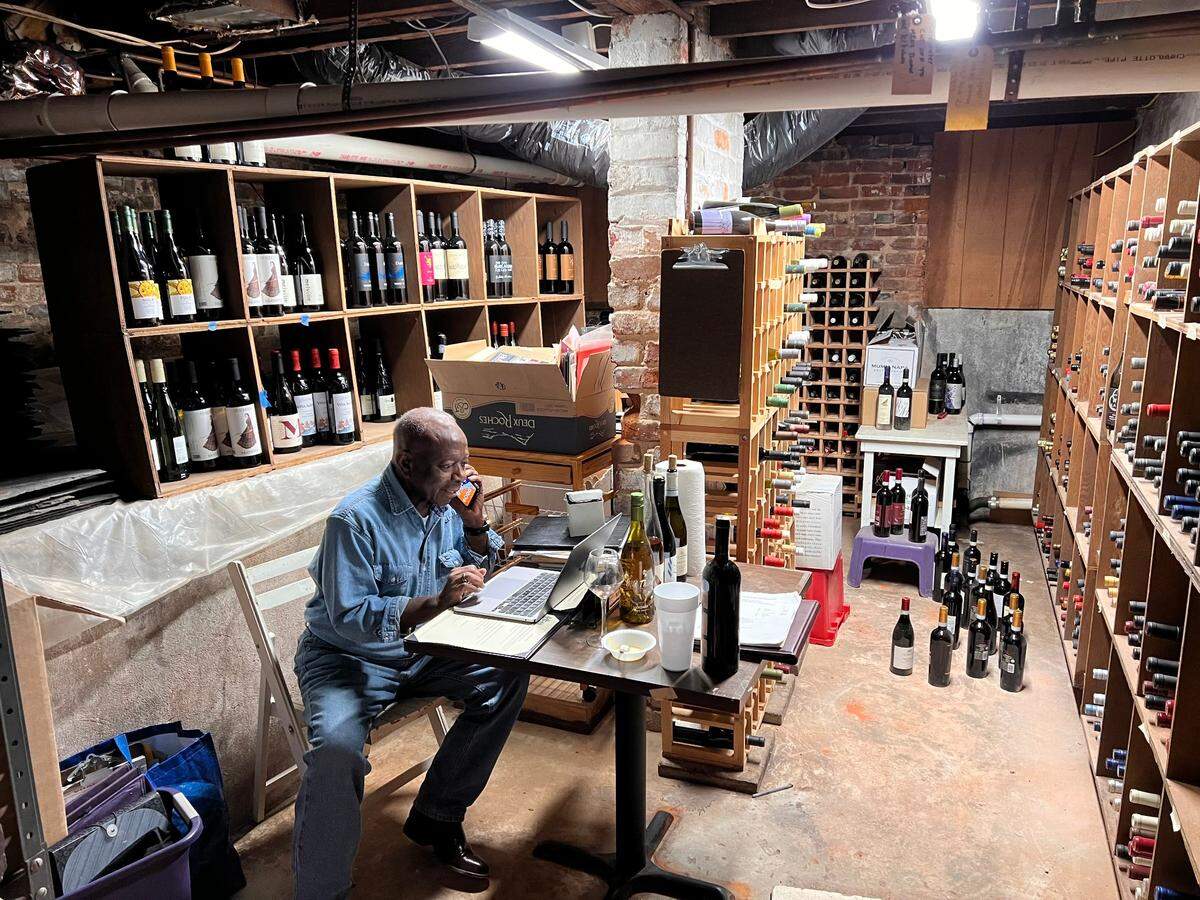
Yet Wesley continued to pitch in remotely. “We would call him and text him about different wines — and we didn’t do that just to pacify him, we did that because we needed him. ... A customer would come in and he’s not there, and they remembered a wine that he had recommended to them, you know, two or three years before, and they wanted the exact same wine. So we’d have to call him or text him and say, ‘Wes, do you remember which one it was?’
“There are 650 bottles of wine in that restaurant, either refrigerator or on display or in a cellar, and he would be able to say exactly where it was. Within a matter of seconds.”
As 2023 turned to 2024, Wesley’s health rapidly declined. But just over two weeks before he died, he made a valiant final return to McNinch House.
His Anthony ‘Wes’ Wesley’s legacy will live on
He was using a walker to get around by that point, and the Victorian mansion that houses the restaurant isn’t exactly friendly to people with walkers. So, mustering his all of his strength, he set the walker aside and ascended the steps into the house, then descended the staircase into the basement.
Once more, he was back in his element — in the place he helped establish a legacy — helping the Clarks sort through the collection of bottles in the wine cellar, even making a few suggestions for McNinch House’s upcoming Valentine’s Day dinners.
“’What about this one, Wes?’” Dee Dee would ask him.
He’d respond with excitement. “’Ooooooooo, that’s good wine.’”
“’How about this one?’”
“’Ohhhhhh, that’s a really good Chardonnay.’”
McNinch House kept Wesley on its payroll until the day he died, and recently hired as his replacement a young Black sommelier Wesley mentored: Terrell Johnson, who most recently worked at Biblio. He starts next week.
This story was originally published February 2, 2024 at 1:19 PM.