30 years ago, this Charlotte transplant helped Coolio reach ‘Gangsta’s Paradise’
At age 62, Doug Rasheed has enough self-awareness to know how his accomplishments in the music industry might be perceived by consumers of today’s most popular artists and songs.
So when younger adults who want to learn a little from him about the biz descend into the basement where he hangs all of his awards and keeps a studio, he tries not to make a big deal. “It reminds me of when I was young,” Rasheed says, “and how I felt when I would meet guys that were successful in the music business before my time.
“Like, ‘OK. He’s old. He’s a has-been.’ ... You know, how impressed can you be?”
He was never exactly a household name. And since moving to the Charlotte area from southern California to be close to family in 2005, Rasheed has come nowhere close to achieving the type of success as a music producer that he achieved during the heyday he enjoyed in the 1990s.
But household name or not, his was one heck of a heyday.
Over the span of just a few years, Rasheed’s career became intimately intertwined with several legendary artists, from Stevie Wonder to Whitney Houston to Tupac Shakur to ... “Weird Al” Yankovic.
Then there’s his biggest flex: Thirty years ago on Sept. 9, , “Gangsta’s Paradise” — a track he co-wrote and produced for a young rapper named Coolio — reached No. 1 on the Billboard charts, stayed there for three weeks, and went on to become one of the most iconic hip-hop songs of all-time.
To mark the 30th anniversary of “Gangsta’s Paradise,” The Charlotte Observer recently spent two hours with Rasheed in the Charlotte home he shares with his wife, Tonya Rivens, about what put him in position to be a part of that song; how it came together (as well as how it almost didn’t); and where his life and career went from there.
These are the most noteworthy bullet points from our engaging and enlightening two-hour conversation.
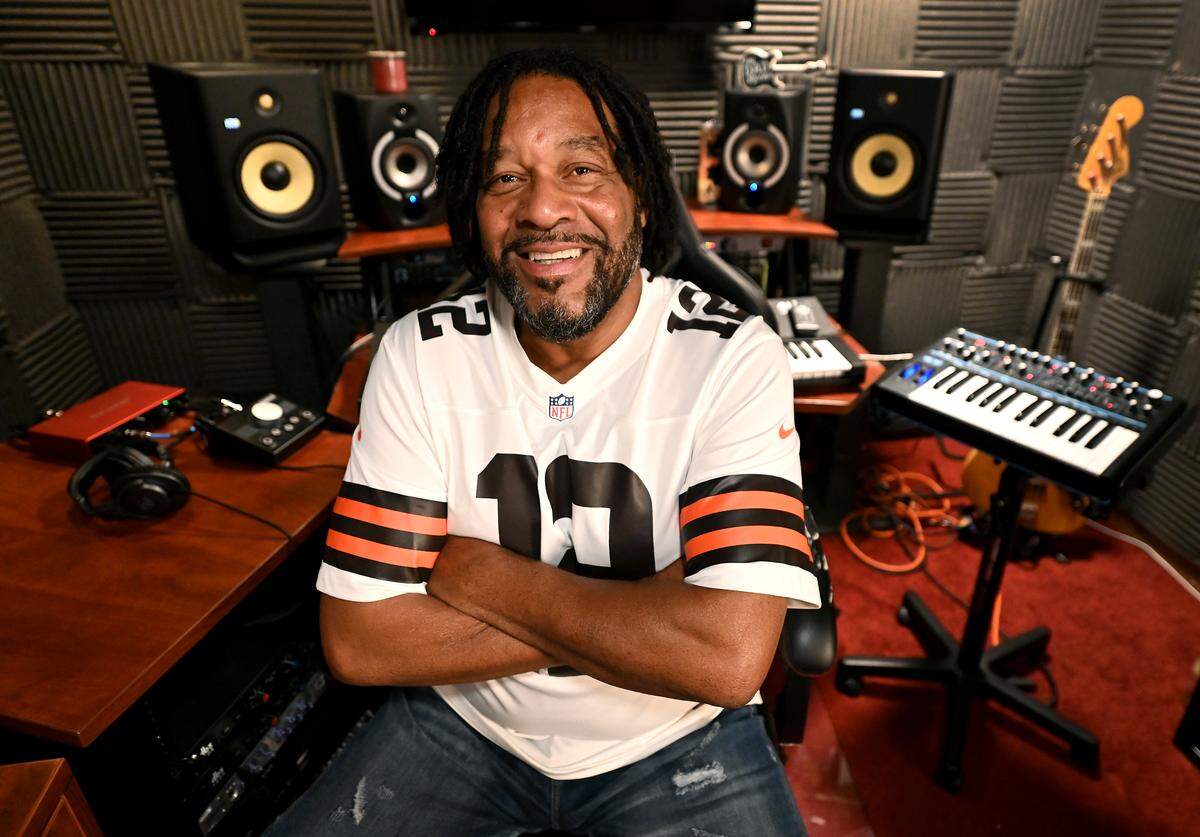
Shaped by house arrest, then two years in Japan
1. When he was a young teen, the wrong path led him toward (what would eventually become) the right one. Rasheed was mostly raised by a single mother who struggled financially, in San Diego’s Skyline neighborhood, infamous for being a hotbed of gang activity. He found his share of trouble there.
“We were running around doing all types of petty crime, me and my little friends from the neighborhood. Stealing tires, breaking into houses, we did all of that kind of stuff. And we got caught. So I was under house arrest, stuck in the house. I think I was 14. And a kid down the street sold me his brother’s bass for 10 bucks. It was cracked-up, had two strings on it. I got it tuned up, got it pretty good, and started messing with it. I stayed on that bass all day, every day — and I turned out to be a natural. That’s when I really got serious about playing music. That was the beginning. So house arrest turned out to be a good thing.”
2. Over the next decade, Rasheed continued playing music — and kept getting better. But he also continued making trouble — of a worsening kind. The big wake-up call came at age 25, when a police raid resulted in the arrests of several people he’d been running with.
“I wasn’t there. And it made me realize: ‘You’re gonna go to jail, or you’re gonna get killed. You need to get out of here.’ So I joined a band ... that had a gig over in Japan. ‘We leave in three weeks.’ I’m like, ‘I’m in!” I was there two years, and we did the whole two years at the same club in Tokyo. ...
“When I was there, I had bought a keyboard — they call it a workstation. It had eight channels on it. You could do drums on one channel, bass and keyboards, you could plug a mic in, record vocals and stuff. At first I just did it to pass the time. I had no idea that I was gonna fall in love with it. By the time I got back in the U.S., I was like, ‘This is what I’m gonna do. I’m gonna be a producer.’”
(What does that mean? In his words: “Blending the record and adding effects; taking what you’ve got and adding effects, reverb, compression, balance ... different things like that.”)
“It was just a whole different mindset when I got back. I wasn’t thinking about the streets. I was thinking about trying to work, trying to make it. ... I spent three more years, maybe, in San Diego. I had been saving money. I invested in some studio equipment and was on a mission to get good at it. Then when I was about 30, I felt like I was finally ready. So I went to L.A. — to try to find work producing.”
3. The plan was to get a job — any job — at a recording studio or a film studio. He wound up being hired as a security guard working a delivery gate at Sony Pictures, in 1993. The gate just so happened to be close to the office of filmmaker John Singleton, who’d hit big as writer and director of “Boyz n the Hood” two years earlier; and who had started trying to develop a record label with an up-and-coming hip-hop/R&B manager named Paul Stewart.
“I just basically said, ‘Hey, I’m just gonna make connections.’ I knew, where there’s film, there’s music. So there were a lot of musical artists, a lot of producers, coming through that gate, and I was spitting my game, trying to get it popping. And I had heard that Paul was the man to know. So I slid him a tape — we weren’t supposed to do that — with some of my music on it, and he liked some of it.
“From there, I ended up working with one of his groups, a girl group called Y?N-Vee. I produced a song called “Chocolate” that was a moderate success. (Released in August 1994, it peaked at No. 44 on the Billboard R&B Singles Chart.) When I heard the song on the radio, I was ecstatic.
“Paul and I went on a mission. We leased a mansion — a baby mansion — from George Duke, the jazz legend. We didn’t know how we were gonna pay for it, but like 50 Cent said: Get rich or die tryin’. We dove in. We started throwing parties and stuff. And Paul was also managing Coolio, who at that time had just one regional hit: a (1994) song called ‘County Line.’ So Coolio was always around.”
Finding their way to ‘Gangsta’s Paradise’
4. Rasheed was simply trying to one-up Stewart when he unearthed what would become the basis for “Gangsta’s Paradise.” They both had impressive record collections, and they would routinely just get together for head-to-head “Who can pull out the dopest sample?” competitions. (Sampling, in a nutshell, involves taking small parts of an existing song, extracting them, and incorporating them into a new piece of music.)
“That day, I pulled out Stevie Wonder’s (“Songs in the Key of Life”) album and I listened to it. I was very familiar with it. It came out of my mom’s collection. And when I heard that loop (on “Pastime Paradise”), I said, ‘Oh, this is it. I got him. He’s losing today.’ I kind of looped it up — ’cause I had that advantage; I could go in and kind of spice it up a little bit. Then he pulled his record out, and he’s like, ‘Ah, you got me.’
“From there, I just kept messing with it. And L.V. (the singer who would eventually perform the chorus and the bridge, who also was being managed by Stewart), we were working on music for him to try to get him a record deal. He heard it, and he was like, ‘Man, that’s it.’ We had already started working on the chorus and his singing parts when Coolio came by the mansion and heard it. He was like, ‘Yo, what’s that? Man, I need that.’ He was working on his new album. At that time, he was the only one that had a record deal. So doing it on his album was a no-brainer.”
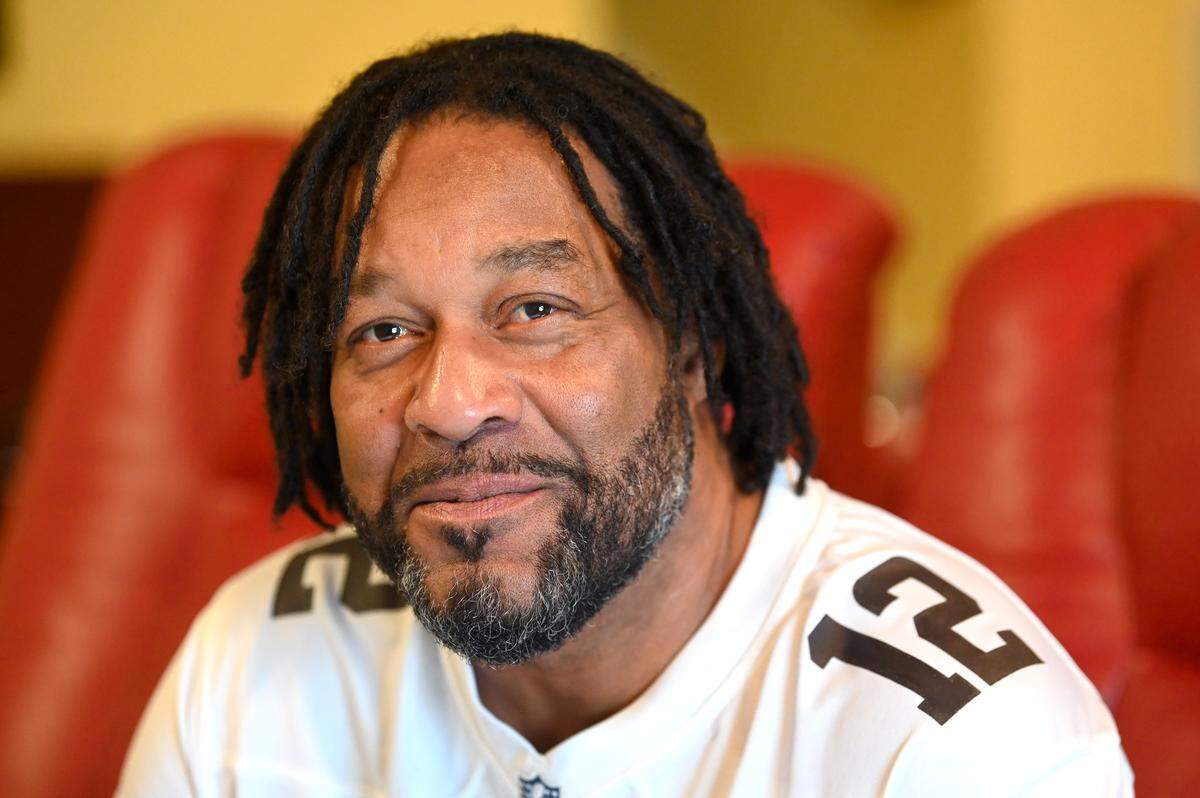
5. Rasheed, L.V. and Coolio finished the song within about two weeks. But there was just one problem: Stevie Wonder initially refused to grant permission to sample “Pastime Paradise” — mainly because Coolio’s original lyrics included profanity and references to violence.
“He was like, ‘No, nope, negative. I don’t want any cursing.’ At first, we were like, ‘Oh, that’s it. We’re done.’ It was disappointing, because there was already a bidding war going on (for the exclusive rights to use it in an upcoming movie). But within a couple of weeks, I think, he got back with us and said, ‘Look, you just need to take out the cursing ... and take out the violence.’
“It was a good decision, because I think that when Coolio rewrote it, the lyrics were better. I was glad. I knew that it gave us a better opportunity to have success with the record. Because to me, it wasn’t a very street-sounding record. It was a pop record. So it didn’t need it. (The profanity) just didn’t fit with that song, to me.”
By the time the song was released, on Aug. 1, 1995, Stewart had finalized a deal to have the song featured in “Dangerous Minds,” a hit film — starring Michelle Pfeiffer as a tough teacher in a rough neighborhood — that bowed in theaters more than a year later.
As such, “Gangsta’s Paradise” became inescapable for the latter half of the ’90s.
6. The song was nominated for a Grammy for 1995’s Record of the Year, an award that recognizes producers. It lost to “Kiss From a Rose,” produced by Trevor Horn and recorded by Seal.
“Which is a beautiful song. I remember sitting there — knowing that I’m probably not gonna win — and thinking, ‘Well, I wouldn’t mind losing to that song. I like that song. But I could tell by where I was sitting that I wasn’t gonna win. I was too far from the stage. (Chuckling.) I was probably 20 rows back and way off to the side. I’ve never seen anybody walk that far to go get their award.”
It’s Rasheed’s sole Grammy nomination, and he cherishes it.
7. Another, more off-beat honor came in the form of a courtesy request from “Weird Al” Yankovic to make a parody of the song. Coolio was against the idea. But Rasheed gave his blessing to what would become “Amish Paradise.”
“I think that Coolio felt like it was making a mockery of the song or whatever. And I get that. I understood it. So they reached out to me and said, ‘Look, he just wants somebody to give him the blessing.’ And I was like, ‘Hell yeah, we’ll do it!’ Because, come on, ‘Weird Al’ Yankovic? He’s only picking the biggest, most successful songs. So I was happy to have him do it.”
“And ‘Weird Al’ and his label, they took care of me. I got some free studio time out of it in exchange.”
A partnership with Tupac Shakur cut short
7. Rasheed continued getting good work in the wake of “Gangsta’s Paradise.” He produced a remix of Brandy’s “Sittin’ Up in My Room” with rapper LL Cool J for the soundtrack of the movie “Waiting to Exhale” in 1995. Then in 1996, he produced a pair of tracks for Tupac Shakur — “Only God Can Judge Me” and “Rather Be Ya (N----)” — that wound up on the legendary hip-hopper’s most successful album, which was also his last: “All Eyez On Me.”
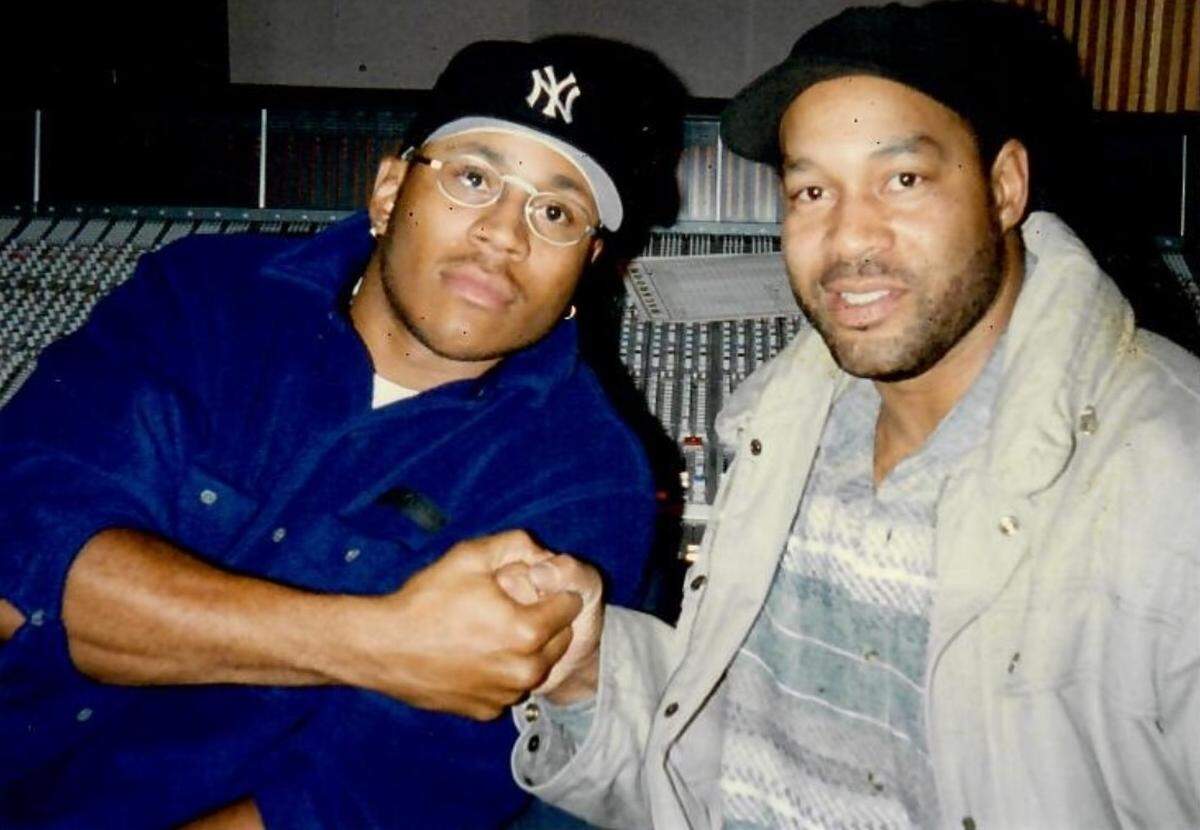
“He was two weeks out of prison when we met. Long story short, my brother knew somebody at Death Row Records, and she said, ‘I can get a tape to Tupac.’ So I put four of my best beats (in hip-hop parlance, a beat is just shorthand for instrumental background music) on a cassette tape, gave it to my brother, and he gave it to the girl. Two days later, my phone rings. It’s Tupac. And he’s like, ‘I want to do two of these beats.’”
In the process of working together, Rasheed learned something from Shakur that stands among the highlights of his professional life:
“He was impressed with the work I did (on those two tracks), and he’s like, ‘I want you to work on my label.’ I said, ‘Pshhh. Are you kidding me? Man, yeah!’ Somehow the conversation led to me being the producer of ‘Gangsta’s Paradise.’ He hadn’t known, to that point. And he lost his mind. He said, ‘You ain’t gonna believe me. When I was in jail and I heard that song, I told everybody: I don’t know how, but I’m working with this dude that did that. Whoever did that, I’m working with him. It just felt like it was kind of meant to be.”
8. Rasheed received a surprise personal invite from Shakur that gave him a front-row seat to the recording of what’s widely considered the greatest diss track of all time.
“He called me at like, midnight. “Come to the studio!” And I’m like, ‘I just got finished being in the studio for 12 hours, man. I’m tired. I’m about to go to sleep.’ He said, ‘Naw, man, naw, I need you to come, man. Come hang out with us. I’m not hanging up till you say you’re coming.’ I said, ‘All right, man, I’m coming.’ We get off the phone. I drive all the way from L.A. to Tarzana, which is an hour and 20 minutes. And he’s in there getting ready to record ‘Hit Em Up.’”
In the seething, ruthlessly violent song, Shakur hurls death threats at several rivals in the rap business, most notably his former friend turned bitter enemy the Notorious B.I.G.
“I’ll be honest with you, when I watched him record, I was like, ‘Oh, my God. He gonna get himself killed!’
“It was an unnerving experience. But it was amazing to be there. I just wonder, why did he call me that night? There were about 15 people there, and I’m one of ’em. I don’t know. I think he just wanted to keep me involved, keep me around, and make sure that we were building on the relationship.”
It was tragically short-lived. Four and a half months later, on Sept. 7, 1996, Shakur was gunned down in Las Vegas. His murder remains unsolved to this day.
9. Over the next few years, work in L.A. for Rasheed started to dry up. He says the game in the city just started to change.
“That was the point when a lot of people in the (urban) music business started going to Atlanta. I thought about it, and I said, ‘Naw, I’m not gonna go there, I’m gonna stay here.’ But it was nothing going on — no parties, nothing — all that industry stuff was done. Snoop Dogg was riding around in an armored truck. Everybody was nervous. Nobody knew what was gonna happen.”
He grinded it out for a few more years, working with Chaka Khan here, Barry White there, even branching out by working with Michael Hutchens from INXS.
But in 2005, Rasheed moved across the country to the Charlotte area to be near his mom and recalibrate.
It’s Rasheed’s ‘biggest earner by far’
10. Since then, he’s continued making music but also has worked on writing projects, including a screenplay with James “Slim” Bouler (the golf hustler made famous by Michael Jordan) that’s being shopped around, and a memoir due this fall — titled “From Rags to Gangsta’s Paradise.”
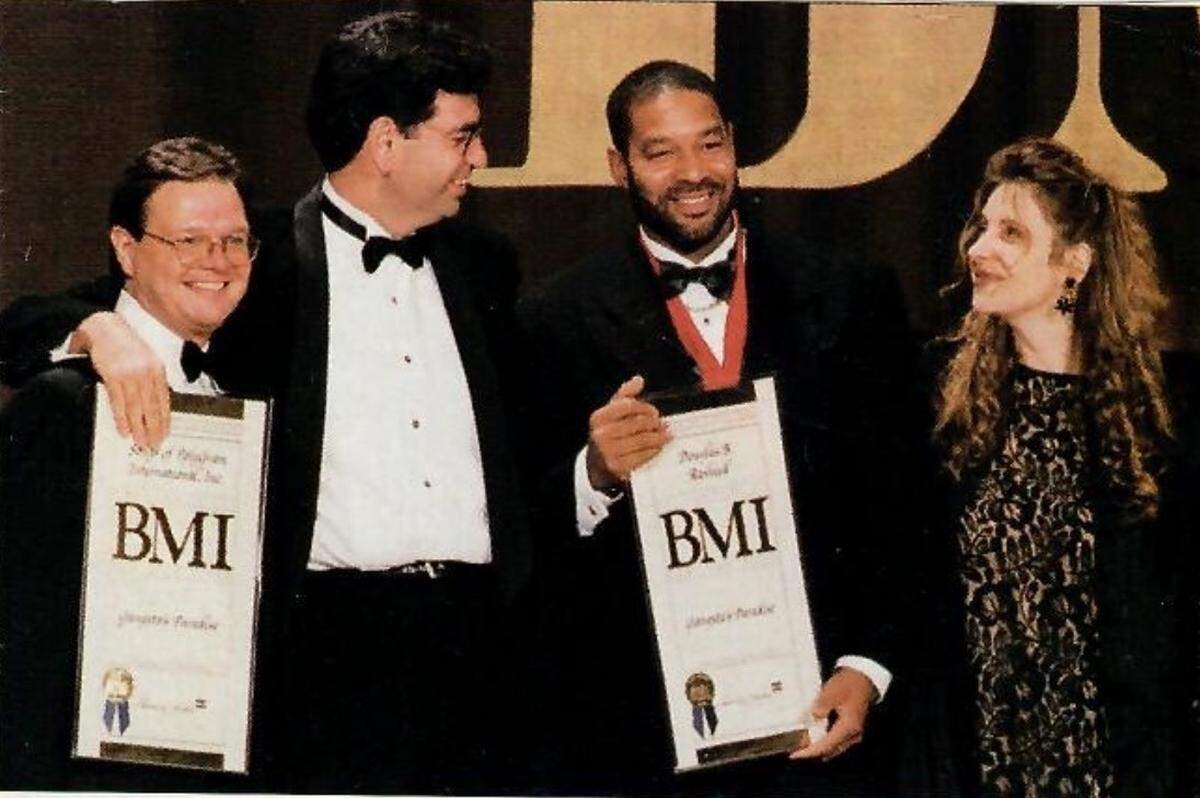
He hopes to make a little money off of it. But thanks to that collaboration 30 years ago with L.V. and Coolio (née Artis Leon Ivey Jr., who died in 2022 of an accidental overdose at age 59), Rasheed doesn’t have to worry too much about new sources of income. Per their original agreement, Stevie Wonder gets 75% of the publishing rights, while the other three split the remaining 25%.
And given that the song resonates with so many demographics, it’s always in demand.
“A good portion of my income is through licensing. Every year I clear countless licenses — I mean, around the world, ’cause it’s a worldwide hit. You got people in Germany, Russia, you name it, they might use it for a commercial. A friend of mine said he heard it on the Muzak in France, coming up the elevator. There’s a chamber-orchestra version of it.
“It’s my biggest earner by far — which is another reason why I tell people who say, ‘Naw, man, don’t use samples because it’s gonna cut down on (your income),’ I tell them, ‘But I made more money off of this song than any of my other songs. By far. I’ve got a thousand songs right now in my hard drive that have never been released. The majority of them are original. I ain’t made a dime off of ’em.’
“So yes, if you use a sample, they’re tearing into your pocket. But without the sample, we may not have sold (6) million records. I didn’t lose money; I made money — and I’m still making money off of the record.”
This story was originally published September 9, 2025 at 5:42 AM.