
The story behind a Charlotte playwright’s tale of a trailblazing Black aviator
A new play at Children’s Theatre of Charlotte that’s getting ready for takeoff features a Black pioneer of the skies.
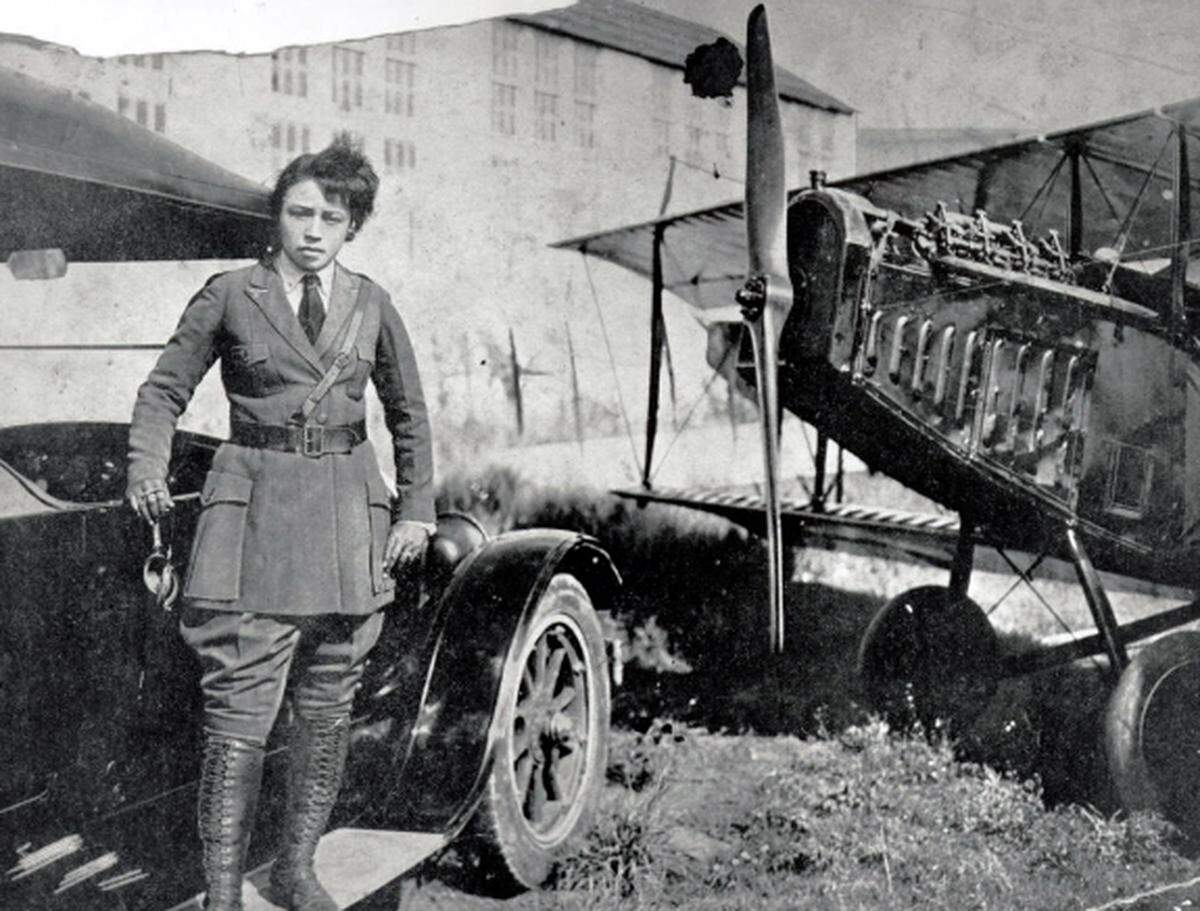
“Bessie Coleman: Fearless and Free” tells the story of Bessie Coleman, who overcame incredible odds to become the first female African American and Native American pilot.
The show makes its world premiere at Children’s Theatre Nov. 15-16. It incorporates real events and people from Coleman’s life, but is a work of historical fiction.
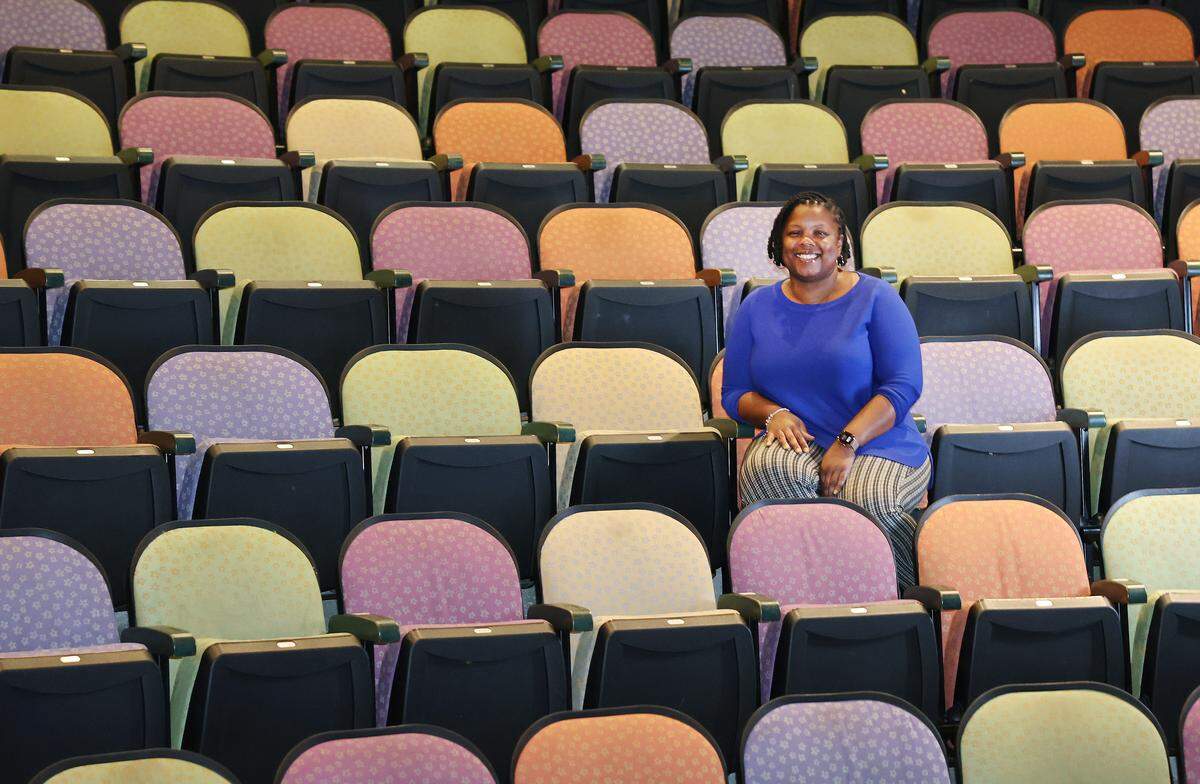
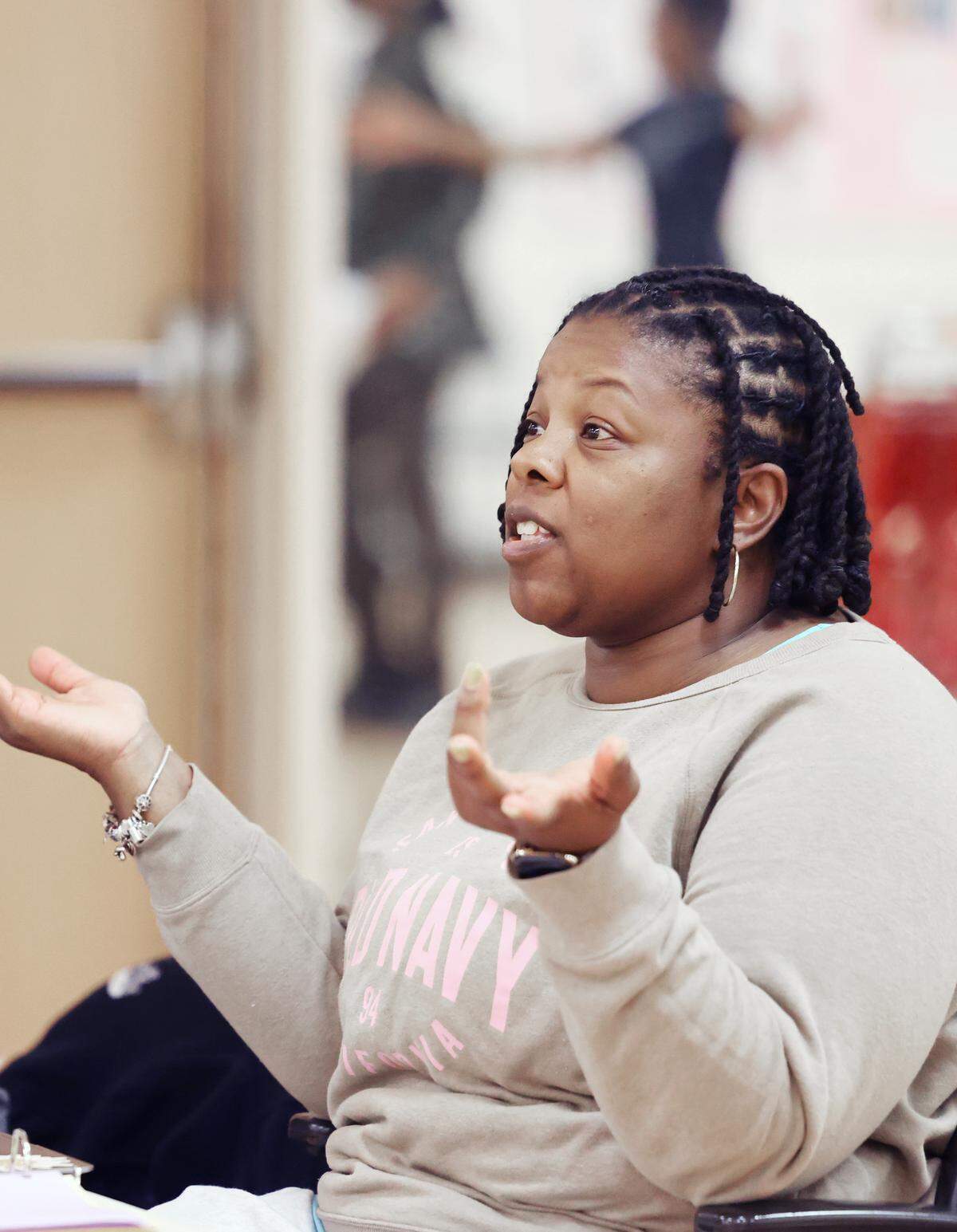
Charlotte playwright Lakeetha Blakeney, professionally known as Keetha B., wrote the show and also directs it. She hopes audiences will find as much inspiration as she has in Coleman’s story of resilience and accomplishment.
Lessons from Bessie Coleman
Blakeney first heard about Coleman as a child, during a Black History Month presentation at her church. She was fascinated, learning that a Black woman took to the skies in the early 1920s, a moment when women and African Americans were barred from American flight schools.
“I, like everyone else, had always learned about Amelia Earhart,” she said. Earhart was the first woman to fly solo across the Atlantic Ocean.
As Blakeney grew up and honed her skills as a theater artist, Coleman’s story stuck with her.
Coleman was born into a large family of sharecroppers in 1890s Texas. The play traces her journey, starting as a bold and precocious 11-year-old through young adulthood, when she earned her pilot’s license in France.
Blakeney marveled later that no play existed about Coleman, who earned her international pilots license two years before Earhart, and went on to become a popular barnstormer. Known as Queen Bess, Coleman performed aerial acrobatic stunts for large crowds across the U.S. and refused to fly for any segregated audiences.
When the opportunity to write an original play for Children’s Theatre presented itself, Blakeney immediately knew this was the story she had to tell.
Falling in love with theater
In some ways, Blakeney’s own journey as an artist has something in common with her protagonist’s: both had big dreams early on and pursued them relentlessly, no matter the obstacles.
“I think about people like Bessie Coleman, who had every reason to not do it, to stop,” Blakeney said. “I will never have to sacrifice in the way she had to sacrifice. So if she could hold onto that dream, then I can hold onto mine.”
Blakeney grew up in Kannapolis and always had a flair for the dramatic. She participated in Christmas plays at church and often entertained company at home with her performances.
But her passion for the stage really started to blossom at age 15, when she first attended summer camp at Children’s Theatre of Charlotte. Blakeney loved every moment.
“I knew I would do it for the rest of my life,” said Blakeney, who went on to double major in theater and African American studies at UNC Greensboro.
She quickly learned that having a viable theater career in North Carolina required developing other skills, too. Bit by bit, she expanded her repertoire to include acting, teaching, writing and directing.
At first, writing came by necessity, working as a teaching artist.
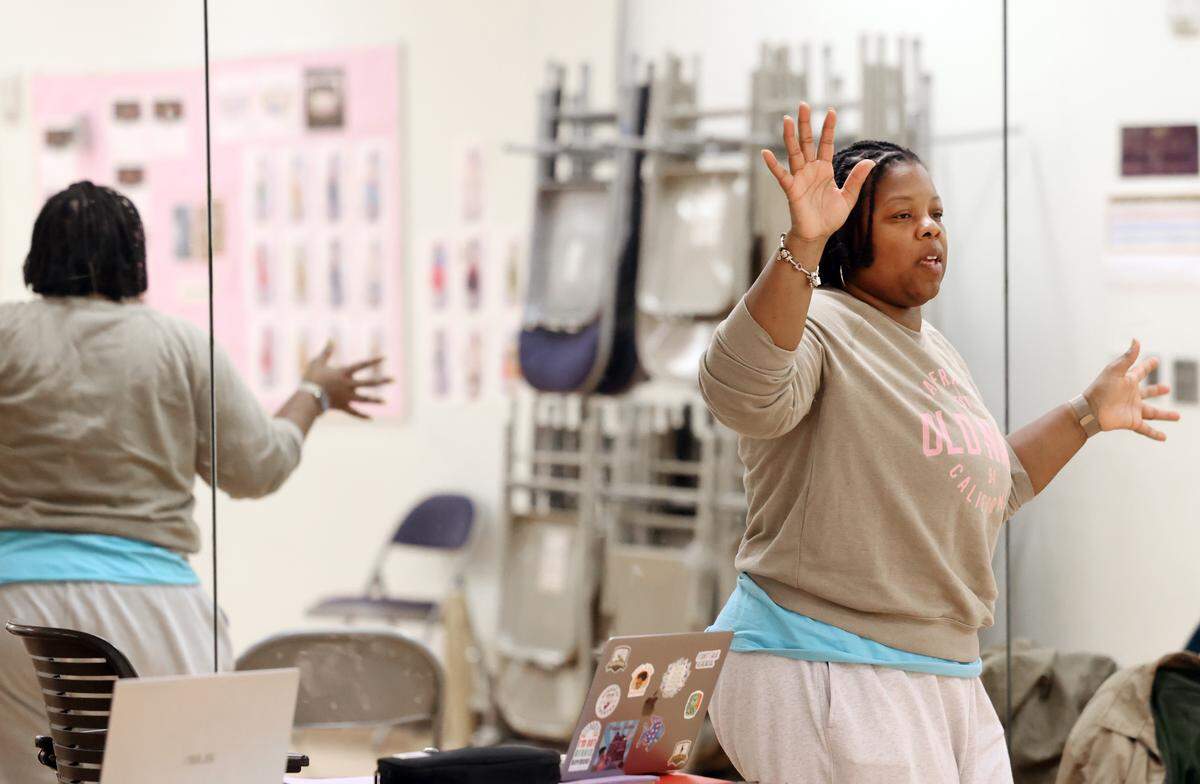
“I found myself with a huge number of kids in a classroom and never enough roles,” Blakeney said. So she’d have to add in 10 ducks or 10 cows and write lines that made sense within the show.
A visit to the Abraham Lincoln Presidential Library and Museum in Springfield, Illinois, inspired her first play.
When she asked about job opportunities, she learned the museum sometimes commissioned artists to present one-man or one-woman shows, but only from the time period in which Lincoln lived.
The resulting play, “Sweet Jenn: A Living Exhibit,” is based on female slave narratives. Although she has never performed it at the museum, she has presented it frequently around the country. That includes at the Atlanta Black Theatre Festival, where it won the 2018 Best Original Script Award.
When the COVID pandemic hit, acting and teaching jobs dried up. Unemployed and stressed, Blakeney — who also holds an MA in English and creative writing from Southern New Hampshire University — met with a career coach to contemplate alternatives.
The coach advised her to consider whether she already had something incubating that she could pursue. Blakeney did: the beginning of a children’s book manuscript she had written. She threw herself into that project.
“It really gave me purpose to have something to work on,” Blakeney said. Eventually, that story became the first in her “Princess Fearless” children’s book series and, later, inspiration for another play.
Children’s Theatre opens new creative doors
Over the years, Blakeney’s relationship with Children’s Theatre remained strong.
She’s done everything from teaching kids and performing with the touring company to standing in the rain directing school buses.
In 2023, another creative door opened at the theater. Blakeney was selected for the inaugural Paige Johnston Thomas Directing Assistantship, a four-month-paid internship.
According to the website, it’s for artists who have had limited opportunities to direct, “particularly due to one or more barriers to access.” She shadowed three directors on three different Children’s Theatre productions. Soon, she had the opportunity to try directing herself with “Danny, King of the Basement” in 2024.
“It was life-changing,” Blakeney said. “I knew exactly the type of work I wanted to do from that point on.”
She now aims to create work that can be a catalyst for change.
“My goal is to highlight the experiences and accomplishments of the marginalized global majority — voices and stories that have too often been silenced or overlooked. Through my work, I strive not only to entertain but also to educate, inspire dialogue, and foster empathy.
“Storytelling, whether on stage or in film, has the power to shift perspectives and challenge systems,” she said. “Ultimately, I create to remind audiences that representation matters, that every culture has wisdom worth sharing, and that change begins when we see ourselves and each other more clearly.”
Developing the Bessie Coleman play
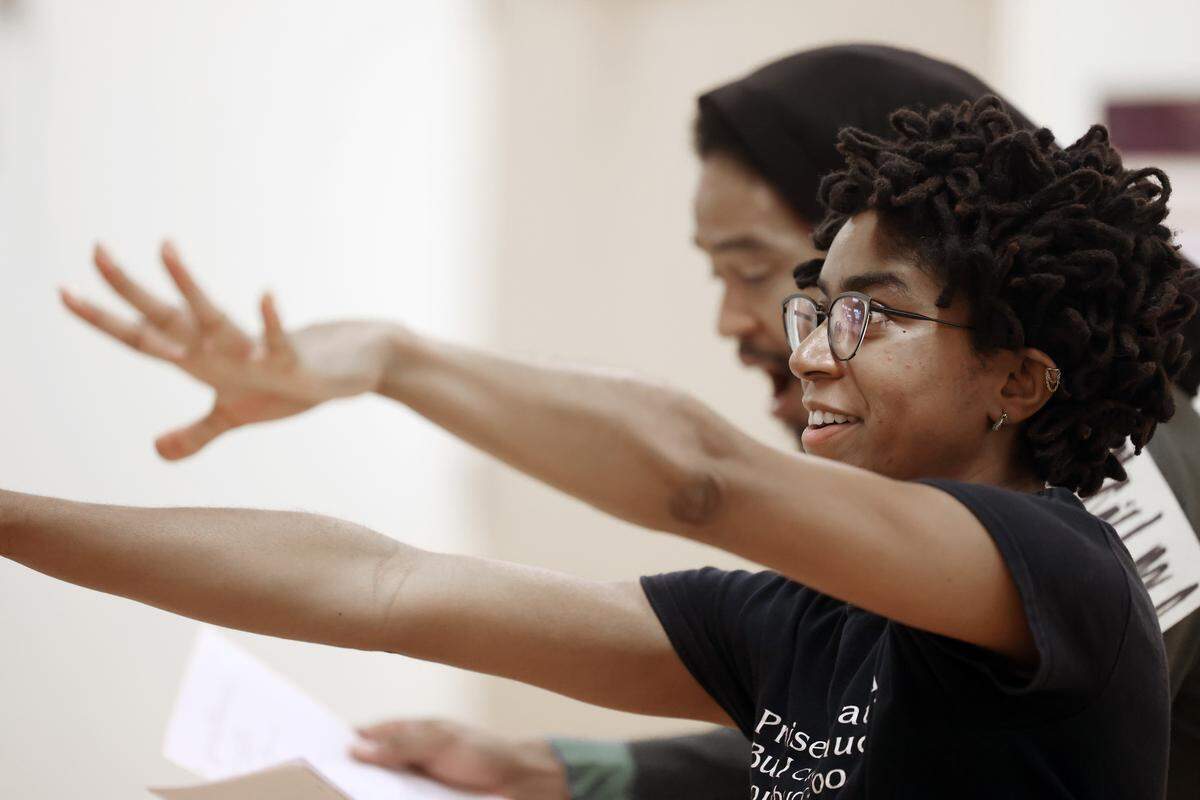
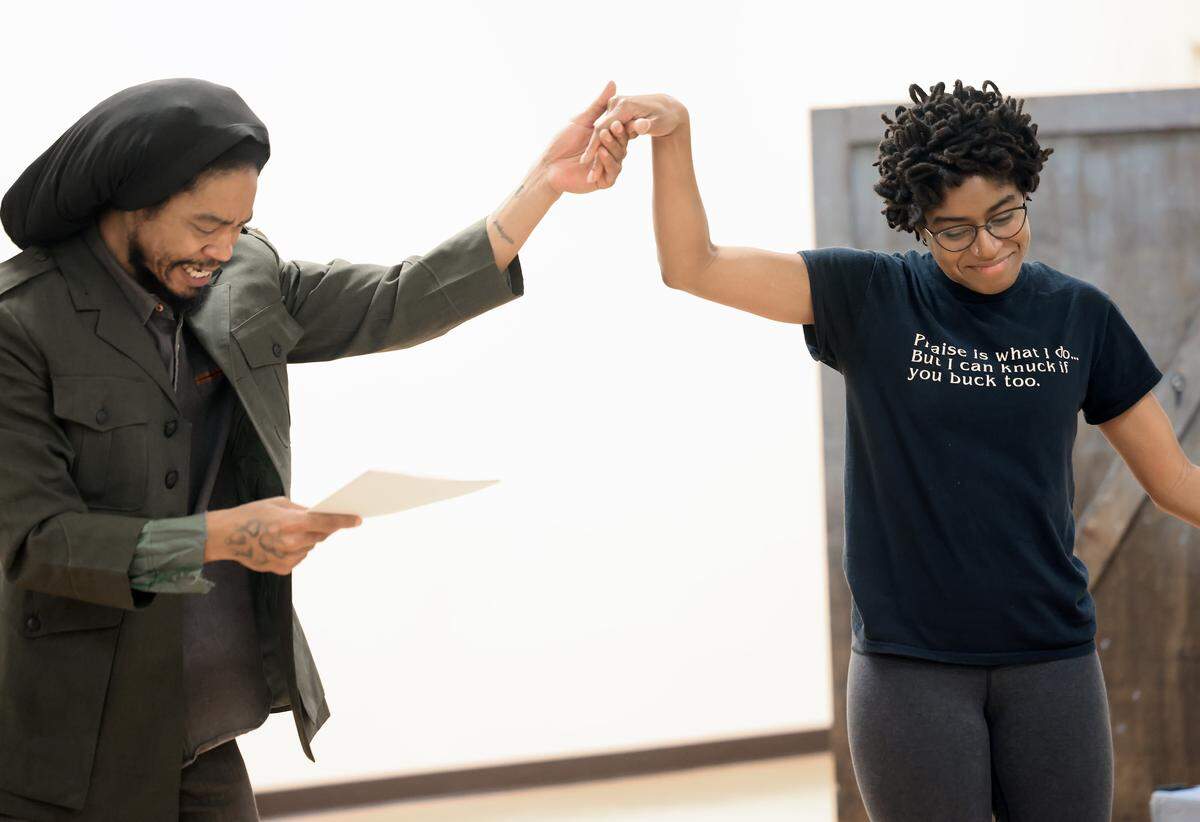
In “Bessie Coleman: Fearless and Free,” Blakeney said the feel of the show is playful and fun. There are two actors but loads of characters.
“I’m in awe of them,” said Blakeney of Lydia Danielle (“Tiara’s Hat Parade”), who portrays Bessie, and stage and film actor Rahsheem Shabazz, who plays about eight different characters. Those include Bessie’s brother, father and famed newspaperman Robert Abbott — founder and editor of the Chicago Defender, the era’s most widely-read Black-owned newspaper.
Blakeney had to fill in some details of Coleman’s life where no documentation exists. She also took creative license at points.
For example, Blakeney knew Coleman was familiar with the Wright brothers and their flight experiments. She took it a step further in the play: imagining Coleman witnessing what happened.
“What if she was a mischievous kid that snuck out on the beach that day and got to see it, and became inspired from that moment on?” Blakeney said. “What would that have been like seeing something that wasn’t a bird fly for the first time?”
Her aim was to create a show that would resonate with audiences of every age. “I really wanted to find that ‘Abbott Elementary’ space, where multi-generations can enjoy,” she said.
For Blakeney, one of the challenges was keeping the story anchored in its time period through language and cultural references. Sometimes the story took her to uncomfortable places, too.
“I’ll be very candid: I did not want to put on a stage a scene in which an African American father leaves his family,” Blakeney said, not wanting to push a narrative into the world that’s hardly unique to Black families.
But he did leave. It was Blakeney’s job to help the actors imagine his motivation and how that event would have changed young Bessie, who grew up (at least in the world of the play) as Daddy’s little girl.
“There are going to be kids in this audience who have two parents at home, who have one parent at home, or who are raised by a grandparent or an aunt or an uncle, who are adopted, who are in foster care,” Blakeney said.
“There are a multitude of situations that could be in this room. And my hope is that they see a little bit of themselves on stage … and how, despite (Coleman’s) situation, she was able to catch on to this dream, and hold on to it and make it come true.”
The importance of history
Much of Blakeney’s other work focuses on stories drawn from the past.
She is the founder and artistic director of Redeeming History Productions, a theater production company for which she creates and performs original works.
“I’m really inspired by history…” she said. “It helps me understand our present, and it informs my future.”
Blakeney said serving on the community partnership committee to reopen Latta Plantation has also been a life-changing experience. As part of that initiative, she traveled to community centers to perform pieces she wrote about enslaved people. The response from audiences has been consistently positive.
Blakeney believes one of her gifts is being able to disarm adults. She invites questions and never argues. She said she knows at the root of anger is always fear.
Instead, she invokes a metaphor from the Ava Duvernay film, “Origin” (a story based on writer Isabel Wilkerson’s journey writing the best-selling book “Caste: The Origins of Our Discontents”).
In the film, a character likens where society is now to the idea of inheriting an old house with cracks in the foundation and flooding. It’s a place where no one wants to go, she said, but if we do nothing, it will create bigger problems.
“So I say, let us all take our flashlights to the basement and let’s go together and let’s patch up the cracks together,” Blakeney said. “That’s just what we’re doing.”
In schools, too, she sometimes has delved into challenging historical topics, like enslavement. “I’ve never had kids feel responsible for it,” she said. “That’s an adult worry… that kids are going to feel blamed. Kids don’t. They’re so smart.
“They feel empathy. And they always say, ‘Now why would they do that?’ I’ve gotten that question. ‘I would never--’ and I say, ‘That’s exactly it: you would never. So now you know how to treat your neighbor moving forward.’ It’s just as simple as that.”
What’s next for Keetha B?
After “Bessie” is up and running, Blakeney is following another one of her dreams by moving to New York City to pursue acting and continue learning. She will be studying the Meisner Technique of acting at the Esper Studio.
She intends to continue working on Charlotte-based projects, too.
“I will always make space for the Children’s Theatre,” said Blakeney, who has a draft of another play, “African Folktales,” that she hopes will someday be part of a future Children’s Theatre season.
As for her current show, Blakeney would love other theaters to bring it to their communities, too.
“That is my prayer for this show, that it flies,” she said. “I want it to soar, just like Bessie.”
Want to go?
”Bessie Coleman: Fearless and Free,” Nov. 15-16, Wells Fargo Playhouse, 300 E. 7th St., Charlotte. Details at ctcharlotte.org.
More arts coverage
Want to see more stories like this? Sign up here for our free, award-winning “Inside Charlotte Arts” newsletter: charlotteobserver.com/newsletters. You can join our Facebook group, “Inside Charlotte Arts,” by going here: facebook.com/groups/insidecharlottearts. And all of our 2025-26 Fall Arts Guide story can be found here: charlotteobserver.com/topics/charlotte-fall-arts-guide.