
New Charlotte museum exhibit offers a look at mesmerizing African textiles
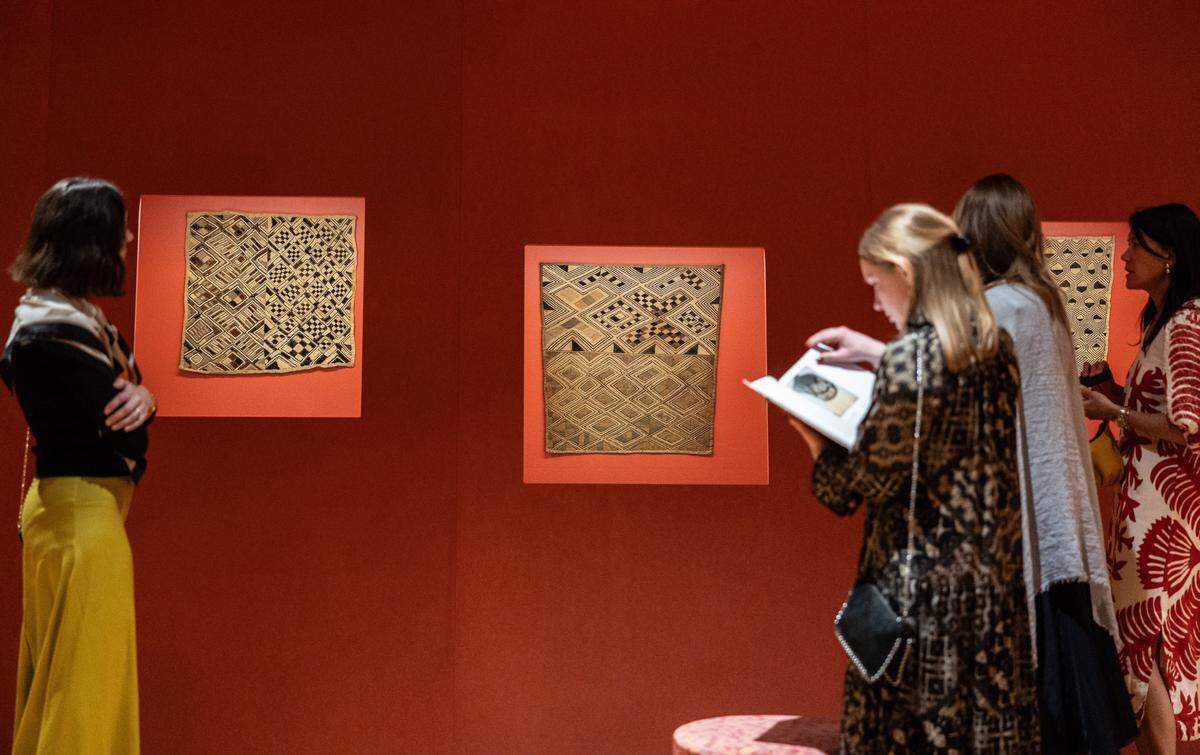
Step inside the second-floor galleries of the Mint Museum Randolph and immerse yourself in the rhythmic patterns and velvety textures of some of the world’s most masterfully woven works of art: Kuba textiles.
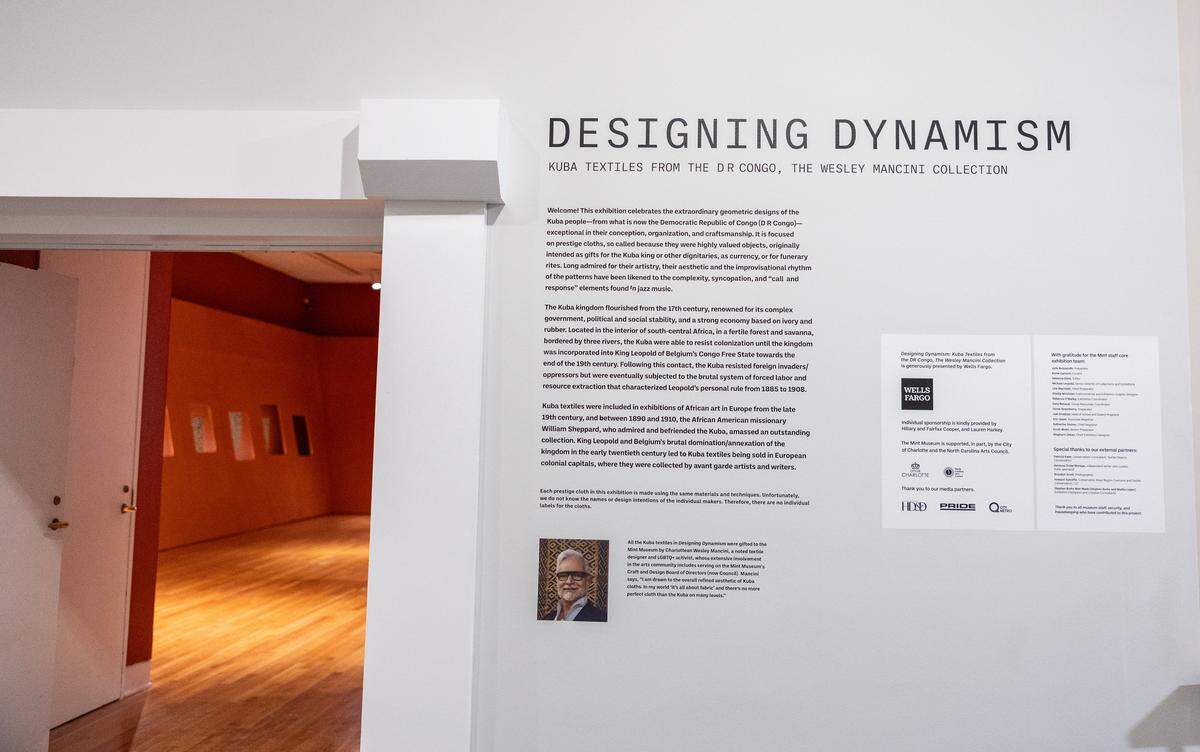
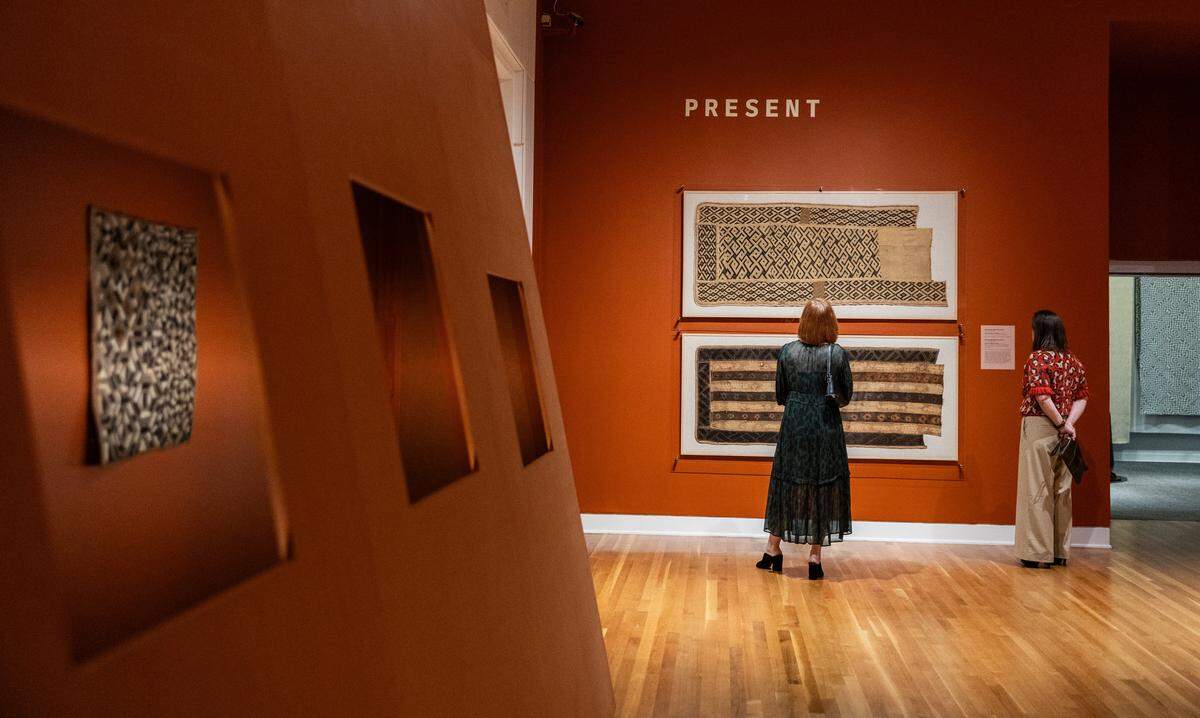
On view now through Aug. 23, the museum’s latest exhibition is “Designing Dynamism: Kuba Textiles from the Democratic Republic of Congo, The Wesley Mancini Collection.” It celebrates a significant collection of the African textile art alongside visual and textual aids that examine the lives and culture of the Kuba people.
Each of the textiles featured in the exhibition was a gift to the museum from Wesley Mancini, a Charlotte-based textile designer who, over decades, put together one of the largest private Kuba collections.
In 2020, Mancini gave a large portion of his collection to the museum.
“They are known in the textile world as among the most original and truly dynamic patterning systems of all global textiles of all time,” said Annie Carlano, senior curator of craft, design and fashion for the Mint Museum. “It’s all about the graphics and the design. When you understand how they’re made, it’s just genius.”
Honoring a centuries-old tradition at the Mint
The Kuba people created Kuba textiles in the 17th century in what is now known as the Democratic Republic of Congo. The weavings were reserved for use in royal courts, during funerary rites or for other important ceremonies.
The Kuba people believed that these intricate patterns would help make them more recognizable to their ancestors in the afterlife.
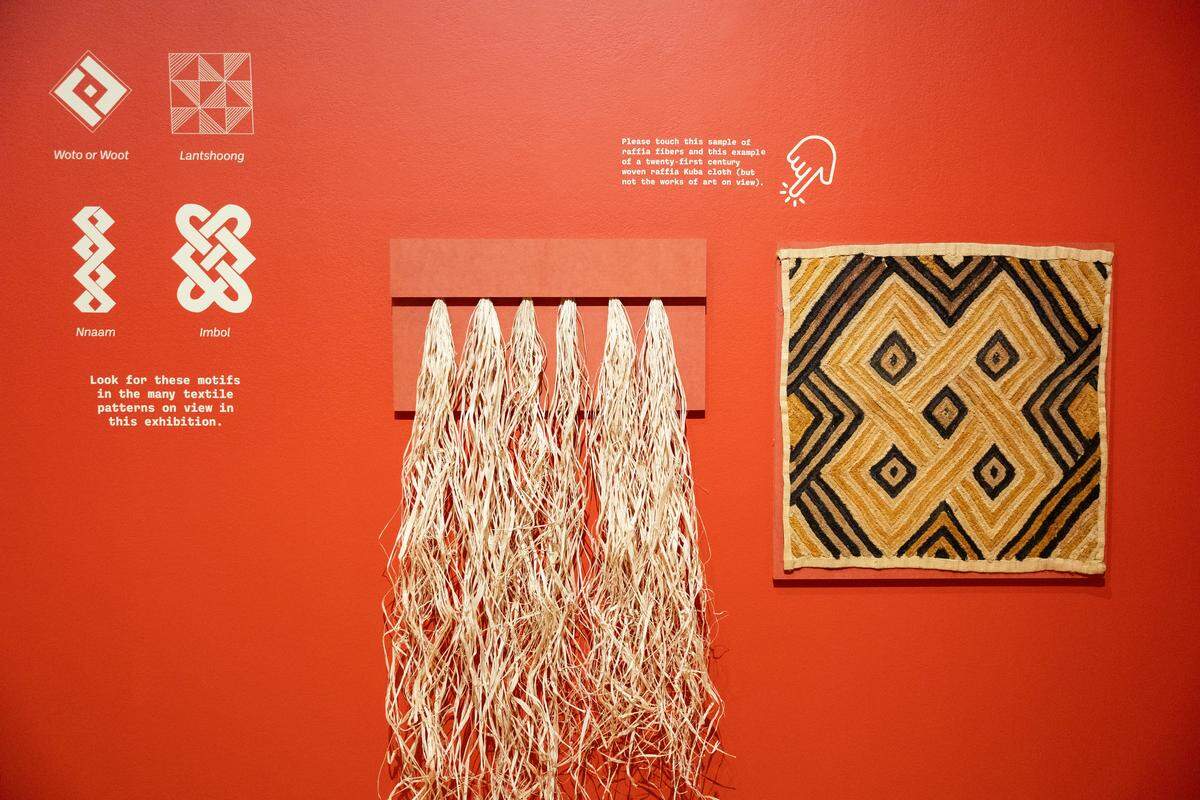
To this day, the Kuba people fashion the textiles out of raffia, a strong and flexible natural fiber, harvested in the DR Congo’s Kasai region, from the leaves of a native palm tree.
At the centerpiece of the Mint exhibition are prestige squares, created by the Shoowa, a small tribe within the greater Kuba people.
“The Shoowa live in this patterned universe. There’s a pattern on everything — on their homes, on their bodies with scarification, on household objects,” Carlano said. “It’s a way of creating dynamic patterns that are very kinetic and energizing. There’s no place for your eye to rest.”
These hypnotic patterns and intricate techniques have long influenced global art.
In the late 19th to early 20th centuries, Kuba textiles began appearing in European markets, where they stunned influential artists like Henri Matisse. He was known to have hung the textiles on his studio walls for inspiration and his 1947 paper cutout work, “Les Velours,” was reportedly inspired by them.
French artist Sonia Delaunay, whose pioneering style examined the intersection of art and fashion, also was impressed by the textiles.
Arduous, ingenious Kuba textile process
Creating the textiles is a community effort.
“The men and boys harvest the raffia, which is an arduous task and requires great skill,” said Carlano, “especially when you’re making the thread and preparing it to weave — you’ve got to make it supple, and that’s a laborious process.”
The plain cloth is then given to the women. “The women are the designers,” said Carlano. “They are craftspeople.”
During the design process, the women use embroidery, applique and patchwork techniques, along with dyes, to then embellish the cloth.
For the prestige squares, most in the exhibition originating from the 1980s, the women use flat embroidery stitches or cut pile to create the plush, velvety effect.
The natural raffia hues mean the textiles are rendered mostly in cream, black, and brown colors, a sharp contrast to other well-known African textiles, like the vibrant Ghanaian Kente cloth.
Kuba designs are not random or purely decorative, but follow geometric motifs and incorporate sacred symbols and signs.
“Most of (the designs) were made intuitively. There’s nothing pre-drawn on the cloth,” Carlano said. “The patterns are coming out of the minds of the women who designed the textiles … They’re building on an ancestral memory, but the way they conceive and make the textiles is genius, and it’s still going on today.”
More about the Kuba people
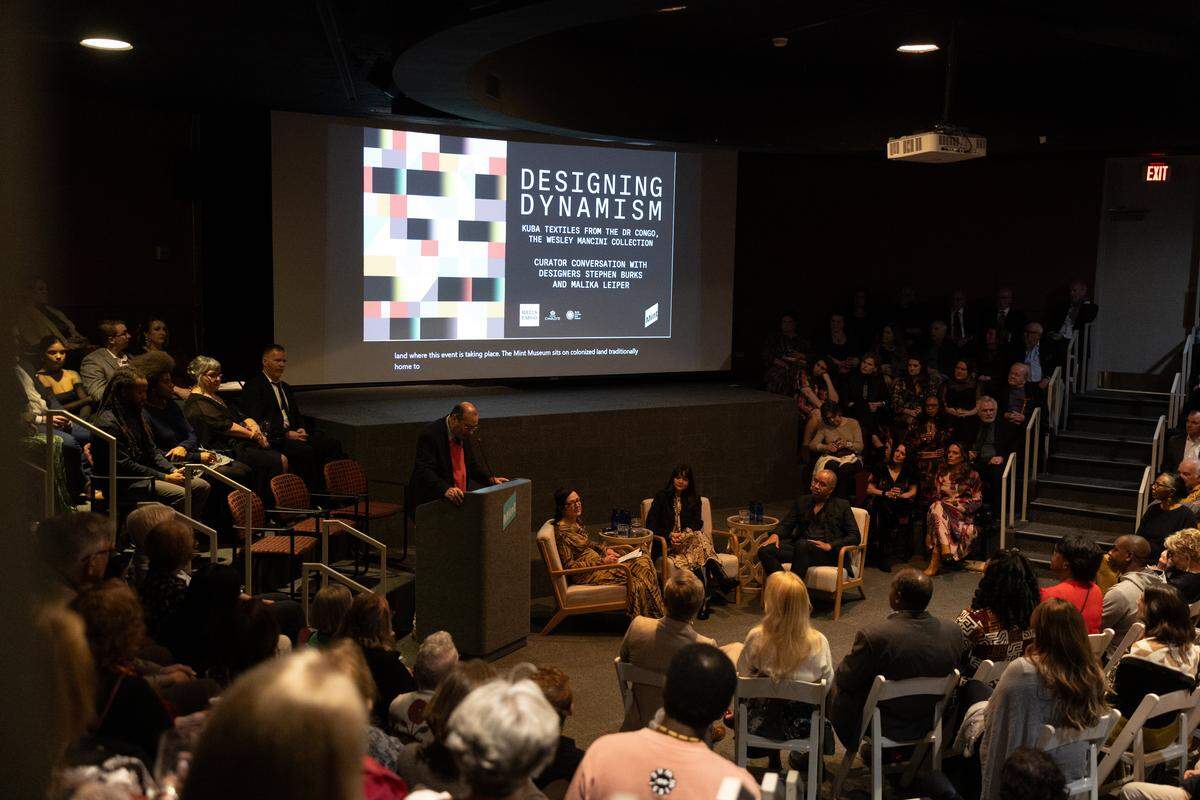
Stephen Burks and Malika Leiper, with the Stephen Burks Man Made studio that works all over the world, designed the exhibition. It’s comprised of three parts: Past, Present and Future.
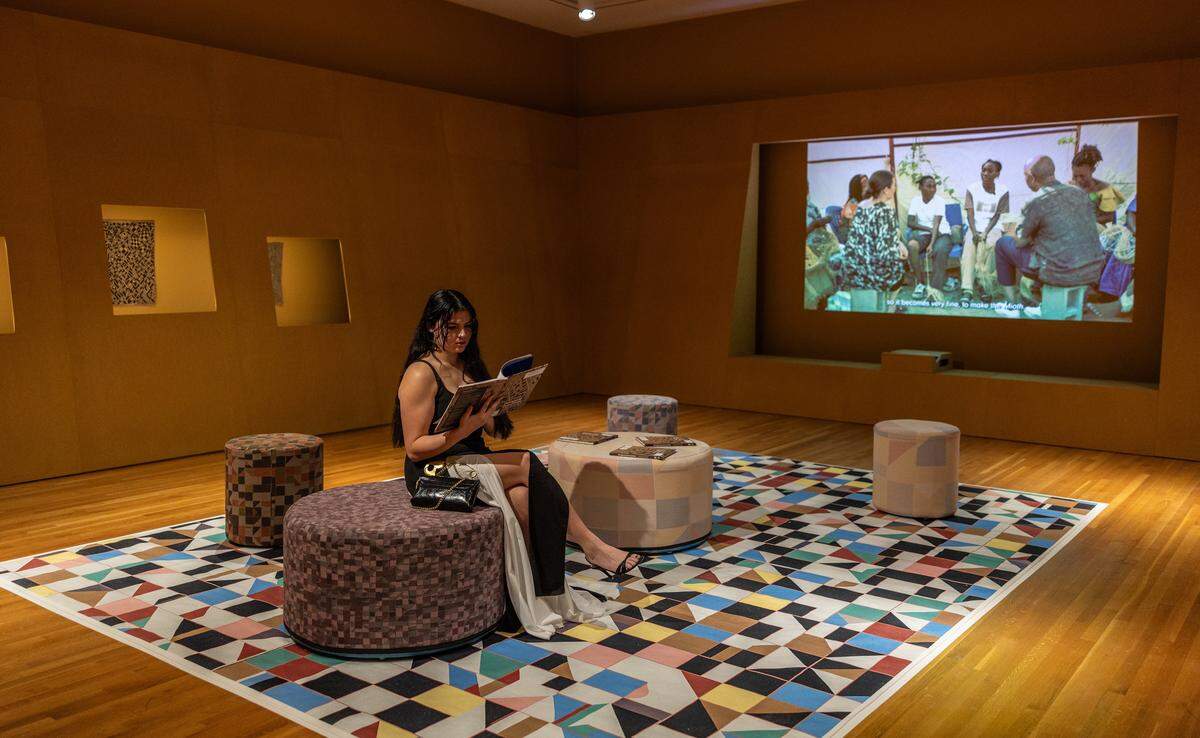
“It’s not so much what you see as what you feel,” said Carlano. “They’ve created spaces, along with our great team here at the museum and some Charlotte contractors, that make you feel like you’re transported into another realm, evocative, abstractly, of the Kuba kingdom. It’s very quiet and very dark, because the textiles need to be protected from light.”
The exhibition also features overskirts, beaded belts and a wood-carved pigment box. “It contains pigment powder and the pigment that was used to make a paste for bodily paints,” Carlano said, “but also to make a paste to dye the textiles the red that you see in the summer textiles.”
“In Search of Kuba,” a short film found in the Future section of the exhibition, follows Burks and Leiper through their examination of the Kuba textile techniques of the Lambath, Mshing Mshing and Shoowa people.
The documentary, and a book written by Burks and leading Kuba scholar Vanessa Drake Moraga, both add cultural context to the exhibition.
“Textiles are in the DNA of the Kuba, and the pattern is ubiquitous,” Carlano said. “I want people to be mesmerized, excited and proud that these textiles are here at the Mint Museum. These patterns are revered among design and textile historians, and deserve to be better known.”
Want to go?
The exhibition is on display through Aug. 23 at Mint Museum Randolph, 2730 Randolph Road, Charlotte. Museum admission ranges from free to $15. During museum hours, ask for a free, at-home art kit and create your own textural collage inspired by the woven and stitched raffia cloth.
More arts coverage
Want to see more stories like this? Sign up here for our free, award-winning “Inside Charlotte Arts” newsletter: charlotteobserver.com/newsletters. And you can join our Facebook group, “Inside Charlotte Arts,” by going here: facebook.com/groups/insidecharlottearts.
This story was originally published February 24, 2026 at 5:45 AM.