Review: At 74, Sting took some unusual gambles in Charlotte. Did they pay off?
At 74 years old, Sting has apparently reached the stage of life where he no longer feels obligated to impress you with production value.
No pyrotechnics. No fireworks. No giant inflatables. No confetti cannons. No towering stacks of video screens.
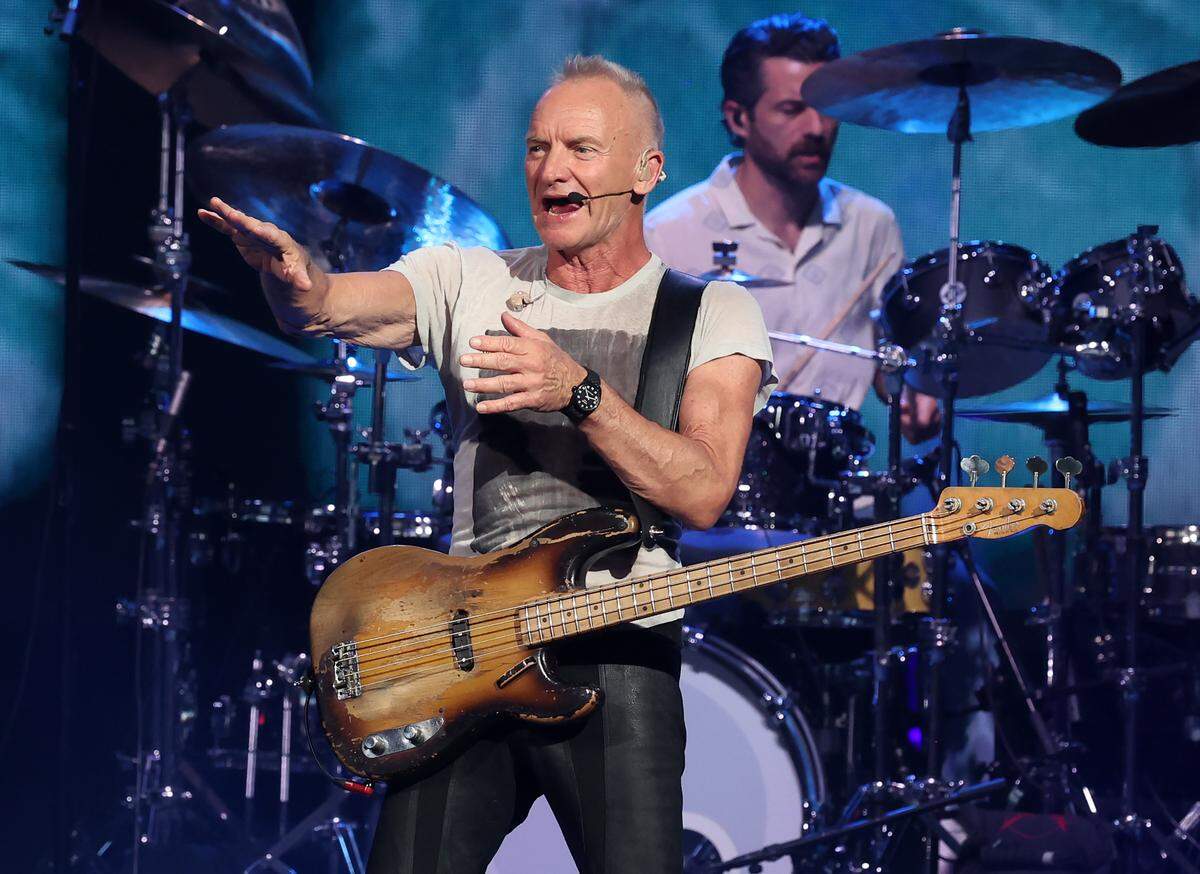
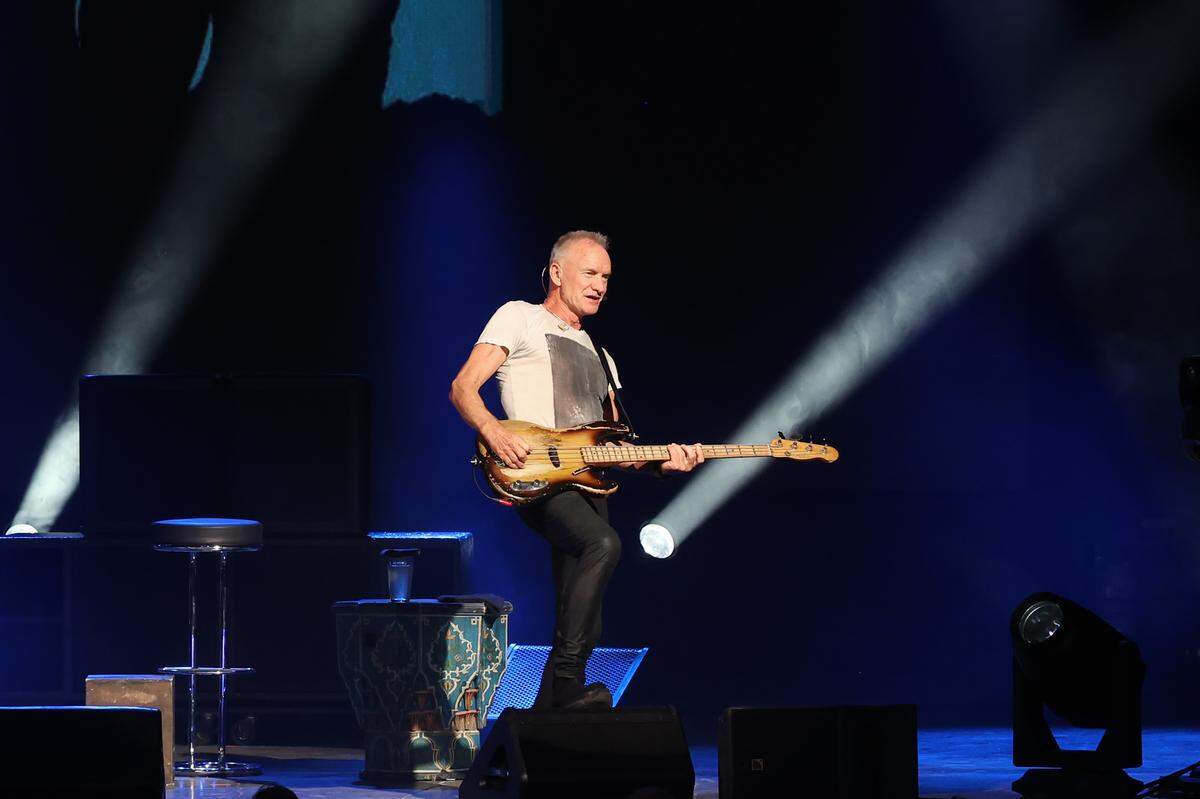
Instead, when Sting walked onto the stage Monday night at Truliant Amphitheater — his bass guitar already slung over his shoulder, his hands clasped together in gratitude — the setup behind him looked almost aggressively minimal: a drum riser, some speaker cabinets, a stool, a few banks of lights and one long horizontal screen displaying mostly abstract visuals.
That was pretty much it.
The entire show revolved around just three musicians: Sting on bass, longtime guitarist Dominic Miller and drummer Chris Maas.
And somehow, over the next 111 minutes, it was enough.
Part of that came down to the songs, of course. Sting’s catalog — both with The Police and as a solo artist — remains absurdly deep. Even people who think they only know four or five Sting songs actually know about two or three times as many. Monday’s setlist was essentially a conveyor belt of hits that the middle-aged fans assembled could surely remember waiting impatiently by their radios to capture on their tape recorders when they were kids.
But this “Sting 3.0” tour stop was far more interesting and unusual than a standard nostalgia-act victory lap.
In an era when many A-list veterans keep adding layers — orchestras, backing tracks, costume changes, guest appearances, enough visual stimulation to warrant warnings to fans with photosensitive epilepsy — Sting has gone the opposite direction.
The result often felt less like a summer amphitheater concert and more like an unusually elegant recital that happened to contain some of the biggest pop songs of the last 45 years.
That atmosphere was evident before Sting even played a note. The lawn at Truliant — normally a sprawling subculture fueled by booze and characterized by the chaos of just sitting or standing wherever you darn well please — was completely closed off for this show. The seated section, meanwhile, was packed with polite Gen Xers and boomers, with men sporting collared shirts and varying stages of baldness otherwise being the closest thing to a common theme.
And by the middle of the concert, most of the crowd was sitting down.
In fact, there were long stretches Monday night when the audience resembled one politely taking in a symphony orchestra more than one attending a summer amphitheater concert headlined by a Rock and Roll Hall of Famer.
But to Sting’s credit, he never once panicked and tried to force the energy somewhere it didn’t naturally want to go.
Instead, he leaned harder into the show’s restraint.
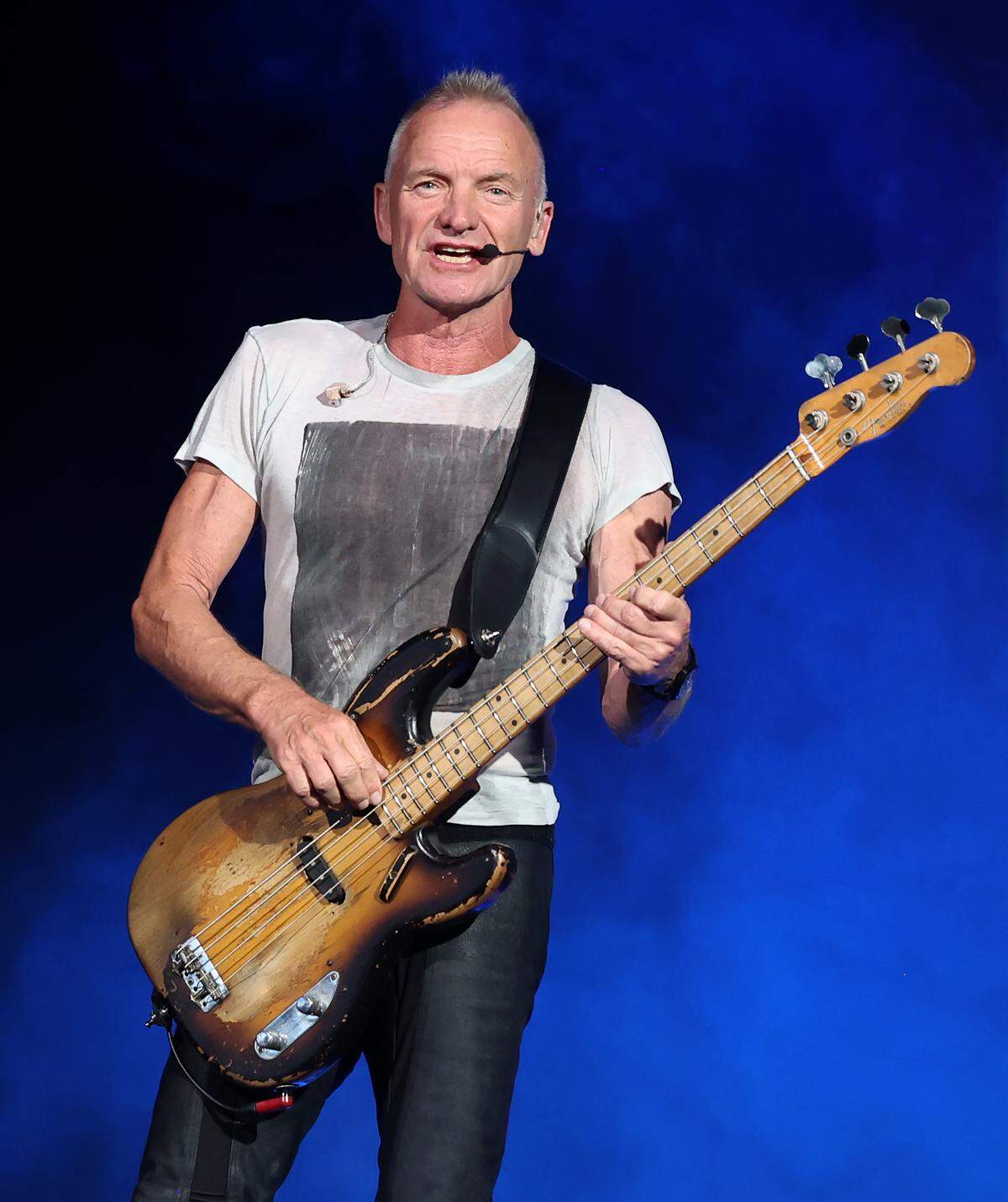
His voice — still rich, velvety and startlingly nimble — had nowhere to hide in these stripped-down arrangements. Not that he needed anywhere to hide.
During “If I Ever Lose My Faith in You” (which elicited an unexpectedly raucous response for the line, “You could say I lost my belief in our politicians”), Sting still climbed smoothly into the higher reaches of the chorus without dropping an octave like, ahem, I’ve seen some peers his age resort to. On “When We Dance,” he held a falsetto note for a length of time that bordered on obscene. And on “Every Breath You Take,” his vocals remained remarkably powerful and controlled.
Meanwhile, he appeared to be almost suspiciously well-preserved.
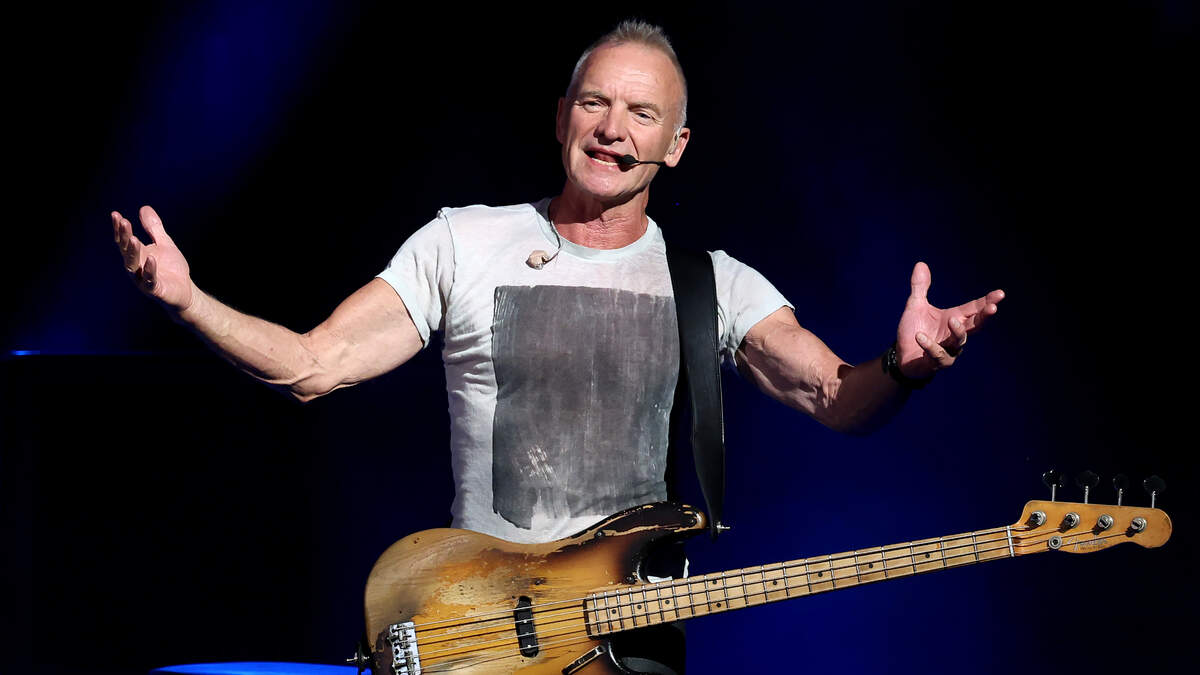
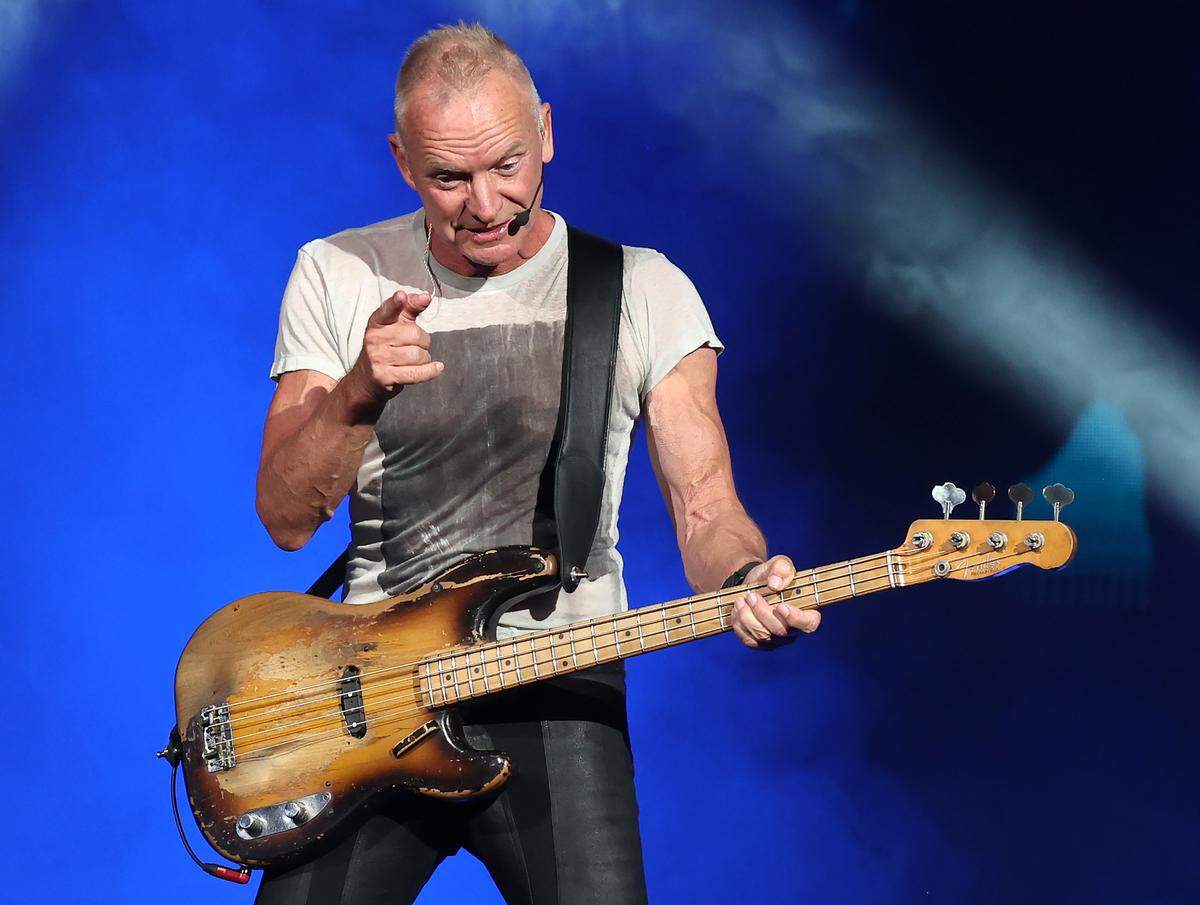
Throughout the evening, Sting — in tight black leather pants, a white graphic T-shirt, and chunky black boots — never appeared winded, never reached for water, never dabbed sweat with a towel despite temperatures still hovering in the 80s well after sunset. His close-cropped blonde-gray hair and sinewy arms made him look younger than his 74 years, and he moved with the calm efficiency of a man who famously practices yoga for more than an hour every day.
But the real revelation of the night may have been the arrangements themselves.
Because while Sting didn’t radically reinvent many of these songs, the three men repeatedly extended songs through instrumental passages to go along with Sting’s free-form vocal improvisation. More often than not, the noodling worked because the musicianship behind it was so tight.
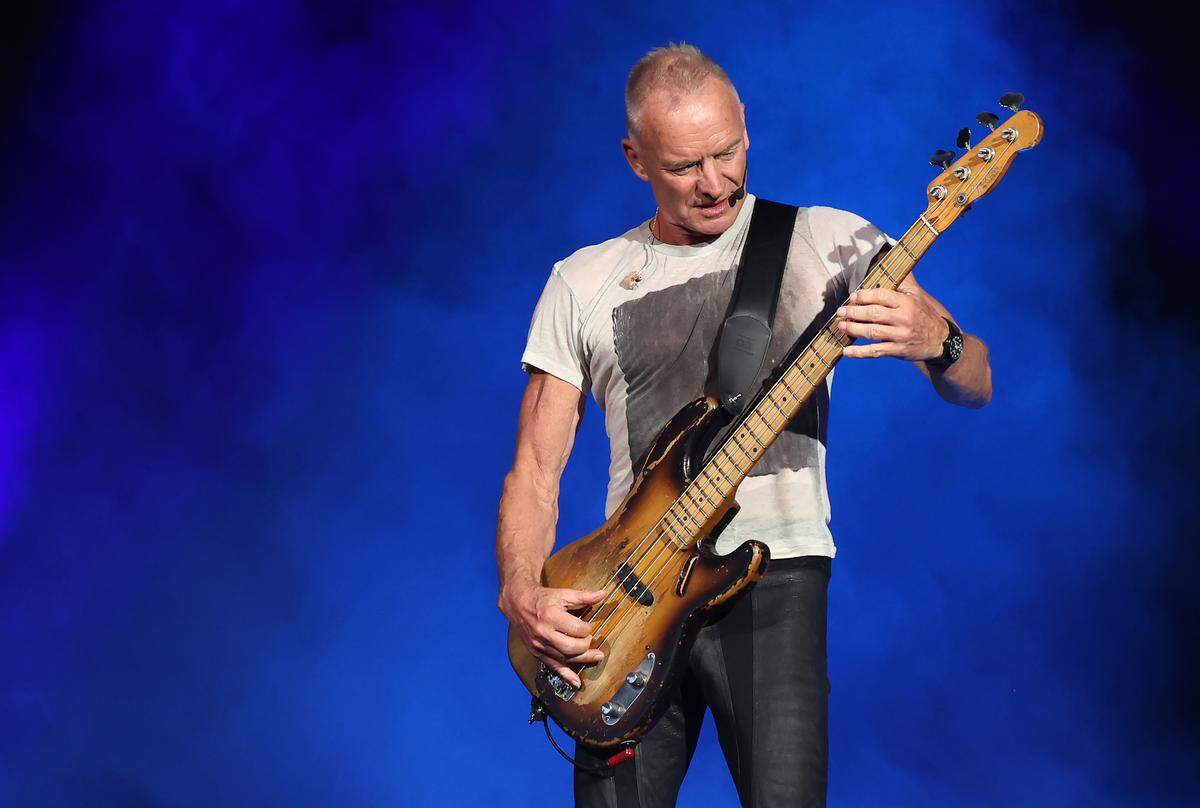
Miller’s guitar work was often deliberately restrained, in quietly technical ways that gave certain songs an almost psychedelic feel. Maas, meanwhile, brought a steady, controlled energy that fit the evening’s elegant tone.
The Police material especially benefited. Songs like “Driven to Tears,” “Walking on the Moon,” “King of Pain” and “Roxanne” suddenly felt even more rhythmically adventurous in a live setting, with their sharp stylistic pivots and abrupt tonal shifts pushed to the foreground.
But there were instances in which the frontman’s flourishes may have come off as a bit too indulgent. A couple times, his elongated “ee-yo ee-yay” vocalizations went on for so long even die-hards started shooting each other nervous looks.
There also were moments when the production’s small scale felt almost too modest for a venue this size.
That was the evening’s central gamble: Sting traded scale and spectacle for intimacy and restraint, trusting the songs themselves to carry the emotional weight.
Sting had originally been scheduled to co-headline Bank of America Stadium last year with Billy Joel before Joel’s health issues forced cancellation of the tour. It’s hard not to wonder how different these same songs would have sounded with the fuller band Sting likely would have brought to that stadium show. And occasionally Monday night’s stripped-down aesthetic made the amphitheater feel almost oversized around him — even without the lawn seats in play.
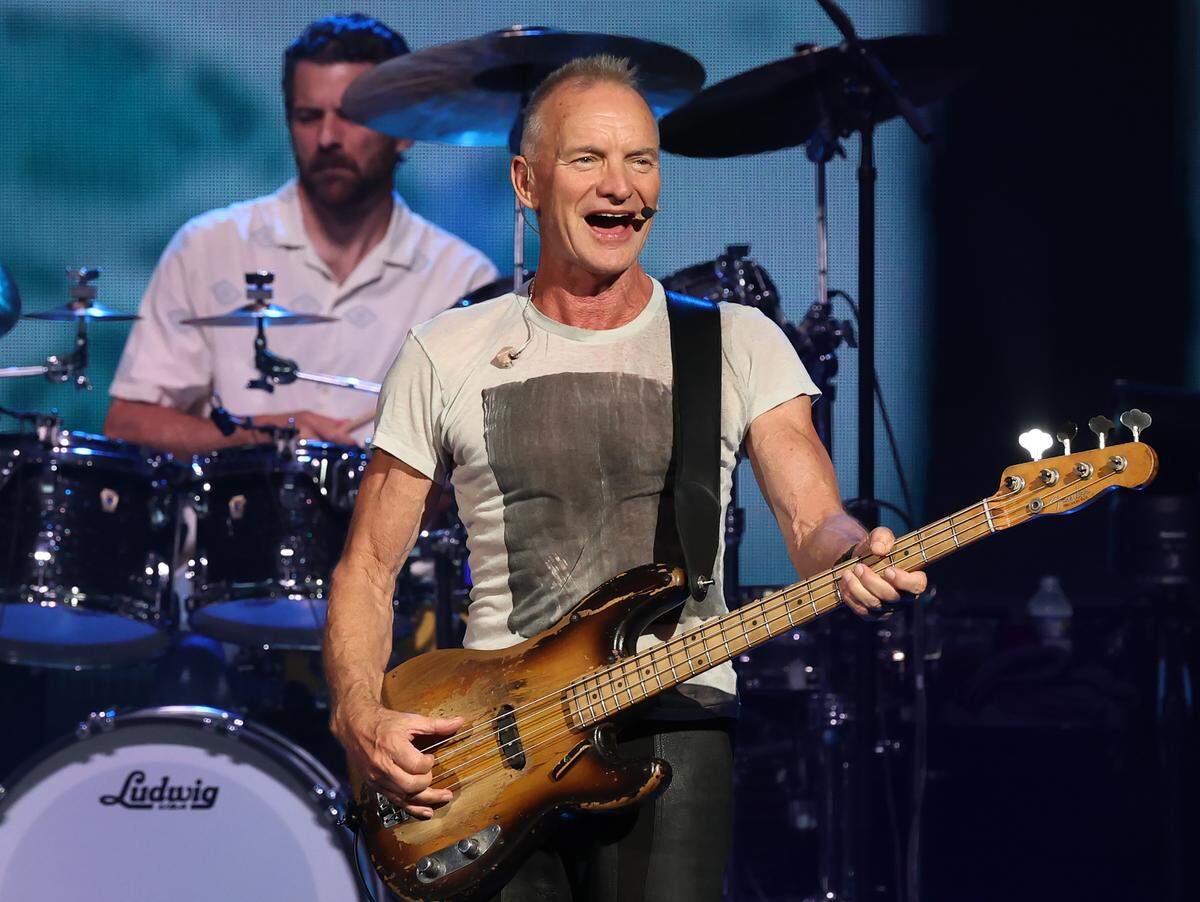
That tension became the evening’s defining tradeoff. The intimacy was real. So was the precision and the sophistication.
Depending on your taste — let’s take my wife’s, for instance — the show could also occasionally feel more “pleasant” than electrifying.
But Sting wasn’t interested in overwhelming the audience. He was interested in pulling apart these songs and rebuilding them in subtler ways — stretching them, slowing them down, letting them breathe.
While Sting apparently understands that aging fans still enjoy occasional jolts of spine-tingling energy, he also seems to recognize that this audience no longer needs constant escalation to stay engaged. And so at the show’s climax, he revealed his closing strategy: “It’s quite custom to finish an evening with something quiet and thoughtful, so you can go home quiet and thoughtful.”
Then he traded his bass for a six-string, settled onto a stool, and closed the night with “Fragile,” his poignant acoustic meditation on human vulnerability.
The plan worked.
Sting’s setlist
1. “Message in a Bottle”
2. “I Wrote Your Name (Upon My Heart)”
3. “If I Ever Lose My Faith in You”
4. “Englishman in New York”
5. “Every Little Thing She Does Is Magic”
6. “Fields of Gold”
7. “Never Coming Home”
8. “Mad About You”
9. “Wrapped Around Your Finger”
10. “You Still Touch Me”
11. “Driven to Tears”
12. “When We Dance”
13. “Can’t Stand Losing You”
14. “Shape of My Heart”
15. “Walking on the Moon”
16. “So Lonely”
17. “Desert Rose”
18. “King of Pain”
19. “Every Breath You Take”
Encore:
20. “Roxanne”
21. “Fragile”