Will Ferrell held an event in NC. But he wouldn’t let us call him Will Ferrell.
After entering the World Golf Hall of Fame, a Netflix publicist reminded me of the ground rules that also had been outlined in the invitation to this ridiculous event earlier in the week.
“He’s doing everything in character,” regional press tour manager John Chau said.
The “he” in question was Will Ferrell.
Except, officially, it wasn’t.
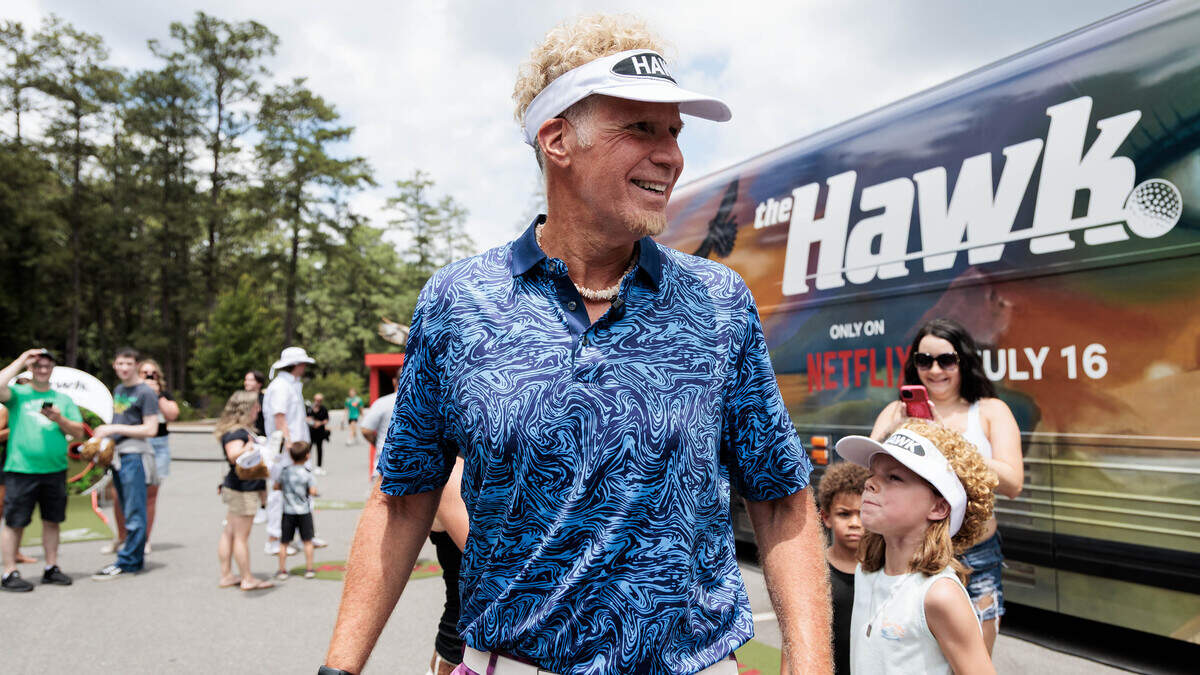
On this particular Thursday in the middle of this charming, storybook village renowned as the “Home of American Golf,” Ferrell was Lonnie Hawkins — a fictional, three-time major champion, washed-up golf legend and occasional public nuisance who serves as the central character in Netflix’s upcoming comedy series “The Hawk.”
And somehow, I found myself among a roomful of journalists gathered to interview a golfer who doesn’t exist.
The event was held on the second floor of the World Golf Hall of Fame, and even before it started, the illusion required maintenance. At one point, L.A.-based marketing agency The Right Now’s Diana Levy — the executive producer of the stunt — asked reporters to spread out in a way that would make the turnout appear as sparse (and therefore pathetic) as possible.
“We want it to look kind of empty,” she said.
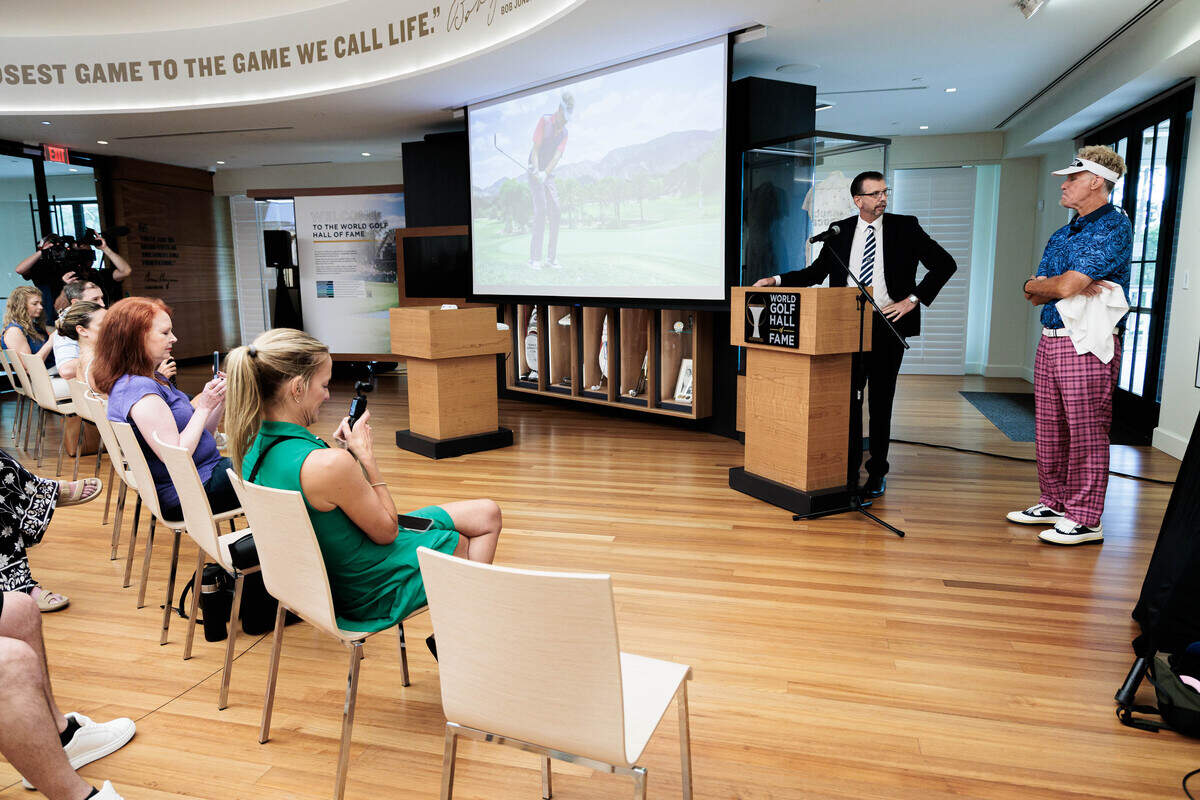
Then just a few minutes later, “Hawkins” (for those playing along) was introduced with a mock induction ceremony that quickly veered even further into absurdity.
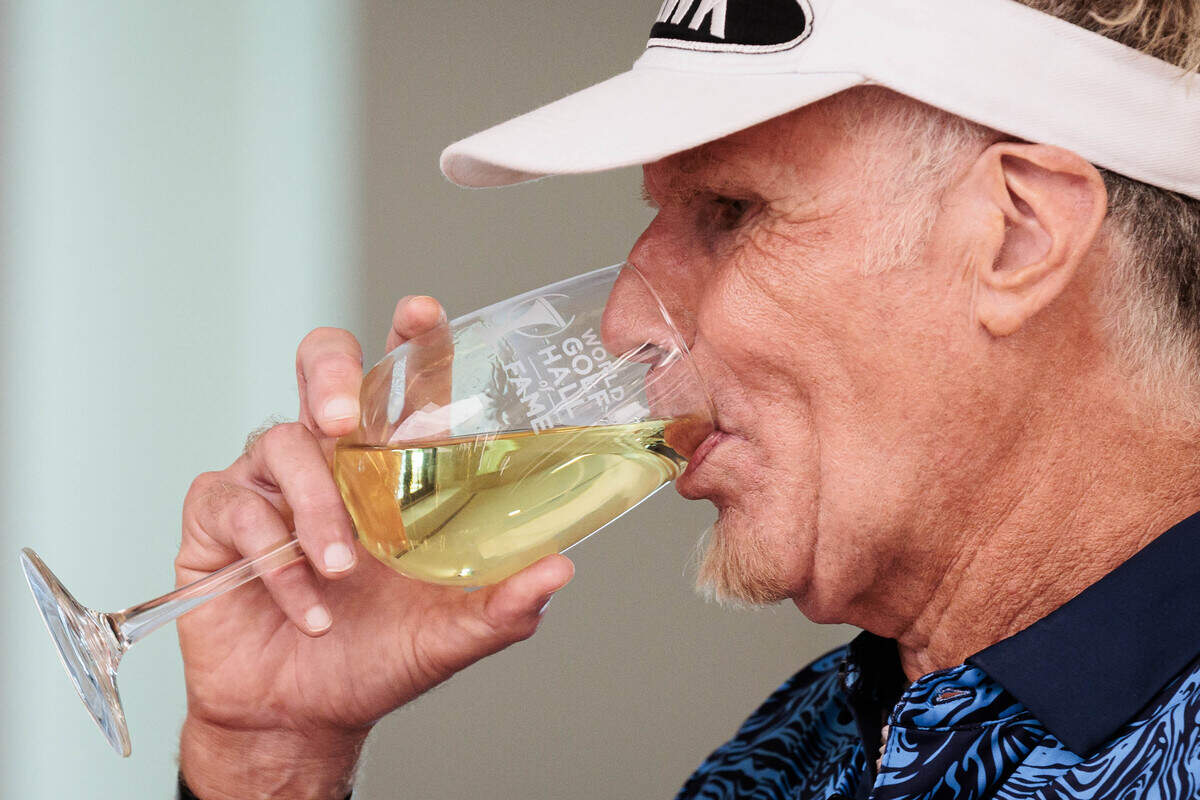
Presenter Steve Lovell informed the crowd that “Hawkins” had once survived on a diet consisting primarily of Milky Ways and boxed Chardonnay. We learned he had briefly toured with N.W.A., invented Taco Bell’s Gordita Crunch and once led Las Vegas police on a high-speed chase while trying to get to an Eagles concert.
Lovell also clarified that “Hawkins” was only being inducted into the Hall “for today only — no future title, benefits, or relationship is extended past close of business today.”
Then, he announced, “Please join me in celebrating Lonnie ‘The Hawk’ Hawkins, because that’s how it’s done.”
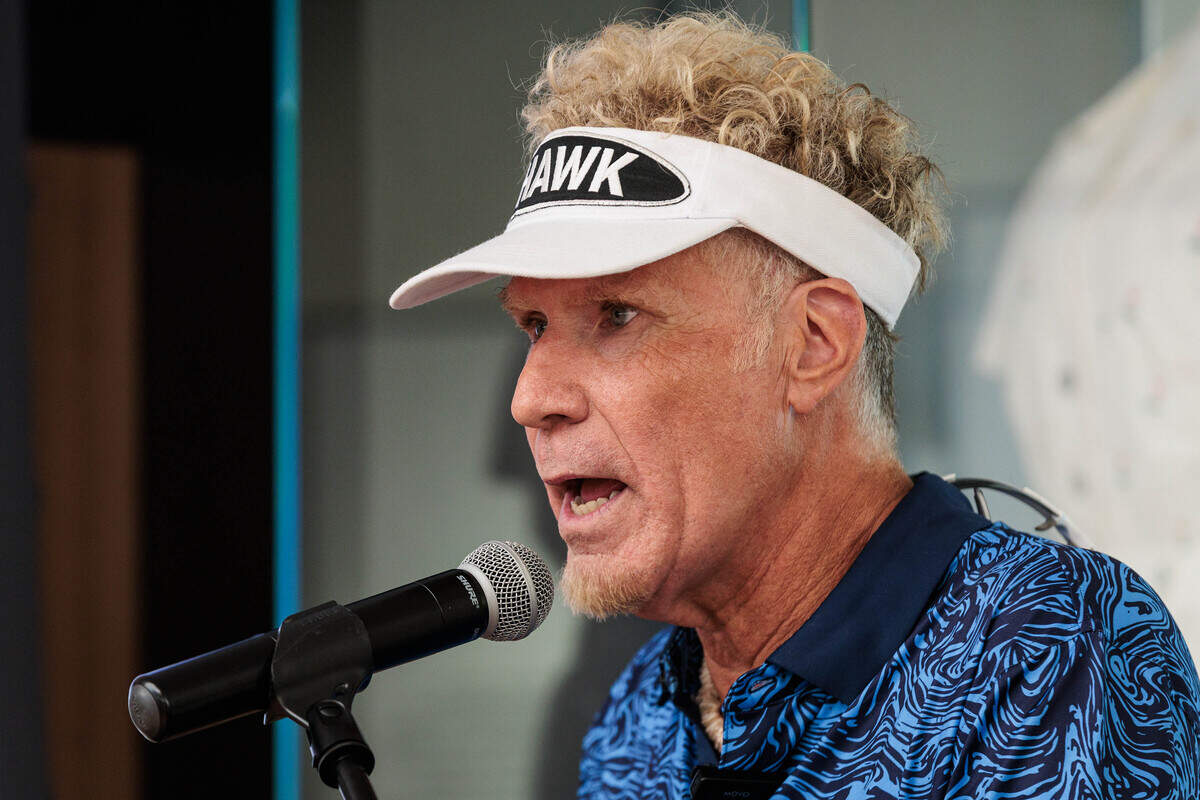
When he took the podium, “Hawkins” thanked the Hall of Fame for finally recognizing his greatness and wondered aloud what had taken so long.
He brushed off Lovell’s insistence that the honor was good for one day only, saying, “We all know (it’s) just semantics. … I really am a lifetime member now, and — which is great, and I get all the privileges that members of this fine institution get, which are a key to the secret upstairs lounge, unlimited supply of sweet tea, and as well as travel miles anywhere Piedmont Air flies.”
He thanked his caddie, whom he said he met in a Walmart parking lot and whose last name he still doesn’t know.
He even offered a partial apology to anyone he had ever harassed or yelled at during a tournament. “There’s no place for that in golf,” he said. “But if I yelled at you, you probably deserved it. That’s on you.”
Then came the part I couldn’t stop thinking about: what happened when “Hawkins” opened it up for questions.
Like that — snaps fingers — the room settled into an unspoken agreement. For the next nine minutes, everyone played along. Nobody challenged the premise. Nobody seemed inclined to.
A television reporter asked about endorsement opportunities. Another wanted advice for young golfers. Someone asked which Hall of Fame members “Hawkins” would remove from the building. Someone else wanted nutrition tips. And when someone asked about his catchphrase, Hawkins explained that “That’s how it’s done” (which I didn’t know was the fake golfer’s catchphrase when Lovell used it in his introduction) serves multiple purposes.
“When I get a great shot, ‘that’s how it’s done,’ ” he said, before adding: “It’s instructional as well. So it forces them to remember what I did, and it reinforces that’s how it’s done.”
Meanwhile, if you’re wondering whether I asked a question, the answer is … I just couldn’t.
I had planned one in advance that I thought would work on multiple levels: “Is this as awkward for you as it is for us?” I wound up caving, though. Even though it worked, at least in my head, as a real question to ask a fake golfer who has made a cartoon of himself, I didn’t want anyone to take it the wrong way. I decided not to ask. To not do anything that might break the spell.
Which, in retrospect, means the spell was working.
At the same time, I couldn’t quite bring myself to invent a ridiculous question for the sake of the bit. That would’ve felt out of character for me.
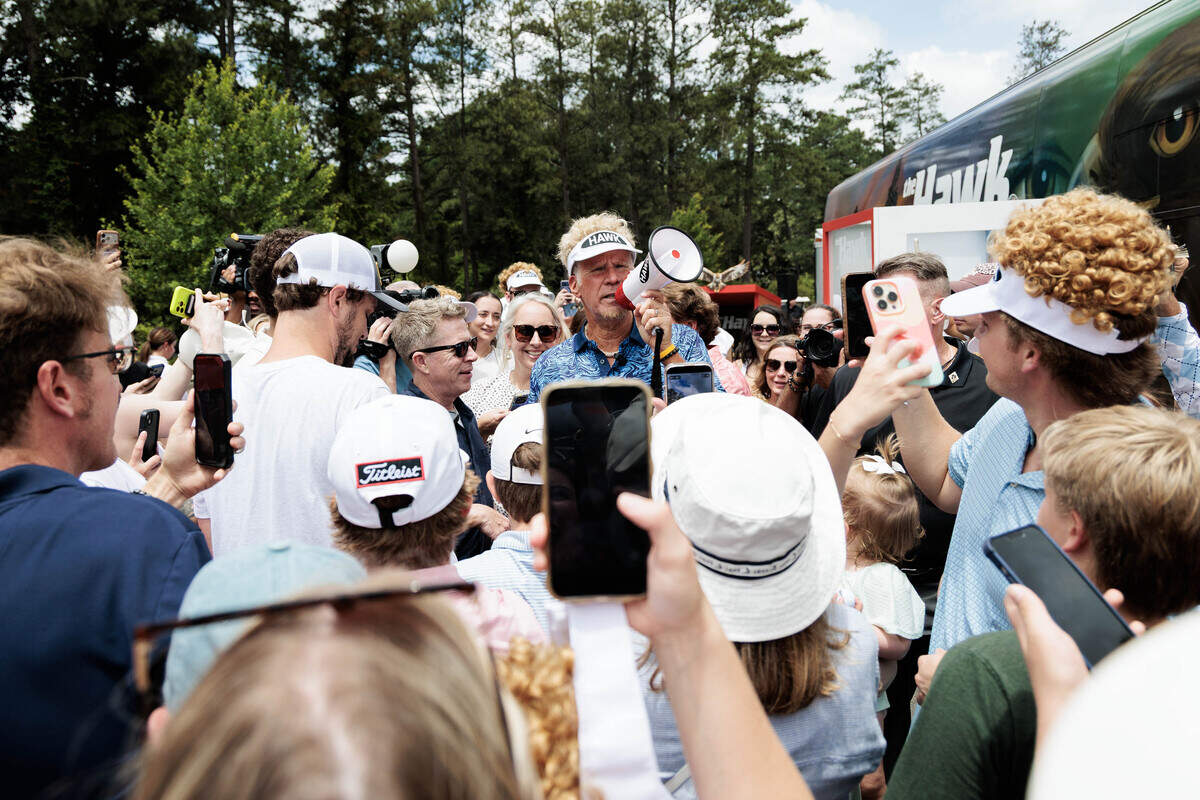
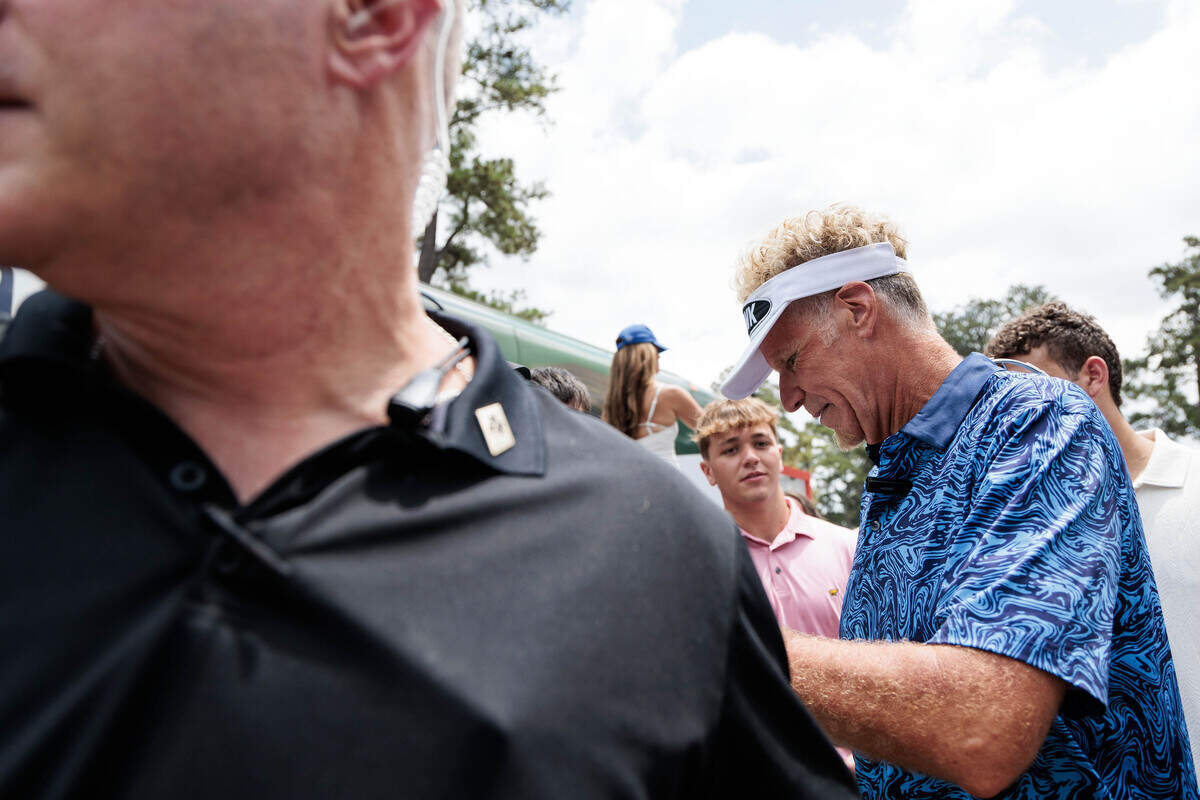
Yet after the “press conference” ended, Ferrell — or Hawkins, depending on your willingness to participate in the bit — appeared in a parking lot outside to mingle with fans. And as I watched them grinning over selfies with a celebrity they weren’t technically supposed to call by his real name, I found myself softening.
The whole thing was undeniably silly. It was also harmless.
In a season when the news cycle continuously reminds us of humanity’s remarkable ability to make itself miserable, there was something oddly refreshing about watching a couple dozen journalists play pretend with one of America’s most committed goofballs while a couple hundred golf and Will Ferrell fans enjoyed a celebrity encounter they’ll never forget.
Yes, Netflix was selling a television show. No, Lonnie Hawkins isn’t real. But for a little while in Pinehurst, a room full of journalists and a parking lot full of golf fans agreed to pretend otherwise.
And honestly?
That’s how it’s done.