
No scalpel or anesthesia: New procedure takes pain out of brain surgery in Charlotte
Luther “Larry” Hicks noticed the shaking around the age of 50. His right hand jittered when he held a spoon or tried to sign his name. At first, he said, it wasn’t that bad; he tried to hide the condition and kept working with contract bonds until he retired at 66. But as the condition worsened, his life got smaller. He began skipping social engagements and staying in.
“I didn’t want to go out to eat in a restaurant; I didn’t want to sign my name at the bank. You feel like everyone is looking at you,” he said.
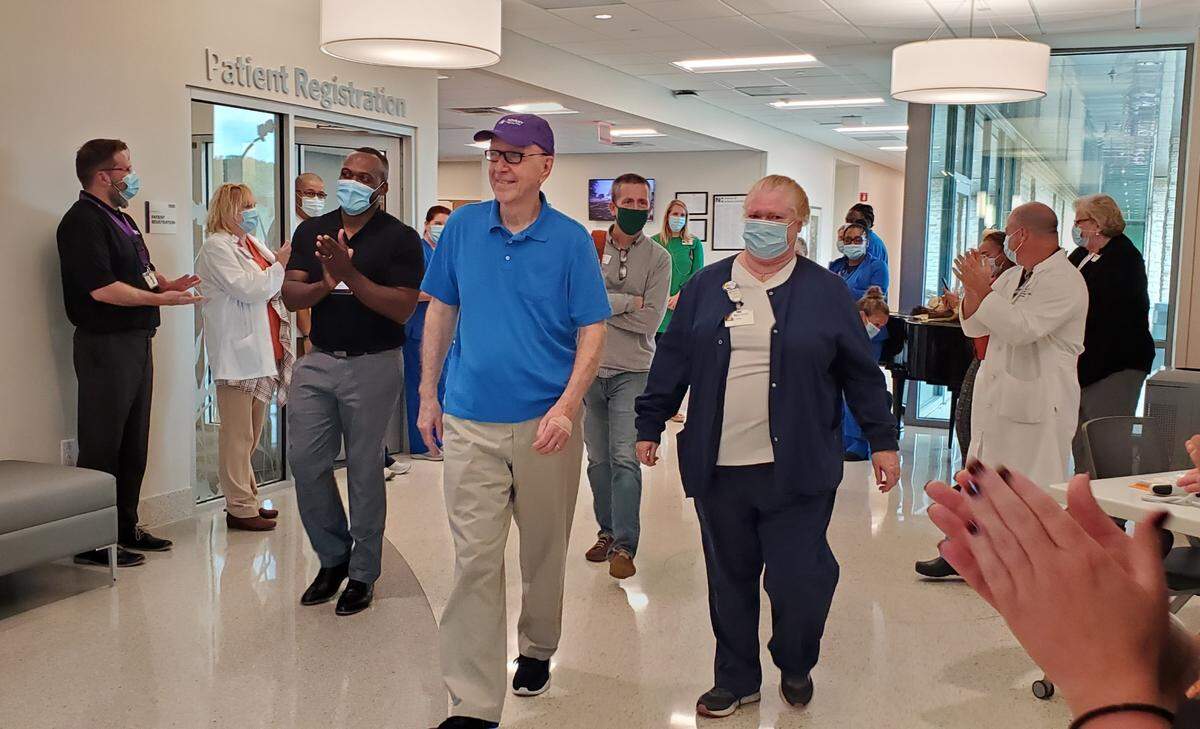
Now Hicks, 79, is feeling much more confident. He recently became the first patient to undergo incision-free brain surgery at Novant Health Mint Hill Medical Center. On Sept. 28, he walked out of the hospital after just a few hours able to complete tasks he’d struggled with for 30 years.
Most candidates for this surgery suffer from tremor-dominant Parkinson’s disease or from essential tremor, a nervous system disorder that causes rhythmic shaking in the hands, head, voice, arms or legs. The conditions have been treated with medications or by Deep Brain Stimulation, which entails surgically attaching a small electrode in the brain connected to a pulse generator implanted in the chest. But some patients have health factors that make traditional surgery too risky, and a battery-powered implant that requires routine checks is not ideal for others.
Hicks, who lives outside of Asheville in the small, rural town of Old Fort, North Carolina, was one of the latter. Also, because patients are not put under anesthesia--they are conscious the entire time--and there are no surgical incisions to monitor afterward, this treatment option is ideal for someone traveling from a distance.
“I’m kind of isolated up here and didn’t want to have to run back and forth to Charlotte to get my supplies. What appealed to me [about the new procedure] was once it’s done, it’s done,” Hicks said.
MRI-guided focused ultrasound
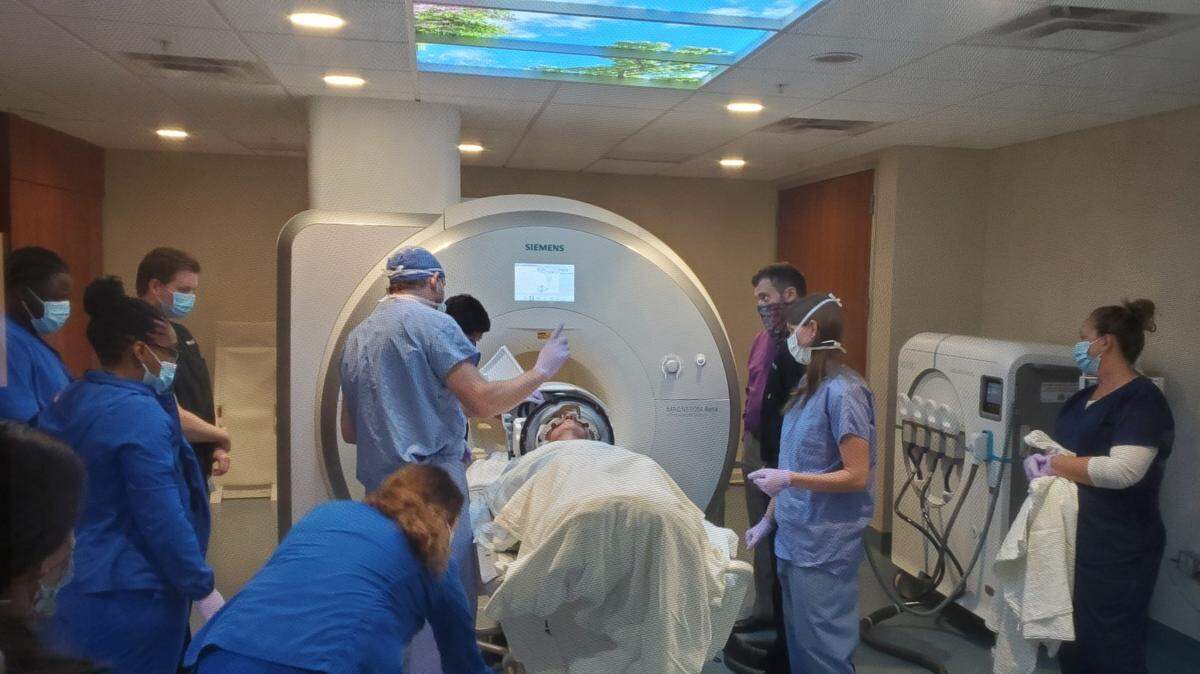
The new surgery, MRI-guided focused ultrasound, treats essential tremor and tremor-dominant Parkinson’s disease with sound waves, targeting the brain tissue that causes the tremors. Only 23 hospitals in the U.S. offer this treatment, with Novant being the first and only facility between central Virginia and Florida to do so.
“One of the biggest reasons we are so excited to incorporate this procedure is the ability to expand patients’ access. We’re empowering people to make choices that best fit their needs,” said Dr. Charles Munyon, Novant’s functional neurosurgeon and the one who performed the operation on Hicks. “The ability to dress and feed themselves again, or just live a more active and independent lifestyle, is extremely rewarding.”
Before considering this kind of procedure, the tremor must be disabling. If the tremor is mild or not interfering with day-to-day tasks, doctors try to avoid surgical intervention.
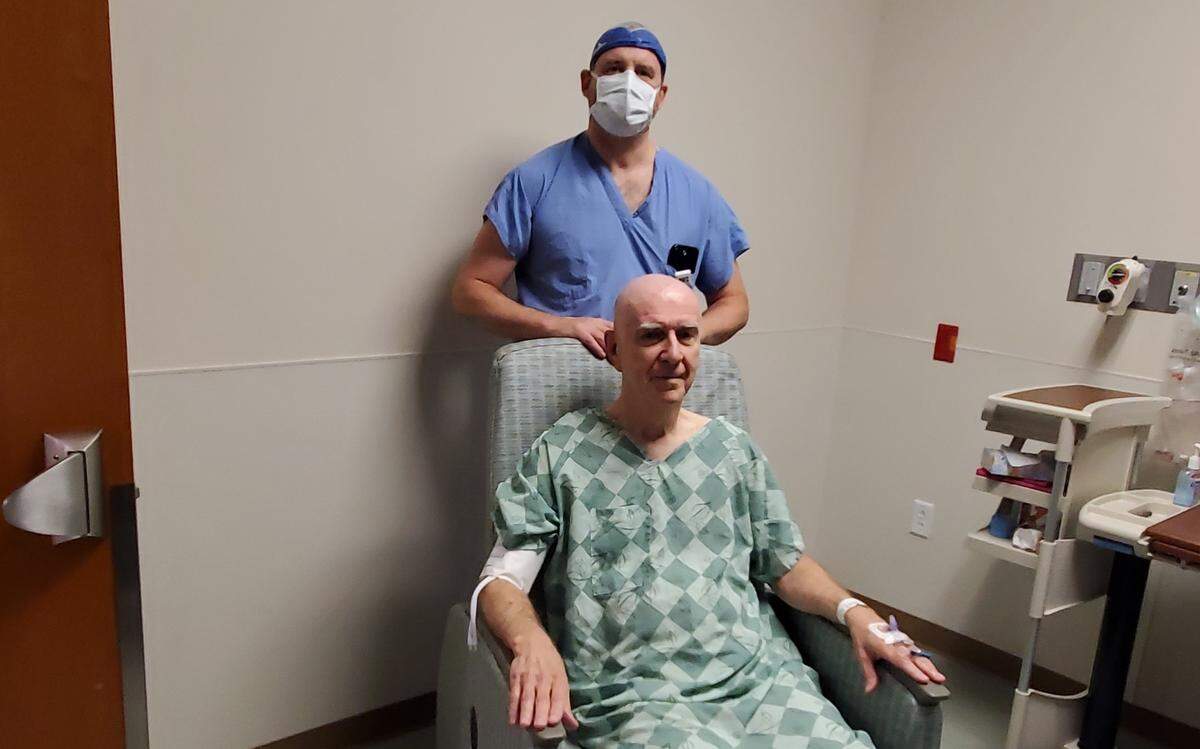
The treatment uses more than 1,000 beams of focused ultrasonic energy, creating small areas of heat deep in the brain to destroy the misfiring cells that are causing the tremors. The process begins with a series of thorough conversations. Hicks said between the manufacturer, Munyon and the surgical team, he had 8 or 10 calls, visits and meetings in the months leading up to surgery. The last discussion took place right before the procedure itself, when Hicks’ scalp was shaved closely and a special frame was fixed to hold his head in position with four sharp pins. According to Hicks, this was the only uncomfortable part of the procedure.
Once the frame is in place, a special membrane filled with cool water is placed around the scalp. The water conducts the ultrasound waves, and an MRI scan measures the temperature in the brain. They then utilize the ultrasound waves to damage the part of the brain circuitry that is causing the tremor.
Drawing spirals and holding a cup of water — during the procedure
Throughout the procedure, Hicks was completely awake and participating, performing motions that allowed Munyon to assess the tremors, including drawing spirals and holding a cup of water aloft. After about four hours of surgery, he retired to the recovery area for about 30 minutes.
“My favorite part came after the surgery, handing Larry a cup of ginger ale and watching him drink from it and put it on the table without spilling anything,” Munyon said.
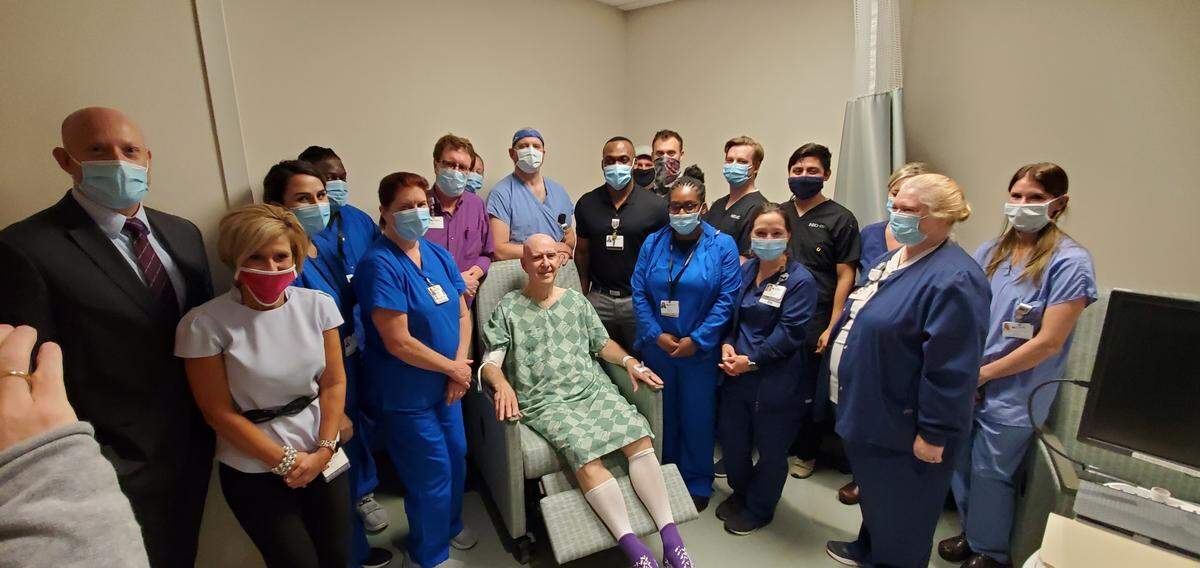
Novant has almost 60 patients on the list of candidates for a similar surgery. “This technology makes Novant Health and Charlotte a regional, and even national, referral site for essential tremor and tremor dominant Parkinson’s disease,” said Saad Ehtisham, president of the Novant Health Presbyterian Medical Center and the greater Charlotte market.
‘You don’t think about not being able to eat soup or drink a cup of coffee until you can’t’
Since returning home, Hicks has been able to hold the items in his right hand without steadying his wrist with his left for the first time in years. Holding a screwdriver is no longer a problem, and brushing his teeth, where he “used to about jab my mouth out,” isn’t either.
“You don’t think about not being able to eat soup or drink a cup of coffee until you can’t, and then you really appreciate being able to do them again,” he said. “I’m just sorry I didn’t get it done 10 years ago.”
Hicks’ son Rob moved in to help out his dad and mother, who is fighting cancer. He said in the week since the procedure, the difference in his father has been incredible.
“He’s been able to do a lot of things he hasn’t even attempted in a while and that’s been wonderful to see,” Rob Hicks said.
Hicks has experienced some unsteadiness in the week following surgery, but Munyon said that and potential tingling in the side are the main side effects. They’re temporary issues that are usually resolved within a month.
“I only stumble some, I think I have to retrain my brain a bit on some things,” Hicks said. “But I was happy to be No. 1, no question about it.”
.jpg)