
Change is hard: What Charlotte lost to development in 2016
The #YearOfTheReaper 2016 claimed musicians, actors and icons worldwide. In Charlotte, 2016 saw the end of beloved landmark destinations and events.
We learned of or experienced the closure of multiple venues with character only the love of a community and the wear of time can impart. Redevelopment stories were plentiful and could have made for a special obituary (or execution schedule) page.
Some places and events had become mainstays in a matter of years, while others reach back to the early 1970s. Others helped build momentum for our growth in between.
Among the most notable things we lost (or will soon lose) to development this year:
– Common Market South End: Closed July 30. Opened April 1, 2008. Site will be redeveloped for office, mixed-use. Common Market will re-open in the first half of 2017 on Tremont Avenue.
– Double Door Inn: Scheduled to close Jan. 2, 2017. Opened in 1973. “Live from the Double Door” was recently produced to document the history of the venue that has hosted Eric Clapton, Stevie Ray Vaughn and the Avett Brothers, among others. Central Piedmont Community College will raze it and expand their campus.
– Jackalope Jacks: Property sold Nov. 28, and it is scheduled to close February 2017. Plans were announced in the spring. It will move into a building with its sister restaurant, Peculiar Rabbit, and music venue Rabbit Hole in Plaza Midwood. Other properties along 7th Street (including the former site of The Philosopher’s Stone) will be redeveloped for mixed-use.
Interestingly, Jackalope Jacks was originally Jack Straws restaurant, which closed in 2000. Jackalopes On The Corner operated across from Double Door from 1997 to 2001, when CPCC’s expansion forced owner Rob Nixon to move down East 7th Street (notice a trend?), where he combined the names. Plus, Nixon is in discussions with Double Door owner Nick Karres to have some of the historic venue’s regular acts perform at Rabbit Hole.
– Amos’ South End: Announced it will close March 2017. Mixed-use development has been discussed for the site. Originally operated in Park Road Shopping Center in the 1990s before opening on Tryon Street in 2000.
– Food Truck Friday lot in South End: Moved to Sycamore Brewing in 2016. The original location adjacent to Common Market made that block feel like such a hub for South End.
– While technically not in 2016, the December 2015 closures of music venues Chop Shop (NoDa) and Tremont Music Hall (South End) did not provide the best foundation for destination options in 2016.
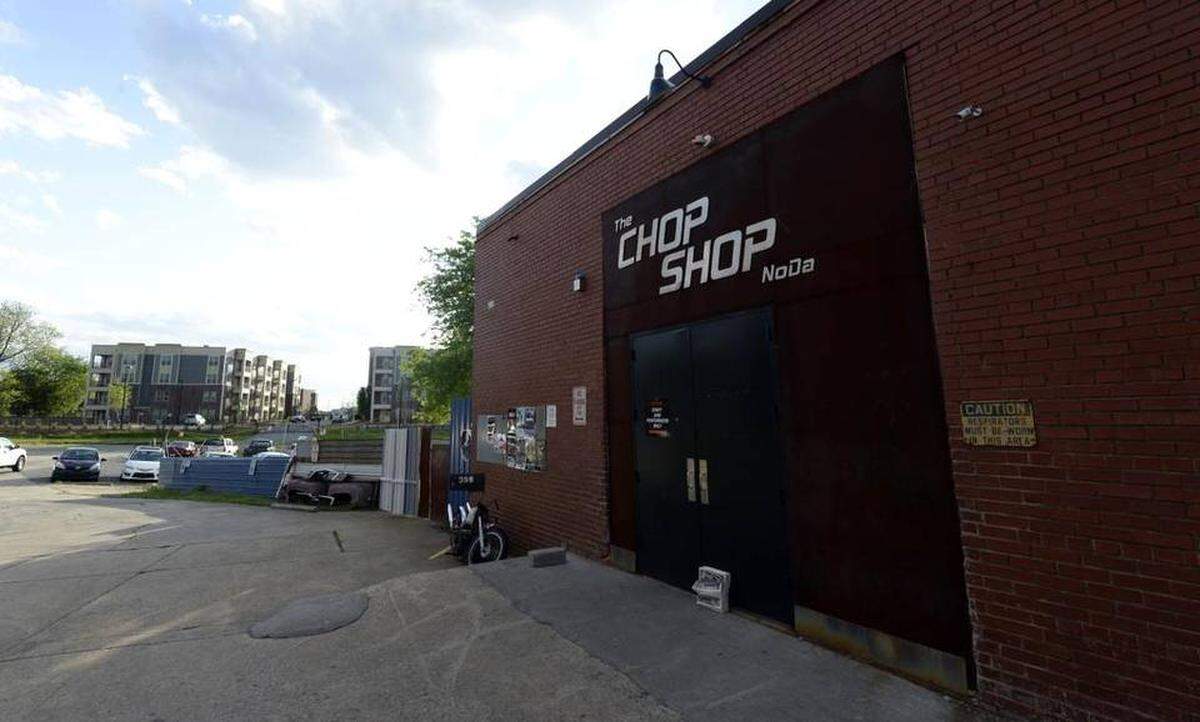
Development adjacent to the Music Factory even contributed to Charlotte Oktoberfest taking a hiatus in 2016. There’s concern about the fates of other mainstays – including Price’s Chicken Coop and Visulite Theatre – that could be lost as the areas around them continue to develop.
And it’s not just the loss of a place. Neighbors have significant concerns about added traffic from relatively dense residential projects.
To be fair, it’s not all bad.
In September, the property at the corner of North Davidson and 36th streets, home to Neighborhood Theatre, Salud Beer Shop and others, was sold. But the seller and owners agreed to deed restrictions to prevent the theater’s demolition.
Park Road Shopping Center, Montford Drive and Plaza Midwood have retained their character through a decade of revival. There’s been some turnover but more ‘keeping up with the times’ than ‘complete, 10-story redevelopment.’
Plus, the losses have at least had replacements, unlike the Eastland Mall.
Relatively few people will miss these things we lost in 2016 but rarely interacted with: The Goodyear store (Tryon Street); the Pepsi plant (South Boulevard); and the Radio Center (South Boulevard). (Anyone else think of The Flintstones every time they saw the last one?)
This isn’t anything new. Long-time Charlotteans post fascinating pictures of uptown prior to its sterilization of retail. Independence Boulevard – before it aspired to be the L.A. freeway – was lined with vibrant shops and restaurants, including a Krispy Kreme where Hawthorne Lane crossed. (Is nothing sacred?!)
The only constant is change. In many cases, people invested money in these properties when the areas were less than desirable and helped to make the area desirable with tenants and events. Who are we to disallow a profit on that investment as they retire?
But do we have to be relegated to becoming nostalgic, reminiscing for the character and local, established businesses Charlotte has developed in recent decades while watching them being torn down? Can’t we build these massive mixed-use developments around Jackalope Jacks — like in the movie “Up,” something that actually happened in Seattle?
Growing cities inevitably have growing pains. Charlotte is no exception. In redevelopment, a balance must be struck. We do have a zoning process and historical designations that can help. Too often in 2016, we seemed to sell and demolish the soul of Charlotte in places that cannot relocate or reincarnate.
Much of this balancing will fall on the city and developers. Without deep, long-term considerations, they will snuff out the proven features fueling momentum that in turn fuels redevelopment. And, should there be another financial downturn and not enough tenants to fill the seemingly endless chain reaction of apartment construction, it will prove difficult to bring life back to areas sterilized of deeply rooted, beloved establishments.
Photos: CharlotteFive and Charlotte Observer file photos
This story was originally published December 23, 2016 at 12:00 AM with the headline "Change is hard: What Charlotte lost to development in 2016."