The Avett Brothers will play their first live show in 6 months. How ready are they?
It’s been 177 days since The Avett Brothers last performed for a big audience live, in person.
One hundred and seventy-seven days since they waved goodbye to the closing-night crowd on the beach outside of the Hard Rock Hotel & Casino Punta Cana, capping their three-day At the Beach festival in the Dominican Republic.
The band flew home overnight, and the next night, March 2, Scott Avett started feeling sick.
It wasn’t COVID-19. A trip to the hospital revealed that he was suffering from appendicitis, and an appendectomy solved the problem. But within a couple of weeks, while Avett was recovering, the pandemic found another way to take the Concord native out of commission along with the rest of the acclaimed Americana band, which includes his younger brother, Seth (who is the group’s co-lead singer and co-founder), bassist Bob Crawford, and cellist Joe Kwon.
And — like scores of other musicians, from the biggest names to the smallest — The Avett Brothers have been on a forced hiatus from playing concerts for close to six months now.
“It’s building,” Seth Avett says, when asked how much he’s missing being onstage. “... When we have to check back into it — like, when we reviewed like the Red Rocks footage (for a PBS concert special airing Saturday) ... then I think each of us kind of start feeling a little more like, ‘Oh, man, that is awesome ... when we get to do that.’ ...
“It’s not a daily consideration. It’s not something that I think we miss in our daily lives. But when we check back into it, and have some evidence of the spirit of it, that reminds us that it will ... be beautiful to do it again.”
So then Saturday night should indeed be beautiful for the Avetts, as well as for the fans stuffed into the 1,500-plus cars that will be inside Charlotte Motor Speedway for a one-night-only, socially distanced, drive-in-style concert. It will be the largest live/in-person showcase of music in the area since the start of the novel coronavirus quashed the traditional concert-going experience.
Scott and Seth Avett spoke to The Observer this week — via Zoom, from inside Scott’s art studio — about the effect quarantining has had on their songwriting (and on their hair); whether recent events have changed the resonance of their new album “The Third Gleam” (out Friday, the day before the concert); and how exactly this show will work.
The conversation has been edited for clarity and brevity.
Q. So what have the last 5-1/2 months been like for you guys?
Scott: While I was recovering from (getting my appendix taken out) — you know, a week or two of just kind of taking it easy and not doing strenuous activity — we were just watching the pandemic settle in. I mean, it was so surreal. We just felt like our first job was to (figure out), “How can we reduce our footprint?” So we did that, and now I feel like we’re starting to learn a little more about who’s really at risk, how to protect those people, what’s the most effective ways, what things can we do? So we’ve branched out a little bit. But we still take it very serious and do everything thoughtfully. Masks and social distancing are key parts of life now.
Seth: And for me, when we got back from that Dominican Republic trip, I turned right around and flew back up to New York. My wife (actress Jennifer Carpenter) and I and our son (5-year-old Isaac), we’ve been living in New York for the most part over the last four years or so. And we were just kind of a little bit ahead of the curve, or just a little early in getting nervous about being in the city, and we actually left the city on March the 6th to come down to North Carolina. We’ve been here ever since.
In the early stages of this thing ... I don’t know, there was some novelty to it. Remember all over Instagram people were choreographing dances and it was all kind of fun and games, like, giving each other haircuts and all this. Then the months and months started settling in and people really realized, like, “God, this is — there is no —”
Scott: There’s no good haircut coming. (Laughing.)
Seth: Yeah, there’s no end in sight and this haircut is not funny, it’s terrible. (Scott laughing.) But I mean, our business, our work, everything got completely turned upside down because our schedule and our lives and our music (revolve around) the connection with fans and live performance. So completely taking that out of the mix has been really just surreal, and odd. We’ve had a really a fundamental change in our daily lives — in every capacity.
Q: Seth, did Scott give you that haircut, or did Jennifer?
Seth: Scott did.
Scott: I did both these haircuts actually. I’m the resident barber. I love cutting hair. My two sons, I’ve given them lots of haircuts. And I’ve given Seth’s son a haircut.
Q. Have there been some — I don’t know if advantages is the right word, but — has it helped in your songwriting at all to be able to slow down and relax and have time to think, and not have to constantly be on the go?
Scott: Yeah, the most useful way to look at this, for us — to turn ... what they say, lemonade from lemons, was to be aware that we’ve gone nonstop for almost 20 years. I think maybe two months was the max I’d ever been with my wife (Sarah), you know, consecutive nights. And ... we probably had trips in there that we went and did a show here or there. So I’d never been home six months-plus, ever. Since we were married, you know? For the past 17 years. And I think what we recognized was, “Oh, OK, let’s face it. There’s something bigger than us working here. What is the lemonade? What is a meaning that we can take from this? How can we take this and let it be meaningful in our lives?”
So that rest and slowing down is so good for songwriting, and any creative process. (It’s great) to have space to know somebody’s not waiting on you to bring it — which just forces you to hurry it along, and means it doesn’t get that space and that time to live. And sometimes that just means it needs to go full circle to realize that the initial 10-minute invention of something was really the only answer. We needed time like this.
If this was 2005 or 2004 for us, it would be very difficult to take this pause. It would be detrimental. So I feel for younger artists that are going out and they’re ready and they really want to make that mark. We took that opportunity, and we had other challenges, but we didn’t have a pandemic that just completely shut us down.
Now, they’ll grow from that. People will figure out how to work that, and it’ll be great for them and it’ll serve them well. But I feel for the people that are like, “Man, I am so eager to get out. I haven’t had my day in the sun yet.” We’re more going, “OK, our day is coming again. We’ve just gotta wait.”
But for songwriting, and for the creative process, man, it’s wonderful. It really is. ... It’s not an opportunity. There’s too many people that are suffering. This is really a terrifying time for many people, and it’s not an opportunity based on that sacrifice. This is a different thing. It just happens to be within a pause.
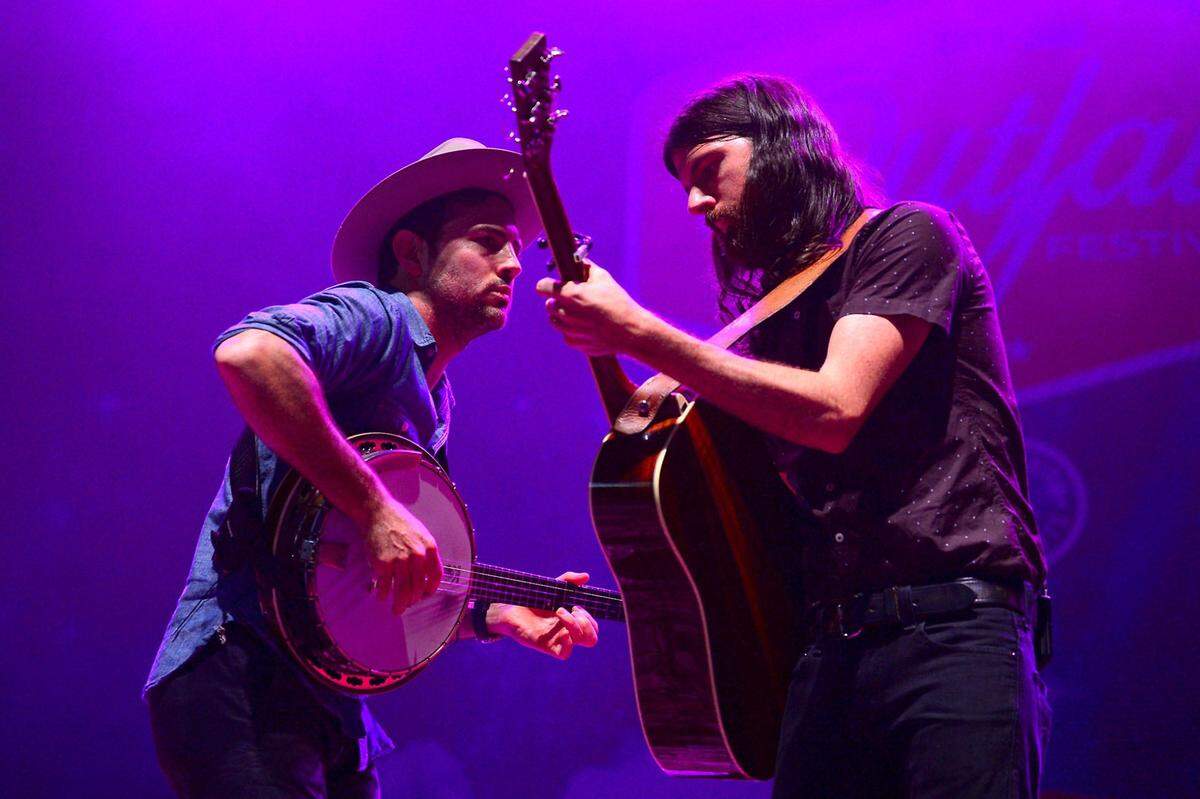
Seth: Yeah, and this whole thing is still relatively young. Our experience of it is between five and six months right now. And this pause is not an intentional pause. So far, at least for me, some of the themes that have found their way into a very fruitful time of writing are — in a very literal sense — informed by the pandemic and by the social unrest. So this pause, it’s great for songwriting, but for me so far the songwriting, it does have isolation in it, you know, and it does have wonderment over continuing on. ...
It’s not all negative, but I’m saying, like, it’s very informed by the nature of the pause. It’s not like the kind of pause where if everything were still going on as normal, and Scott and I just had a discussion and said, “You know what? We need to take a year off the road.” Then we might be writing more songs that are, I don’t know, about romance, or God knows what. But it seems worth mentioning that that’s part of the creative process for me, thematically. It’s heavily informed so far by the nature of the pause.
Q: When you say it’s been a very fruitful time of writing, how many albums have you written in the past 5-1/2 months?
Seth: It’s kind of unknown. I mean, it’s not like we’ve compiled everything that we’ve been thinking about. But I know that when the pandemic started, my mind completely turned its creative side off. That lasted for almost three months. And that’s the first time that I’ve experienced that in over 20 years. And then it came back with a vengeance, and it was, you know, a new song almost every day for weeks. Not in their entirety, but basically the faucet got turned back on. So I think there’s a lot coming, but yeah, who knows how much?
Scott: It’s like a shrub or something that’s growing. We have to let it grow. And it goes wild with blooms and leaves, and then you’ve gotta ... figure out how to prune it. Or maybe you’re clipping the flowers off of it, I guess, but right now it’s just growing wild.
Q: Let’s talk about the new album. (“The Third Gleam” was recorded last winter, pre-pandemic.) What sort of thought process did you go through in terms of evaluating whether it was still the right time to put it out?
Scott: Well, when the pandemic hit, we thought it would be really good to be able to offer to our fans an album (snapping fingers twice) like that. Just as something to keep the dream alive. But when we got into the nuts and bolts of that, we realized it couldn’t happen as fast as we wanted it to. And it shouldn’t have. It needed to some time. Then I think that along that way, we realized, “Man, it’s incredible how applicable this stuff is.” (Despite not) knowing about the pandemic and then the social unrest and Black Lives Matter. ... It was a nice discovery.
Seth: Yeah, and I mean, I have to say, when some big thing happens in the world that connects everybody, we don’t always need artists to articulate it for us.
Scott: Or remind us.
Seth: Or remind us. Like, after September 11th, I didn’t want to hear a bunch of artists playing us their song about September 11th. It seems to me that in a time of struggle, a time of suffering, there is a lot of art that is appropriate. And some of it has nothing to do with the suffering. ...
I don’t know. I just was thinking about it, (as we were preparing the album), it was like, “We don’t have to directly address the pandemic or the social unrest. It just so happens that a lot of the themes that we wrote about that made their way onto this record are themes that are old and are in the future as well. So all that just kind of lined up, without having to think about it. But if the record was super-light, and didn’t address anything heavy, I think it would also be appropriate to put it out. You know?
Q: Is there a particular song, though, that maybe has taken on a slightly different meaning at all, for you guys?
Scott: I don’t know about for us. Songs will take on different meanings once other people have relationships with them, I’ll find. But for us, we don’t know what other people’s relationships are with these songs yet, because we haven’t played them for people in person. We haven’t heard from people about them.
Seth: I have one. And I agree with what Scott just said. But I had an interview with a fellow in Germany the other day that really helped me just kind of re-frame and just sort of re-fuel the point of a song, and that’s “The Fire.”
The song is about taking a moment with some other people’s perspectives. And just talking about the song was a healthy reminder to me that I forget to do that all the time. And I think because of the pandemic, the social unrest, Black Lives Matter, this upcoming election — all this stuff — there’s never been a better time for the Golden Rule. There’s never been a better time to realize that there is not one reality. There are billions.
Even this conversation we’re having right now. You’re experiencing a certain thing, I’m experiencing a certain thing, and Scott is experiencing another thing. And all three of them are wildly different. Even though we’re taking part in the same event, we all are informed by different baggage and different things that make us excited about something, or sad about something else.
But talking about “The Fire” with him, I was just like, “I need to keep remembering that. That when I make a judgment about somebody at the grocery store not wearing a mask or whatever, I need to remember that I’m not them. And I don’t know what they’ve been through, I don’t know what they’re thinking about, I don’t need to discount them.
If they’re on the left or the right side of the political spectrum, I don’t need to assume that I know why. I don’t need to assume that I have a real understanding about what informed that. Or that if I guess right, that they were right or wrong for doing so. This is kind of a massive topic. But yeah, that song has kind of taken on — not a new meaning, but its importance to me has been renewed.
T: The album’s first song, “Victory,” opens with the line, “Accolades and happy days / they don’t ever last.” That’s something I’ve always been interested in with you guys, is that — despite all the recognition and the success that you’ve had — it really doesn’t seem like that stuff is important to you. Here’s the most straightforward way to put it: Would it be important to you to win a Grammy, for instance? (They’ve been nominated three times.)
Scott: We talked about this the other day with the Grammy Foundation. And this actually goes back to (our early days in Charlotte). My ego — and, I’m sure, our collective ego — wanted us to be on every cover of everything all the time. And then as that doesn’t happen the way that you expect — or when it does happen — what I started building was a perspective of when it does happen, of course it’s a reflection of your greatness. Of course.
Now, there are ways of articulating that. A very simple broad way would be of course we are each beloved ones. And being that, for us to be praised is good. It’s good, and OK. And it can be done well. Most people don’t do it well when you’re 20, 25 years old. But what I started building was a way to look at it like, “If I don’t get it, it’s nothing. It’s neither good nor bad. A non-event. OK, I’m not on the cover of the magazine.” And when I do: “Well, of course I am. I am a glorious, beloved child of God. And of course I’m there. And it’s no surprise that any of us would make it there when we work hard at something in our realms.”
And originally that might have been a way of (preventing) damage to my ego. But as I’ve grown older, now that we have had accolades, we’ve learned how they don’t own us. And how we don’t need to hold them too tightly. You could say that about a new car you bought, a job you land, an award, a house you build, your boyfriend or girlfriend, whatever. You can’t let it own you, and if it does, I think that’s the trap.
So ultimately, the takeaway is: Be awake to that. Be awake to it when you do go, “Ohh, I really want that show. I really want that award. That would be so cool, and I don’t have it, and what does that say about me?” And then go, “Wait a second. It’s a non-event. You’re here to make. You’re here to create. That’s what you’re here to do. You’re not here to win awards. So put that aside.”
Q: So, how do you guys measure success for yourselves?
Seth: Awards. (Laughing.)
Scott: Grammys! Money! (Laughing.)
Seth: How much money we have. Square footage of our houses.
Scott: (Laughing.) No, I just keep going back to, “Look, nobody can be Scott like I can be Scott.” Our contribution is to create art, music, experience, connections, relationships. Beyond that, even further, is to be who we are. That is success. If I know that I’m doing me, and included in that is love, then I’m succeeding.
Seth: And I have to say, as far as the feeling that I have in my heart, the awards or the accolades that we’ve gotten don’t really compare to the times when I have been made aware by a fan how much they have brought us into their family’s life. I just tend to think — as I get older and forget more and more things — that I will forget the accolades before I forget some of that. Because I feel like what this music and what the growth of the band has really highlighted is that we are connected in our suffering. So if you write a song that someone else thinks is good in some way, or connects to their experience, they can let you know: “We have a suffering that looks similar.”
And that really is the award. That’s really the thing that shows me that what we have been doing is not all for nothing. It’s the communication that keeps me wanting to share music. I think the thing that makes me want to write music — or make things, make art — I think that is its own entity, and I think that that is just a communication with God. But the decision to share it with people and to put it out there for everyone’s judgment is really informed by that return. By the return that we get from people saying, “My joy and my suffering is like yours, and yours is like mine.”
Q: And finally, a quick question about Saturday night’s concert: Since everyone will be spaced out, and in or on top of their cars, is there a different way you have to approach something like this?
Scott: Since the screen is probably what people will mostly see, the way it seems to play out in my mind is that we really need to approach it more like a TV performance. We hone in on performing the songs wherever we are to the best of our ability, to represent them well. Because you can’t play out to the crowd.
Running around in the crowd and stuff, and running from end of the stage to end of the stage, I don’t envision that happening as much as, “Let’s make something great that will come out of the speakers in the cars and that they can reference on the screen.” It’s hard to know exactly what it’ll be like, though.
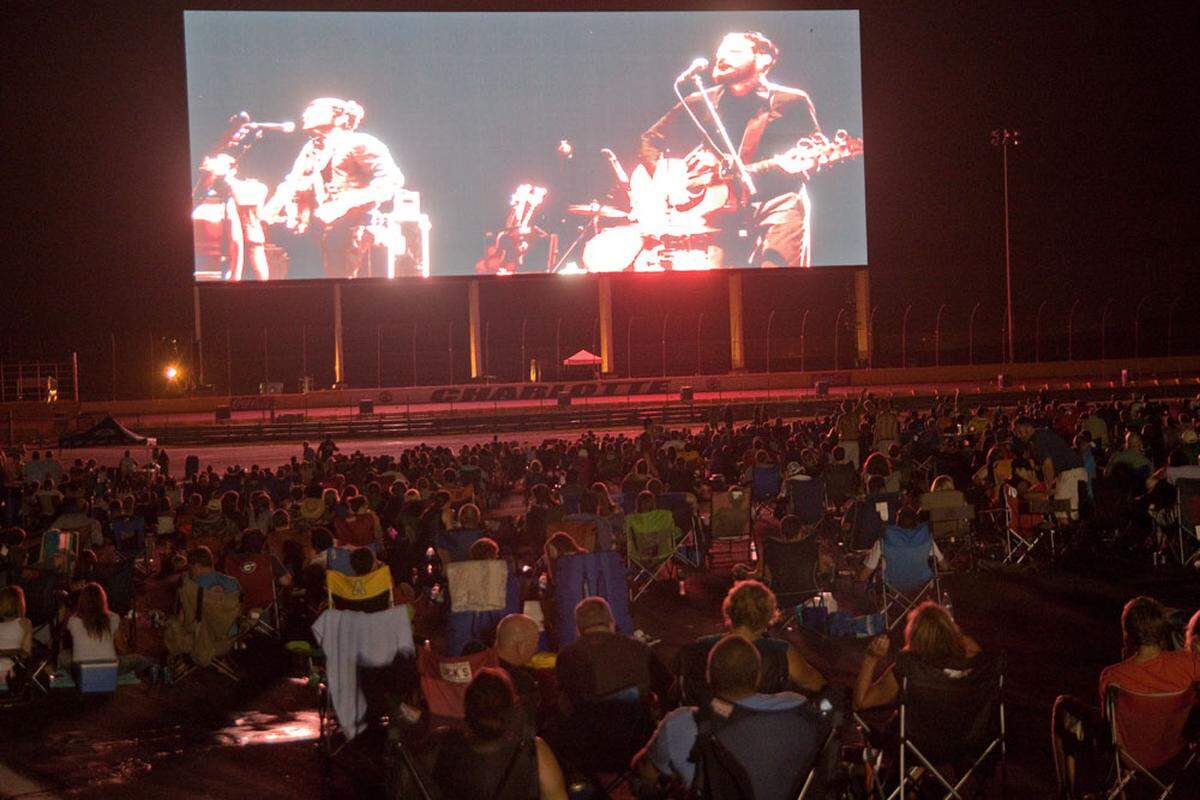
Seth: Yeah, obviously logistically there are some boundaries that have defined how we’re gonna do it because of the pandemic, of course. There’s gonna be four of us rather than seven. Less crew — less personnel on stage, and in the wings, and in production, all of it. We just thought that was a safer way of doing it. So instead of trying to play to the scale of a big room or a big venue, we’ll just stay intimate, you know, stay with the songs.
The reality is the speedway is too massive to try to fill with your personality. The best thing we can do is just have fun, get up there, me and Scott and Bob and Joe play the songs and connect with the people through this new way, where the screen will help us to make it intimate, and the FM channel broadcast will help make it intimate. So we’ve thought about it, and where we’ve landed is let’s just get up there and keep it simple, stupid. Play the songs, enjoy it, and just enjoy this moment, because it’s gonna go by (snapping fingers) so quickly.
Information
▪ The Avett Brothers will play a drive-in concert Saturday at 8:30 p.m. at the Charlotte Motor Speedway. Tickets are sold out, but the show will be streamed live via pay-per-view. Go to theavettbrothers.com/drive-in for details.
▪ The Avett Brothers will be performing “Victory” on ABC’s “Jimmy Kimmel Live!” on Tuesday at 11:35 p.m.
This story was originally published August 25, 2020 at 2:51 PM.