Fox News anchor on ‘Women of the Bible’ and the man in Charlotte who shaped her career
Although she was only at WBTV News for three years, and even though it’s been more than 16 since she left town, Shannon Bream still holds a special place in her heart for Charlotte.
After all, she says, it’s the job that laid the groundwork for her to become who she is today, professionally: a 14-year veteran of the Fox News Channel, one who has anchored a late-night show that bears her name since 2017.
And by far — “by far,” Bream emphasizes — her most significant mentor was John Carter.
“I tease him that he still takes credit for anything good that happens to me,” Bream says, smiling, of her former colleague, who still works as an anchor at Charlotte’s CBS affiliate. “He says, ‘Well, that wouldn’t have happened without me.’ But you know what? There’s a lot of truth in that. ... He’s just a fantastic role model of somebody in the newsroom who really is about the bigger product and the bigger success, and completely plugged in and caring about the community.”
As for the biggest lessons Carter taught Bream?
“His attention to detail and his writing was what I really took from him. Grammar, of course, but getting to the heart of the story, double- and triple-checking your facts and your quotes.”
While writing scripts has always been an important part of her TV job, in recent years she’s taken on a couple of major writing projects away from the newsroom.
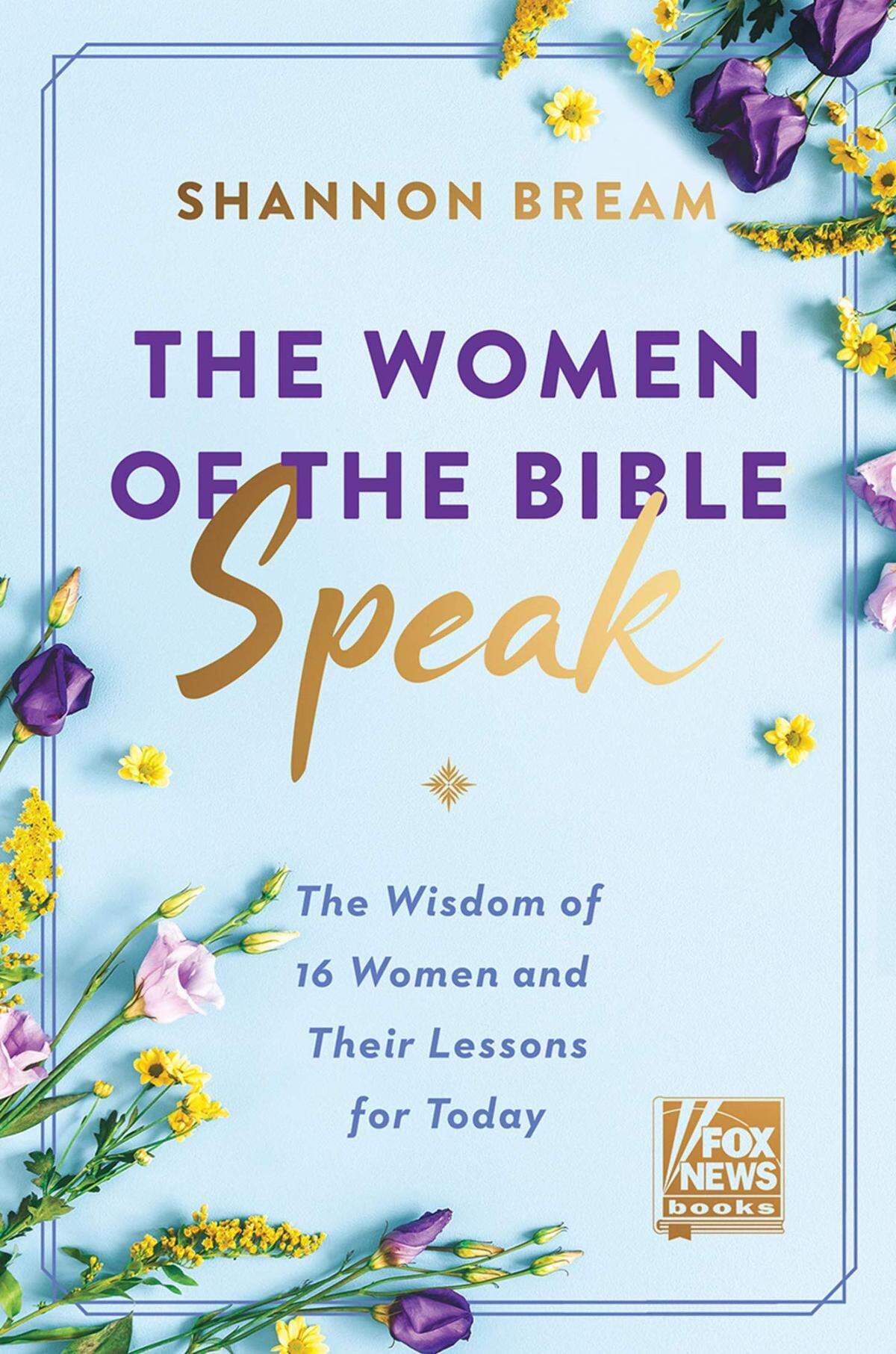
The latest — a book titled “The Women of the Bible Speak: The Wisdom of 16 Women and Their Lessons for Today,” is a follow-up to her 2019 memoir “Finding the Bright Side: The Art of Chasing What Matters.” It will be published March 30 by Fox News Books as part of the network’s recent deal with HarperCollins.
It’s funny, by the way, that she should mention attention to detail. Because there’s one she’s currently trying to ignore completely.
“I really try hard not to,” Bream says, smiling again, when asked whether she’s paying any attention to how “The Women of the Bible Speak” is faring on Amazon’s ranking of best sellers. “And I’m sure that a lot of authors feel that way. Especially because of the content of this book, because what I’m hoping is it will spiritually challenge and encourage people.
“I get emails every couple of days saying, ‘Book’s doing great! Here’s where it is.’ And I try to tell myself, That’s fantastic. But I’m hoping for sort of a higher purpose for the book, and so I try not to look. But I do hear, and of course the more people who buy it hopefully the more will get the message of hope.”
(For the record: As of Tuesday afternoon, still three weeks out from release, it was 148th best-selling book on Amazon, taking into account both preorders and books already in circulation.)
Bream spoke with the Observer by Zoom this week from the home she shares with her husband, Sheldon, in Arlington, Virginia — right across the Potomac from Fox News Channel’s offices in Washington, D.C. — about her memories of her early days in the news business, turning 50, why she wrote her new book, and the somewhat surprising idea she has for her next one.
The conversation has been edited for clarity and brevity.
Q. How did the idea for this book come to you?
I have to give Fox a lot of credit. They actually came to me (in July or August of 2020) and said, “We’re thinking about putting together this book of women in the Bible. Would you be interested?” And normally, with any project you take on, you say, “Oh, give me some time to think about it.” But this was an immediate yes for me. I was thrilled to be able to tackle this topic, and hopefully make it something that is very enjoyable and interesting and relatable for people.
I wouldn’t necessarily recommend writing a book in the middle of a pandemic, a presidential election and then a Supreme Court confirmation battle. So it really was a labor of love. It was every free moment I had from the time they approached me. Nights and weekends and days — because I work nights — were all about the book.
I had great people that I could reach out to with theological questions — and things that were deeper than the knowledge I had about these stories — to be able to ask them questions like, “What does this word really mean in Hebrew or Greek?” I learned a lot through the process and ... I realized how much I enjoyed studying these stories. Hopefully that comes through.
Q. The pandemic has changed our way of life in so many ways. It’s also made us reassess our choices, reevaluate our priorities, etc. We were deep into the pandemic when you wrote this. Do you think the book would have been different if you hadn’t been writing it during this time?
Yeah, you make a great point, because I think all of us were rattled last year. We either personally — or people close to us — suffered a lot of loss, and a lot of pain and uncertainty, and heartache. I saw that in these stories, because there are women who prayed for years and years and years for something to come to fruition, or they’re betrayed; we have widowhood in this book, infertility; I mean, very 2021 problems, and 2020 problems. So I feel like the stories did take on a different nuance to me, because everybody was sort of in a place of pain at some point last year. Or of struggle. Or of faithlessness. And of reaching and looking for help and for comfort.
So I think the stories are illuminated in a different way because of the crisis that everybody was going through at that point. I felt like I could relate to these women a little bit more, especially the ones who are struggling and looking for answers and feeling, “God, where are you in this?” I think that’s a question that many people of faith asked last year. So I think it’s certainly colored the book — maybe deepened some of these examinations of these women, and really being able to understand the emotions and the struggles that they went through.
Q. What was relationship like with religion and the Bible like when you were growing up in Florida?
My parents divorced when I was just a year old, so I grew up in a broken situation going back and forth between my parents. My mom during that time developed a very deep faith. She began teaching at a Christian school, and really the only way I was able to go there is because she was a teacher there and there was a tuition discount.
We grew up in the Baptist Church. There are times we would be going to a Southern Baptist church, and times we would go to a more independent Baptist church. My grandparents were Presbyterian, so we went to church with them a lot as well, and of course those two denominations have a few major differences, but at the core the belief about Christ was certainly the same.
So I was hearing Bible stories and I was learning all of these stories. So I thought I knew a lot of these stories. And I did. I had a good basic working knowledge of them. But I learned so much more by digging in (while writing the book).
Q. You famously left a career as an attorney to try the TV news business when you were about 30. Can you talk about that decision and whether your parents thought you were crazy for doing that? I don’t know how much money you were making at the time as a lawyer, but I assume it was more than you made in your first journalism job.
That is true. Well, so I’ve always been a news junkie. I love current events, the latest news, what’s breaking, what’s happening. I didn’t think about making a career out of it, ’cause my dad was very much, “You’re going to law school or med school. Pick one.” He did not see journalism as a solid career that would provide for his daughter so that she would never have to worry about anything in life. And I think in his mind, a solid education and doing law or medicine would give me a good foundation. I certainly understand where he was going with that.
So he was the toughest one to tell when I decided to make this transition. And when I took an internship (at my first TV station), I kind of hid it from everybody except for my husband. My law firm didn’t know. I would work overnights and weekends, whatever extra time I could do. Not glamorous. Working 2 a.m. to 11 a.m., and I would make coffee and answer the phones, and eventually started writing scripts for the morning show anchors and just took on each new thing as it became available. There’s a lot of turnover in newsrooms, and so I had an opportunity to start producing and learning and then eventually going out once in a blue moon on a story. And I immediately fell in love with it.
(But as far as telling my father), I mean, I put it off and off and off and off and off, and my husband was like, “You’re gonna have to tell your dad at some point you don’t work at your law firm anymore. He’s gonna call there. You have to tell him what you’re doing.” (Laughing.) So I thought, Let me dip my toe in the water.
(When I finally told him) I was going to leave my law practice and I was gonna go into TV news, there was silence. My dad was not super-excited about that. And for years, he never lived in a market where I worked. So I think for years he probably didn’t really think I had a job in TV news, because he lived in Tallahassee, I worked in Tampa and in Charlotte and D.C. It wasn’t until I ended up at Fox where he could turn on his TV and see me, and at that point I think he probably thought, “OK, my kid’s gonna be OK. This is a real job.” He often told me how proud he was of me.
Q. It’s true you got fired from that job in Tampa?
And I did get fired from that job, after my boss left and a new boss came in and said, “Whose idea was it to put you on TV? You’re really the worst person I’ve ever seen. You’re not gonna make it in this business.” I like to share that story with young people because it felt like the end of the world at the time. But it wasn’t. It really made me examine if I was serious about this — if I was going to admit that I needed to improve. How could I get better? Who could I learn from? It was a kick in the pants that I needed, probably, to be serious about the career. It hurt, and it took months and months and months until I found a new job at WBTV in Charlotte. But it was a good lesson in humility.
Q. So when you first got to Charlotte, did you have a road map yet in your head of where you wanted your career to go?
I didn’t. I was so thankful for that job, and so grateful to be working with John and the other folks at BTV, because I knew I had a lot to learn. I’d been fired. This was the next job after being told, “You’re terrible.” So I was sort of like a sponge, just really grateful for this opportunity to be there and to learn from people who were already fantastic at what they were doing. And BTV has such a great operation, and a long history. Just to be in that building — and to learn from other people and from all the radio guys and gals that were there, too — I was really thankful to be there.
I don’t think I had a plan. Which you probably should. ... I just sort of was open to the next thing, whenever it would come along, and didn’t know this is where I would end up. But certainly as I got closer to the years that I ended up at Fox, I was trying to get my — back then — DVD in the door for somebody to look at. And I had seen this explosion of cable news and what they were doing. So certainly the closer I got to it, I was definitely trying to get my foot in the door.
Q. What are the most memorable stories that you covered in Charlotte?
The last year probably that I was there, I covered a really bad winter storm there, where ice had taken down power lines everywhere, and I was out with my photographer and we’re just trying to stay safe. I remember seeing the community and how devastated it was. Charlotte looked like ... a war zone. There was so much stuff down. I just remember thinking, ‘Alright, we’re out here trying to get the story. People are without electricity. This looks like it’s gonna last a long time. What can we do to get them the best information to make sure people are OK — and to keep ourselves safe in this situation?’ That’s one that definitely stuck with me because the images were just so devastating for parts of the city.
And really, I have such great memories working with John. I was learning everything from him as I went. About writing, about grammar, about deadlines. He and I had some fun. I mean, working on the morning show, we would have animals in, and there was one time someone brought an animal on the show called a binturong — I’d never heard of it before and I’ve never seen it since. It sort of attacked John. I didn’t really think he was hurt, and I’m laughing and laughing, and I look over at one point, and he’s actually got a scratch. He’s got blood on his face. I don’t know if the animal had been scared, or what happened. But then I realize it’s not good that I’m laughing at my injured co-anchor here, and John’s trying to be professional and keep it together.
So doing the morning show, I have a lot of memories like that of us just doing slapstick kind of fun things while also covering serious news in Charlotte. I just have wonderful recollections of that time.
Q. Did you think of yourself as a good writer back when you were in Charlotte?
Well, certainly I was always aware of the difference between the way that I wrote as a lawyer writing a brief and writing a motion, and knowing that I needed to learn the conversational style of writing for news. Especially TV news. I think it reads different than print. I think print writing skills are different than writing for TV and the conversational script-writing skills. So I knew I had a lot to learn on all those fronts. And I don’t know how good of a writer I was in Charlotte. Hopefully I was improving under John’s guidance, for sure.
I think it’s always a work in progress. Every time I do write something or write a script, I like to have two or three people’s eyes on it. And with a book certainly you’ve got editors and other people looking over your work.
I think there’s always room for improvement, but hopefully I’ve come a long way.
Q. You had a big birthday not long ago: 50. That can be a tough one for some people. Was it a big deal to you at all?
I think it wasn’t, because it was in the middle of the pandemic and everything else. I think you’re just grateful and thankful for things in a different way. My birthday was in December, so you’re coming to the end of this really difficult year and thinking, ‘You know, my family and friends are safe, I’m healthy and safe,’ and I just felt really grateful more than anything.
I think being on TV and being a woman, I’m always thinking about how to make things look better and feel better and that kind of thing, but I really have an overwhelming sense of gratitude these days. I don’t know. I hate for people to look at a number on the calendar, or an age on the calendar and to feel bad about it. ... So I think having that milestone birthday at the end of a really tough year, I just felt grateful for what I did have.
Q. You’ve been in the business for 20 years now. How much do you think attitudes have changed toward aging women in the TV news business? Do you think that there has been more of a willingness than there was when you started to give women the same treatment that is given to men?
Yeah, I think about people who were pioneers in this business 20, 30 years before I was, and I think they had people openly saying things like, “Well, we’re adding you to the show for some eye candy,” or, “You’re gonna be the cute sidekick.” And these were women who were smart and educated, who wanted to be taken seriously. I feel like by the time I got there, they had laid so much groundwork already that you had a voice. You were able to stand up and say, “I do have an education. I’ve got some thoughts on this topic. I know how to research, I know how to write.”
I want to be cognizant of my physical appearance, and do the best I can with that. But I do think over the last 20 years I’ve been in the business, you can turn on the TV now and see people who don’t fit a certain standard that may have been the ideal in the ’80s. I mean, people of all different kinds of backgrounds and ages, different physical appearances and ethnicities. I think that’s exciting and interesting. I think television and journalism is always more interesting the more voices that you have involved. What I’d like to see is more ideological diversity. I think that that’s something, too, we can keep working on, so that newsrooms have people of all different backgrounds and ideas.
I think that we’ve come a long way. But there’s always work to do.
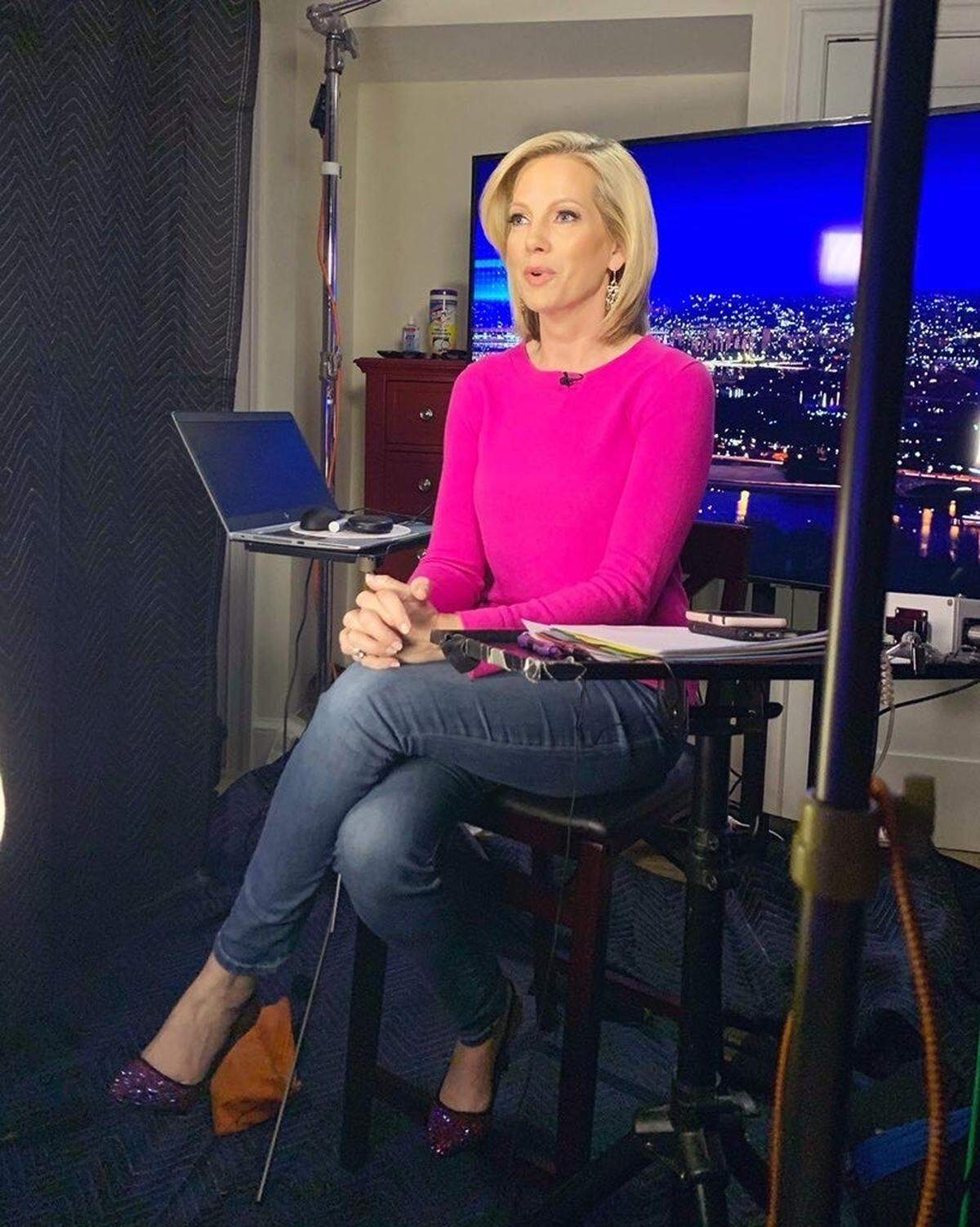
Q. Before I let you go, I have to ask: Do you already have an idea for a third book?
You know, after the first one I said, That’s it. I’m not doing another one. But I really enjoyed digging into these stories (for “The Women of the Bible Speak”) so much. And my faith is such a big part of my life ... so I love to do projects that are a chance to share that, and hopefully encourage other people.
I have started on a little bit of an idea of a fiction book, and I don’t know if I’m any good at that. I’ve never written fiction. I have a lot of friends who are very successful, New York Times-bestselling fictions authors, that I’m kind of bouncing ideas off. I don’t know if that will ever happen. Maybe one day, in retirement. I don’t know. But I’ve got some ideas. So we’ll see.
Q. What genre would it be in, do you think?
I’m a huge fan of Fannie Flagg, and Southern fiction. “Fried Green Tomatoes,” and everything she’s written since then. Fannie, you’re very overdue for a new book. I love her stuff. I grew up in the South — the Southern part of Florida, Tallahassee — and that’s where my family is, sort of in the panhandle there. The Florida-Georgia line. Everyone in my family is like one of these characters in a Fannie Flagg book, in the Southern fiction genre. So I wouldn’t have to go far from my actual family to write one of those books. They’re all sort of kooky, crazy storytellers. So, I think, you write what you know.
Along with the release of the book, Shannon Bream will be presenting a one-hour Fox News Channel special on March 28 and a five-part series on the streaming platform Fox Nation. Guests will include Kathie Lee Gifford, Sara Evans and Alveda King.
This story was originally published March 10, 2021 at 6:00 AM.