
Woodstock, part 2? Fans remember massive rock concert at Charlotte Motor Speedway
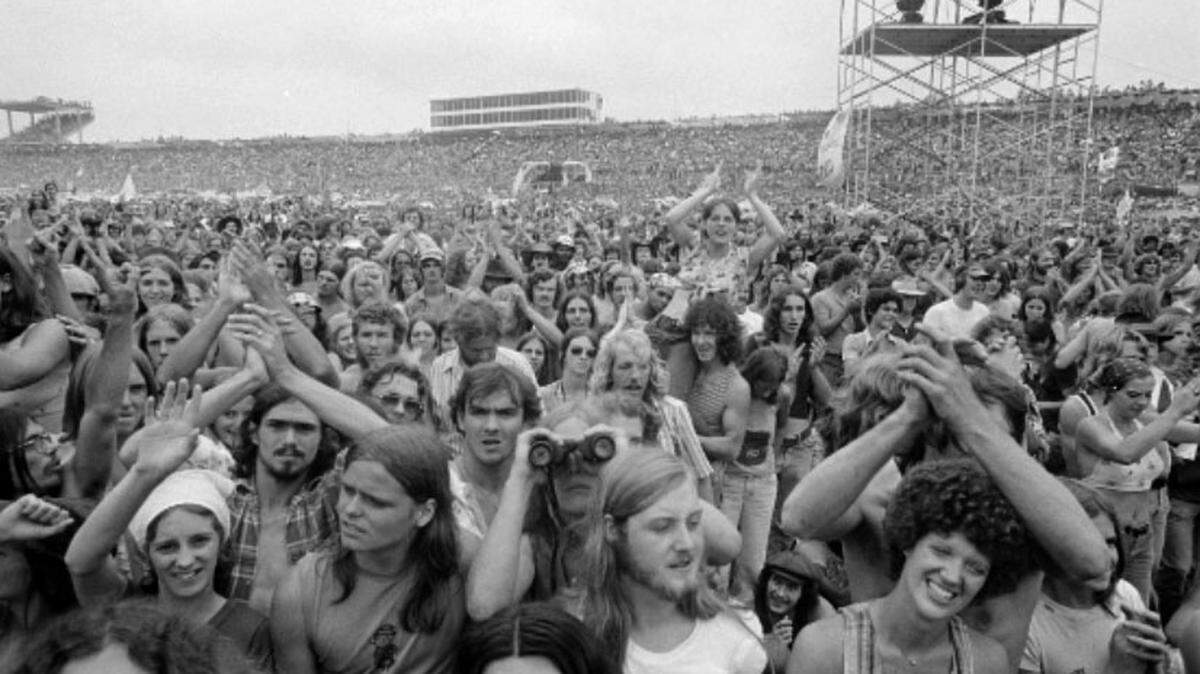
Standing in the middle of the Charlotte Motor Speedway in the southern summer heat, Larry Sprinkle looked out from the stage over a sea of people with their bell-bottoms on.
The speedway officially seats 95,000, but more than 200,000 people poured in for a festival on Aug. 10, 1974, that promised bands like The Allman Brothers Band, Emerson Lake and Palmer, The Marshall Tucker Band, Foghat, and the Eagles.
Hot and loud with Pabst Blue Ribbon as just one of the smells in the air, it unintentionally became the largest concert in state history, and at the time, one of the largest concerts in U.S. history.
“It was Carolina’s Woodstock,” Sprinkle said, now an early morning meteorologist at WCNC in Charlotte. “I didn’t need anything chemical. I didn’t need anything liquid form. That [energy] was enough for me.”
Newspapers reported on the aftermath, but coverage of the event itself was surprisingly sparse compared to Woodstock five years before. The media didn’t quite know what to make of the long-haired, bare-chested crowd and focused more on the destruction left afterward than the performances.
For many attendees, the party has never stopped. Forty-eight years later, more than 1,200 devotees still gather on a private Facebook page where they share stories through paragraph-long posts and hundreds of photos. Some still have their original ticket stubs and most recall details as if it all happened last week.
We got in trouble because I had lied to my parents about where I was and then I showed up on the news in some background shot...so busted... is just one of the memories under a photo of the original event poster.
Euphoria lasts a lifetime
Ask those who were there about their experience and they light up, remembering the sense of community among the chaos as much as the legendary performance that brought them there. Chris Jepsen still remembers that he and his friends didn’t come prepared with food during the three-day campout, but other attendees offered up their provisions.
“The lines for food were horrendous, so we opted to not lose our spot and just starve,” Jepsen said. “But the people around us had food. Everybody was like ‘Man you’ve gotta eat!’ and they shared their food and water with us. We were looking at this like oh, this might be just as cool as Woodstock. It wasn’t as large as that, but I daresay it was fun. I’ll say that a million times, for sure.”
For Jepsen and others, the euphoria generated at the gig has lasted a lifetime.
Kaleidoscope Productions promoted the concert along with Charlotte radio stations WAYS and WROQ as sponsors.
A ticket’s face value was $12, the equivalent of about $65 today, and around 100,000 people were expected. But twice that many showed up.
Early arrivals claimed their spot under the Friday night sky in anticipation of the Saturday music to come.
Hours later thousands of people rushed the gates of the speedway, chanting “free concert, free concert!” and trampled the chain link fence that lined the speedway. A crowd half the size of Woodstock was inside by the time the music began. But this was about the extent of violent behavior that occurred, according to professional photographer Bryant McMurray, who captured it all on film.
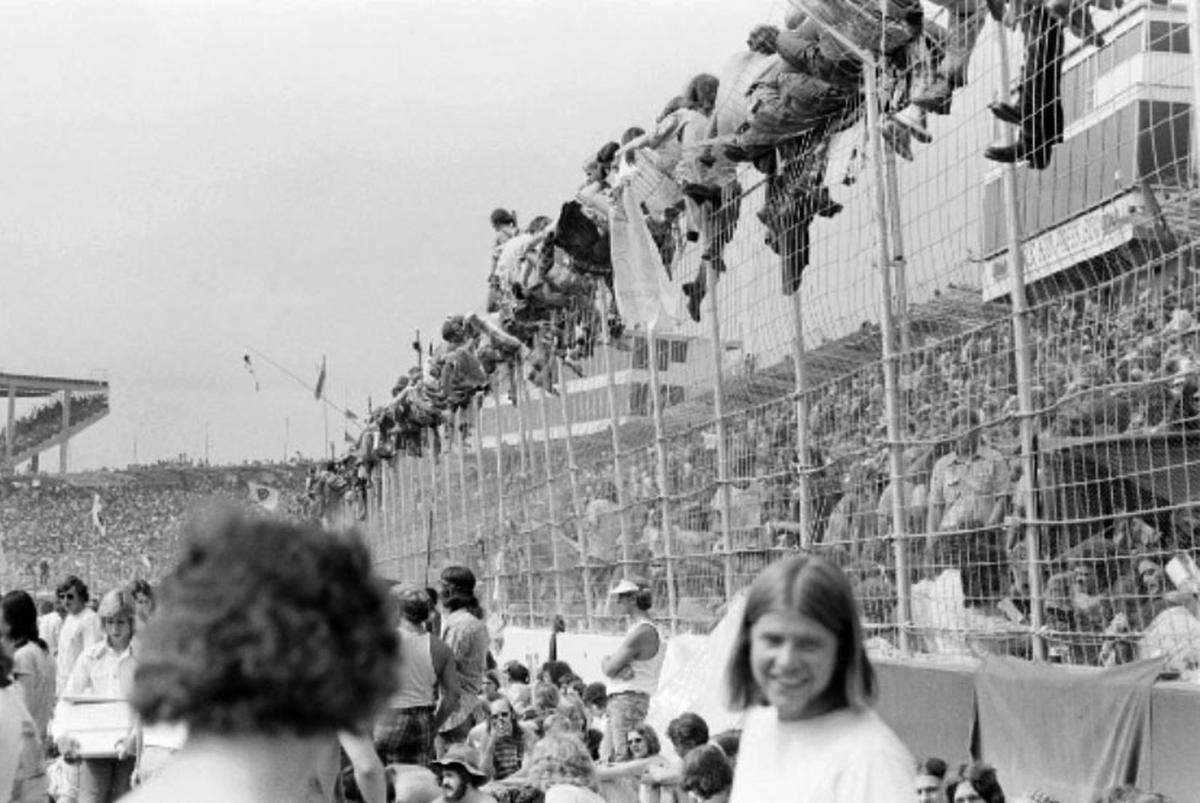
McMurray, now a part-time faculty member at the University of North Carolina at Charlotte, says that when he shows his students some of the photos he took, they’re amazed.
The whole scene was hot and the air smelled of bodies and booze, McMurray said, but no one cared. That was just part of the experience, and police presence was slim until the event was over.
“Of course, the rebellious ones stood out in the crowd, but everybody seemed to be really peaceful and enjoyed the music,” McMurray said.
There were lines everywhere. Lines to get in the gates, lines to the few porta johns available, and lines to the scarce food vendors — but it was worth it to see the lineup coming to the stage.
Larry Sprinkle’s role
Prominent radio hosts Wolfman Jack and Jay Thomas were the scheduled emcees for the event, but after getting stuck in traffic, Sprinkle became the fill-in announcer.
A roar of cheering washed over the crowd like a tidal wave when Sprinkle walked on stage and signaled that the show was about to start.
“I’ve been to races, and it’s loud at that speedway, but to hear this was like you take the sound of a stock car race and amplify it about 100 times,” Sprinkle said.
There was no shortage of narcotics and hallucinogens, along with cases of beer and cigarette packs, according to attendee Randy Barfield. Acid was being sold in tents, marijuana in cars, and the PA system made a warning announcement about the dangers of certain bad drugs being sold. Medical recovery tents were set up just in case of bad trips.
Barfield’s first concert was August Jam. A newly legal driver at 16, he towed his friends to Charlotte in his freshly painted blue Ford van – it had about 400,000 miles on it before this trip was made. Coming from Merry Hill in eastern North Carolina, it was one of the first long road trips he ever took, and Deep Purple’s “Machine Head” and Santana’s “Abraxas” played on an eight-track tape all the way there.
As they approached the city, traffic started to look like ants lining up on a log from above. And this was the day before the jam even started, he says. The festival was advertised not only in North Carolina, but in New York City, Chicago, and Dallas over the radio, and people answered the call. One of his friends sat on top of the van as they crawled along Interstate 85 and looked around to see festival-goers talking with each other through the line of cranked-down windows.
When some of the cars were still in the line that looked like a roadie version of airport security, impatient drivers ditched their vehicles on the highway and walked.
Tow truck companies from all over the Carolinas and neighboring states came to break up the standstill.
Eagles were a no-show
There was one no-show from California, but no one seemed to notice too much at the time.
“We heard early on that the Eagles had planned not to come. But you know, we only used to know the Eagles as a backup band for Linda Ronstadt,” McMurray said.
No big screen monitors or laser show lights, Emerson Lake and Palmer still put on a show filled with theatrics as the sun began to set, including a flying piano that ascended from the stage and somersaulted like a fairground ride. Barfield said those who were sober took a double-take, and those under the influence of alcohol and drugs questioned reality.
“He was stationed inside a big metal hoop that was sort of a track, the piano was nailed down, and he had a seatbelt on. It would go up, over, and upside down and he just kept playing,” McMurray said. “The crowd went wild.”
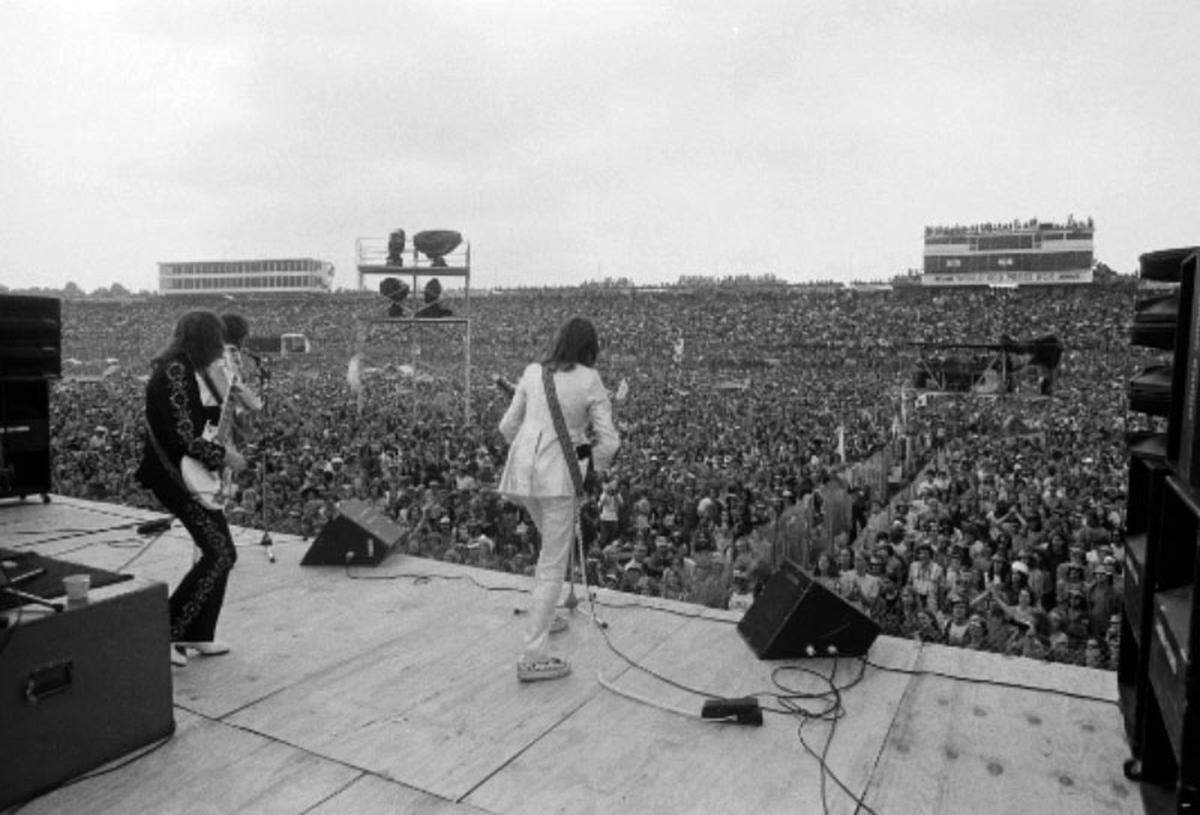
A wasteland of debris was left after the concert-goers headed out of town. It took the rest of the week to repair the damage to the grandstands as workers scooped up the trash and repaved the loop in preparation for a race the next weekend.
“I think I slept for two days after I got home,” McMurray said.
A part of North Carolina and festival history, those who attended August Jam formed a bond that has lasted through the years, even if they don’t remember each other’s names.
“I think people look back with nostalgia to those days when they were there peacefully to have a good time. Maybe they were enhancing that good time, but that was allowed to happen,” Sprinkle said. “Forty-eight years ago and there’s still this mystery about it.”
UNC Media Hub is a collection of students from the various concentrations in the Hussman School of Journalism and Media at UNC Chapel Hill.
This story was originally published March 5, 2022 at 6:00 AM.