Jean-Pierre Bonnefoux, celebrated dancer turned Charlotte innovator, dies at 82

Jean-Pierre Bonnefoux — a native of France, who proved a scintillating principal dancer for the Paris Opera and New York City ballet companies, then took an unexpected leap by taking on yet another career-defining role, as artistic director of a fledgling program in Charlotte that he would help to massively transform over two decades — died Sunday.
He had celebrated his 82nd birthday just four days earlier.
His former wife of 45 years, Patricia McBride, who helped him see Charlotte Ballet through a period its remarkable growth, said he died of heart failure in assisted-living in Charlotte, with her, their children, and his most treasured pieces of artwork by his side.
News of Bonnefoux’s passing began circulating widely on Wednesday, and McBride, who remained his collaborator and best friend even after they quietly divorced about seven years ago, said she was overwhelmed by the outpouring. “I’ve been on the phone all day with people calling me and saying how Jean-Pierre influenced their lives,” she told The Charlotte Observer, “and that they wouldn’t be the dancer that they were without having his coaching.
“It’s been just so beautiful.”
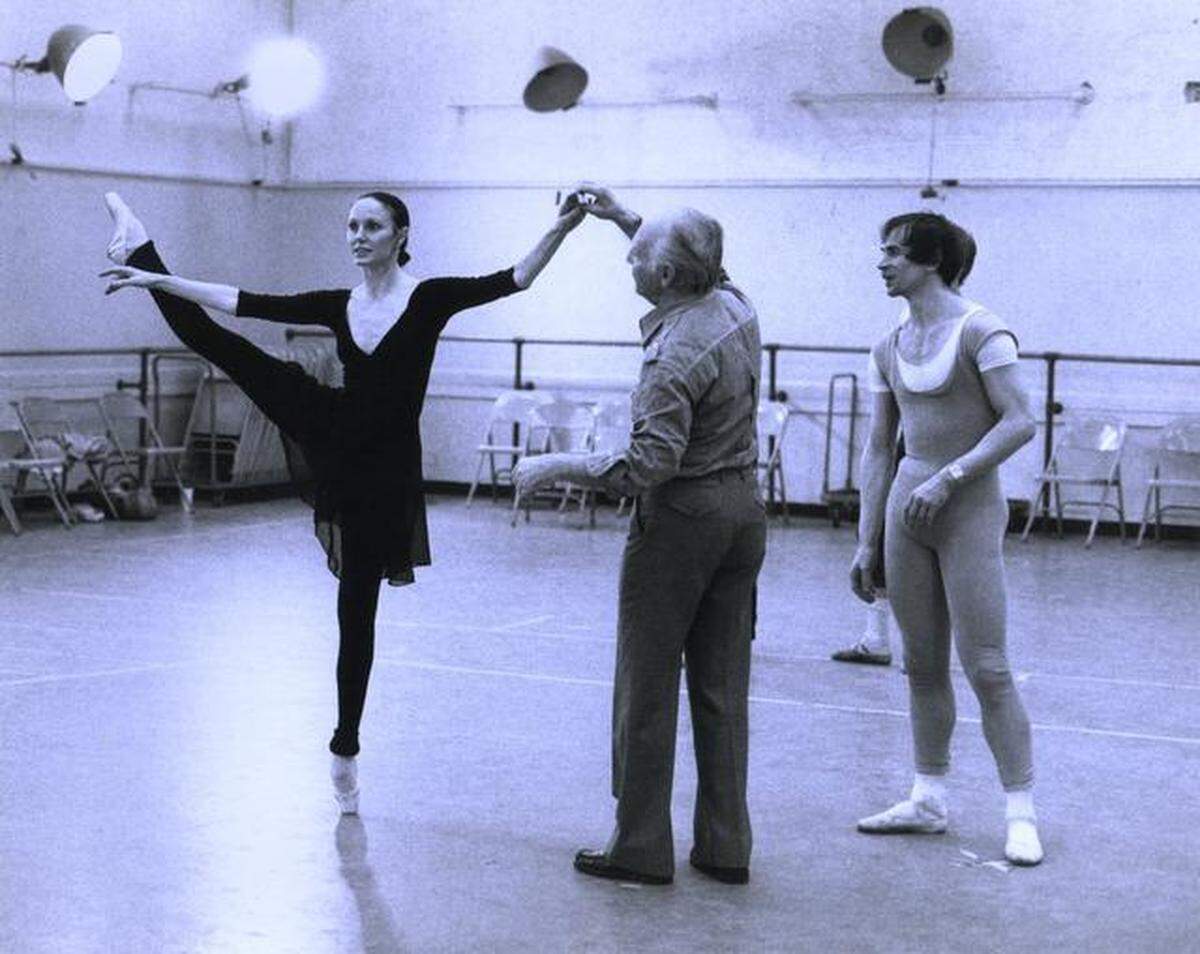
Although Bonnefoux’s youth and young adulthood were focused on his own movements, having joined and starred in the Paris Opera Ballet at the age of 14 and the George Balanchine-led New York City Ballet in 1970 at 26, the Frenchman always seemed destined to be a teacher and coach.
That proclivity was birthed after he became danseur étoile in Paris in 1965, on a more-informal level, as he dabbled in teaching ballet to children and adult amateurs in a French public-education program, and in choreography for French television shows.
Upon moving to New York to become the City ballet’s principal, he spent the first several years focused on drawing fresh inspiration from both his legendary choreographer (Balanchine, regarded as the “father of American ballet”) and his soulmate, McBride — then their principal ballerina, whom he met upon joining and married on Sept. 9, 1973, in the Burgundy region of France.

But his passion for elevating the work of dancers other than his own really began to blossom after a stroke of bad luck.
While performing on stage at the New York State Theater in 1977, Bonnefoux landed wrong, tearing all of the ligaments in one of his ankles. The recovery was slow and grueling. To help him pass the time, Balanchine let him teach a class for company members.
“This strange time when it was supposed to be the end for me,” Bonnefoux told The New York Times in 1978. “It was finally maybe the richest part of my life.”
He told the newspaper he thought he might like to someday have his own company — “of two or 18 dancers.”
As it turned out, that number would wind up being in the hundreds.
From Indiana U. to a fresh start in Charlotte
Two years later, in 1980, Bonnefoux retired from the stage, moving with McBride to Bloomington, Indiana, to become head of the dance department at Indiana University. Three years after that, he started moonlighting during summer breaks as director of the School of Dance at Chatauqua Institution in western New York state.
It was clear he’d found his niche, especially in New York — developing over the years in both roles a reputation as a great teacher, but also as someone who wanted to be a great human being.
“He has such a good attitude, and he’s so positive that it takes over and you just want to move and dance,” a 15-year-old student at Chautauqua told the Buffalo News in 1995. “At one level you look up to him so much and respect him so much. But he’s not above coming up to you and asking you how you are.”
Bonnefoux and McBride’s invitation to come to Charlotte came unexpectedly, under tragic circumstances, in 1996. The previous October, the director of what was then called North Carolina Dance Theatre (NCDT) died of pneumonia at the age of just 51.
The couple wasn’t looking to leave.
But they saw great potential for both the city and the company to grow. “We really believed in the ambition of the city and of the people in Charlotte,” Bonnefoux said in a video produced by Charlotte Ballet to commemorate his retirement in 2017. “When we arrived first, we’re told by the chairman of the board at that time, that was a very difficult time for the company, which we knew it was.
“The board was thinking about folding, except if they could find a leader who could really become really an important part of the city, then it would be stable.”
The gamble paid off for all parties involved.
With McBride at his side as associate artistic director, the company reinvented itself over the course of the two decades they spent in their roles. Its school grew from training fewer than 150 students annually to more than 700. Its revenue ballooned more than threefold, from $2 million to $6.5 million.
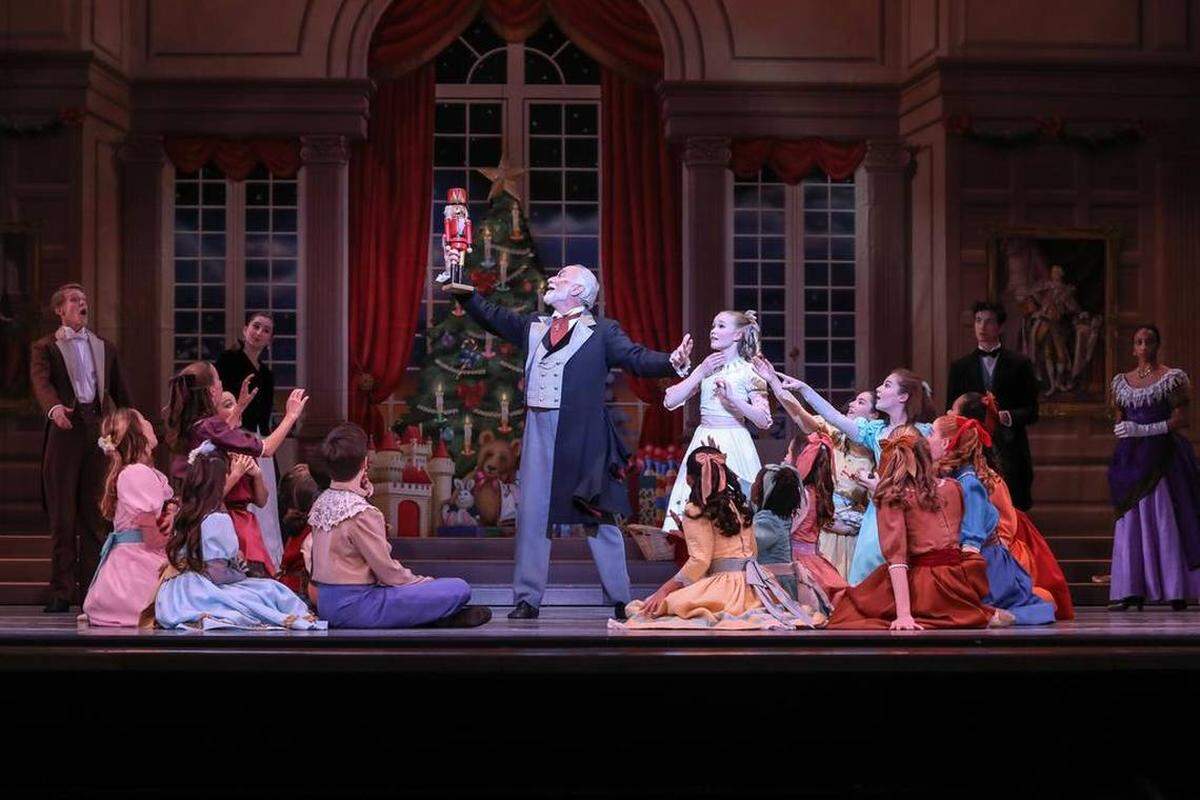
Under Bonnefoux’s watch, NCDT started a second company of professional dancers in 2001. It welcomed choreographers famed for innovation in both classical and contemporary dance — Jerome Robbins, Maurice Béjart, Roland Petit, and, of course, Balanchine. His own choreographic repertoire included interpretations of “Carmina Burana,” “Cinderella,” “Peter Pan,” “Romeo & Juliet” and the ballet he may be best remembered for locally — the holiday classic, “Nutcracker,” which he turned into a beloved Charlotte tradition for families.
In 2009, the company broke ground uptown on a 34,000-square-foot named for its new heroes: the Patricia McBride and Jean-Pierre Bonnefoux Center for Dance.
Then in 2014, it adopted another new name, becoming Charlotte Ballet after four decades as North Carolina Dance Theatre.
Throughout it all, Bonnefoux remained focused on two things at his core: striving tirelessly to be both a great teacher and a great human being.
What former Bonnefoux students had to say
He clearly achieved that goal.
When dancers who worked with him were asked by the Observer — at the time he was stepping down from Charlotte Ballet — to describe Bonnefoux’s gifts, there was a familiar theme.
Ayisha McMillan Cravotta, who arrived in Charlotte in 2002: “He was so positive of my potential. I had a lot of expectations of what I wanted and I had a lot of hope. He was interested in connecting with me, building me up, and telling me to go for it.”
David Ingram, who joined the company in 2007: “(He taught me) how to ask myself deep, hard questions about what I was doing, how to allow my true self on stage, and how to forgive myself, which is difficult to do in the dance world.”
Alessandra Ball James, who was hired in 2002: “Jean-Pierre has a great eye for talent, and potential in a dancer, but he also has a great sense of character. He doesn’t stand for any sort of cattiness, or any kind of negative... It is like gold to be in the studio with Jean-Pierre.”
And Bonnefoux cared as deeply about those who consumed his work as he did about those who helped create it.
“He’d even go and talk to ... the audience,” McBride said. “He’d go in the audience, and people would come up to him, and he’d spend time with people if they asked him to explain something in it. He just loved meeting people... Just loved being able to touch people and bring them something that would bring them joy.”
He said as much in his 2017 appreciation video, with a touch of his trademark humility.
Reflecting on what he accomplished as the Charlotte company’s longest-serving artistic director, Bonnefoux remarked: “You wish you would have been able to do it in 10 years. That’d be nice. Five years. Why not?” But he suggested that he cared about intangibles above all else. “The greatest success, I think, is to go in the audience, and the audience... being happy with what they see.”
McBride said Bonnefoux moved to Asheville after stepping down from Charlotte Ballet, and for a time was teaching and coaching dancers at a school in Boston — but ultimately decided he wanted to return to Charlotte.
“Which made us very happy that we would see him back here,” she said.
“He absolutely loved Charlotte.”
In addition to his life partner, Patricia McBride, Bonnefoux is survived by their son Christopher, their daughter Melanie, and their three grandchildren, all of whom reside in Charlotte; and a legion of former dancers and students scattered around the world.
More arts coverage
Want to see more stories like this? Sign up here for our free, award-winning “Inside Charlotte Arts” newsletter: charlotteobserver.com/newsletters. And you can join our Facebook group, “Inside Charlotte Arts,” by going here: facebook.com/groups/insidecharlottearts.
This story was originally published April 17, 2025 at 7:55 AM.