Hilary Knight Calls Trump’s Women’s Hockey Remark a ‘Distasteful Joke’ as Controversy Overshadows Gold
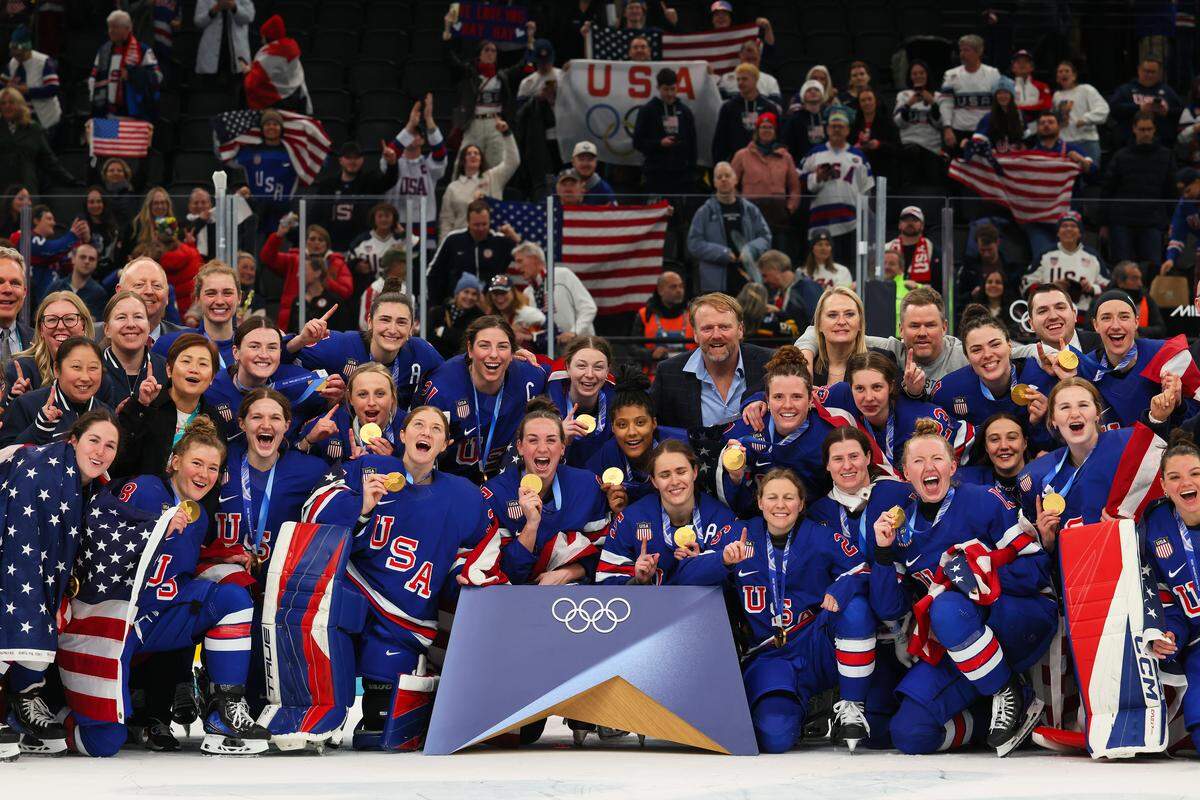
Olympic gold medalist Hilary Knight publicly responded to President Donald Trump’s viral comment about the U.S. women’s hockey team, calling it a “distasteful joke” while lamenting that the fallout was eclipsing historic achievements by American women at the Milan Olympics.
What Trump Said
The controversy traces back to a congratulatory phone call Trump made to the U.S. men’s hockey team during their locker room celebration in Milan. Trump invited the players to attend the State of the Union address in Washington.
During the call, Trump added, “I must tell you, we’re going to have to bring the women’s team, you do know that,” and, laughing, said that if he did not also invite the women’s team, “I do believe I probably would be impeached.”
The remark framed the women’s team invitation not as recognition of their athletic achievement but as a political obligation — delivered as a punchline. Video of several men’s players appearing to laugh at the comment went viral, turning a celebratory moment into a multi-day public debate.
Knight’s Response
Appearing on SportsCenter on Wednesday, Knight addressed the situation directly.
“I thought it was sort of a distasteful joke, and unfortunately that is overshadowing a lot of the success, the success of just women at the Olympics carrying for Team USA and having amazing gold medal feats,” Knight said.
“We’re just focusing on celebrating the women in our room, the extraordinary efforts, and continue to celebrate three gold medals in program history as well as the double gold for both men’s and women’s at the same time. And really not detract from that with a distasteful joke.”
Knight’s comments were carefully calibrated. She did not shy away from characterizing Trump’s remark, but she repeatedly steered the conversation back to the women’s accomplishments.
She later added that she was looking forward to “celebrating all great things that have come out of the Olympics and feeling the love and support and getting back in our respective communities and sharing this journey with them. And that’s what this is all about.”
The Men’s Team Responds
Jack Hughes, who scored the men’s gold medal game winner, and his brother Quinn addressed the situation Tuesday on Good Morning America.
“Our relationship with them, over the course of being in the Olympic Village, I think we are so tight with their group,” Hughes said. “After we won the gold medal, we were in the cafeteria at 3:30 a.m. in the morning with them. We go from there, pack our bags and we’re on the bus.”
“People are so negative about things. I think everyone in that locker room knows how much we support them, how proud we are of them. The same way we feel about them, they feel about us,” Hughes said.
Hughes elaborated further Wednesday night after his first game back with the New Jersey Devils. He acknowledged the awkwardness while framing it as an unscripted reaction in a high-energy environment.
“You’re in the moment and the president calls. We’re blaring the music. It is what it is,” Hughes said. “We have so much respect for the women’s team and they have so much respect for us. We are all just proud Americans.”
Swayman Concedes the Team ‘Should Have Reacted Differently’
Goaltender Jeremy Swayman offered the most direct acknowledgment that the men’s reaction fell short. Speaking to reporters in Boston after returning to practice with the Bruins, Swayman said the men “should have reacted differently” to Trump’s remarks.
“To share that gold medal with them is something that we’re forever grateful for,” Swayman said. “And now that we’re home we get to share that together forever and see the incredible support we have from the USA and share this incredible gold medal.”
Swayman’s comments stood out as the clearest concession from any member of the men’s team that the moment, regardless of intent, had sent the wrong message.
Knight Acknowledges ‘A Tough Spot’
Knight did not direct blame at the men’s team. She characterized the players’ reaction as a momentary lapse rather than a reflection of their values.
“I think there’s a genuine level of support there and respect,” she said. “I think that’s being overshadowed by a quick lapse. I think the guys were in a tough spot, so I think it’s a shame this storyline and narrative has kind of blown up and overshadowing that connection and genuine interest in one another and cheering each other on.”
Her use of “tough spot” acknowledged the reality that athletes on a congratulatory call with the president have limited options for pushing back in real time, especially when cameras are rolling and emotions are high.
BOTTOM LINE: The controversy shows how a single viral presidential remark can overtake an entire Olympic narrative, and whether the women’s team’s State of the Union absence — attributed to scheduling — becomes a lasting political storyline remains an open question.
Production of this article included the use of AI. It was reviewed and edited by a team of content specialists.