For years, this Charlotte rapper toiled in obscurity. Then DaBaby came calling.
To get an idea of how stubbornly persistent Fetty P Franklin is — and has been — on his unlikely rise in Charlotte hip-hop, just listen to how he describes what he’s been up to lately:
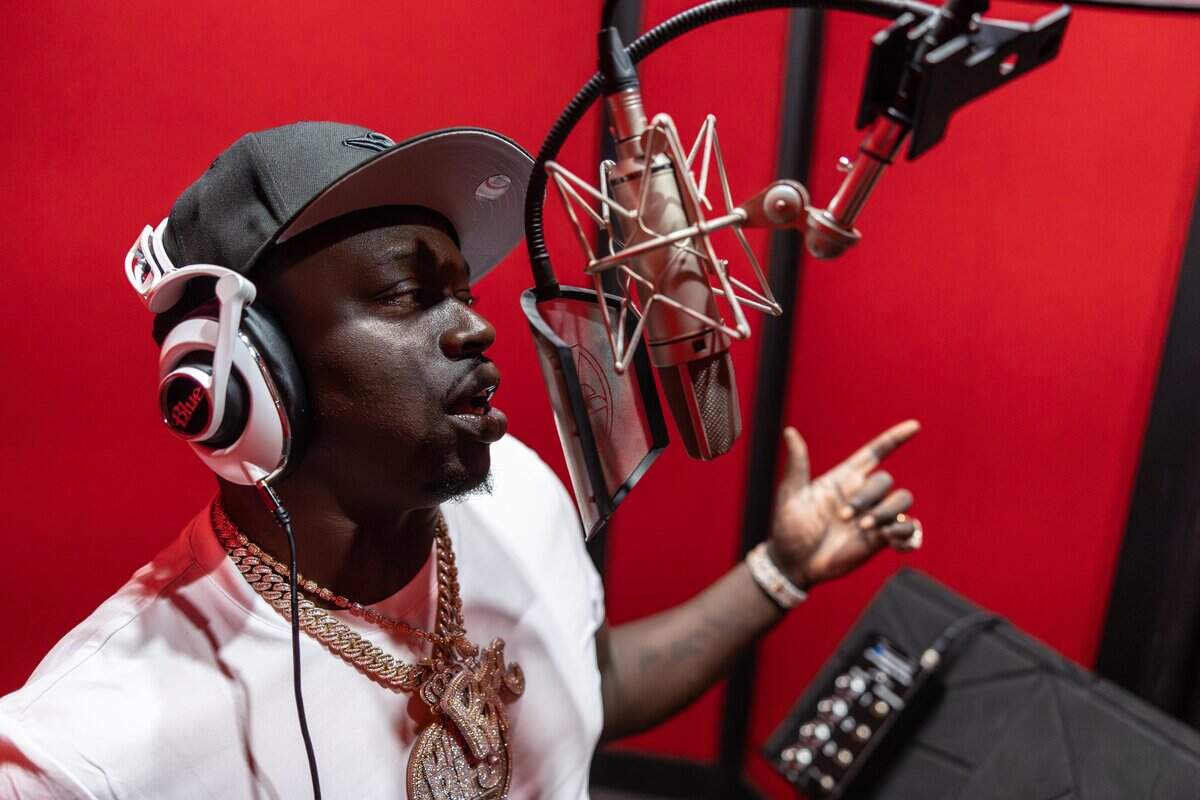
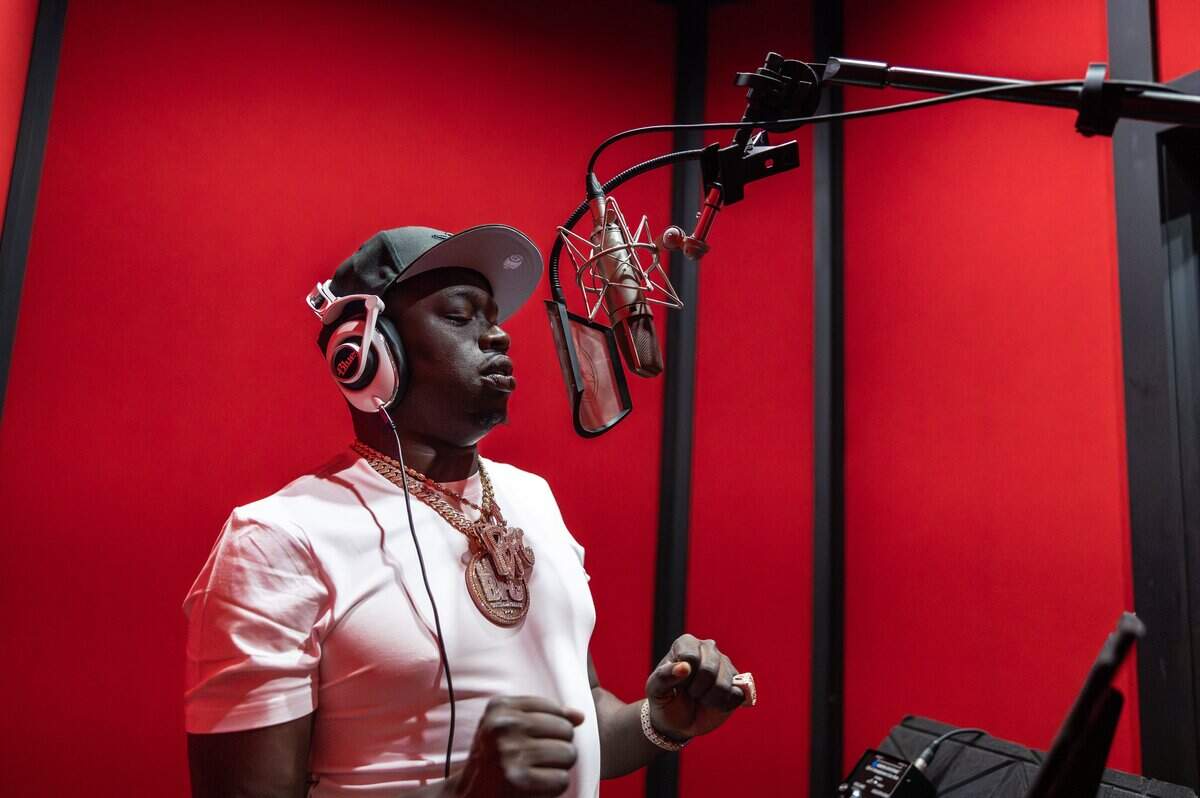
“It ain’t even been a whole seven days. I’m gonna say like four, five days, I done recorded about at least 30 songs,” says the Queen City-based rapper as he lounges in a corner of a control room at Gat3 Productions, the Grammy-winning Charlotte studio where he recorded his new album, “Bet the Bank on Frank.” “It’s just like practicing. It’s like shooting in the gym.”
It’s also the kind of persistence that has earned him a spot in the lineup for DaBaby’s Be More Grateful Festival on Saturday in Concord.
An even clearer indication that persistence has been as important to Franklin’s success as talent, however, may be this:
Franklin (whose real name is Patrick Glenn Jr.) didn’t become a full-time rapper at 21. Or 25. Or 30. He became one at the ripe old age of 35, just last year, when his blend of gritty street narratives and surprisingly reflective storytelling caught the attention of DaBaby, the city’s most commercially successful rapper.
The two first connected while working on “SDA,” a track from Franklin’s 2025 album “FRANK.” Their chemistry quickly led to a seven-song collaborative project called “Kirk Franklin” — a playful nod to DaBaby’s last name and Franklin’s stage name — and, most recently, an invitation for Franklin to perform at Saturday’s festival alongside artists including 50 Cent, Moneybagg Yo, Trick Daddy and Waka Flocka Flame.
“This is the greatest time of my life,” Franklin says. “I’ve had the most money I ever had in my life, doing things I’ve never done, you know, all because of music.”
But the story of how he got to this place begins in a Charlotte most newcomers have never seen.
The Charlotte that shaped Franklin
For many Charlotteans, the city is defined by South End apartment towers, NoDa murals, craft breweries, Panthers football and an endless influx of transplants.
But that’s not the Charlotte that shaped Franklin — and he’ll make sure you know it.
Franklin almost seems amused when he learns his interviewer has never heard of Earle Village, the west Charlotte public housing development where his family was living when he was born. He responds with a pointed pop quiz.
“Well, what about Belvedere? Double Oaks? Dalton Village? Southside Homes? Boulevard Homes? Little Rock?”
They’re all public housing communities that have been demolished, redeveloped, renamed or otherwise faded from public consciousness during Charlotte’s transformation over the past few decades.
Franklin isn’t really asking questions, though. He’s making a point:
If you don’t know those places, he argues, you don’t know the real Charlotte. And if you don’t know the real Charlotte, he seems to be suggesting, you can’t truly understand who he is, either.
He says he was largely “raised by the streets” of those projects. His father spent much of his childhood incarcerated, and he had to learn early lessons about survival, hustling and self-reliance from the surrounding neighborhoods rather than from a traditional family structure.
Starting around the age of 14, he spent about a decade cycling in and out of trouble with the law, including serving time on drug charges.
It was in jail that the identity of Fetty P Franklin began to take shape.
As he tells it, he was kicking around rap-name ideas with another inmate in the county lockup. The “Fetty” portion reflected his attraction to money and hustling culture — “fetty” being slang for cash. The “P” came from Patrick, his given first name. “Franklin” carried a double meaning: It tied into the money theme through Benjamin Franklin, whose face appears on the $100 bill, while also giving the name a more complete, memorable sound.
But what makes the story interesting isn’t really the name itself. It’s that long before the festivals, streams and DaBaby collaborations, he was sitting in jail trying to imagine what might come next.
And the name wound up outlasting the circumstances that produced it.
‘He put another ladder right there’
Franklin began releasing music independently in 2018, drawing heavily from his own experiences.
For years, the music wasn’t a career so much as what Franklin now calls “an expensive hobby.” He poured money into studio sessions, videos, clothes and travel while earning little or nothing in return. The audience grew slowly. The bills kept coming. At times, he questioned whether the investment made any sense.
But he stayed stubborn.
The breakthrough finally arrived in 2025, when his album “FRANK” yielded viral hits like “Jimmy N Johnny,” which eventually eclipsed 10 million streams. Suddenly, a rapper who had spent seven years grinding in relative obscurity found himself attracting national attention — including from DaBaby.
It’s interesting, because in a lot of ways, Franklin is pretty cynical about the city he calls home, especially when it comes to the music business.
“I don’t think Charlotte will ever be one of those cities where somebody can walk out the house, come up with a song, put it out, the whole city get behind it, and he blow up,” he says. “Too much crab-in-a-bucket business around here. Ain’t nobody want to see nobody win. And if they do want to see you win, they don’t want to see you winning more times than them.”
But DaBaby became proof that things don’t always have to work that way.
When the established rap star saw the up-and-comer climbing the ladder, Franklin says, he didn’t try to shake him off of it. “He put another ladder right there, and another one. (He said) ‘Matter of fact, if that one fall, just jump on this one.’”
And now that Franklin is finding fame and fortune of his own, he’s enjoying himself and living the life of a successful rapper to the extent that he can. He recently bought a retired Brinks truck — one that’s “bulletproof, bomb-proof, grenade-proof, RPG-proof,” he says — largely because he thought it would make a memorable image for the “Bet the Bank on Frank” album.
At the same time, Franklin says he has little interest in returning to the life that inspired many of his songs.
“Since I was 14, I’d never been really a free person on my birthdays all the way up until the last few years,” he says. “It always been something going on throughout my birthday, I’m in prison, fighting a case, serious stuff like that.”
Then he pauses.
“This,” he says, “is just a different time in life.”
This story was originally published June 12, 2026 at 11:24 AM.