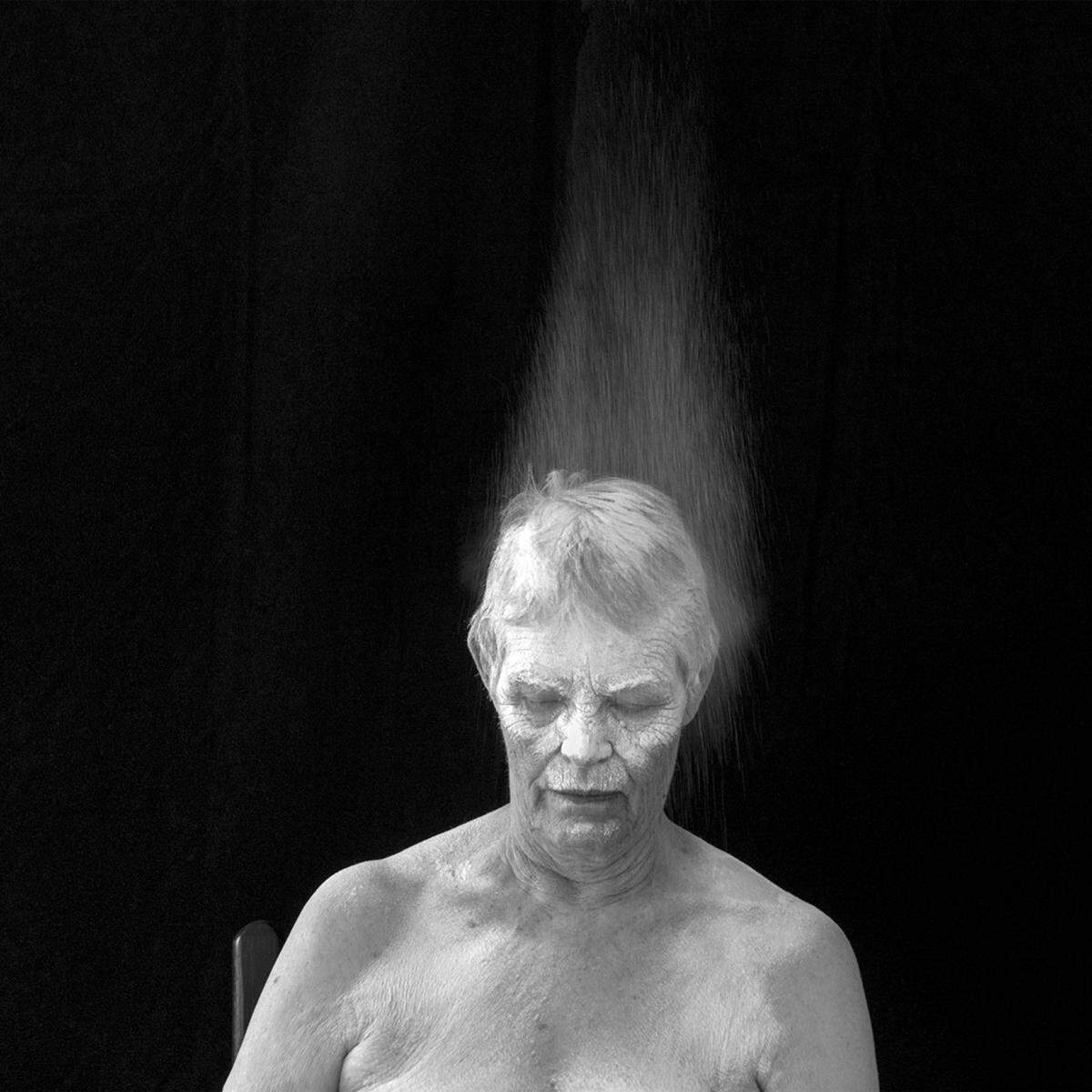
Photographer celebrates the (aging) female body in portraits shot over 25 years
By Page LeggettArts correspondent
Carolyn DeMeritt, fine art photographer and darkroom teacher at The Light Factory, has been taking photos of her friend and fellow artist, Pinky Bass, for a quarter of a century now. Almost by accident, she began to realize the series chronicled something rarely discussed – much less, honored – in our society.
“Guess what? We age,” is how DeMeritt jokingly put it.
She recently returned to Charlotte from a three-week stay in Mexico, where the series, “Infinite Grace,” was exhibited. More than 16 of her Light Factory colleagues and others from Charlotte’s arts community joined her in Mexico City.
We talked before and after the trip. This conversation has been edited for brevity and clarity.
After looking at your “Infinite Grace” series and learning about your trip, I have so many questions. I’ll start with: Why Mexico?
Well, I love Mexico. I don’t go yearly, but I have gone a number of times since my first visit in 1993. My subject for this show, Pinky Bass, was there years ago for six months. She invited other artists to come stay with her for a portion of her time there. I fell in love with it.
I am friends with Allen Blevins (former director of Bank of America’s art and heritage programs) and Allen knows Ana Casas Broda, owner of Hydra Gallery in Mexico City. When Ana was in Charlotte to speak on a Mint Museum panel, Allen asked me to show her my work. On the spot, she asked if I’d like to show it at her gallery, Hydra + Fotografía. Allen was pivotal in making this show happen. He co-curated it with Ana.
So, you’re coming full circle with Pinky and the Mexico City show.
Yes. Pinky, who’s a photographer and mixed media artist, lives in Fairhope, Ala., so we’re long-distance friends. But over 25 years – when we have gotten together – I’ve always photographed her. It didn’t begin as a “project.” It was organic, catch-as-catch-can. When we’d see each other, I’d photograph her. No one’s photographing women’s bodies or aging women, really.
And does she photograph you?
Oh, no. I hate being photographed. I’m not comfortable in front of the camera. Pinky, on the other hand, will do anything in front of a camera. She’s been more than a subject. She’s been really involved in every aspect of this series. She’s done some beautiful stitching on some of my photographs of her.
“Tired,” 2017, is part of Carolyn DeMeritt’s 25-years-and-counting series of portraits of Pinky Bass. Carolyn DeMeritt
How do you make your subjects comfortable when you hate being photographed?
I think I come across as a non-threatening presence. I don’t use a flash, and I have minimal lighting. It’s very informal. I often shoot with a Diana camera, which looks like a toy. It’s not intimidating. And, I’m relaxed myself. I don’t direct a lot; I sort of watch and see what happens. My shoots aren’t structured. They’re more fun that way.
What does the name “Infinite Grace” mean?
I’m not a word person. My photograph titles tend to be single words – “Skin,” “Body.” I had been calling this series, “Extended Portrait of Pinky Bass.” But Patrick Saleeby, The Light Factory’s assistant director, is also a copywriter. He came up with the title to reflect how gracefully Pinky accepts her body as she ages. She’s embracing the changes with grace.
“Aura,” 2018, by Carolyn DeMeritt. Carolyn DeMeritt
Your work isn’t political, but you can’t ignore what’s going on politically between the U.S. and Mexico. How do you feel about going there during such a tense time?
I don’t like anything about what’s going on now.... I’m heartbroken by the situation of children being separated from their families. I don’t really speak Spanish, but I need to learn how to say, “I didn’t vote for him. This is appalling. Please forgive us.”
What sacrifices did you make to live a creative life?
I don’t feel like I’ve made any. I love this life. I am lucky. I haven’t had to support myself this way. It’s allowed me to do projects that aren’t exactly commercial – like a 25-year portrait series. The kind of photography I do is not really the kind where you make money. You spend money. But I’ve always loved it.
After DeMeritt’s return:
Welcome back. How was the reaction to your exhibition?
Quite positive. There was a lot of conversation generated by it. I saw one man standing in front of one particular image for a very long time. He told me that, at first, he was startled by it. But the more he looked, the more beauty he saw in it... Sometimes women embrace this work more than men. Men may, I don’t know, have an idealized version of the female body. But this man saw beauty in an aging body. His comments to me were very heartfelt.
I think there’s a big difference in the reactions of Mexicans to this work (as compared to Americans). They have a comfort level with imagery Americans might consider startling.
How did Pinky feel about being there and being surrounded by big images of herself?
I think she loved it. We all had a great time. Of course, we shot more while we were there. Any time I have access to her, we want to add to this series.
Anything else you want to share?
We were so touched by the number of Mexican artists who came to the show. A number of them have exhibited in Charlotte as part of the big Latin-American arts festival a number of museums participated in last year. (Photographer) Nelson Morales, who’s done a residency at the McColl Center, was there. Another, Diego Moreno, rode a bus for 10-and-a-half hours to get to Mexico City! It was really wonderful to see them.
A previous version of this story misstated Allen Blevins's job status. He is a former director of Bank of America’s art and heritage programs.
This story is part of an Observer underwriting project with the Thrive Campaign for the Arts, supporting arts journalism in Charlotte. Sign up here for the free e-newsletter “Inside Charlotte Arts.”
This story was originally published March 6, 2019 at 4:37 PM.