
You can learn about Catawba Indian pottery traditions at this Levine Museum event
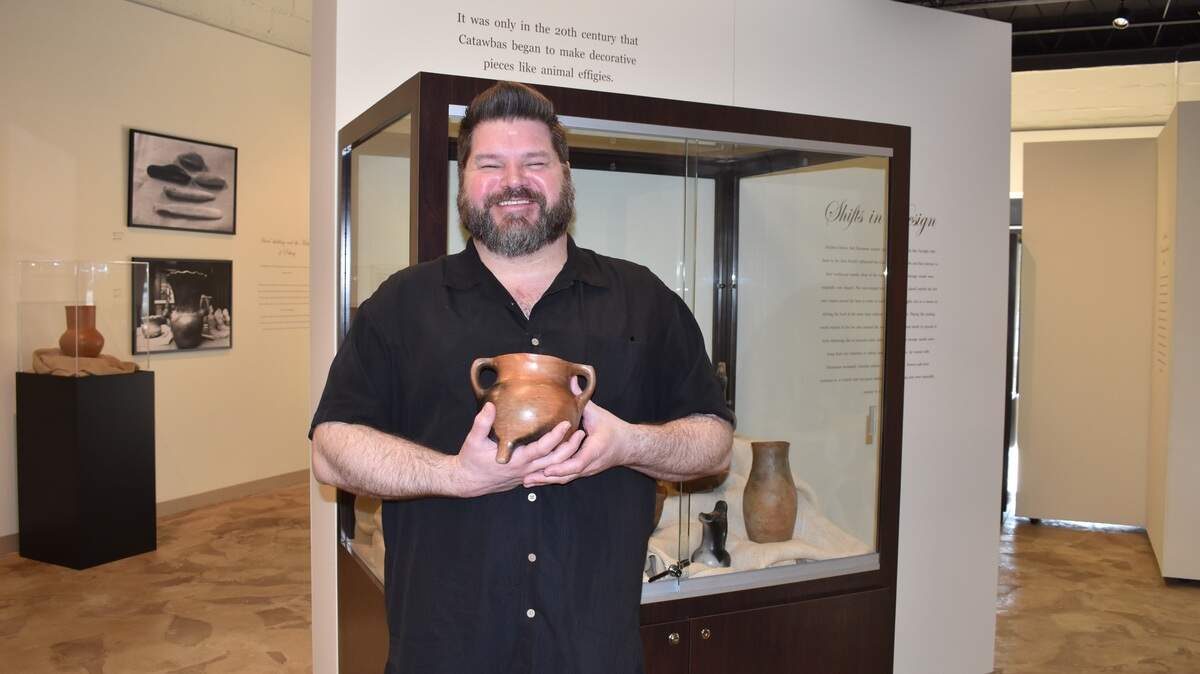
Years ago a colleague sent professor Stephen Criswell a clip of Today Show’s Meredith Vieira interviewing President Barack Obama. Criswell, who heads the Native American Studies program at the University of South Carolina-Lancaster, wondered why his friend sent it to him. Then, he spotted a piece of Catawba pottery behind the reporter on a table in the White House Library.
Criswell was pretty sure the piece was made by the 20th century Catawba potter, Sara Ayers. He contacted the White House and found out that when the library was redesigned during President George H.W. Bush’s administration, they went with a Native American theme. The pot normally sat on a shelf, but was moved to the table for the interview.
“The only piece (included in the redesign) from a tribe east of the Mississippi is this piece by Sara Ayers,” Criswell said. Ayers was known for her crosshatch design with a checkerboard pattern – making it easy for someone with this knowledge to spot her piece in a news clip.
Criswell will discuss Catawba culture and the tribe’s long-standing pottery tradition on Nov. 12 at a Levine Museum of the New South event. Here are 10 fun facts he shared with us in advance of the event:
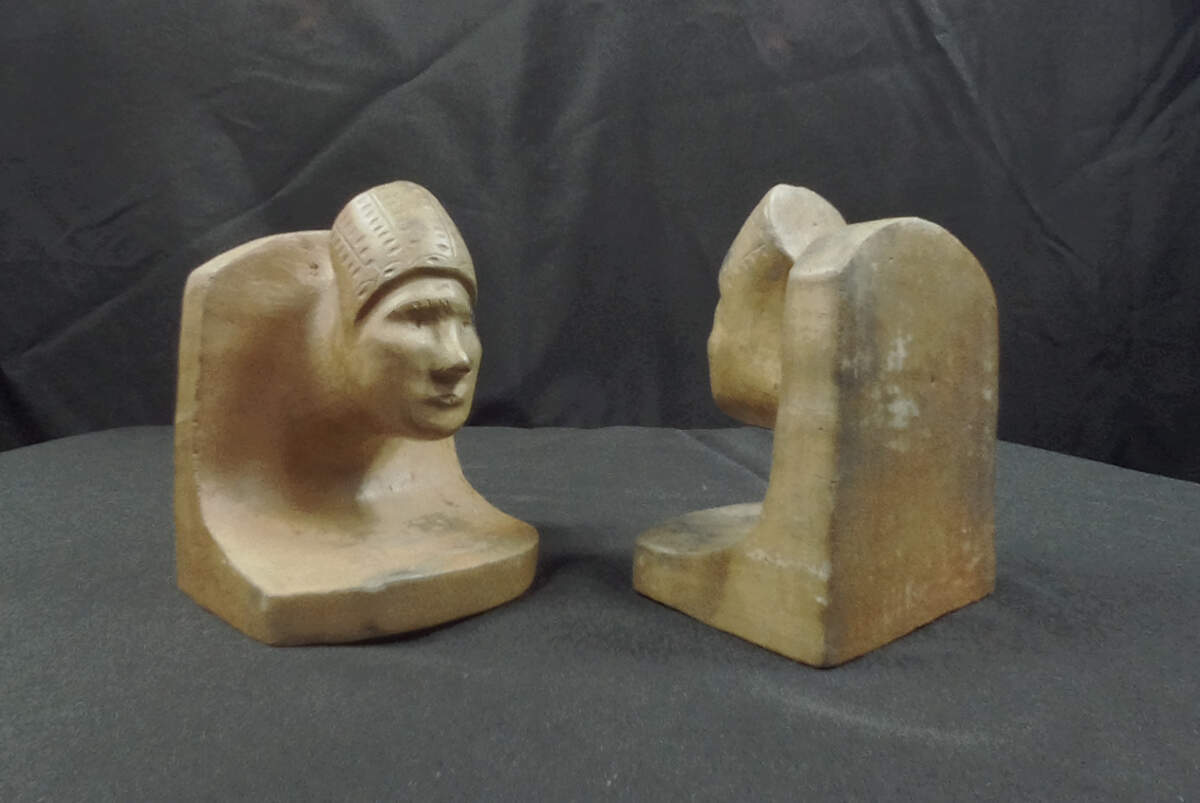
1. Catawba Indian pottery is the oldest continuous ceramics tradition in North America. It’s hard for people to imagine just how long this style of pottery has been made. “My colleague, archivist Brent Burgin, likes to say, ‘When the Egyptians were building the pyramids, the Catawbas were making pottery,’” Criswell said. Criswell likes to add that the pottery was probably being made during the Revolutionary War, the Civil War and even last week.
2. Catawba pottery is made without a wheel. It’s usually hand-molded with the occasional use of molds for pipes or pot handles.
3. It’s also made without a kiln. The pottery is put in an open pit, low-heat fire. “It’s a very delicate and risky process,” Criswell said. “A lot of times pots get (destroyed).”
4. Potters typically learn to make it from parents, grandparents and other family members. It is traditionally, but not always, the work of women.
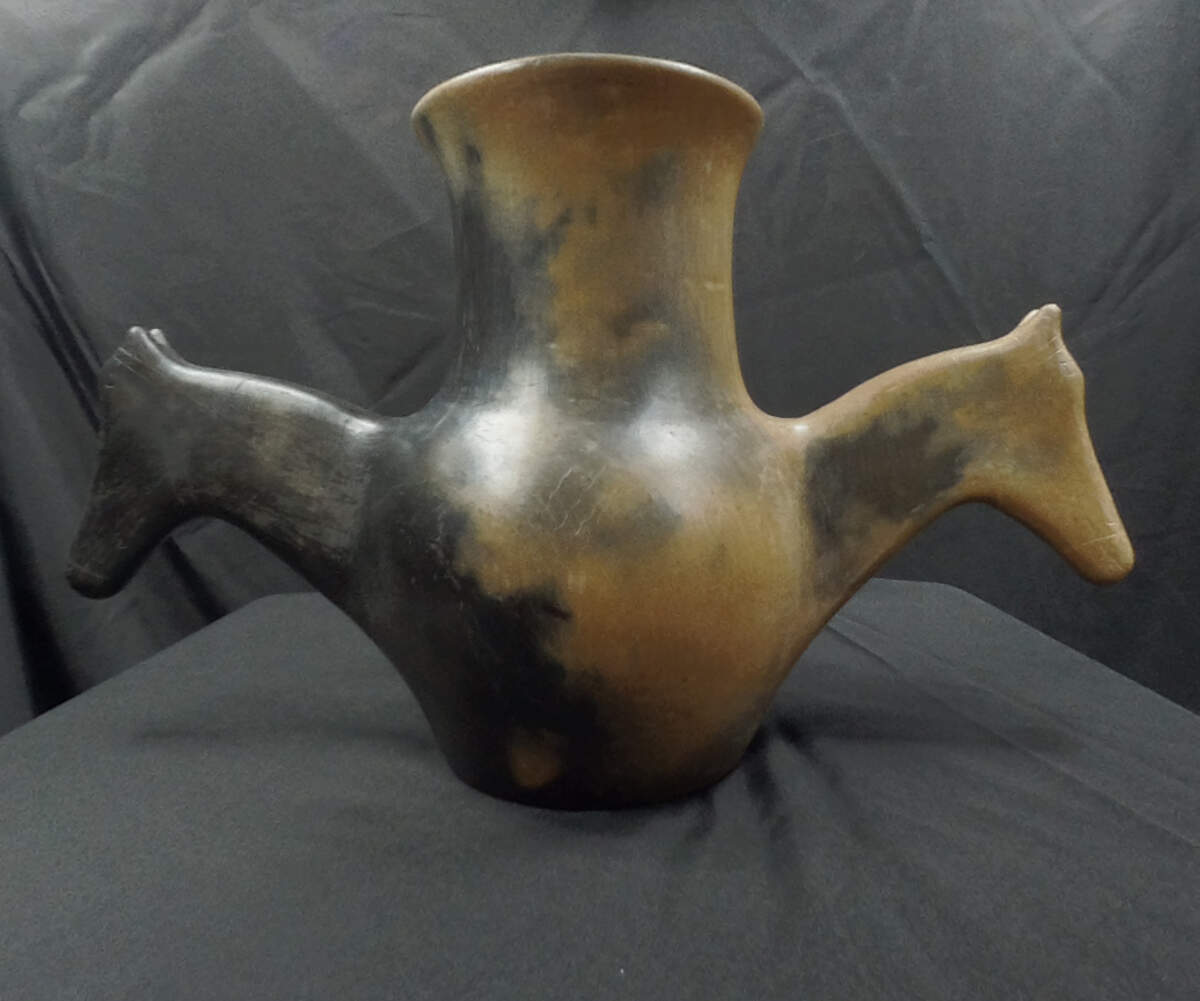
5. Catawba pottery is made without a glaze. Potters polish the pre-fired clay with smooth river stones. “Many of these stones are cherished family heirlooms,” Criswell said.
6. All Catawba pottery is made from clay harvested on or near the S.C. reservation, along the Catawba River. “There are a couple of clay holes around the Catawba that they tend to keep secret because they don’t want people to come in and dig up all their clay,” Criswell said.
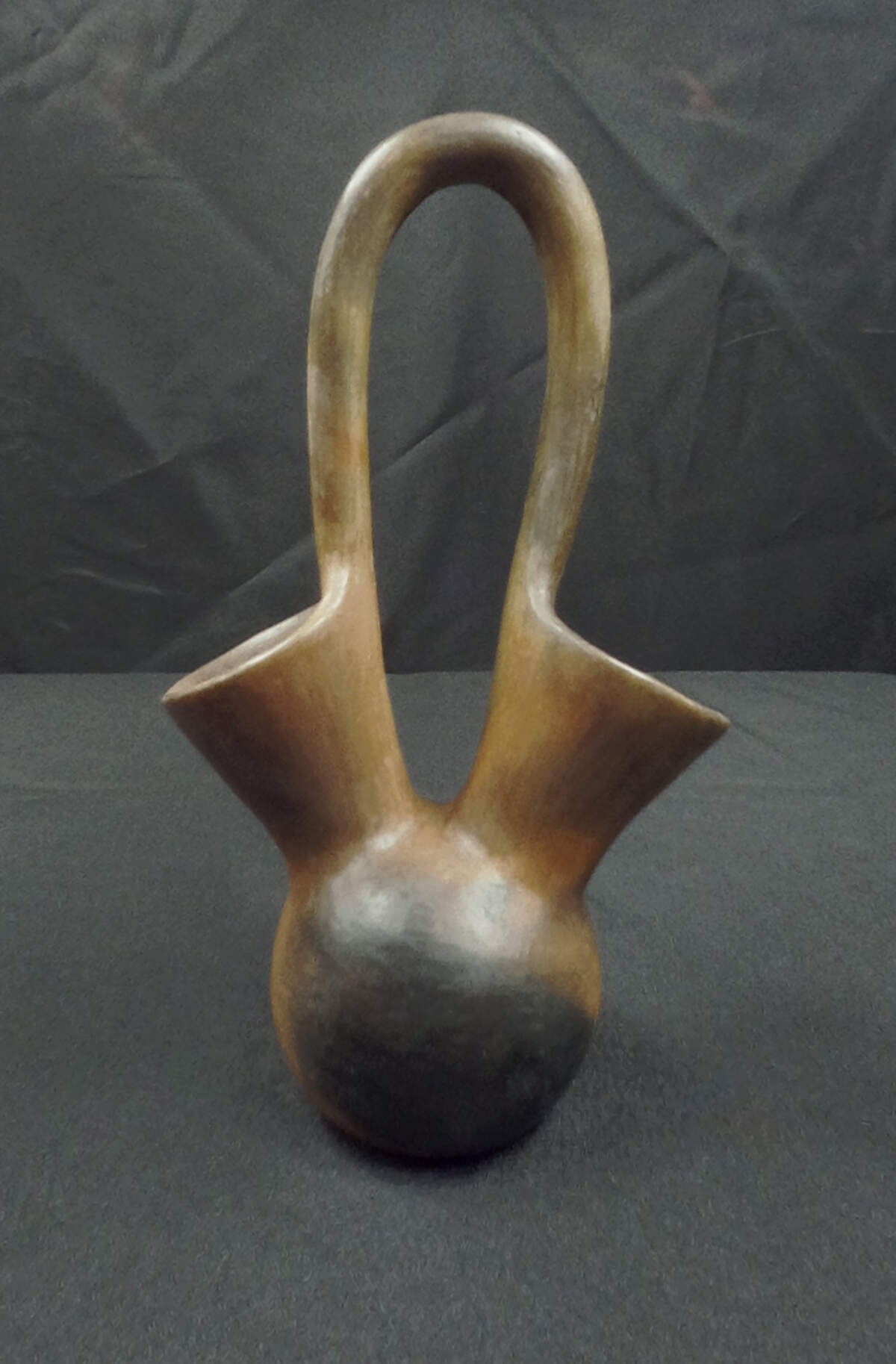
7. In 1997, Catawba potter Georgia Harris received a National Heritage Award from the National Endowment for the Arts. She was adept at being traditional, but pushed the boundaries. “With folk artists change is a tricky thing,” Criswell said. “If you do something outside of the tradition, the community can come down hard. The best of them are able to push it a little farther without going too far outside (the tradition.)”
8. Catawba potter Keith Brown (Little Bear) collects pottery shurds (sic) from prehistoric pottery and incorporates them into his soft clay. “One of the things Keith likes to do is to press them into pieces he’s making.,” Criswell said. “So, the design on his contemporary piece is a design from a few thousand years ago.”
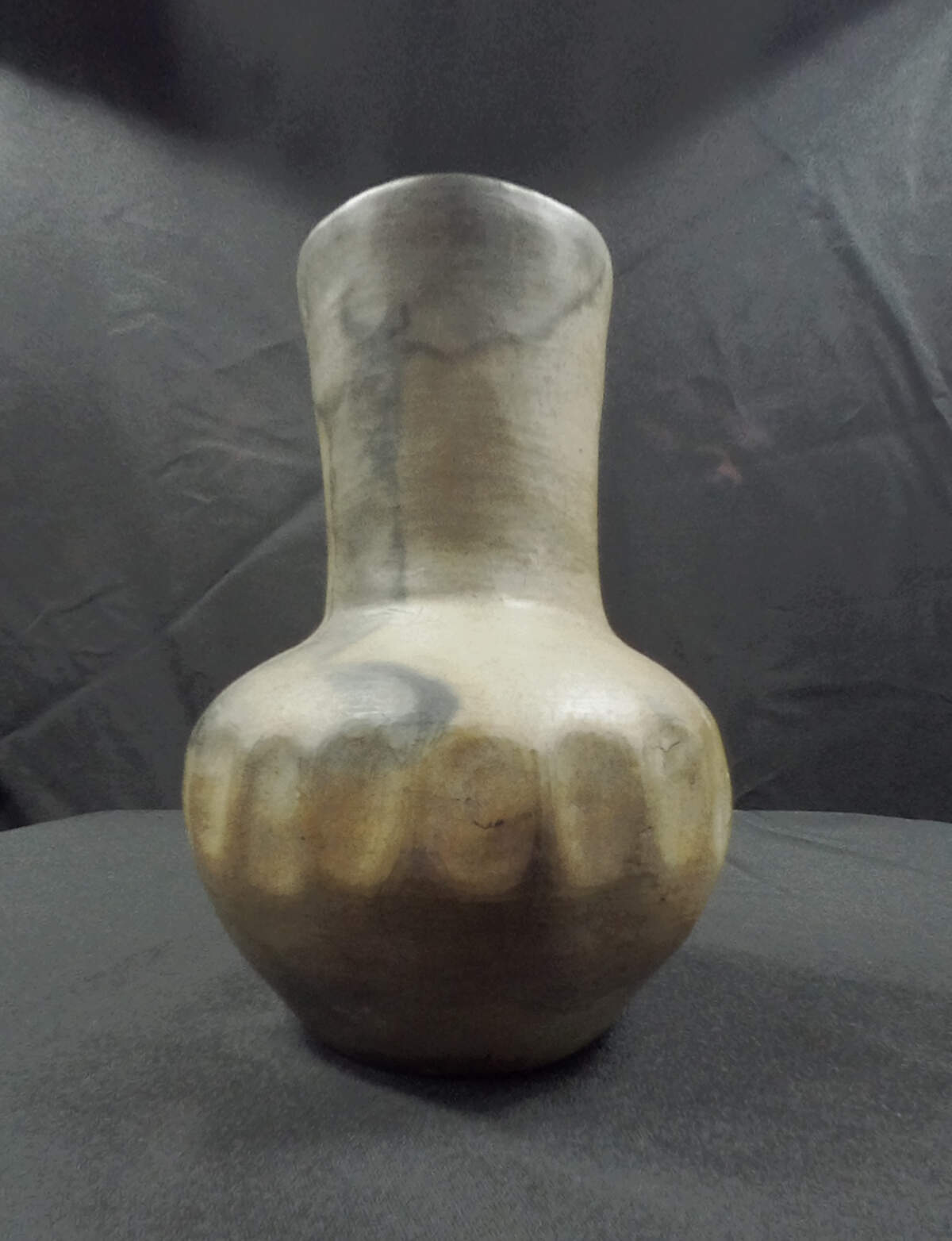
9. Criswell says that when the Blue Ridge Parkway opened, Catawba potters provided pottery to local merchants for visitors who wanted to buy “Indian art.”
10. Buying Catawba pottery from anywhere other than the Catawba Nation or the potters themselves can be tricky. Pieces often labeled Catawba might be Catawba Valley pottery – wheel-made, kiln-fired ceramic – made by European-Americans. “Pieces labeled “historic” might not be,” Criswell warned. “One Catawba I know found a pot her son had made as a kid in an after-school program listed on eBay as ‘ancient pottery’ made by a ‘master potter.’”
‘Catawba Traditions’
What: This “New South for the New Southerner” event features Stephen Criswell, director of Native American Studies at USC-Lancaster. He’ll speak about the history and culture of the Catawba Indians and take questions from the audience. His talk is hosted by Tom Hanchett, Charlotte Mecklenburg Library historian-in-residence.
When: Nov. 12, 6-8:30 p.m.; doors open at 5:30 p.m.
Tickets: $15 for non-members, $11.25 for members. Tickets include program, dinner and a cash bar.
Where: Levine Museum of the New South, 200 E. 7th St.
Details: (704) 333-1887 or Levine Museum
More arts coverage
You can find all our arts season preview stories and calendars in one place: charlotteobserver.com/topics/charlotte-arts-guide.
Want to get more arts stories like this delivered to your inbox? Sign up for the free “Inside Charlotte Arts” newsletter at charlotteobserver.com/newsletters
You can also join our Facebook group, “Inside Charlotte Arts,” at https://www.facebook.com/groups/insidecharlottearts/
This story was originally published November 6, 2019 at 2:04 PM.