
This Charlotte artist’s work is inspired by his storytelling roots in Colombia
One night in 2011, artist Nico Amortegui woke up and started painting in watercolor. He hadn’t painted in almost 20 years.
“It was like a magical moment in life, and it just happened,” he said. “I couldn’t stop.”
Amortegui found a market in Winston-Salem to sell his paintings. He displayed his work on the ground for people to view, selling paintings for $10-$15 apiece. He brought home $150 and went back the next two weekends, making more money each time.
“I had a tiny little car, and we piled everything on top of the car,” Amortegui, 42, said. “I think we lost a couple of paintings getting there because they flew away.”
Amortegui and his wife, Laine Amortegui were struggling financially in Charlotte. The recession affected his construction business, his two fashion magazines (Si and blü), as well as his wife’s coffee shop in Shelby. They closed everything. His motorcycle was repossessed, and they stopped paying their mortgage.
It wasn’t the perfect time to become an artist.
“This is it,” he remembered thinking. “This is what I want to do for the rest of my life. I got home and said, ‘honey, I’m just going to be an artist.’ She almost had a heart attack. She was pregnant at the time.”
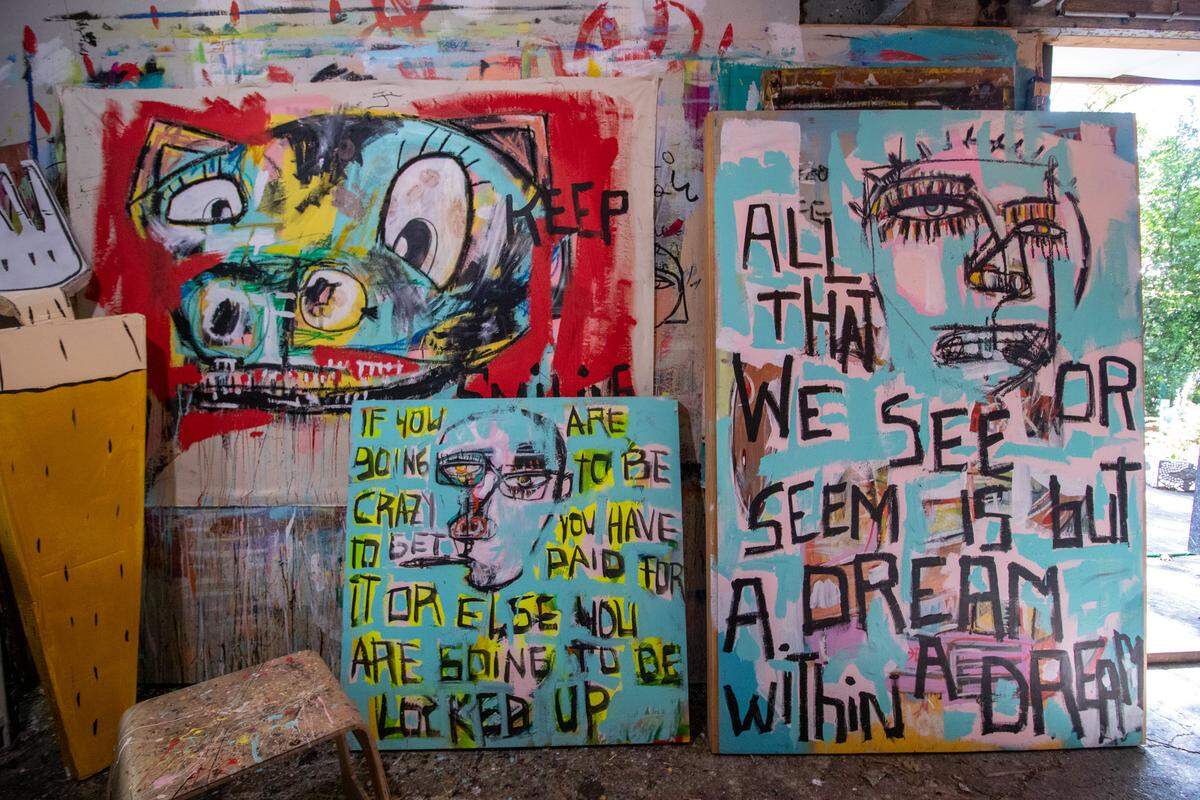
‘His work was raw’
Amortegui grew up in Bogotá, Colombia, surrounded by all types of artists, including his uncle Pablo Zapata, a well-known contemporary artist. He traveled legally to the U.S. in 1994 and was an immigrant without papers until his late 20s. He moved around, eventually working in Miami and Los Angeles as a fashion photographer. He and his wife made their way to Charlotte in 2001 and married in 2006.
James Funderburk, a partner at Advent Coworking and owner of HomeCollectionsCLT.com, has been cheering on Amortegui since he moved to Charlotte. Amortegui worked as a salesperson at Funderburk’s SouthPark clothing store and later helped remodel Funderburk’s boutique apartments for HomeCollectionsCLT.com.
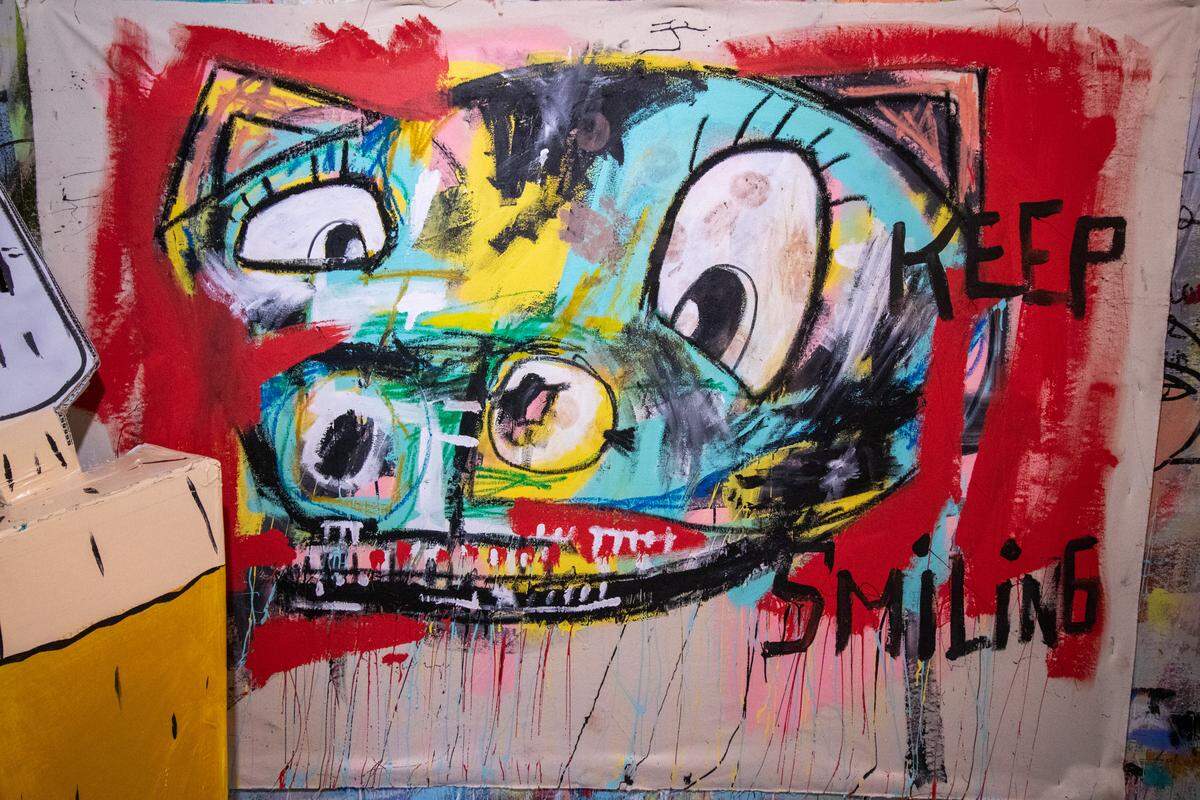
One day in 2011, Amortegui brought a painting to Funderburk. It would be the first of many Funderburk would purchase – his collection includes 50 to 60 of Amortegui’s paintings. Funderburk’s clients are always interested in meeting the artist and buying Amortegui’s works.
“His work was striking,” Funderburk said. “It was raw. I encouraged him to do more, that I’d buy more paintings. I bought a large portion of what he painted that year.”
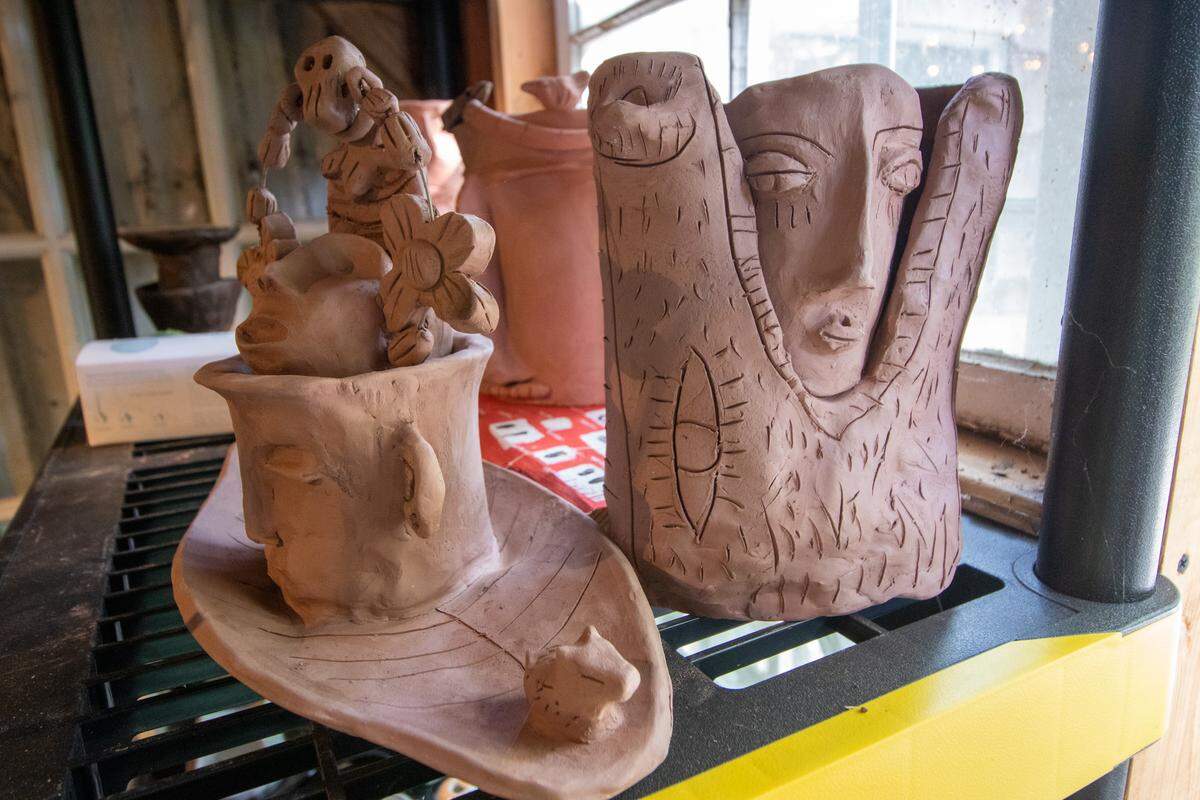
Ceramics
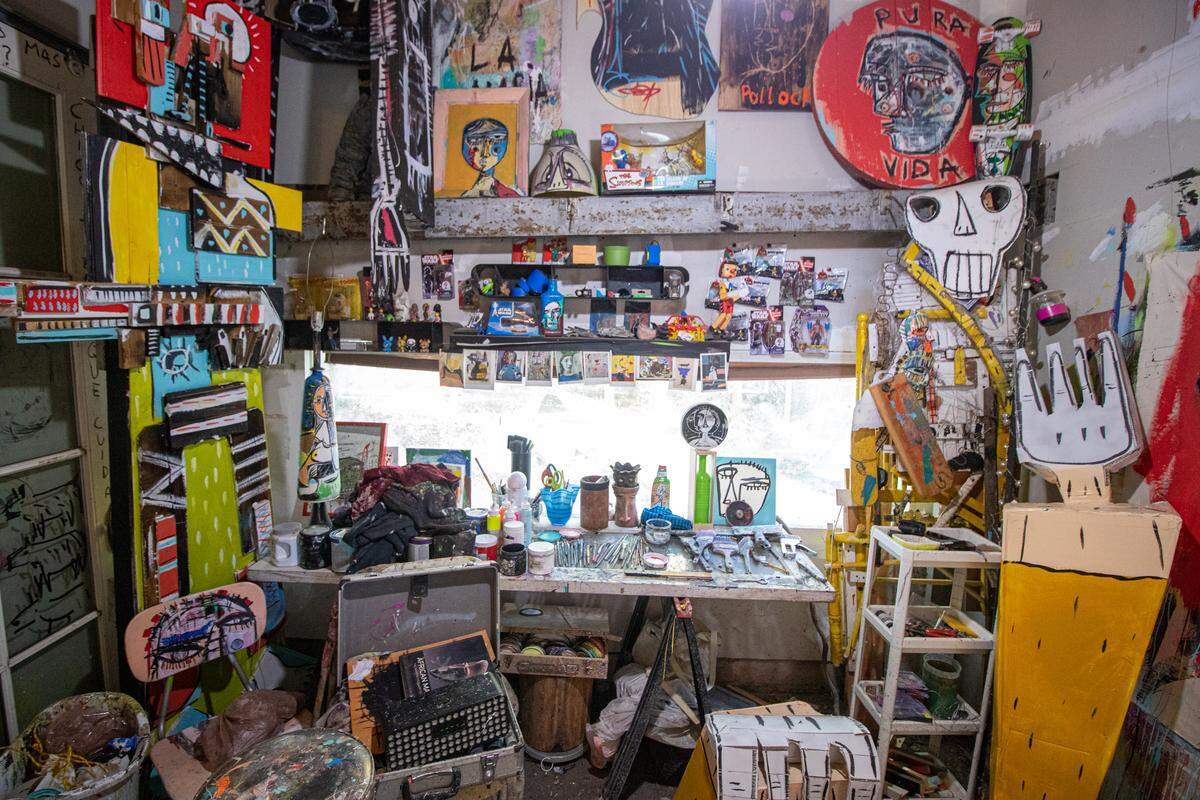
Amortegui didn’t stopped at painting on canvas. He’s taken on ceramics, wood sculptures and structures, like the wood castle he made for the Woodlawn School in Davidson.
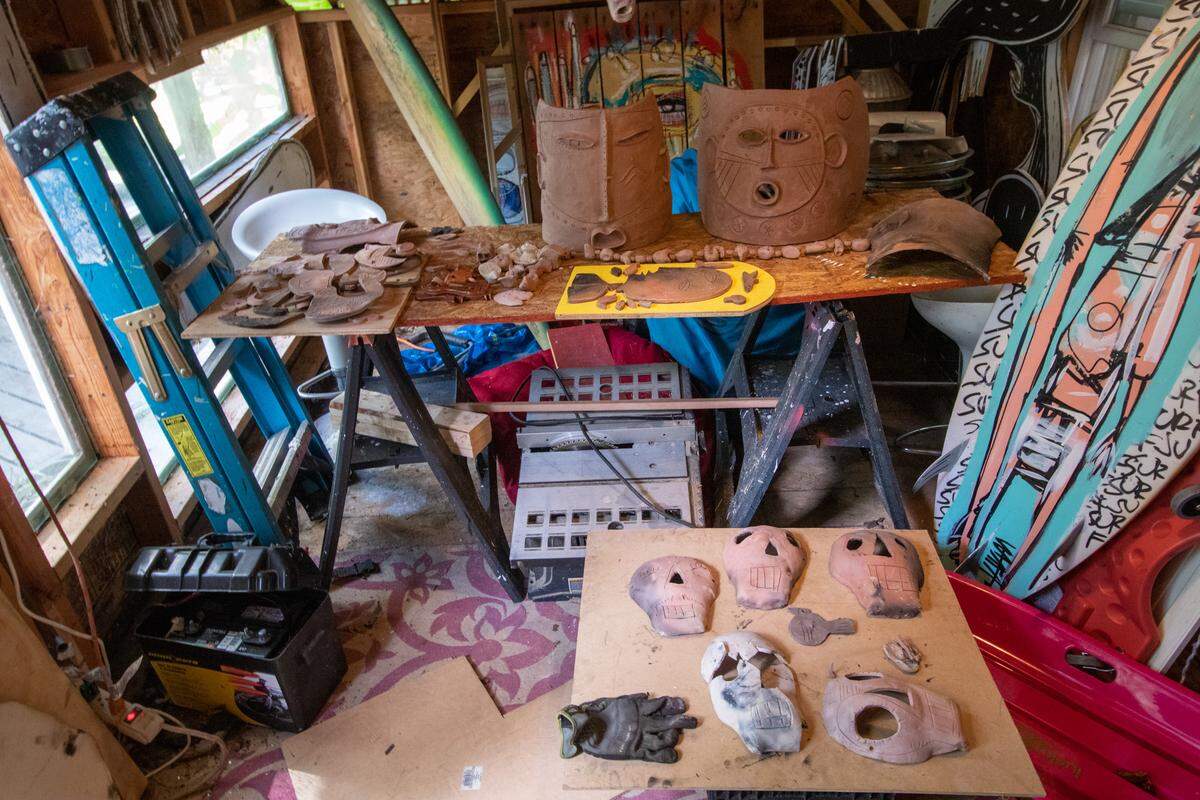
During a visit to Mexico in June, sponsored by the Arts & Science Council, Amortegui made pottery with five families. They taught him about the different types of clay, how to process, dry, fire and paint it. Inspired by what he learned, he built a kiln near his studio using bricks, cement, wood and metal pieces. He wants to create sculptures and totems for the garden with techniques from Latin American mask-making.
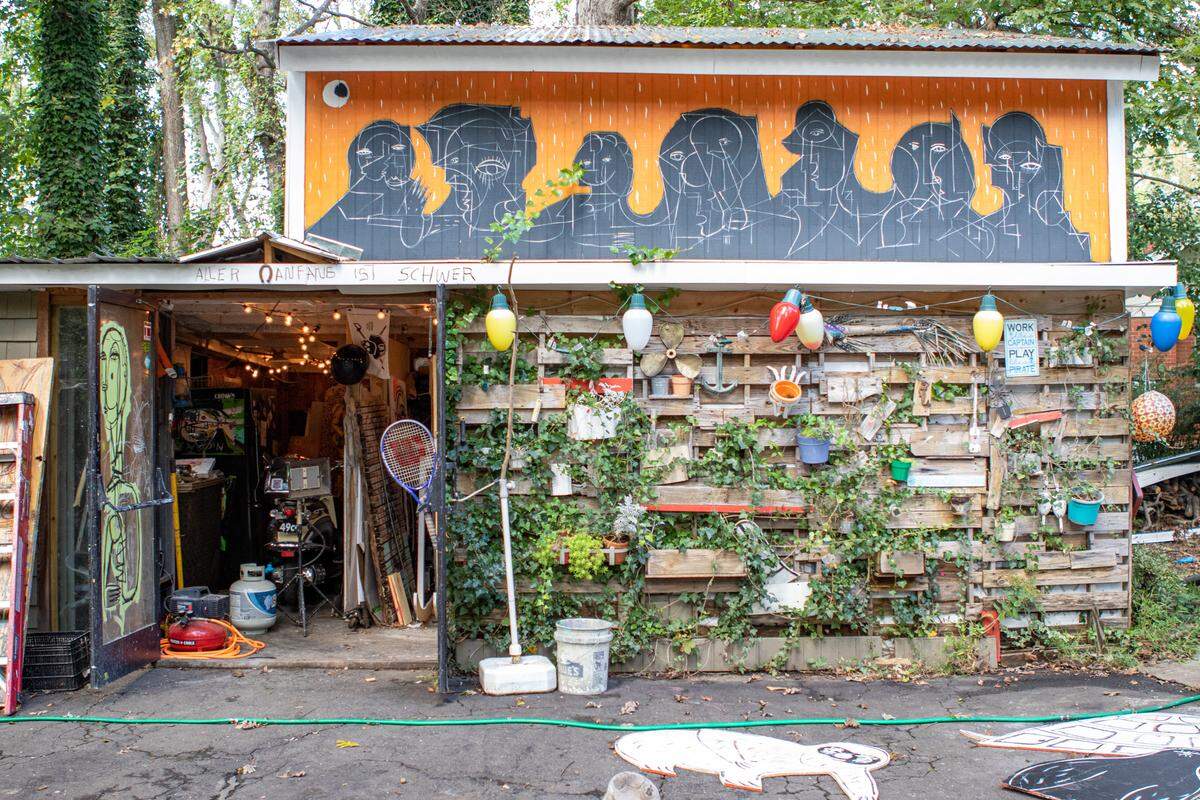
Many pieces get busted in the kiln with his trial and error process. His studio and garden are filled with remnants of things gone wrong. But to him, it’s all part of the learning experience.
“Usually the process takes one or two days,” he said. “I don’t have patience, so I rush the process to six hours, so a lot of thing blow up. I’m OK with that because it’s part of the process.”
Old Salem apprentice
This year, Old Salem Museum in Winston-Salem accepted Amortegui for a year-long apprenticeship. He’s operating a wheel with a foot pedal from the 1800s to make ceramic plates. He’s painting playful scenes of daily life in the 1800s, some with birds and flowers.
His work has evolved since he first started. His early pieces were blatantly political, focusing on issues affecting the community such as immigration, Latinos and women’s issues.
“Most people are afraid to talk about things,” Amortegui said. “but if there’s an art piece that is already speaking about it, talking about it, it allows people to engage.”
At a recent show, he brought an over-sized rocking horse he’d built. Many people commented about how they remembered owning a rocking horse as a child. The rocking horse stressed the commonalities among people, rather than focusing on the differences.
Murals and more
It’s not just the toys that bring awareness. His murals around Charlotte such as the ones at Charlotte-Douglas International Airport, Salud Beer Shop and Camp North End may help people question the stereotypes they have about Latin American people and culture or what they think they know about a certain community or issue, he said.
“They break that barrier (more easily) because of a feeling,” he said. “When you have a feeling, you’re opening the door into allowing things to happen, maybe willing to listen. It actually impacts them, touches them.”
Amortegui’s artwork exhibited at Elder Gallery of Contemporary Art for the first time this spring at “We see heaven upside down,” part of an international and multifaceted project connected to Moving Poets. The project was founded by MyLoan Dinh and addresses migration, displacement, and the concept of home.
“They (Amortegui’s art) are created with exuberant colors, rich imagination and a reverence for tradition,” said Elder Gallery owner Sonya Pfeiffer. “And I think that what people respond to is all of that: the color, the imagination. But you can spend so much time with the work and go a little deeper because they really also speak of resilience and resourcefulness and creativity.”
A storyteller
Amortegui agreed to continue his participation in the “We see heaven upside down” project by creating sets and making life-size and larger puppets – something he’s always wanted to do. They’re for a stage production called, “HEAVEN,” the next iteration of “We see heaven upside down.” The performance is Feb. 26-March 1 at the Booth Playhouse.
Some of his puppets will be worn by the performers, others will be part of the set as moving puppets on the stage.
“Having Nico involved has been amazing because he’s a true collaborator,” Dinh said, “which is what we love. He addresses the difficult topics with a lot of humanity.”
Amortegui’s still political, but he’s more interested in helping people connect with one another through his art. He characterizes his work as folk art, influenced by his roots. Early on, someone told Amortegui he needed a name to sign his works. He decided on MALO, the letters representing important people (and pets) in his life.
His style is distinct – he paints in the moment, no sketching ahead of time. In his portraits, he draws from the Colombian tradition of storytelling. He may add words or phrases that have meaning to the people he’s drawing.
“My grandfather was a storyteller,” he said. “He used to tell me stories all the time. So, I think I use my art in the exact same way.”
More arts coverage
You can find all our arts season preview stories and calendars in one place: charlotteobserver.com/topics/charlotte-arts-guide.
Want to get more arts stories like this delivered to your inbox? Sign up for the free “Inside Charlotte Arts” newsletter at charlotteobserver.com/newsletters
You can also join our Facebook group, “Inside Charlotte Arts,” at https://www.facebook.com/groups/insidecharlottearts/