
Jazz greats mentor Charlotte musician at Juilliard. ‘Be on the lookout for this kid.’
Jazz musicians don’t waste words.
When a pianist plunges deeply into the 100-year history of jazz from Louis Armstrong to Keith Jarrett, they say, “He does his homework.”
When his playing blends blues, gospel, R&B, classical music and everything else his restless mind has vacuumed up since childhood, they say, “He has a good ear.”
So when triple Grammy-winning saxophonist Branford Marsalis met an amazing Charlotte teenager and wanted the director of the Juilliard School jazz program to admit the kid, this was his pitch: “‘Sean can really play.”
“Branford has different levels of compliments. He might say someone’s talented or someone has strong technique,” explained younger sibling Wynton Marsalis, head of Juilliard Jazz and himself a winner of nine Grammys. “But he said, ‘Sean can really play’.”
That’s what Sean Mason needed to know. He’d been praised by church musicians, his family, Charlotte music mentors and especially Lonnie and Ocie Davis, founders of Jazz Arts Charlotte, who helped the shy student at Philip O. Berry Academy of Technology learn to speak and sing through his keyboard.
Still, as he studied at UNC Greensboro in 2017, music seemed to be a joy on the side, not a job at the center of his future. Then he ran into Branford Marsalis, who was subbing on the faculty for a semester and turned Mason’s world around.
A path to Juilliard
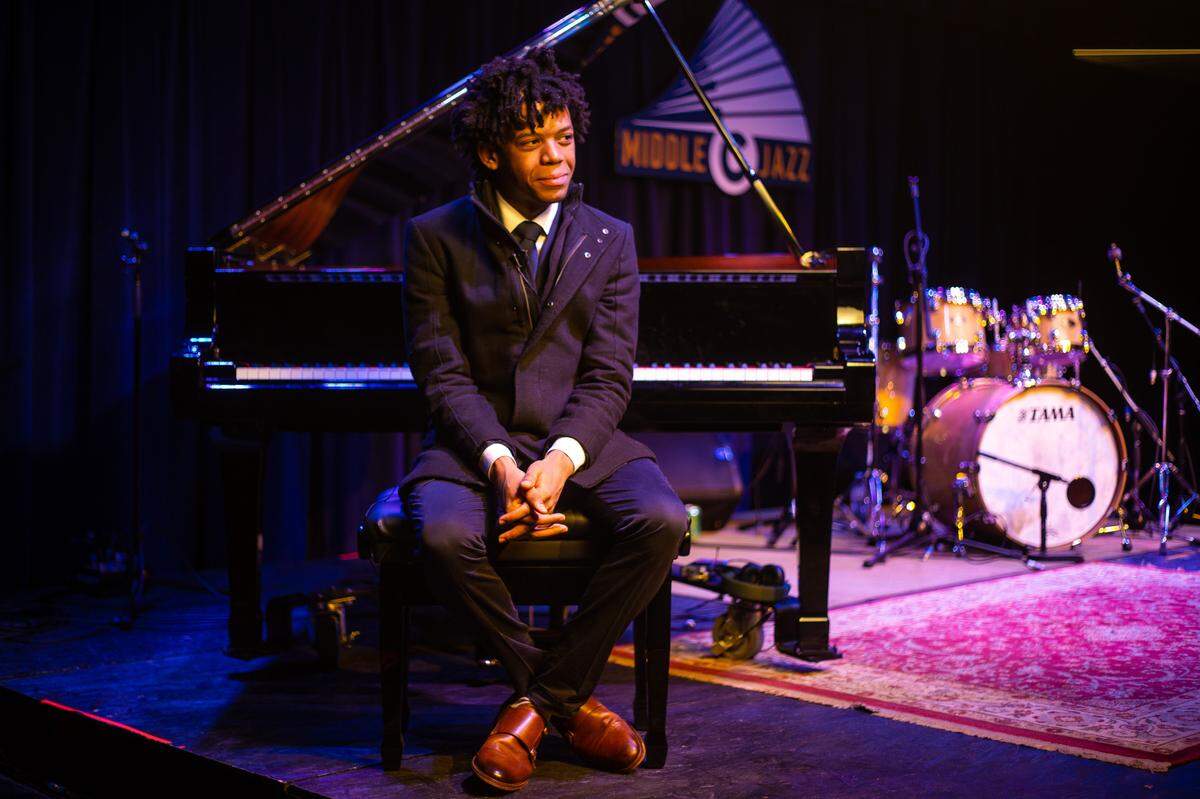
Now he’s a 21-year-old sophomore at Juilliard; the school wouldn’t accept any UNCG credits, so he started college over. He fronts the Sean Mason Trio with bassist Butler Knowles and drummer Malcolm Charles. He’s played multiple venues in the Jazz at Lincoln Center program and performed in quartets led by both Wynton and Branford Marsalis.
On the Sunday before Christmas, you’d have caught him at Charlotte’s elegant new Middle C Jazz club on South Brevard Street. There he swung through his tribute to “A Charlie Brown Christmas,” which he has done somewhere each year since he was too young to drink in venues that hired him.
An interview at the club the next afternoon would find him dapper in a dark, slim-fitting suit. (His website has a Sean Mason Fashion section, for he hopes to design and market clothes.) He seemed easygoing, soft-spoken but confident around a questioner he met only once five years ago, self-contained except for fireworks of hair that shoot out from his head.
When asked to perform for a video recording, he said, “Let’s have some blues” — not a song, just improvisation, with Mason leaning away from the keyboard and swaying gently from side to side. It’s a Ray Charles move, done to a Ray Charles piano vamp. If you didn’t already know that the most eclectic of American pianists was Mason’s musical idol, you could guess. Earl Hines, whose 1940s band included Charlie Parker and Dizzy Gillespie, comes second.
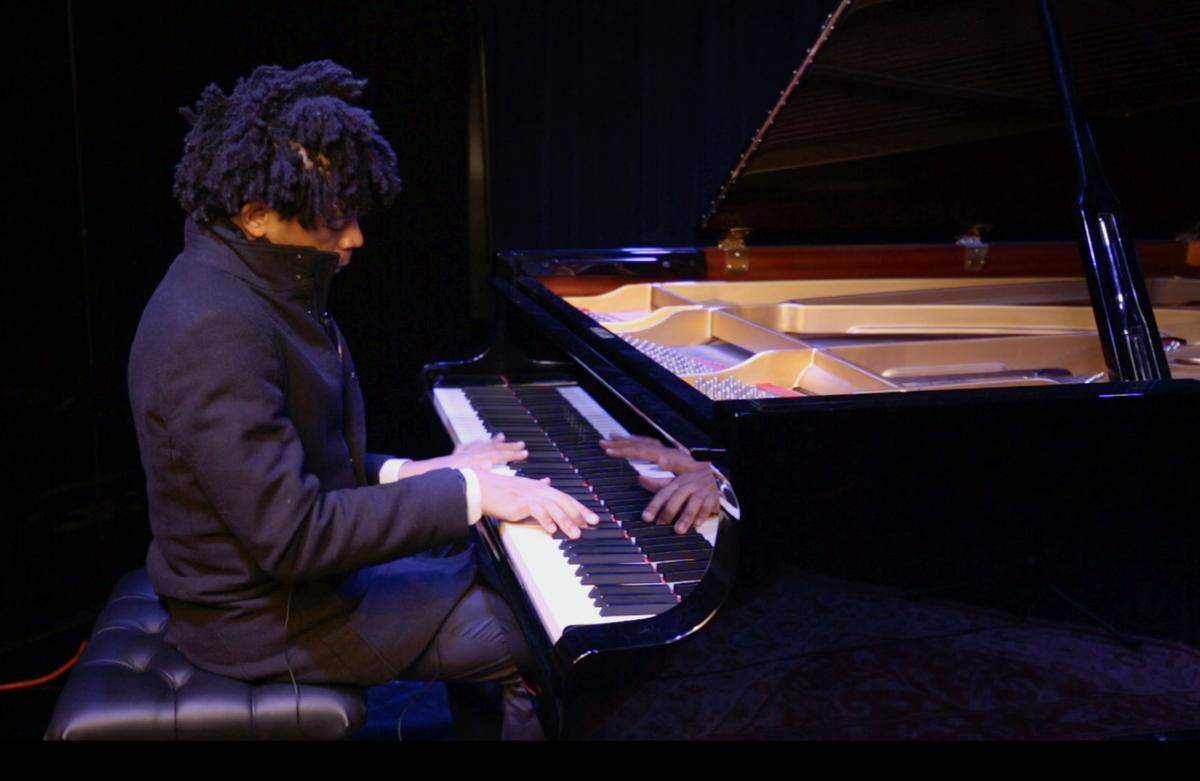
Many young musicians don’t know Earl Hines from Duncan Hines. Almost none would listen to 15 hours of Library of Congress interviews with Jelly Roll Morton after hearing Morton’s pioneering music. But Mason did. Mention an obscure pianist in conversation and he’d say, “Gotta remember to look him up.”
That kind of dedication endeared him to Branford Marsalis, who now lives in Durham and teaches at N.C. Central University.
“I had 15 saxophone players and Sean (at UNCG),” he recalls. “I gave him (Morton’s) ‘King Porter Stomp’ to transcribe. I must have given that to 15 students (over the years), and none ever learned it. I asked him about it after a month, and he’d done it. Then I gave him Edvard Grieg’s Lyric Pieces, and he came back and played two of those basically from memory. I said, ‘You might want to consider Juilliard. Go to their website, put in your audition tape and they will call you.’ I told my brother, ‘Be on the lookout for this kid.’
“I can tell which musicians hear more music than they know, which ones have a natural instinct for technical and harmonic proficiency. I try to invent exercises that overwhelm them with their weaknesses. When I taught Sean, he didn’t have any weaknesses I could fix.”
Gigs with Marsalis
Branford Marsalis started to give his prize student gigs when his regular quartet pianist, Joey Calderazzo, couldn’t come. “Sean had a limited jazz vocabulary then, because he was getting by on his own ears,” he recalled. “When you put a musician under a stress test, the first thing they’re intimately familiar with becomes the thing they go to. Sean would go to a church lick, because he was a church player. At first, the quartet exposed his limitations.
“But he adapts very quickly. He has a strong internal pulse, and he can copy any style with instruction. ... I wrote the score for (the upcoming film) ‘Ma Rainey’s Black Bottom,’ with songs from the ‘20s and ‘30s. When we recorded it, I used mostly New Orleans guys, my regular bass player (Eric Revis) and Sean.”
For years, Mason felt a little anxious about two things. First, he had taught himself to play by ear, after grandmother Betty Cornwell gave him a 25-key Casio keyboard: “Every day after middle school, I had nothing to do from 3 to 6 but watch TV, eat or play around with the Casio. So I practiced all the time.”
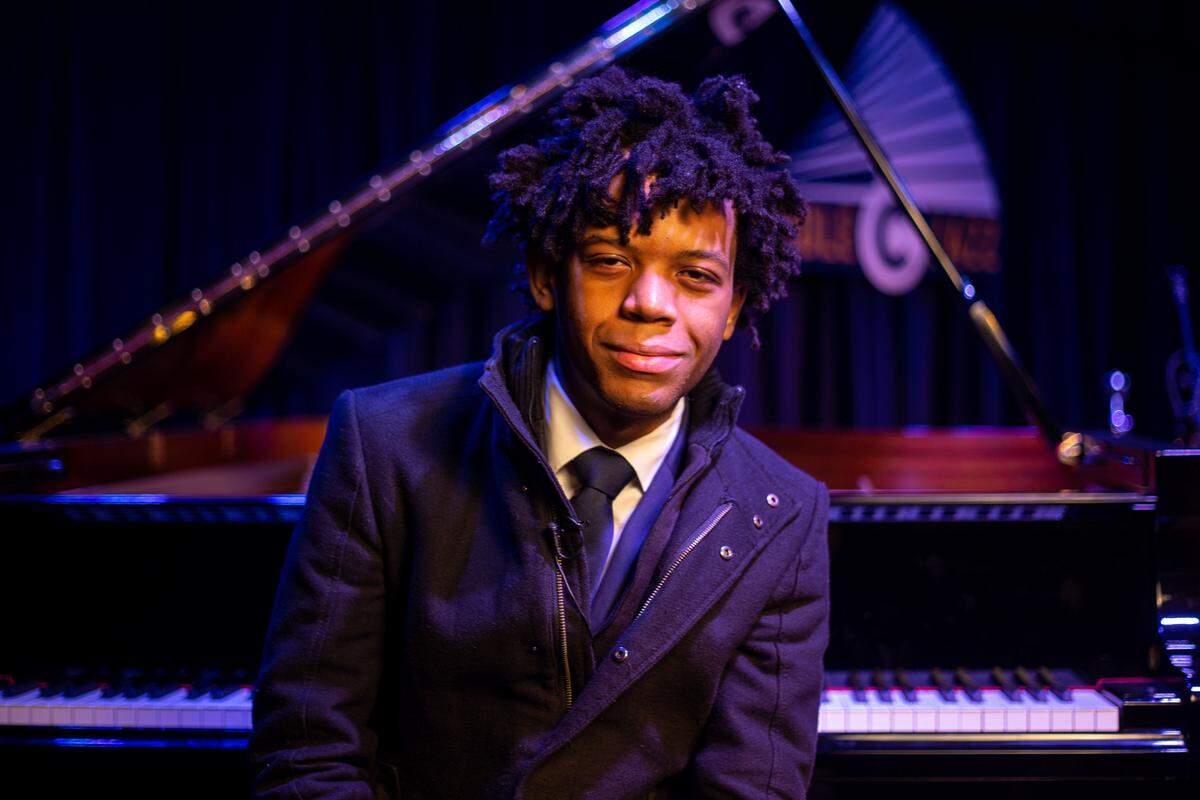
Second, he’d gotten a later start than usual for a serious musician, taking up piano at 13 after trying trombone and percussion in middle school and quitting each after one year. “I used to be jealous of kids who started at 4,” he said. “I’d think, ‘There’s nine years I can’t get back. How do I compete with them?’ But now I’m glad I had a normal childhood, playing sports and hanging with kids in the neighborhood. I’m interested in politics and a lot of things outside of music. I can interact well with people.”
Said Wynton Marsalis, ”He has a combination of soul and intelligence that’s rare — a deep, soulful feeling and a willingness to study. He’s a serious reader, not just of music history but Ralph Ellison’s ‘Invisible Man’ and Frederick Douglass’ autobiography. He’s interested in history and American culture. That’s really an achievement, in this time when there’s not a lot of recognition for knowing something.”
‘That North Carolina soul’
Once Mason found the piano, he knew he was home. He played at Mount Carmel Baptist Church under jazz-gospel pianist Lovell Bradford, another mentor. Mason’s parents, Cynthia Mason and DeAndre Tucker, took him a step higher by enrolling him in a Jazz Arts camp. Lonnie Davis immediately knew he was special, even if Mason didn’t.
“We would play something in front of the class, with nobody able to see the keys, and ask ‘What interval is this? What type of chord is this?’ Every time, Mason raised his hand. The questions got more and more difficult, and the only one answering was this quiet kid at the back of the room. He had so many natural gifts, and he played with such soulfulness. Even as a very young musician, he would try to pull out everything that was in him.”
Davis and both Marsalis brothers all use the s-word to describe him. Wynton Marsalis, asked to explain Mason’s gifts, said, “He has that North Carolina soul; you can hear the barbecue sauce in his playing. His musical ideas lean toward the profound; he understands how to develop solos, and he can come up with different ways to play the background to your solo. He can play stride piano, country, blues, American popular music. He can go from simple folk songs to Thelonious Monk complexity.”
The Davises guided him into their Jazz Arts All-Star Ensemble, exposing him to new styles and schools of thought. He began to voyage through jazz history in obsessive fashion: After discovering Keith Jarrett, he tried to listen to every recording Jarrett made over half a century. (He thinks he has.) Like Jarrett and the Marsalis brothers, Mason sees no barriers between jazz and classical music.
“When you open the score for Bach’s ‘Well-Tempered Clavier,’ the four-voice fugues make you want to cry, because they’re so beautiful,” he said. “I had to stop practicing and start pacing around the room, because I was overwhelmed.”
Mason has specific goals: recording a live concert with his trio, creating that fashion line down the road, ultimately developing different kinds of bands “to embrace all the music I love.” Yet in a cosmic sense — and Mason can get cosmic without sounding spacey — he’s after more.
“I want to master every aspect of the piano,” he said. “Keith Jarrett has been searching for 50 years for that kind of total mastery of the instrument. Bill Evans once said he’d rather spend a thousand hours working on one song than an hour learning a thousand songs. The concept of mastery has almost been lost nowadays, but that’s what I’m looking for.”
More arts coverage
You can find all our arts season preview stories and calendars in one place: charlotteobserver.com/topics/charlotte-arts-guide.
Want to get more arts stories like this delivered to your inbox? Sign up for the free “Inside Charlotte Arts” newsletter at charlotteobserver.com/newsletters
You can also join our Facebook group, “Inside Charlotte Arts,” at https://www.facebook.com/groups/insidecharlottearts/
This story was originally published January 7, 2020 at 9:16 AM.