
New book ‘Wilmington’s Lie’ shines light on dark, little known part of NC history
When Pulitzer-winning journalist David Zucchino talks to groups about his new book, “Wilmington’s Lie: The Murderous Coup of 1898 and the Rise of White Supremacy,” there’s one question he gets all the time: Why didn’t I know about this?
“Wilmington’s Lie” (Atlantic Monthly Press, $28), tells the story of a dark, consequential chapter of state history that’s also one of the least known.
For years, Zucchino himself didn’t know this story, even though he’d lived in North Carolina and graduated from UNC Chapel Hill, where numerous buildings bear the names of men involved in the effort.
At the narrative’s heart is North Carolina’s Democratic White Supremacy Campaign, a propaganda and voter intimidation effort that dismantled political advances black citizens had made since the end of the Civil War.
Launched in early 1898, the campaign culminated on Nov. 10 in Wilmington, where heavily armed whites killed at least 60 black men. Black residents fled the city. Supremacists ousted elected officials, seizing control of what had been a multiracial local government.
White supremacists also won control of the state legislature in Raleigh, ushering in 70 years of Jim Crow and black voter suppression, cementing North Carolina’s enduring racial inequality. Along the way, they buried the truth about what happened in Wilmington.
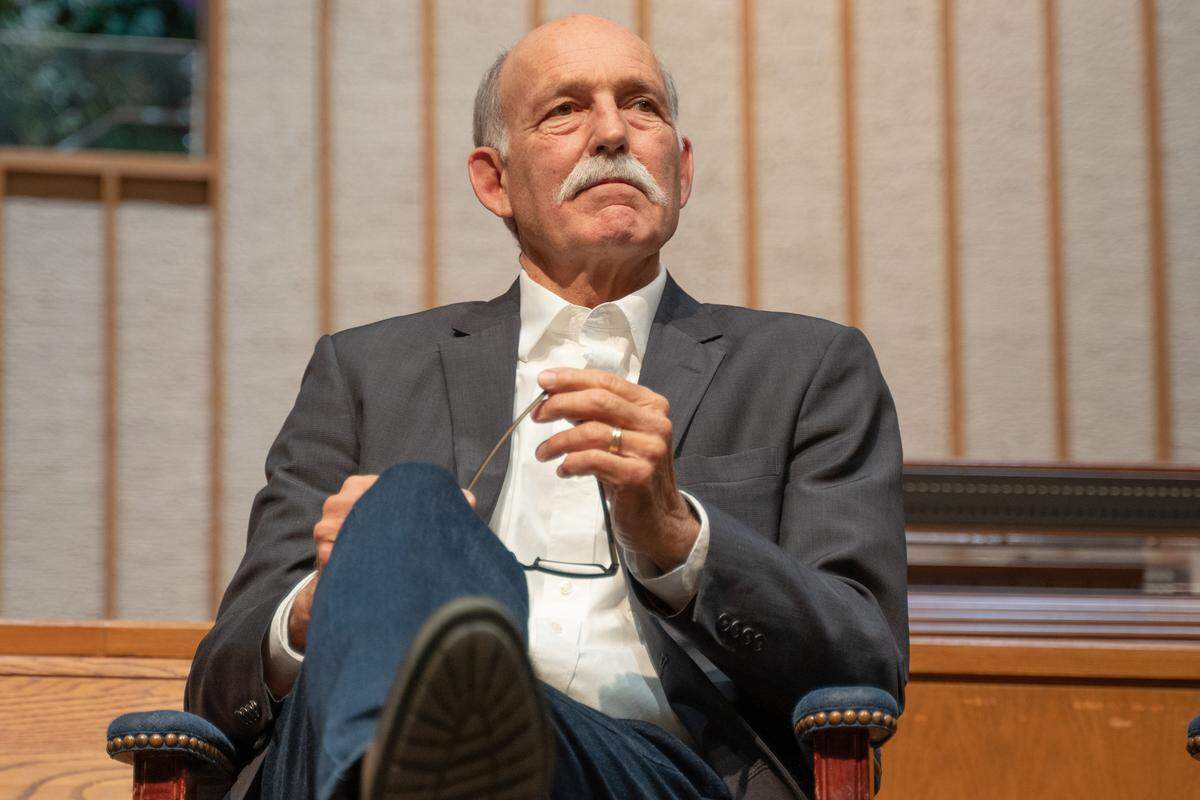
“This wasn’t just an important chapter in North Carolina history,” Zucchino told the Observer recently. “It’s an important chapter in American history.”
North Carolina’s White Supremacy Campaign, though not the first in the South, “was the best, different than all the others, because it was so well orchestrated. It was premeditated. It was planned down to the day. They mounted a propaganda campaign, and told the whole country they were going to do it. And then did it.”
North Carolina, he says, inspired white supremacists across the South.
‘The freest town’
The campaign was responding to growing black political power. Since 1894, a coalition of whites and blacks known as Fusionists had controlled the legislature. By 1898, black men, including George Henry White, the only African American in Congress, held a variety of offices.
Nowhere was African-American progress more evident than Wilmington, then the state’s largest city.
With blacks comprising 56% of the population, Wilmington’s government included African-American aldermen, police officers and magistrates. It also had black lawyers, doctors and other professionals, including Alexander Manly, editor of a crusading black newspaper, the Wilmington Daily Record. The American Baptist Publication Society called Wilmington “the freest town for a negro in the country.”
But in spring 1898, Democrats launched what they called their white supremacy campaign to reclaim power in the November election. In Wilmington, white supremacists pledged to oust black officials and the multiracial government “by the ballot or the bullet — or both,” Zucchino writes.
Key to the effort was Josephus Daniels, owner of Raleigh’s News & Observer. He spearheaded a disinformation barrage of news stories and editorial cartoons that smeared black men as incompetent and corrupt, and portrayed them as sexual predators who threatened white women.
(The Daily Charlotte Observer, forerunner of the Charlotte Observer, also participated in this effort. It sent star reporter H.E.C. “Red Buck” Bryant to report from eastern North Carolina, where he wrote stories full of unsourced anecdotes. One, headlined “Human Devils in Command,” described Wilmington’s black officeholders as depraved and ignorant.)
The campaign also relied on Red Shirts, vigilantes clad in red shirts or jackets, who used intimidation and outright violence to keep blacks from the polls. They, too, operated in Charlotte, with some 1,000 marching through town in the days before the 1898 election.
Unsurprisingly, when voters went to the polls on Nov. 8, most blacks stayed home, and Democrats prevailed.
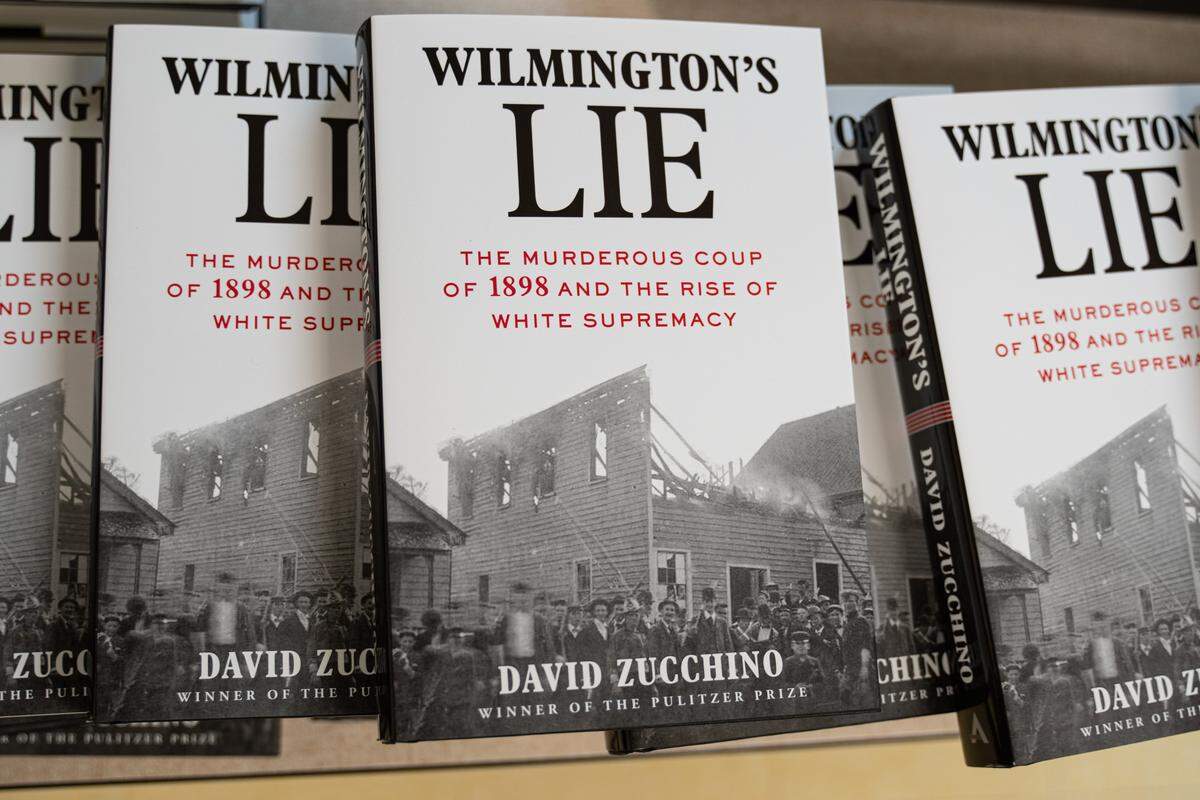
Two days later, white supremacists launched their attack in Wilmington, shooting down men in the streets, setting fire to the building that housed Manly’s newspaper. The photo on the cover of “Wilmington’s Lie” shows the white rioters posing outside the destroyed structure.
Manly, who’d fled town, had drawn their ire with an explosive column responding to a speech from a white Georgia woman. She’d argued that black men caught with white women should be lynched. Manly had countered that white women often willingly had relations with black men, and that many victims of lynching “had white men for their fathers.”
In the wake of the coup, it didn’t take long for years of black progress to vanish. With new poll taxes and literacy tests to suppress voting, the number of registered black voters in North Carolina plummeted from 126,000 in 1896 to 6,100 in 1902.
‘This story has been chasing me’
In his long journalism career, David Zucchino has reported from more than three dozen countries. In 1989, he won a Pulitzer Prize for his series, “Being Black in South Africa.” Today, he lives in Durham and works as a contributing New York Times writer, spending about half his time reporting from Afghanistan.
North Carolina, however, is where he got his start. After attending high school in Fayetteville, he graduated from UNC Chapel Hill and took his first journalism job at The News & Observer.
And yet for years, Zucchino didn’t know about the white supremacy campaign.
This is why: Whites controlled the history, and they hid it. If the topic came up, whites explained the violence in Wilmington by casting blacks as aggressors. Says one 1949 North Carolina public school textbook: “A number of blacks were jailed for ‘starting a riot’ and a new white administration took over Wilmington’s government.”
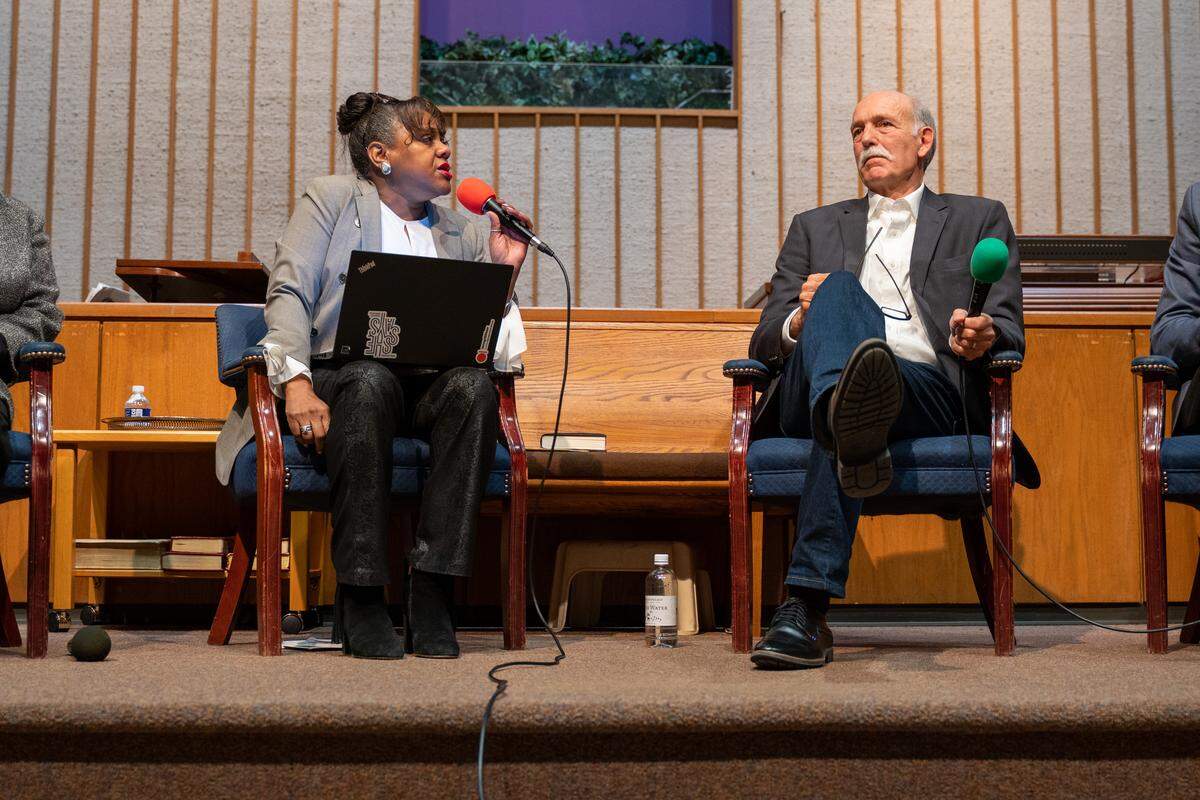
Numerous white supremacist leaders went on to become governors and prominent state officials. Their names are familiar to North Carolinians, though their roles in the campaign aren’t.
In 1969, for instance, when Zucchino was a UNC freshman, he’d lived in Morrison Dorm, unaware that its namesake, N.C. Gov. Cameron Morrison, had played an important part in the campaign.
When he attended football games at Kenan Memorial Stadium, he didn’t know that its namesake, William Rand Kenan Sr., led a rapid-fire gun crew whose members gunned down black men in the streets of Wilmington. (UNC recently changed the name on the plaque at the stadium to honor Kenan’s son, William Rand Kenan Jr.)
And when he was a young reporter at the N&O, then owned by the Daniels family, no one mentioned that Josephus Daniels had masterminded propaganda for the white supremacy campaign.
“Basically,” Zucchino says, “this story has been chasing me around for years and I didn’t know anything about it.”
He first encountered the story in 1998, when N.C. newspapers wrote about the centennial of what was typically described as the “Wilmington Riot.” By then, the truth was beginning to surface. It occurred, Zucchino says, “gradually, then suddenly.”
The truth comes out
The big breakthrough came in 2000 when the N.C. legislature passed a bill, sponsored by two black Wilmington legislators, to appoint a commission to investigate the causes and impact of the 1898 coup. Its 480-page report, published in 2006, “upended white myths a century old,” Zucchino writes.
It concluded that the coup was a conspiracy by Wilmington’s white elite, and that state and federal authorities failed to respond to violence or punish the white perpetrators.
That same year, the News & Observer and Charlotte Observer both published a 16-page special edition titled “The Ghosts of 1898 — Wilmington’s Race Riot and the Rise of White Supremacy,” written by historian Tim Tyson. Both newspapers apologized for their roles in the campaign.
Zucchino, who hopes his book will bring the story to national attention, credits historians for much of the research he relies on. But he did plenty of legwork, scouring newspapers, letters, memoirs and diaries, searching especially for accounts from black citizens.
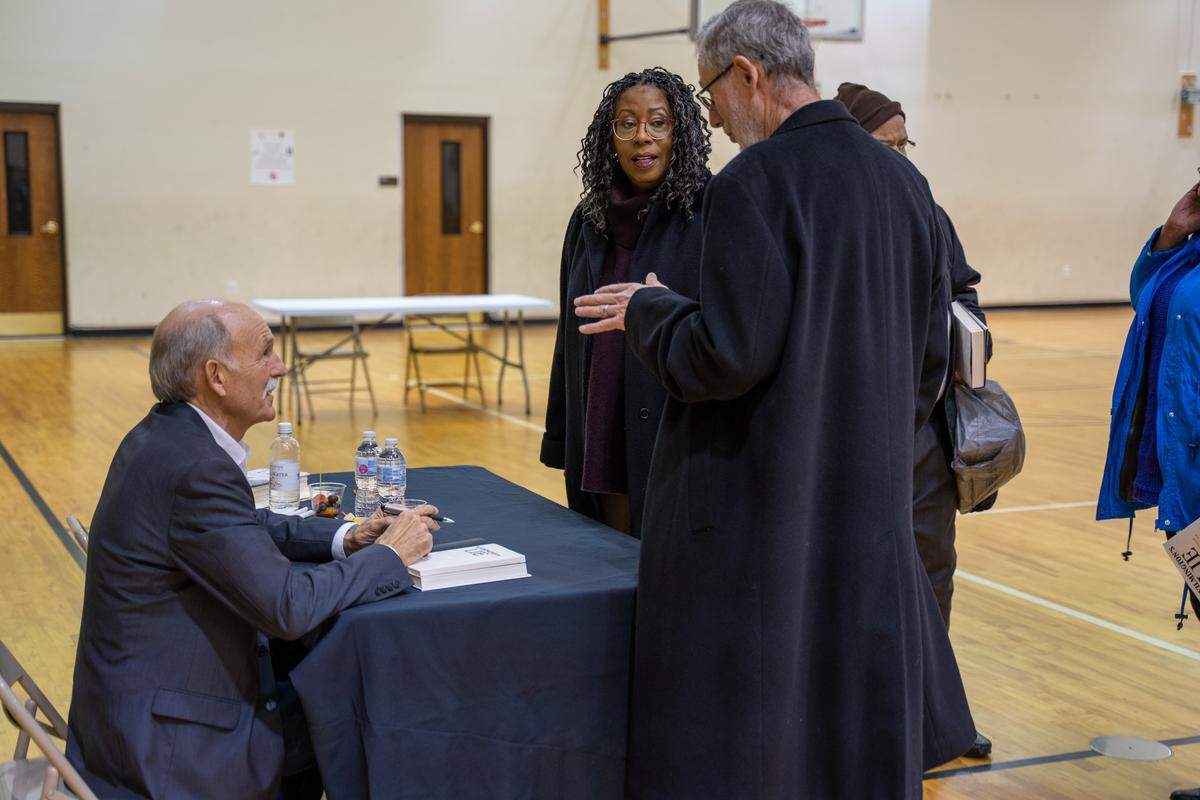
He also hired a genealogist to confirm that Manly, the black newspaper editor who was run out of Wilmington by whites, was descended from N.C. Gov. Charles Manly and a woman he enslaved. When Alex Manly, the grandson of a white governor, wrote about white men fathering black children, he’d spoken from family experience.
The result is a compelling, often shocking narrative.
Zucchino’s prologue, for instance, includes cinematic scenes that take us to the brink of bloodshed, with armed white men hitting the streets in Wilmington on Nov. 10, 1898, heading to a black neighborhood called Brooklyn:
Their new rapid-fire guns had been mounted on horse-drawn wagons. The orders came to move out. The soldiers and sailors rushed to Brooklyn, the wagon wheels churning, the men holding on to their hats and clutching their rifles, the animals snorting and panting, the two big guns cocked and ready to fire.
Echoes of the past
This assault was both planned and publicized, never secret.
In late October, Col. Alfred Moore Waddell, a leader of the Wilmington coup, addressed a thousand white people in the city’s Thalian Hall, urging them in a fiery speech to seize control from blacks: “We will have no more of the intolerable conditions under which we live. We are resolved to change them if we have to choke the Cape Fear with carcasses!”
With violence imminent, Republican leaders begged President William McKinley to send in federal troops. One man advising against this federal intervention was N.C. financier Julian Carr. “It is the lawless vicious, bad element of the negro race that is being suppressed,” he wrote in a telegram to the president.
Years later, Carr would deliver a now-infamous speech at the 1913 dedication of UNC’s Confederate War monument known as Silent Sam.
It wasn’t only white Southerners who supported the campaign. White reporters from the North wrote stories sympathetic to the white supremacists’ goal of removing blacks from office. Often, campaign leaders greeted these reporters with cigars and whiskey when they stepped off the train in Wilmington.
But some newspapers also condemned the violence.
The New York Journal described the Nov. 10 scene as mass murder: “There was no riot; simply the strong slaying the weak and helpless. The negroes had no firearms of any kind but every white man from 12 to seventy was handling guns... From every town around the whites poured in to exterminate the Negroes.”
As he concludes, Zucchino points out echoes of the past in today’s political landscape, such as attempts by white N.C. conservatives — Republicans, this time, not Democrats — to use gerrymandering and voter fraud accusations to suppress black voting. Courts have overturned several of these attempts. A panel of federal judges concluded that one voter ID law in N.C. had targeted African-Americans “with almost surgical precision.”
“Wilmington’s Lie” shows how effectively people in power can distort history. And yet it also proves that the past isn’t easily erased. We still don’t know how many black people died in Wilmington, and we also don’t know many of their names. But the truth — much of it — has finally come out.
This story is part of an Observer underwriting project with the Thrive Campaign for the Arts, supporting arts journalism in Charlotte.
More arts coverage
You can find all our arts season preview stories and calendars in one place: charlotteobserver.com/topics/charlotte-arts-guide.
Want to get more arts stories like this delivered to your inbox? Sign up for the free “Inside Charlotte Arts” newsletter at charlotteobserver.com/newsletters
You can also join our Facebook group, “Inside Charlotte Arts,” at https://www.facebook.com/groups/insidecharlottearts/
This story was originally published March 2, 2020 at 10:30 AM.