
Jewish Film Festival screens ‘Those Who Remained,’ a look at life after the Holocaust
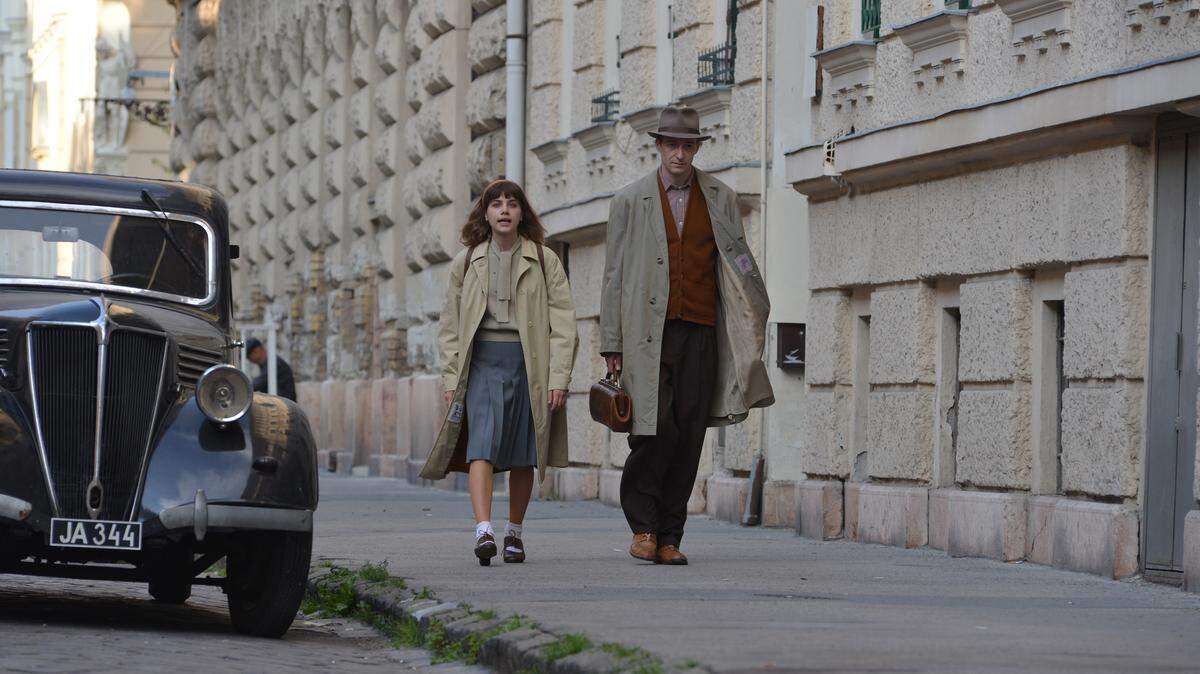
We’ve seen countless Holocaust-themed films about Jews who fought back, were tortured or gassed, were hidden or protected, were seduced by power and collaborated to survive. But how many have we seen about Jews who returned to their home cities after World War II and struggled to piece broken lives together?
That’s the theme of “Those Who Remained,” which was short-listed for a 2020 Academy Award for best foreign film. (It made the final 10, though not the final five.) Hungarian director Barnabás Tóth focuses on two survivors in 1950 Budapest: Aldo, a 42-year-old gynecologist who lost his wife and child in a concentration camp, and Klara, a 16-year-old who thinks she “failed” to save her younger sister. The unusual bond between the emotionally closed doctor and the embittered teenager makes for a poignant drama that never goes quite where you expect.
The Charlotte Jewish Film Festival, which has a nose for quality, presciently snapped up that feature long before the Oscar buzz for its 16th annual event, which runs Feb. 1-23.
This year’s festival opens with something non-cinematic: “YidLive!,” a show by the duo Yidlife Crisis. Montreal-based Jamie Elman and Eli Batalion present their comic take on the modern Jewish experience in a multimedia presentation with videos and live music.
Then the CJFF screens documentaries, dramas and comedies that raise you up or knock you over. “Standing Up, Falling Down” may make you smile at the friendship between a comedian (Ben Schwartz) and an alcoholic but charming dermatologist (Billy Crystal). The documentary “King Bibi” may make you wince at the way Benjamin Netanyahu has manipulated media (social and otherwise) to retain power as Israel’s prime minister for more than a decade.
Perhaps no picture will stay longer in your memory than “Remained,” and the odds were that you would never see it: Until it snagged the last spot at the Telluride Film Festival in September, then picked up a U.S. distributor in Menemsha Films, Toth’s movie lingered in obscurity. Soon after that, the Hungarian nominating committee submitted it for an Oscar.
Acquiring state backing
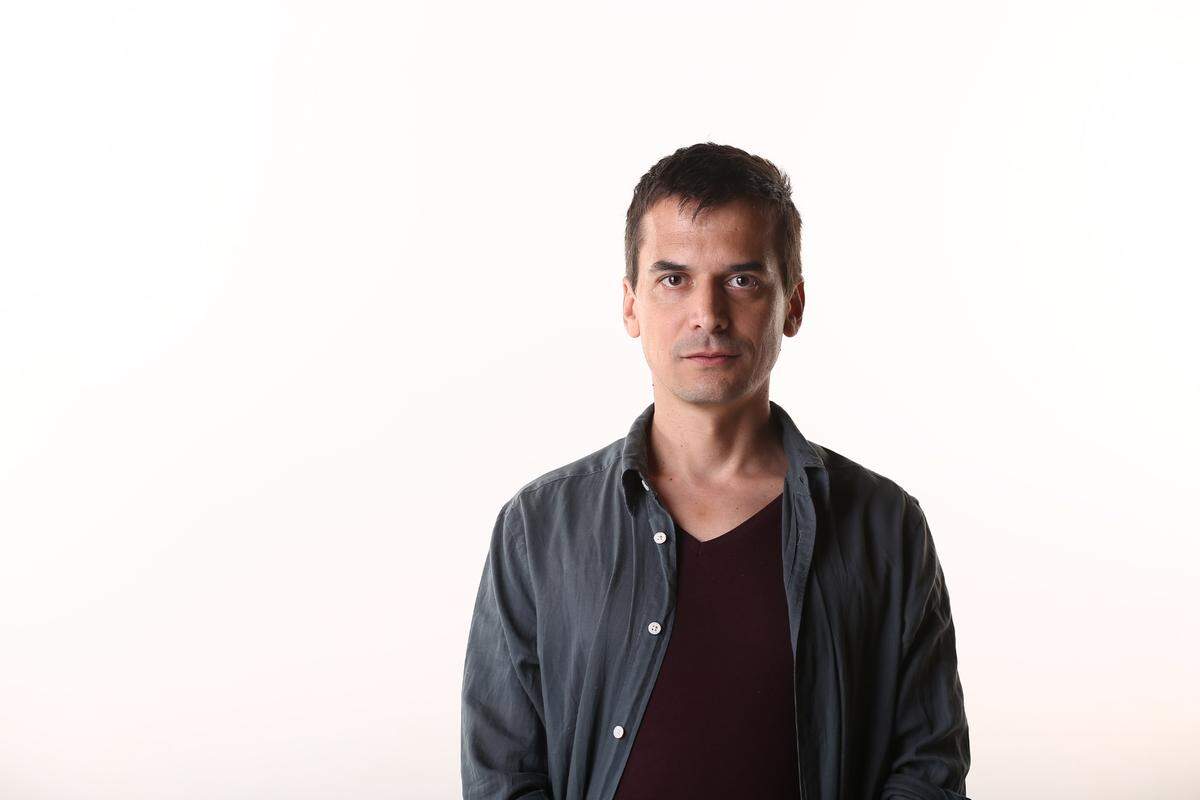
“I think three points made them commit,” said Tóth, who came to America last month for the Palm Springs International Film Festival. “We had Menemsha, which had distributed films with box office success, including ‘1945’ from Hungary two years ago. Telluride was a miracle, a place of worldwide cinema. And the first reviews from Variety and Hollywood Reporter and the Wall Street Journal were very positive.”
Those reviews made his 10-year odyssey to finish the film worthwhile. He’d spent the last decade competing for state backing, like many European filmmakers, and shooting TV episodes and shorts. The latter include the Oscar-shortlisted “Susotázs” in 2018, which won a top prize at the Footcandles Film Festival in Hickory. (“I spent four wonderful days there.”)
“The industry is very different than in America,” Tóth said. “There are only one or two windows to apply, it’s usually the same people sitting on the commission, and you have to have the right relationships. If you or your producers are not in the inner circle, you can wait a long time.
“(Decision-makers) always give some advantage to historical subjects, partly for educational reasons: Twentieth-century history is not being spoken about, and the government wants to see films set during the first time of the Soviet era, the postwar dictatorship. I hope they like this politically and personally.”
A budget film
His budget paid for a shoot of just 19 days, which meant creative choices: The story stays mostly inside rooms, and Aldo’s apartment looks sterile partly because designers saved money by not decorating it. Yet “I never worked as a director at a more comfortable pace. You cannot spend too much time (advising) the actors. You cannot afford to go out into the street to shoot cars and pedestrians, which allows you to focus on faces and interiors.”
Tóth said anti-Semitism has led to no large-scale Hungarian tragedies recently, as it has in England and the United States, though, “I think it’s always there in people’s minds and can be easily provoked.” Perhaps that’s why he downplayed religion: We see a camp tattoo briefly on Aldo’s arm, and he prays quietly in Hebrew at one point, but the word “Jew” goes unspoken.
“I had this intention not only to make it universal for all survivors — Roma, homosexuals, opposition politicians — but to make it universal for audiences. I’m not Jewish myself, and we have so many films about the Holocaust. It’s a fragile balance, because the novel (by Zsuzsa Várkonyi) speaks out about the family going to the camps. As soon as you put that onscreen, you get into things you have already seen (elsewhere) and things that are unshowable.
“In Budapest, the strongest memory of the Holocaust is a memorial on the banks of the Danube (River), at the place where they shot people from the ghetto. You just have these beautiful metal shoes on the ground, and that’s more powerful than any film image could be.”
Want to go?
The 2020 Charlotte Jewish Film Festival runs Feb. 1-23. Most films cost $11. If they sell out, a waitlist opens. Get details at 704-554-2059 and charlottejewishfilm.com.
Other highlights include “Fiddler: Miracle of Miracles,” a documentary about the creation and legacy of the musical set in tsarist Russia; “Incitement” (Israel’s submission for the 2020 Oscars), which views the 1995 killing of prime minister Yitzhak Rabin through his assassin’s eyes; “The Tobacconist,” about a teenager in Austria who meets Sigmund Freud just as the Nazis move into Vienna; and “Love in Suspenders,” a romantic comedy about senior citizens who have lost their partners and wonder whether love will be possible for them again.
More arts coverage
You can find all our arts season preview stories and calendars in one place: charlotteobserver.com/topics/charlotte-arts-guide.
Want to get more arts stories like this delivered to your inbox? Sign up for the free “Inside Charlotte Arts” newsletter at charlotteobserver.com/newsletters
You can also join our Facebook group, “Inside Charlotte Arts,” at https://www.facebook.com/groups/insidecharlottearts/
This story was originally published January 27, 2020 at 5:30 AM.