
‘The Saxman’ who plays on uptown street corners channels his setbacks into his music
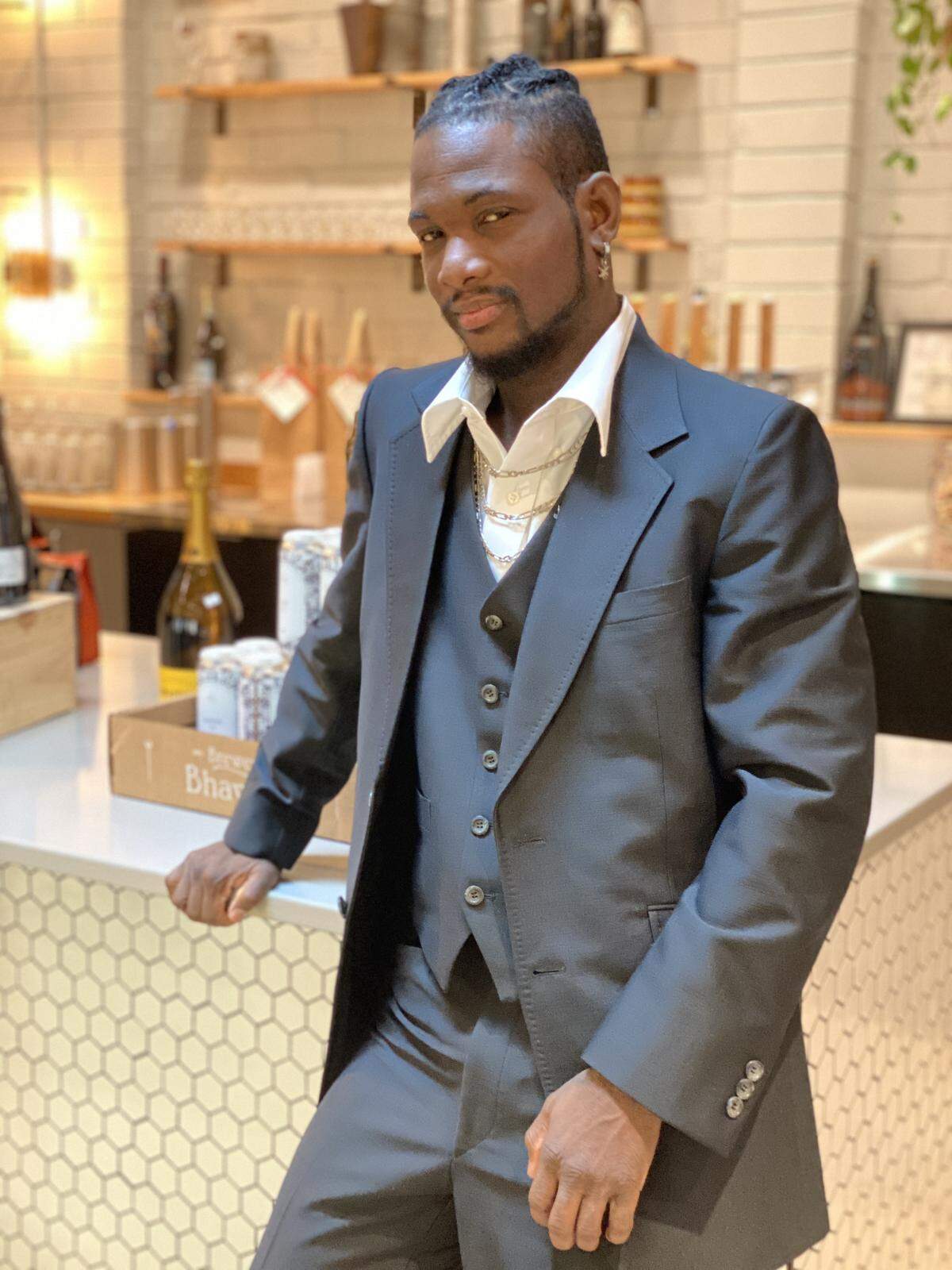
Will “Saxman” Smith wears a three-piece black suit with a bright white button-down shirt, red leather Stacy Adams shoes and two earrings, each in the shape of a phoenix. His hair is in African braids, pulled tight in a small ponytail. His saxophones are close by in his car.
He has been playing saxophone since he was a teen.
He has played at Blumenthal Performing Arts Center, Crown Station, The Evening Muse, The Fillmore Charlotte, Founders Hall, the Neighborhood Theatre, The Ritz-Carlton, Charlotte and on most street corners in uptown and NoDa. He’s performed with Funky Geezer, Case Federal & the Agents, and many more..
Despite facing family and personal trauma, Smith exudes positivity.
When his mom passed away in 2014 he was 22 and took responsibility for his four younger brothers. In the past year he struggled with housing and then was involved in car accident out of state that almost ended his life. For the past four months, Smith, now 27, has been in three hospitals, including the rehab hospital where he remains.
But an inner strength keeps him on course for playing his music and entertaining people.
“(Mom) didn’t like to hear the words, ‘I can’t,’ ” said Smith. “She’d say, ‘Don’t let anybody’s words stop you from doing something.’ ” He hopes to get back to his music soon.
Mom set the course
Smith grew up in NoDa with his mom, Indigo Smith, and his four brothers. Bookshelves lined the walls – filled with fiction, nonfiction, poetry, books on subjects such as math, engineering and musical theory. Smith always had a book in his hands, he says. His mom taught him to follow his dreams.
She added “Saxman” to his name when he started playing the saxophone in his teens. Later, she even managed the business portion of his music gigs.
Indigo encouraged her boys to express themselves. She made sure Smith was around people who played music and moved him to Northwest School of the Arts for middle and high school. She and Smith’s band teacher suggested he try the saxophone.
As early as 14, Smith was playing across the city at gigs his mom set up.
“I got to know how hard it is, and how easy it is to be a musician,” he said. “Sometimes you won’t have all the things you want when you start off. You’ll go through the ups and downs, but one thing you’ll always have is your music if you work hard.”
He’s fearless
Evening Muse co-owner, Joe Kuhlmann, remembers watching Smith and his brothers walk behind Indigo as they headed home from the Johnston YMCA’s after-school program to their home nearby. He likened the scene to ducklings following their mother.
Kuhlmann talked with Smith about music and the hustle — practicing, rehearsing and gigging. As a teenager, Smith’s “gigs” were mostly playing on street corners all over Charlotte. He became comfortable performing in front of a crowd and often hopped on stage at The Evening Muse to join the band for a song or two.
“I think his real gift is fearlessness,” Kuhlmann said. “He’s found a way to manifest that through a saxophone. For someone who’s been through as much as he has been through, he’s still got an amazing positive attitude. Those traumas and struggles have not totally beaten him down.”
Smith has been writing his own music every day since 2014. He bounces from different genres — rock, hip-hop, rhythm and blues — songs people recognize, to jazz, symphonies and sonatas. He’s proficient on alto, soprano and tenor saxophones, an unusual skill for a musician to play all three, he says.
“It just comes to you,” Smith said. “When you hear it, you hear it. The only way to put it out, is to put it out. If I don’t do it, I’d probably lose my identity.”
Stepping up
Smith was 22 when his mother died. She had suffered a sudden stroke two years earlier that left her incapacitated. With the help of his uncle, Gregory Smith, Will Smith took care of his brothers who ranged in age from 7 to 20 at the time.
Larrin Granderson owns SouleJukebox, a recording studio in Charlotte. He’s known Smith since he was a teenager, skateboarding around NoDa.
He always liked Smith and admired how he took care of his brothers. “That type of quality is beautiful in a person, when they’re either obligated or feel obligated try to step-up to a role they probably don’t know how to do,” Granderson said. “He tried to do everything he could for them.”
A monster on sax
Smith’s music leaves an impression on an audience. After he steps off the stage, you might not remember his name but you’ll remember his sound, Granderson said.
“He’s a monster saxophone player,” Granderson said. “He knows what he’s doing. I think he needs a little more limelight. I know he tries his best to stay above water. If he had a big enough platform, I think he could skyrocket because he can play with anyone, doing any genre.”
Until last year, Smith survived on his music gigs. Then, he took on his first 9-to-5 jobs – mail sorting and security – to supplement his music income. He’s never without business cards. He manages his own gigs now, and before the crash was booking private and public events most weekends.
In the past year, Smith struggled with housing and transportation. He lived with family and friends until he could find something permanent and rented a car for a year until he purchased one in January, the one wrecked in the accident. Things that worried him before the accident have ceased to exist – “a greater me emerged.”
Once released from his doctor’s care, Smith looks forward to performing.
“I’ve never been a person to give up,” he said. “I believe in looking forward. I plan on helping be an example to children and youth so that while they’re growing up they can always see themselves as a valuable person.”
More arts coverage
Want to get more arts stories like this delivered to your inbox? Sign up for the free “Inside Charlotte Arts” newsletter at charlotteobserver.com/newsletters
You can also join our Facebook group, “Inside Charlotte Arts,” at https://www.facebook.com/groups/insidecharlottearts/