
Coronavirus won’t stop this Charlotte music festival. It’s going online.
No venues left open? No problem. Can’t collect a crowd? America becomes your audience.
That’s Elizabeth Kowalski’s philosophy. And the founder of Charlotte New Music Festival, who says “I hate to cancel anything,” has arranged for her groundbreaking festival to take place off the ground June 15-27.
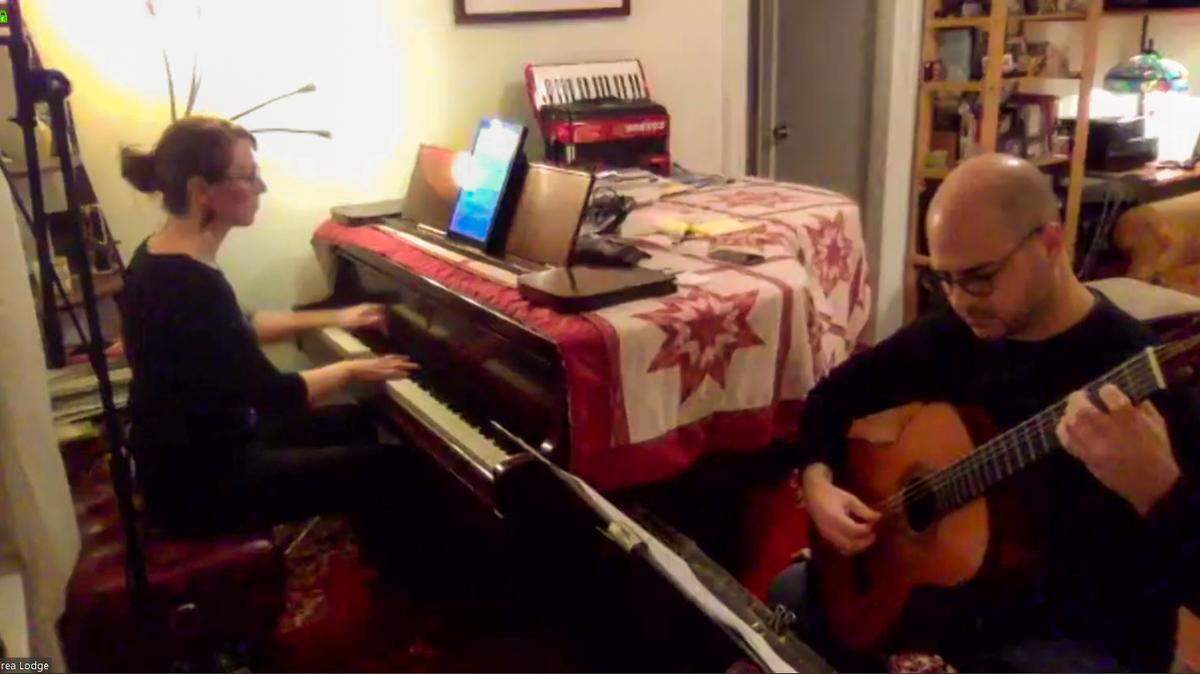
Ever since launching the festival in 2012, Kowalski has tried to make it more innovative and far-reaching. She began a monthly open mic event this winter, using the slogan “classical to contemporary and beyond,” to give her organization a year-round presence.
She never guessed it would become the template for the entire festival. Kowalski pulled off one in-person event, a February date at Crown Station, before the coronavirus clamped down on traditional performances. She immediately changed to online open mic nights, a journey easiest to follow on CNMF’s Facebook page.
Online open mic
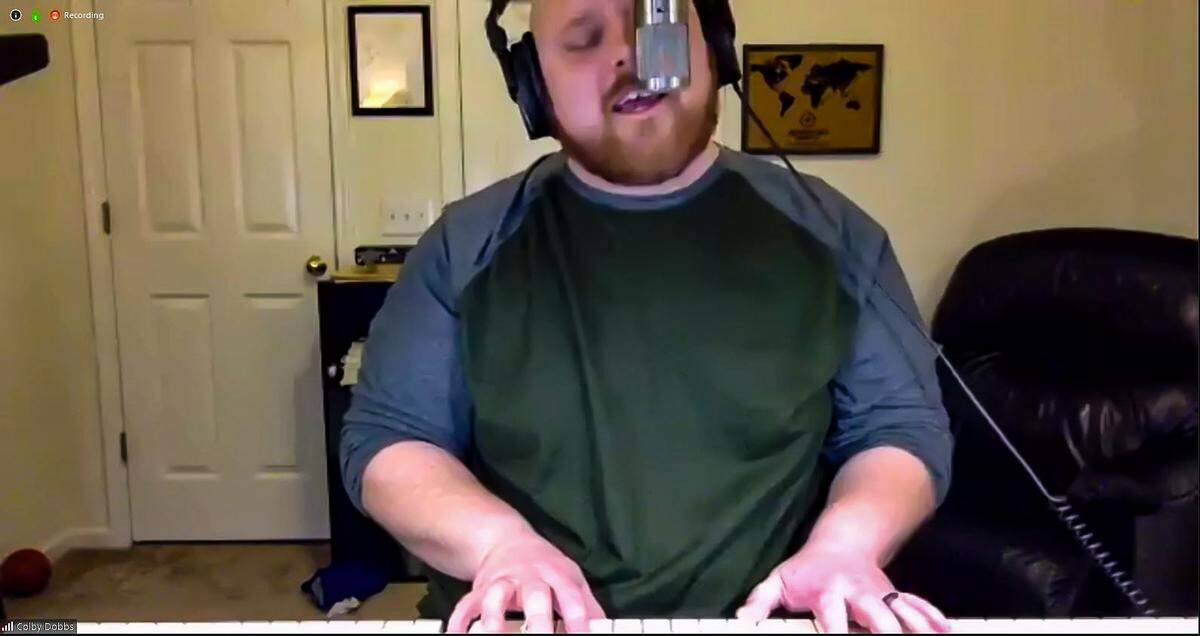
She had to solve a new set of logistical problems to mount concerts in cyberspace. She’s getting plenty of practice: Kowalski has resolved to do a live online open-mic gig each Tuesday, building up to the festival. She started March 24 by inviting musicians she knew; she has now started to receive requests from strangers to play.
“I welcome weird stuff,” she says. “I’m discovering musicians, especially computer musicians, who have never had a place to play in public – people off in their own orbit. It’s like going to an art museum: Sometimes you say ‘It’s clear what this picture’s about,’ and some art is more abstract, maybe scary. You have to spend time with it.” But she adds, “I would also like to have (traditional) classical music. I would welcome someone coming on to play Bach.”
At the moment, you’re more likely to hear saxophonist Erin Rogers, an improvisor who does avant-garde things with textures and noise and harmonics. Or New York-based trombonist Will Long, who played Jason Eckhardt’s “Compression..” That piece, inspired by police brutality, goes on for several minutes but hovers around one pitch.
“My dad was watching and said, ‘He could have done the same thing for 30 seconds. Why did it go on so long?” I told him, ‘You can’t make someone feel the depth of emotion conveyed by that story - getting choked to death by a police officer - in 30 seconds. The character of the tones, the breathiness, the fullness, the sorrowfulness – it totally worked. And it was all on Zoom!”
Helping musicians
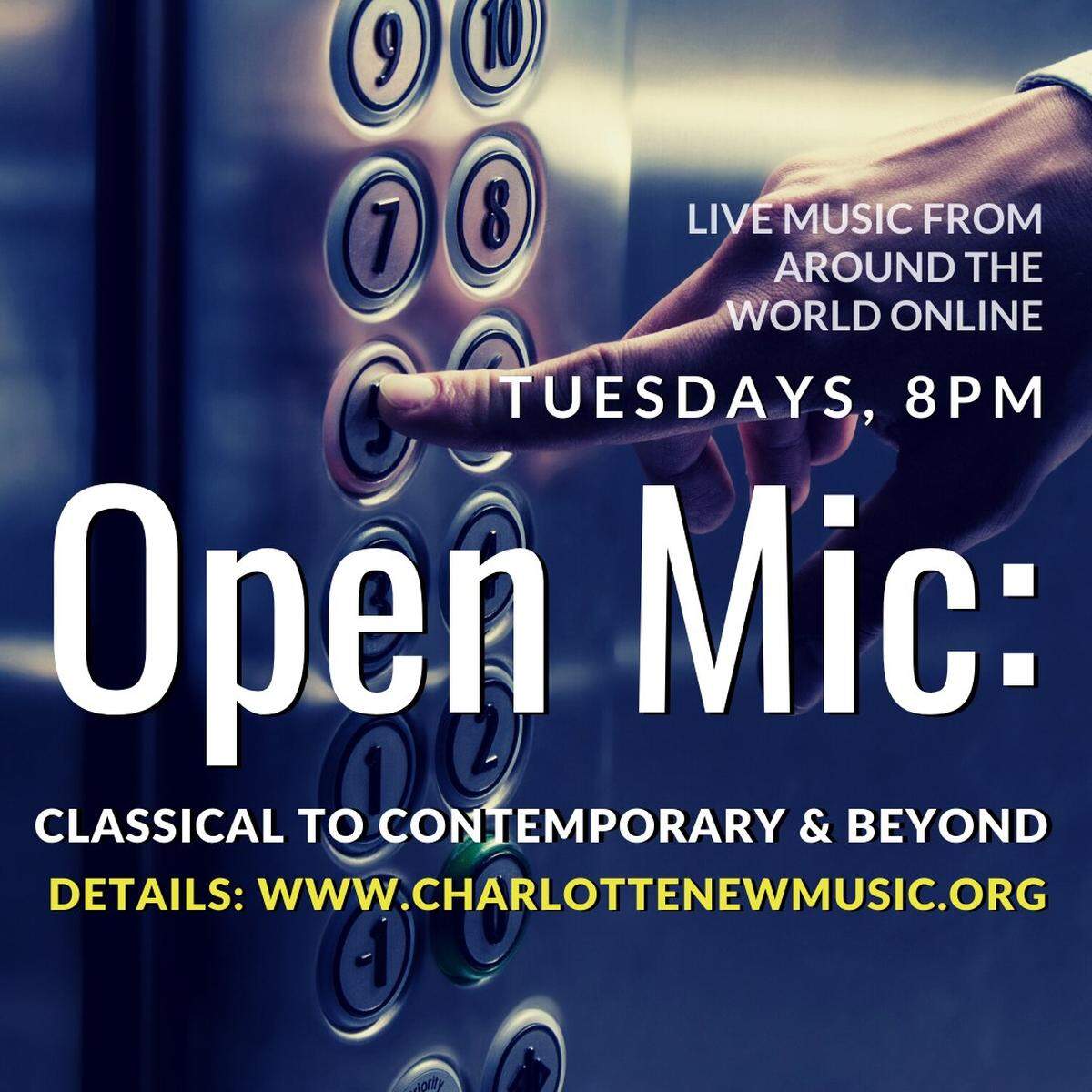
That platform, with all its benefits and problems, has been useful for open-mic gatherings. Kowalski has figured out audio settings necessary to reproduce the best sound possible on Zoom, has a sound check at 7 p.m. and starts letting customers into the Zoom meeting around 8 p.m. (She raises up to a couple hundred dollars by requesting donations.) Perhaps four or five artists perform sets of 10 minutes or so each time. Most are soloists, though quarantined couples perform as duos.
Performers come literally from anywhere. She proudly says the main festival has drawn submissions from six continents – she hasn’t pulled anyone from Antarctica – and she realized she has the same flexibility with virtual open mic nights.
“Right now, musicians have been slow to sign up, partly due to it being so new, so I asked myself and other composers, ‘Who would be your dream list of performers?’ I consulted that list, and I have booked April and the first part of May. I always want Charlotte to be represented, as it is in the (June) festival: North Carolina’s not hugely known as a music hotspot, and I want to put us on the map another way.”
Establishing a foothold
The Harrisburg native has doggedly continued to do that, establishing a foothold in a city that seldom welcomes unusual culture. Kowalski has held concerts and workshops from NoDa to Plaza Midwood to Goodyear Arts to UNC Charlotte. She has organized hands-on sessions for composers, youth ensembles wanting to learn pieces written during their lifetimes, and computer musicians.
The Beo String Quartet, as adept at modern music as it is at Mendelssohn, has become her regular quartet in residence. Invitees range from the Boston-based clarinet-marimba duo Transient Canvas (which has also played for an open mic night) to Hypercube, which blends guitars, saxophones, piano or accordion and percussion. The very names invite curiosity: Duo Zonda (two flutists, neither named Zonda), Loadbang, SpacePants.
Over the last 18 months, Kowalski has immersed herself in non-classical genres: mainstream rock, alternative rock, jazz, “every part of the music scene I know, from DJs to people who play in bars. If they are making music and putting quality into their craft, I support them. I have been inviting songwriters to write for the ensembles we bring in and helping them to get pieces down on paper.
“Half of them have said, ‘I don’t write THAT kind of music.’ I tell them, ‘Try it out. See what kinds of things you come up with.’ A jazz musician is working on a string quartet. A songwriter is writing for a local duo. A guitarist has been inspired to write for Transient Canvas – a drummer has, too – and I feel more people will get involved.
“I hear the word ‘highbrow’ two times out of five when I talk about (the organization). We don’t want to be highbrow, or not only highbrow. That’s just part of it.” (Kowalski herself, who has music degrees from UNC Charlotte and UNC Greensboro, has begun to compose again.)
What the future holds
What will happen this June remains to be determined. Her main fund-raising event, which had been set for late March, got blown away in the COVID-19 blast.
“I put together this beautiful mini-festival, from contemporary classical to jazz-funk. We’d have had a bonfire and a cookout, and it was selling well, but I ended up having to refund hundreds of dollars. At least that was a good test run that showed community interest.
“I’m planning another, maybe for the fall, and have sponsors in place. But right now, I’ve focused my energy on teaching (music students) online and getting the open mic nights and the festival online.”
The goal, she says, is to make the virtual fest as close as possible to the regular one. Composers will work with musicians. Groups such as SpacePants, a Raleigh soprano, and Los Angeles violist, will record audio and video, and Kowalski’s team will help them get it ready to present.
“We’re talking about all the possibilities,” she says. “Will they play live in an empty venue, keeping a distance from each other? Will we have watch parties? We may discover online components we can use next year, when we have a live festival again. There will be technical difficulties, but the musicians and composers are grateful we didn’t cancel. The fact that we made an early call to put everything online gives us time to make the best plans possible.”
This story is part of an Observer underwriting project with the Thrive Campaign for the Arts, supporting arts journalism in Charlotte.
More arts coverage
You can find all our arts season preview stories and calendars in one place: charlotteobserver.com/topics/charlotte-arts-guide.
Want to get more arts stories like this delivered to your inbox? Sign up for the free “Inside Charlotte Arts” newsletter at charlotteobserver.com/newsletters
You can also join our Facebook group, “Inside Charlotte Arts,” at https://www.facebook.com/groups/insidecharlottearts/
This story was originally published April 15, 2020 at 1:14 PM.