
Teaching culture through costumes. Meet the women who make the Greek Fest wardrobe
Ten years ago, Elaine Mahairas stopped by her church to return the costumes her three children borrowed for a dance performance at Holy Trinity Greek Orthodox Cathedral’s annual Yiasou Greek Festival. The mundane errand led to an opportunity.
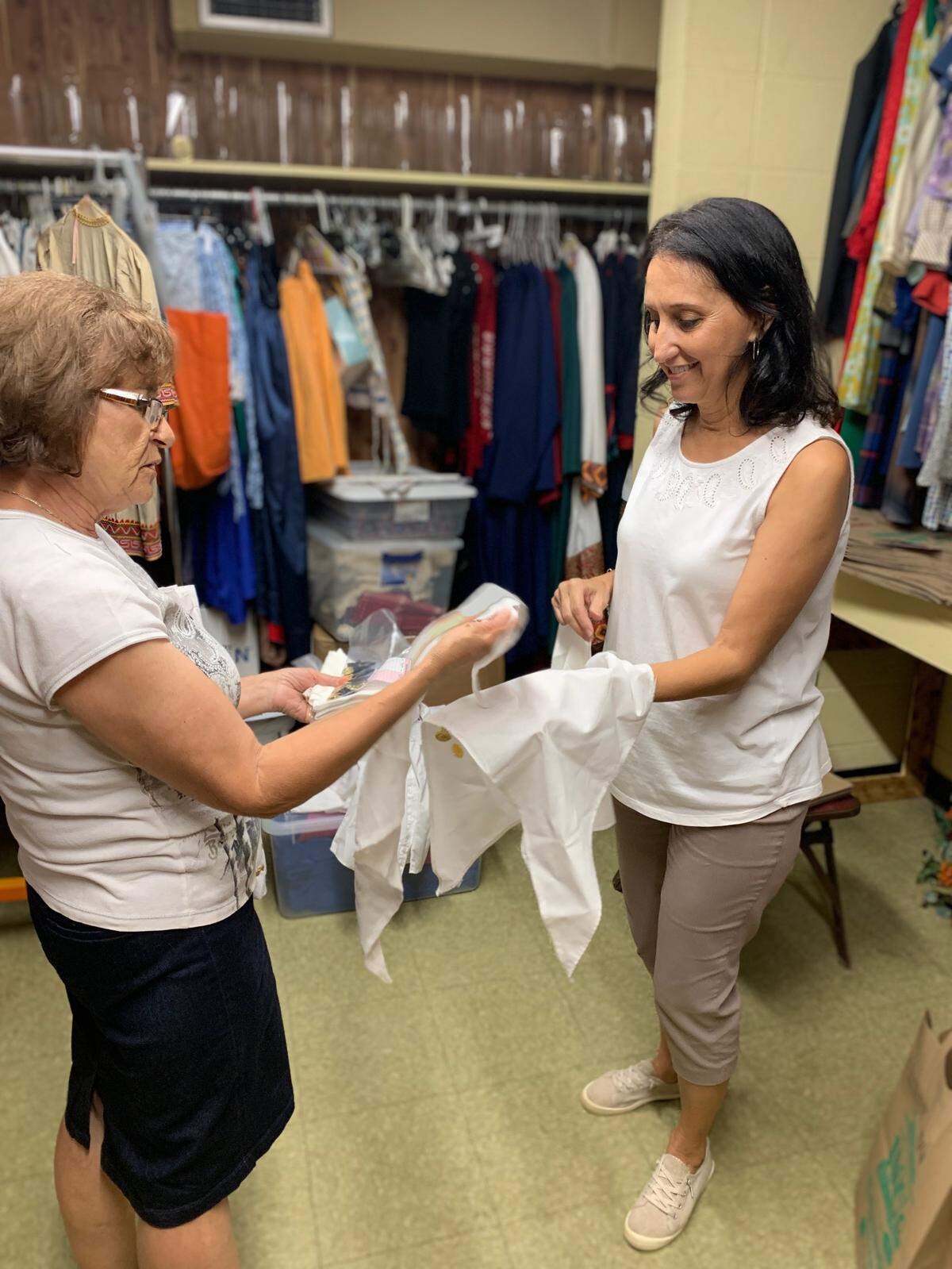
The woman who managed the church’s costume room asked Mahairas if she’d be willing to help. Mahairas agreed and started with simple tasks like distributing and collecting costumes.
Two years later, that woman retired and Mahairas took over as the costume chair for the dance program. Holy Trinity has the largest church-affiliated Greek folk dance program in the United States.
Mahairas works with a committee of four women to maintain the costume collection, repair older costumes and make new ones. She learned to sew just five years ago.
“I did not know how to sew at all,” said Mahairas, a Charlotte native. “I must have had it in me and didn’t know it though. I bought a sewing machine and I Googled it, and I taught myself how to sew.”
Authentic Greek costumes
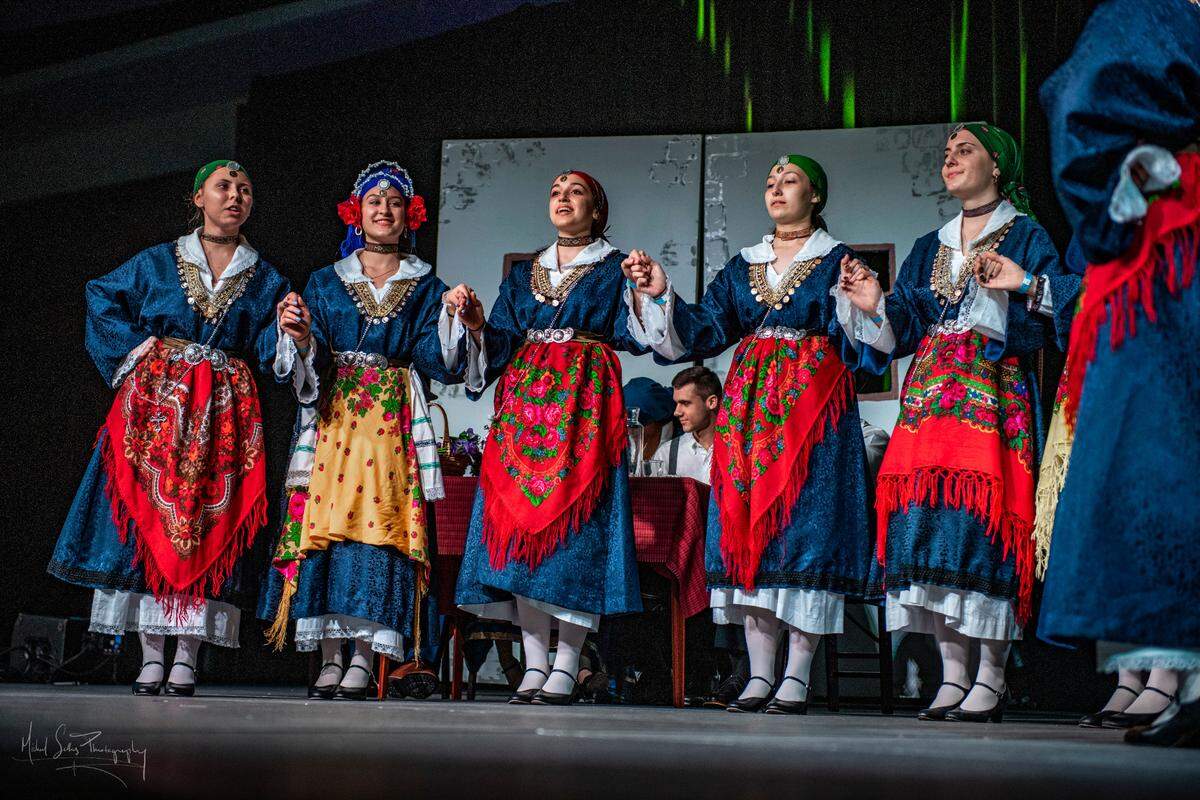
The costumes are an essential part of the Holy Trinity Greek Folk Dance Program.
They are worn by the 350 children who dance in the festival each year. Holy Trinity has been hosting the Yiasou Greek Festival each fall for 41 years. This year’s festival is canceled due to the COVID-19 pandemic.
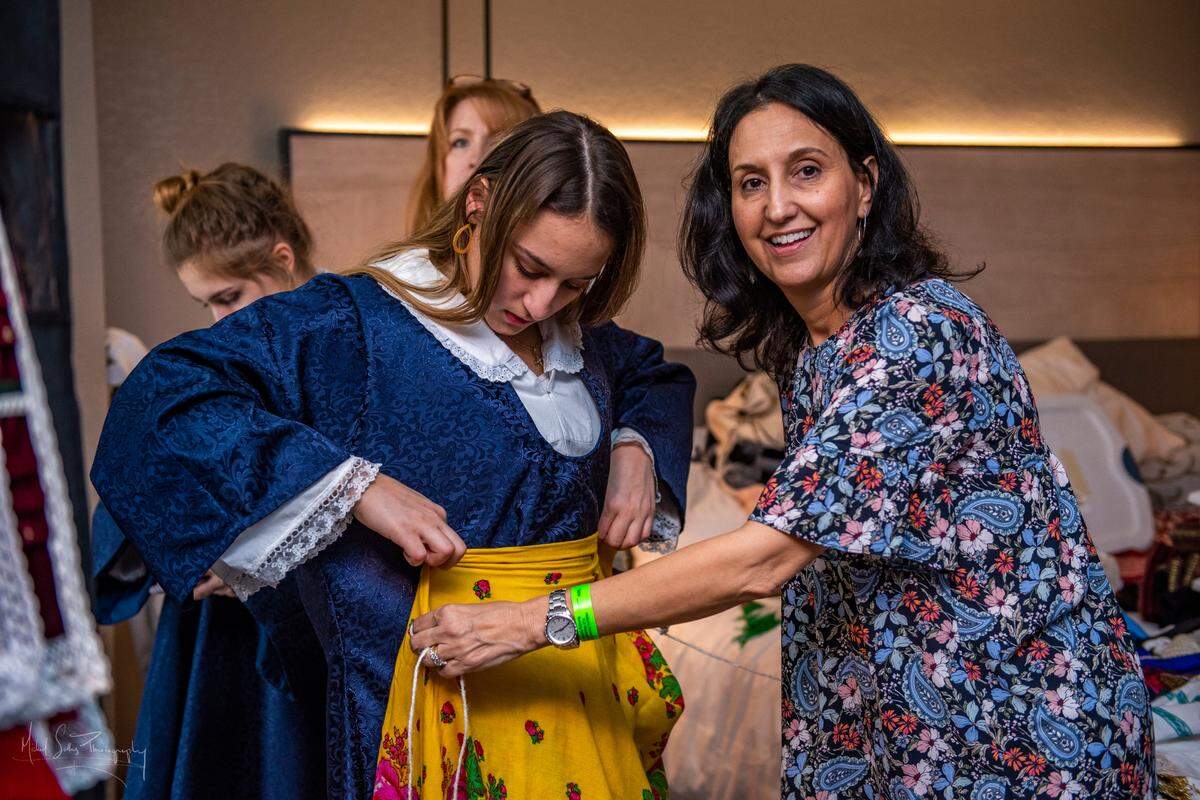
Another 100 students dance in the competitive program. Students bring two costumes each to the competition. The competitive dance instructors choose the music and dance and pull images of costumes for Mahairas to review.
They work together to choose the best costumes, either pulling from the current inventory of blouses, dresses, pants, shirts, skirts and vests or sewing new ones. Sometimes a dancer can reuse a costume and add a scarf or other accessory to make it true to the region where the dance originates.
They’re careful to follow the color schemes of the village’s costumes.
“It (the costume) all has to go together,” Mahairas said. “We’re competing. We’re going there to win. Part of it is, ‘Is that costume authentic to that village? Are the dances authentic?’ It all has to flow together.”
Costumes tell a story
Olympia Bisbikis moved from Greece to Knoxville in 1973, and to Charlotte six years later. Bisbikis has been sewing costumes for 35 years, the last 16 for Holy Trinity’s costume committee.
Like Mahairas, she’s self-taught. Her two daughters danced when they were kids, and her five grandchildren participated in the dance program at Holy Trinity. She hand stitches much of the costumes’ appliqué pieces.
“Every costume is important to me,” Bisbikis said. “They have their own story. You can learn about the regions of Greece through the costumes. Each costume represents their region. It’s an important way to learn our culture.”
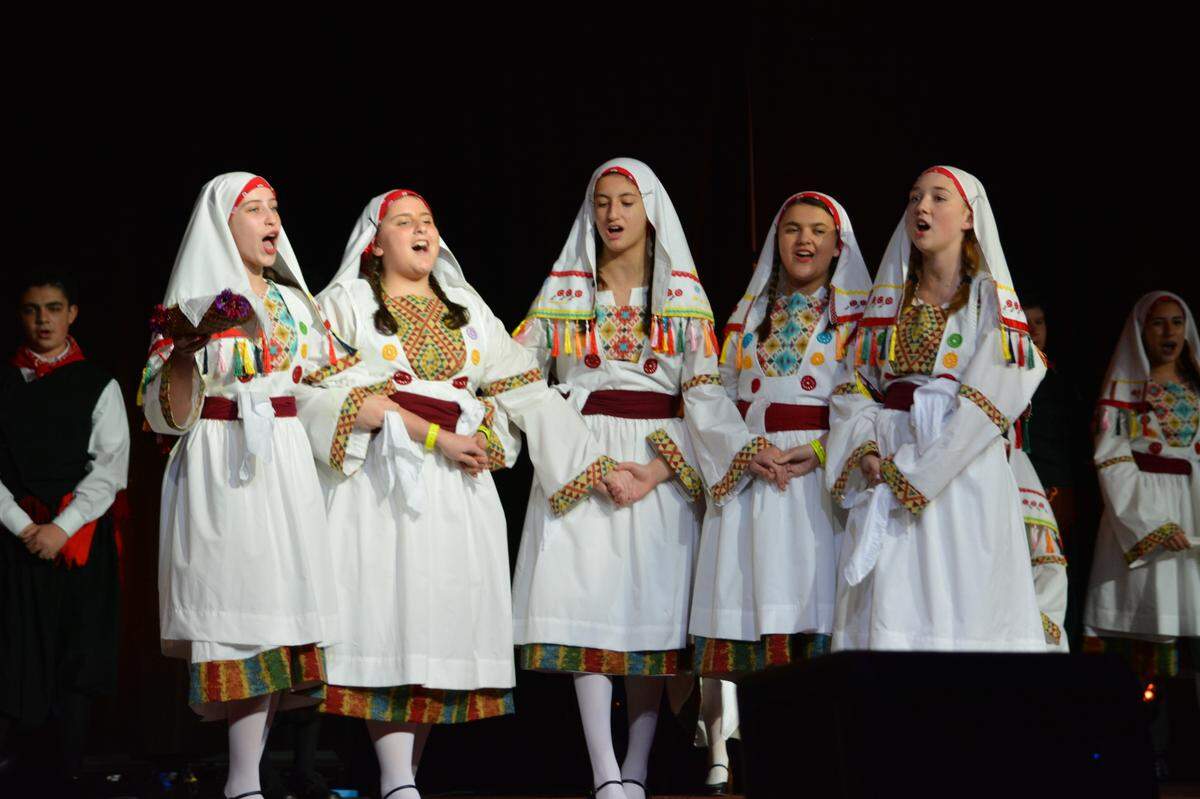
Mahairas remembers pulling out a Thracian dress from the costume room and Bisbikis saying, “I made that.”
The Thracian garb is typically worn by young girls. It’s a white undergarment with colorful trim sewed onto the bottom. A black dress is worn over top. Bisbikis made it for her granddaughter 16 years ago.
‘My second love’
Two rooms with high ceilings are crammed with more than 2,800 costumes, representing hundreds of villages in Greece. They hang on racks running along the walls. Plastic bins and cabinets hold accessories such as hats, jewelry, sashes and scarves.
It takes four to five hours to cut and sew a custom costume. Adding buttons, embroidery or other decorations takes additional time.
There are no patterns to follow. Bisbikis and Mahairas recreate costumes from images in books and online and make a pattern on arts and crafts paper. Once they measure the dancers, other volunteers help sew the costumes.
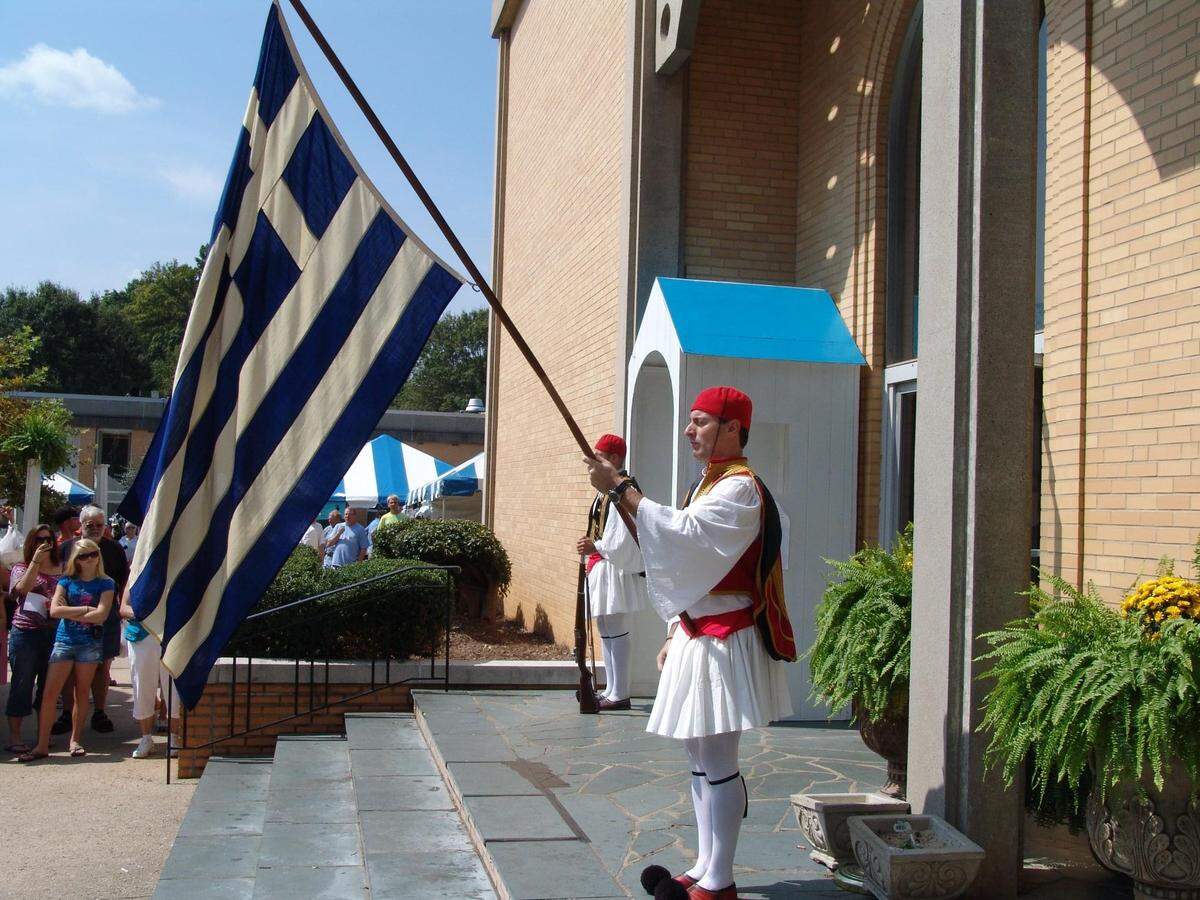
“We do try to copy the pictures as much as possible,” Mahairas said. “If it has something special like fur we would make sure to put it on the costume.”
They buy fabric that resembles what might have been used in the village but most often they choose muslin and linen for warm weather and wool for cool weather. Both women embroider, a time-consuming yet highly regarded embellishment come judging time.
“It’s become my second love,” Mahairas said. “I have missed it so much since COVID, I couldn’t wait to get into that costume room. It’s become such a big part of my life and my family’s life.”
More arts coverage
Want to get more arts stories like this delivered to your inbox? Sign up for the free “Inside Charlotte Arts” newsletter at charlotteobserver.com/newsletters
You can also join our Facebook group, “Inside Charlotte Arts,” at https://www.facebook.com/groups/insidecharlottearts/
This story was originally published August 26, 2020 at 11:19 AM.