
‘Bluz’ Rogers is ready and eager to broaden the Blumenthal’s offerings and audience
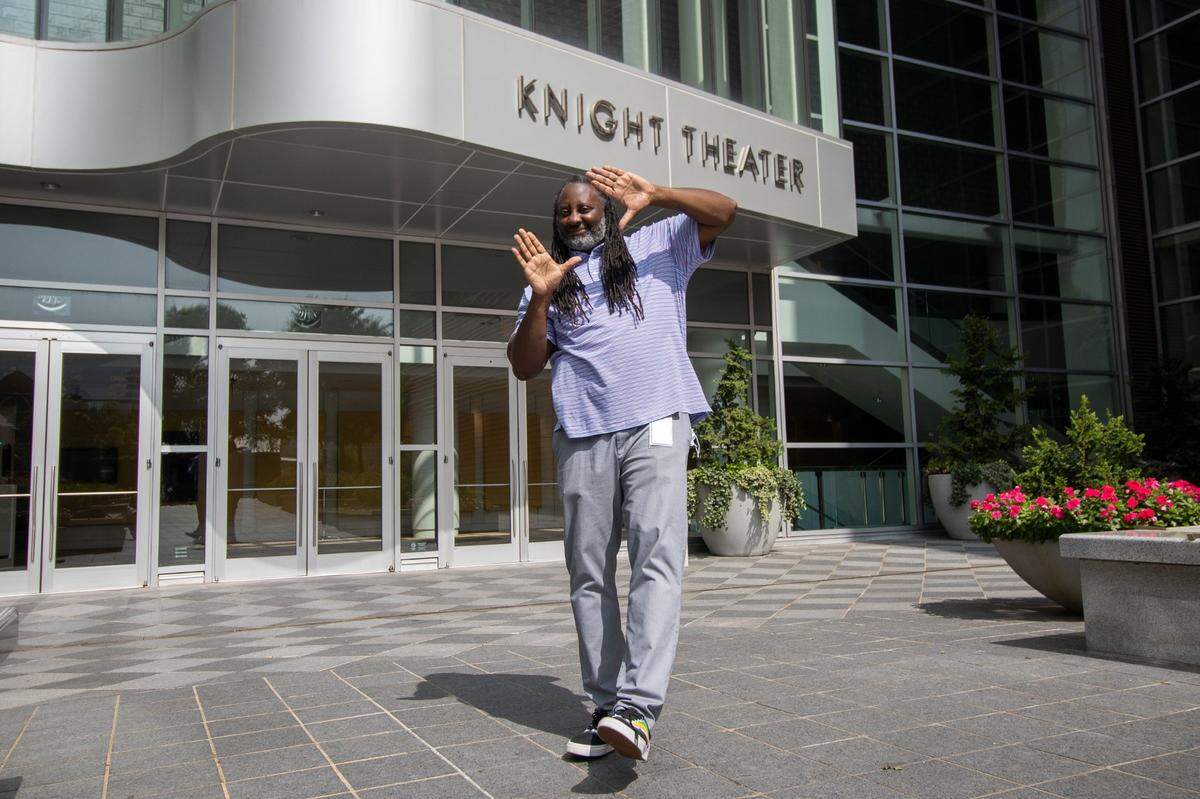
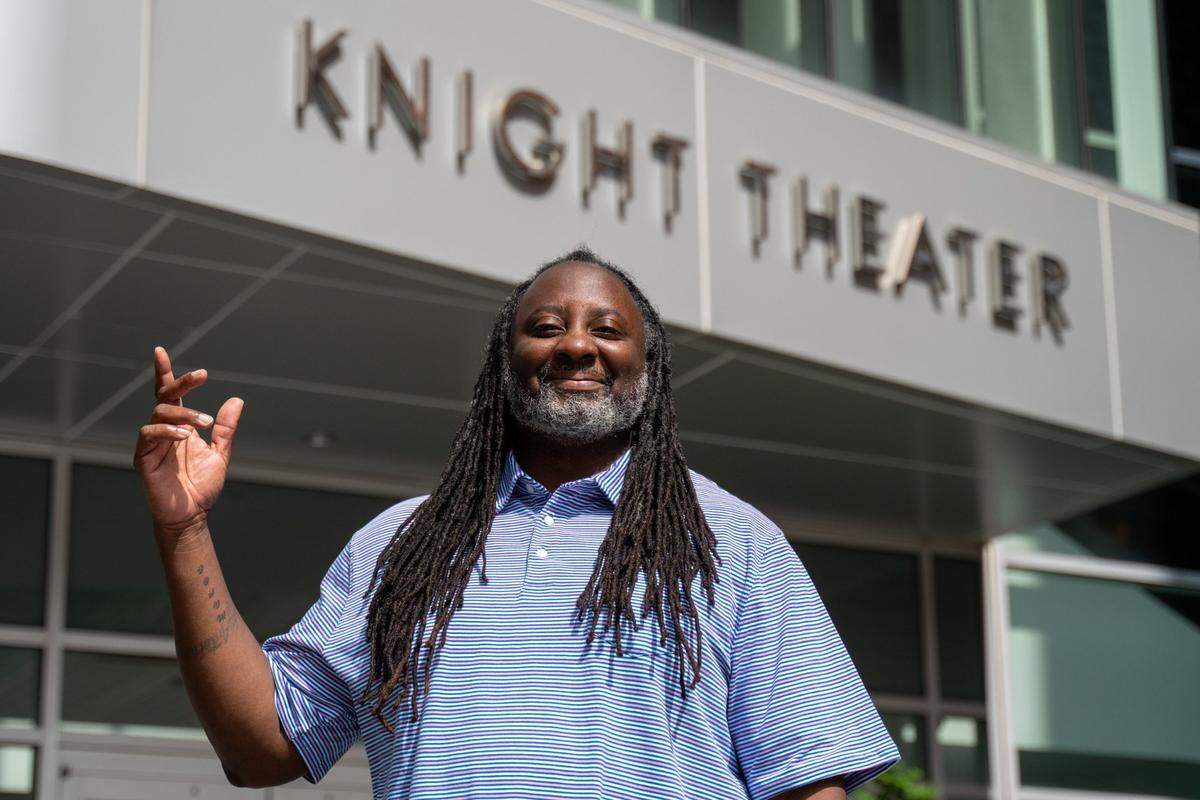
When Blumenthal Performing Arts created a new position — director of creative engagement — and named Boris “Bluz” Rogers to the post you could almost hear Charlotte’s artistic community respond with a resounding “Yes.”
It will be his job to help create, develop and launch new programs to enlarge and expand the Blumenthal’s impact on the community.
An award-winning poet, Bluz is considered the grand marshal of the city’s poetry scene. He has worked his way through the ranks of spoken word entertainment for nearly 20 years, winning an Emmy Award and leading the Slam Charlotte team to a historic three victories in the National Poetry Slam.
His work as an ambassador for Charlotte arts, nationally and abroad, will continue at the Blumenthal, but his ability to elevate and assist local artists will grow.
“I’m excited to expand Blumenthal’s presence beyond uptown, developing new ideas and launching new ideas,” Bluz said. “It’s what I’ve been doing, I was just given a more focused role.”
Forging a relationship
Blumenthal President Tom Gabbard said the partnership was more a matter of when than if.
About 16 years ago, the Blumenthal brought Charlotte a Broadway show based on HBO’s “Def Poetry Jam.” Thinking poetry slams were a novel idea for Charlotte, the Blumenthal produced six slams throughout the city to prepare audiences for the show.
“That’s when I first met Bluz and saw Charlotte already had a great underground poetry scene,” Gabbard said. The Blumenthal began supporting the Slam Charlotte team, which Bluz coached, and began working with him on other fronts as well.
Bluz played leadership roles when the Blumenthal brought Breakin’ Convention, a renowned international hip hop dance and theater festival, to Charlotte for three years running. He also coordinated hip-hop events for Charlotte! Shout! in 2018, packing the multi-week celebration of the arts with performances representative and relevant to hip hop culture.
At a lunch a year ago, the two men began talking about ways to deepen and formalize the association. They talked about what the Blumenthal needed and how a move like this could support Bluz development. Eventually, the Blumenthal created the position for Bluz.
“The time was right to bring him onboard in a more substantial way,” Gabbard said. “Bluz is someone I really admire and have great confidence in. This partnership makes sense because we’ve been building this relationship for a lot of years.”
Creating a wider path
The Blumenthal is also recognizing the need to serve a wider swath of Charlotte’s diverse community. Expanding inclusion and engagement with the public and producing different programs to pique the interests of more Charlotteans has become a top priority.
“Bluz had already proven he could do that,” Gabbard said. “He will be a key leader on our team in these efforts.”
National award-winning playwright Stacey Rose hopes the Blumenthal does more than install Bluz as a figurehead. Before she founded Queen City New Play Initiative, which aims to raise resources and national awareness of local playwrights, Rose was active on the Charlotte theater scene.
Many art institutions are under pressure due to heightened social activism and particularly the demands of We See You, White American Theater, a movement of Black and Indigenous people of color to make access to arts resources equitable, Rose said.
“I’m incredibly happy for Bluz,” she said. “As a brother, fellow artist and someone I’ve known and loved for years, he deserves this. But my biggest concern is that he receives the support he needs to succeed in this position. I’m holding Blumenthal accountable for giving him all the things he needs to serve the community.”
Rose said people of color are often appointed by institutions to be the face of initiatives, then not supported by those same groups.
“The Blumenthal should understand he doesn’t bear sole responsibility for the treatment and success of (Black and other minority) artists in the city,” Rose said. “The weight of anti-racism doesn’t fall on his shoulders alone, either. It’s a partnership that requires clearly articulated goals. And we must ask ourselves what other people of color are in high positions in the institution. These are the kind of things needed for radical change.”
Marginalized artists
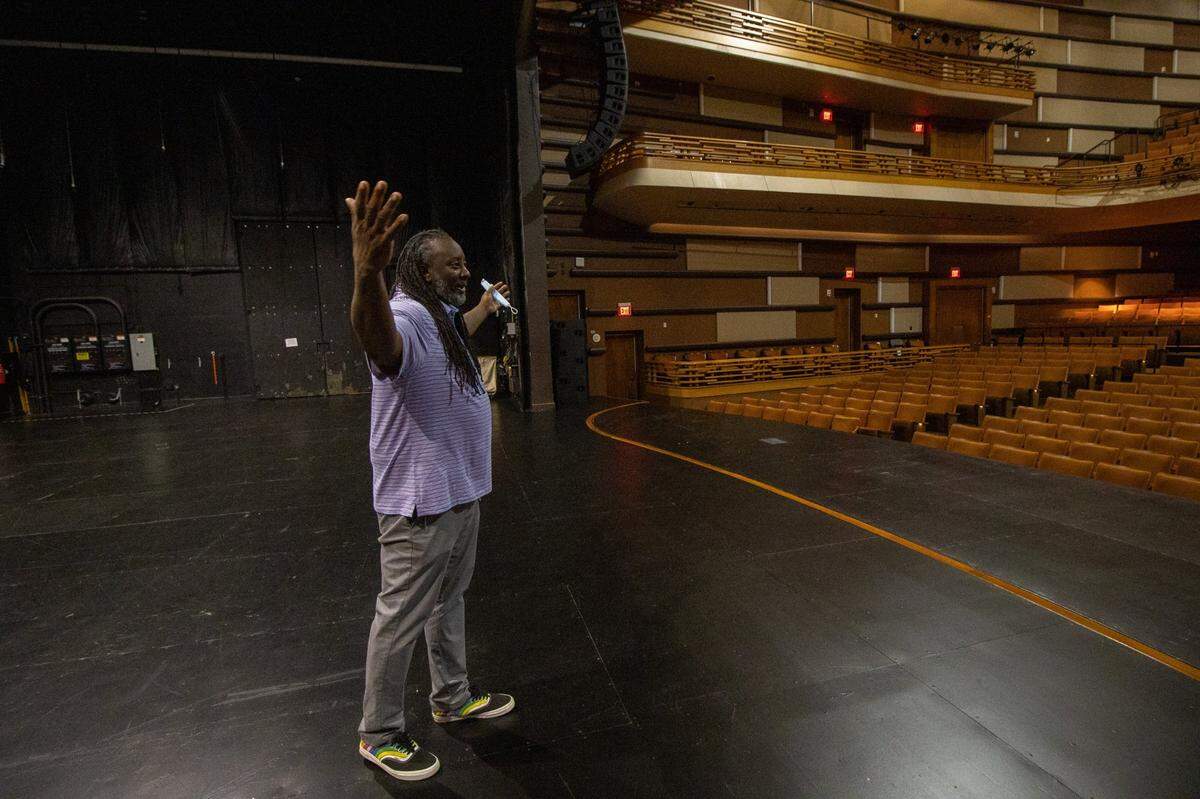
Bluz said he plans to work to include more marginalized voices and those of people of color, specifically connecting with artists who have already been active in the public sphere but could use more resources to reach a broader audience.
Some of the support he’ll offer will be funding, Bluz said. He’ll also be working with other organizations such as the Arts and Science Council, Knight Foundation, and Center City Partners to subsidize stages and studios.
His most important job, he said, will be to listen.
“Anyone can have great ideas for, say, Black programming, but in this season of change and of seeking out and amplifying voices,” Bluz said. “A creative machine like the Blumenthal has to take the time to tap into communities and serve the grassroots. It’s seeing who’s doing creative things and listening to what they need and what kind of access they need in order to make it happen.”
Bluz wants artists to know they don’t have to change just because the Blumenthal is involved. He recalled the 2016 Breakin’ Convention when an artist wanted to change his performance to include commentary about Keith Lamont Scott’s death at the hands of the Charlotte-Mecklenburg Police Department.
“There was a discussion of whether it was appropriate in a family show, but ultimately that heavy content still hit the stage,” Bluz said. “You are who you are, and you do what you do like no one else, and that’s why you’ve been invited to the stage. We want that authenticity.”
A more diverse audience
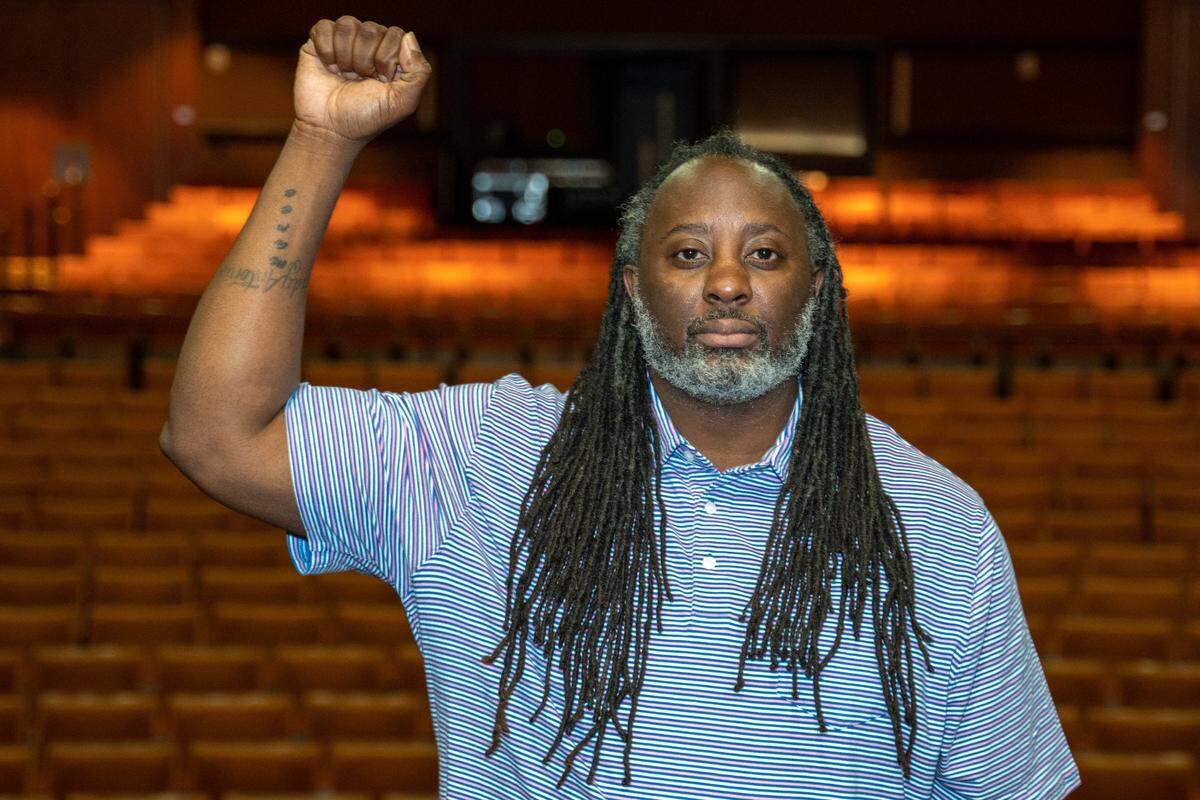
His other concern is expanding the audience. He wants to see more diverse crowds coming uptown and engaging in the arts, including more lower-income families. But he is also planning to bring theater into neighborhood spaces and schools.
“I want to go to where folks are and find spaces to access and create a theater experience right where they live, so people can get to it without having to worry about parking or paying to park,” Bluz said “They can just enjoy the experience and walk home. It’s part of enlarging the impact of what we do in communities.”
Bluz’s first big event in the new position will be the We Are Hip Hop show, which has been postponed until January due the coronavirus pandemic. The goal of We Are Hip Hop is to create something uniquely Charlotte while still engaging international artists. Prior to the event, the Blumenthal will host a series of warm-up shows at Camp North End in November.
Bluz has a final for local artists: “Folks, talk to me. If there’s a creative person, group, or event I should know about, hit me up. I’m still that same dude,” he said. “I have a title now, but the work still needs to be done. Lets’ stay focused and get active.”
This story is part of an Observer underwriting project with the Thrive Campaign for the Arts, supporting arts journalism in Charlotte.
More arts coverage
Want to get more arts stories like this delivered to your inbox? Sign up for the free “Inside Charlotte Arts” newsletter at charlotteobserver.com/newsletters
You can also join our Facebook group, “Inside Charlotte Arts,” at https://www.facebook.com/groups/insidecharlottearts/