A ‘spirit of prosperity’: Three Black artists tell the story of Brooklyn’s legacy
Before city leaders tore it down through urban renewal, Brooklyn was considered a city within a city in Charlotte — a thriving, mixed-income Black neighborhood in uptown.
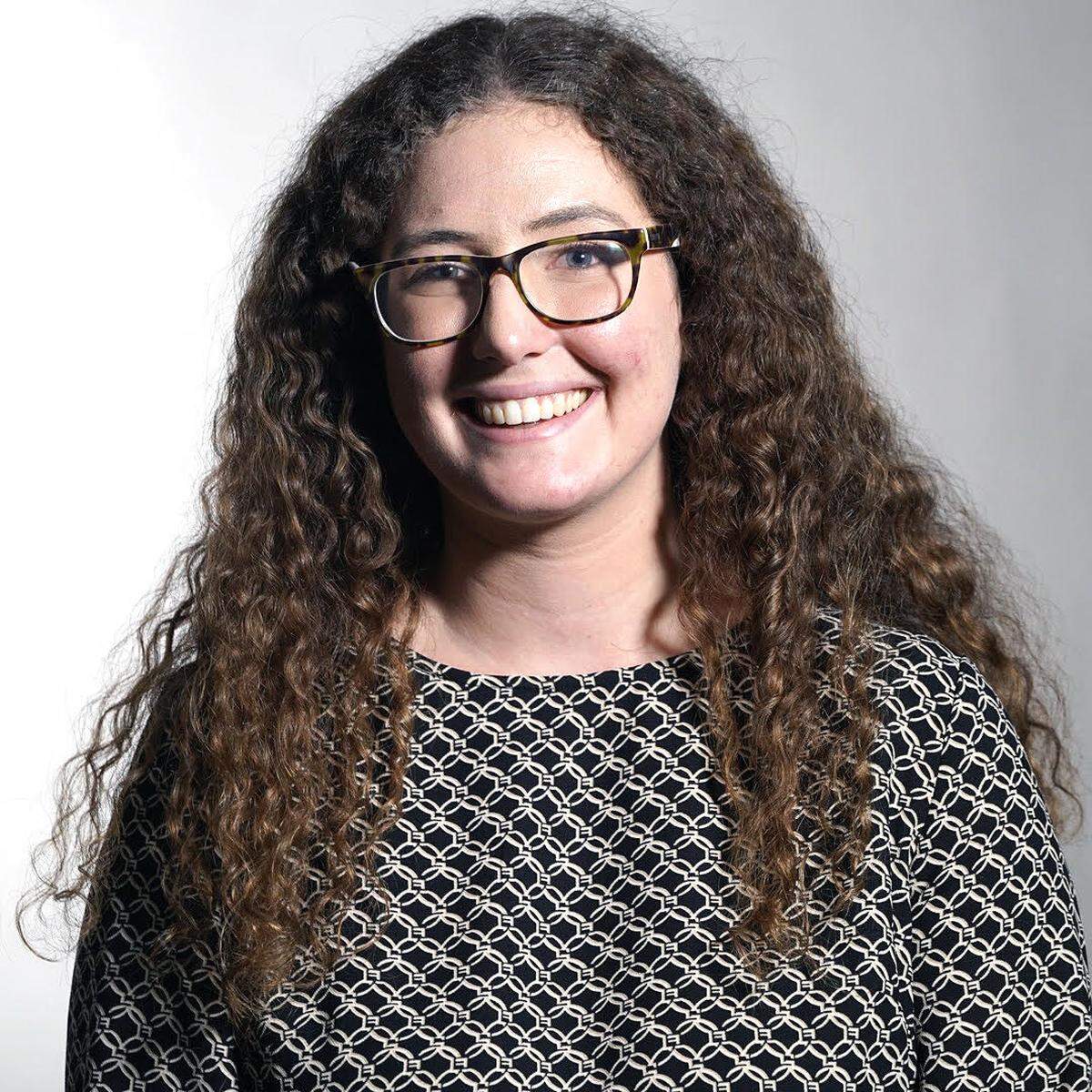
SOZO Gallery, Studio 229 and the Brooklyn Collective decided to come together to tell the community’s story, and how its legacy endures, said co-curator Hannah Blanton, SOZO’s owner. The Brooklyn Collective is an initiative around inclusivity and upward mobility, housed in three buildings that are among the few remaining structures from Brooklyn.
The exhibit, which features three local Black artists, opened Thursday in what was once known as the Mecklenburg Investment Company building, one of the original buildings from Brooklyn, built in 1922.
“To me, Brooklyn is more so the Black experience in different facets, from everyday life to popular culture to familial history,” said Jordan T. Robinson, co-curator. “The artists created a shared space where the history of this neighborhood and the people of this neighborhood and the legacy are intermingled with their own personal experience.”
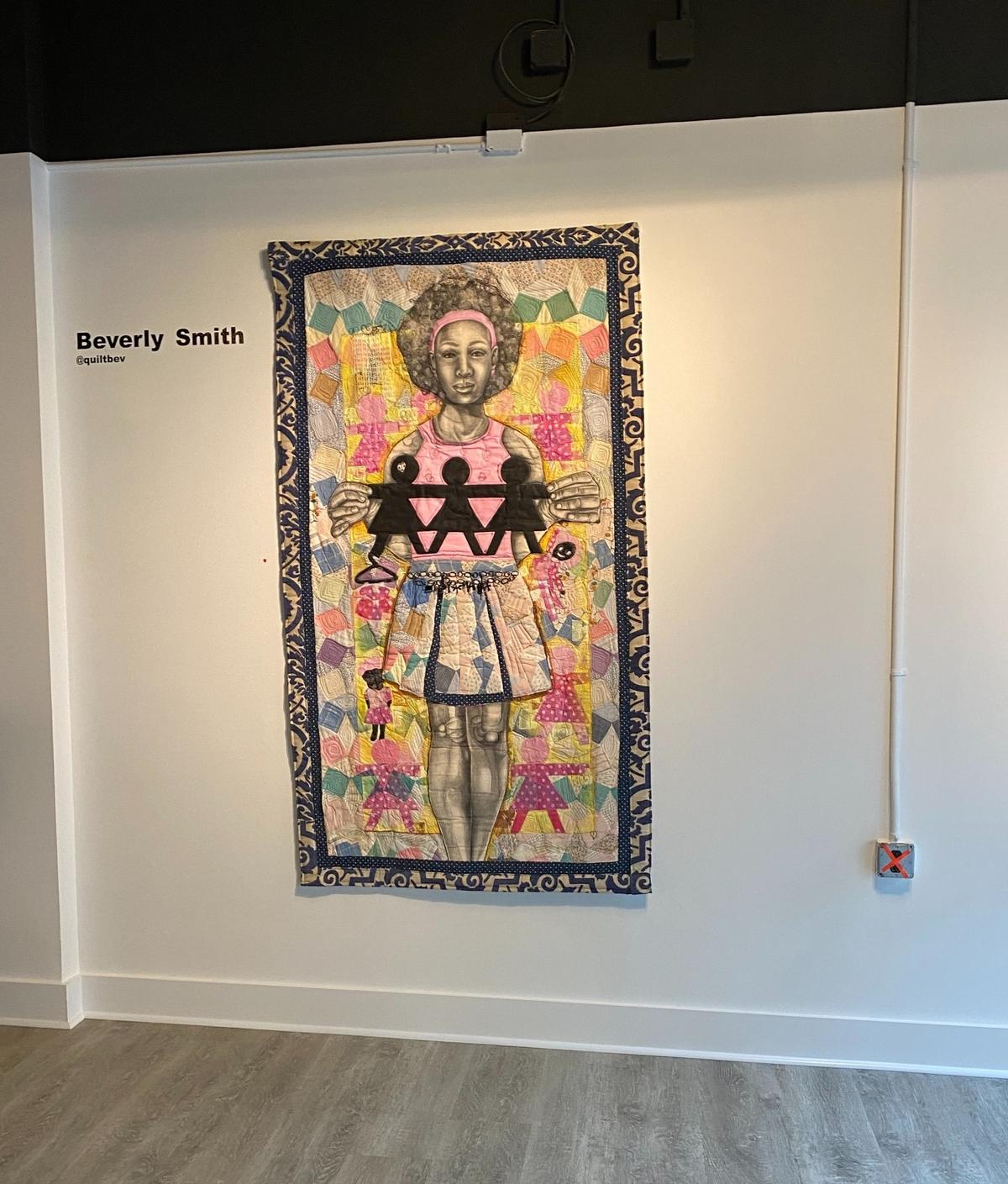
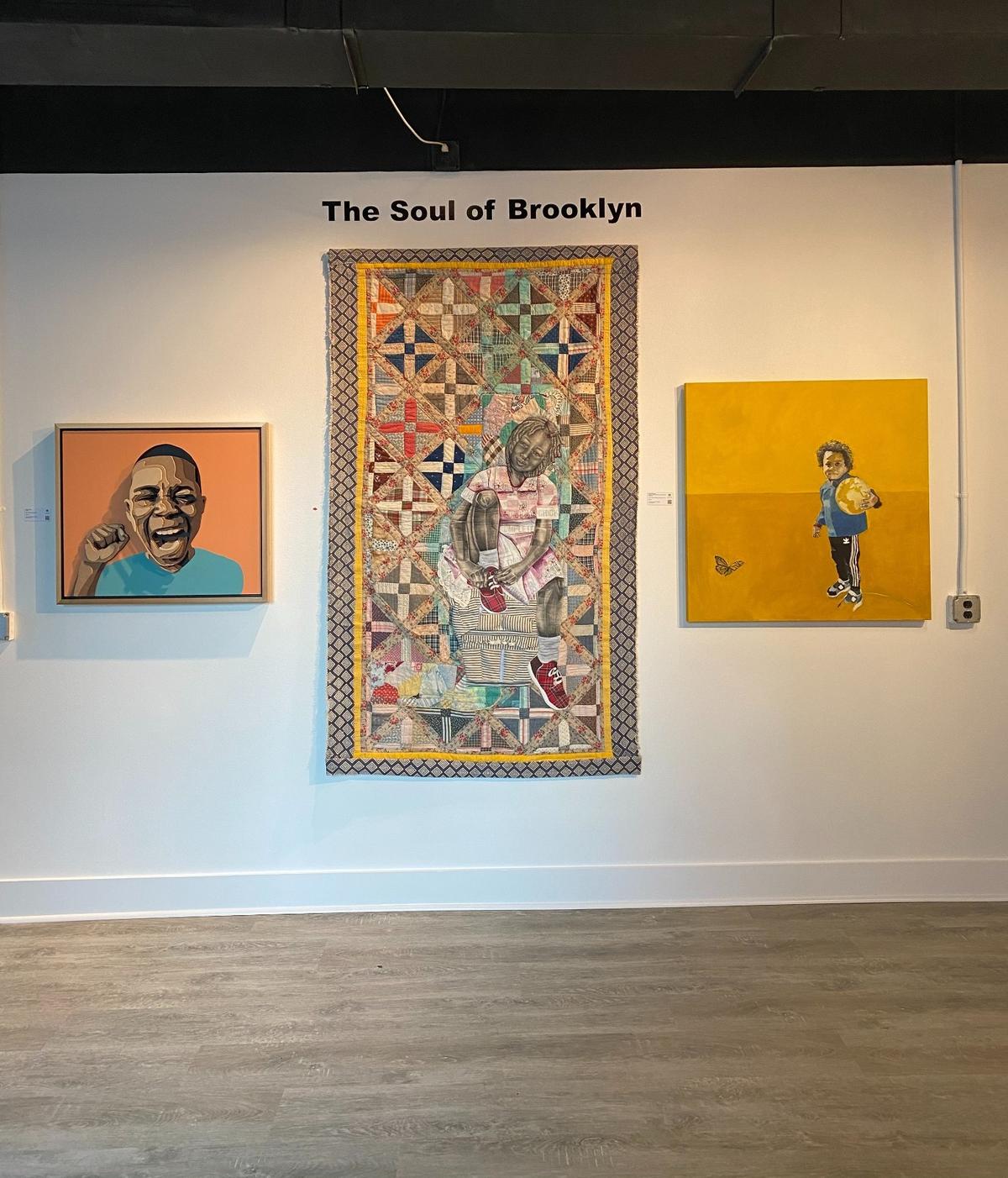
Beverly Smith, one of the artists, is a quilter, mixed-media fiber artist and storyteller, and recently retired from teaching at West Charlotte High School. She uses a collage-like style in her quilting, reflecting themes from the Antebellum South.
The exhibit also features former NFL player Percy King, who creates portraits of African American figures such as Tupac Shakur and Biggie Smalls as well as artists like Aminah Shakur and Elijah Pierce.
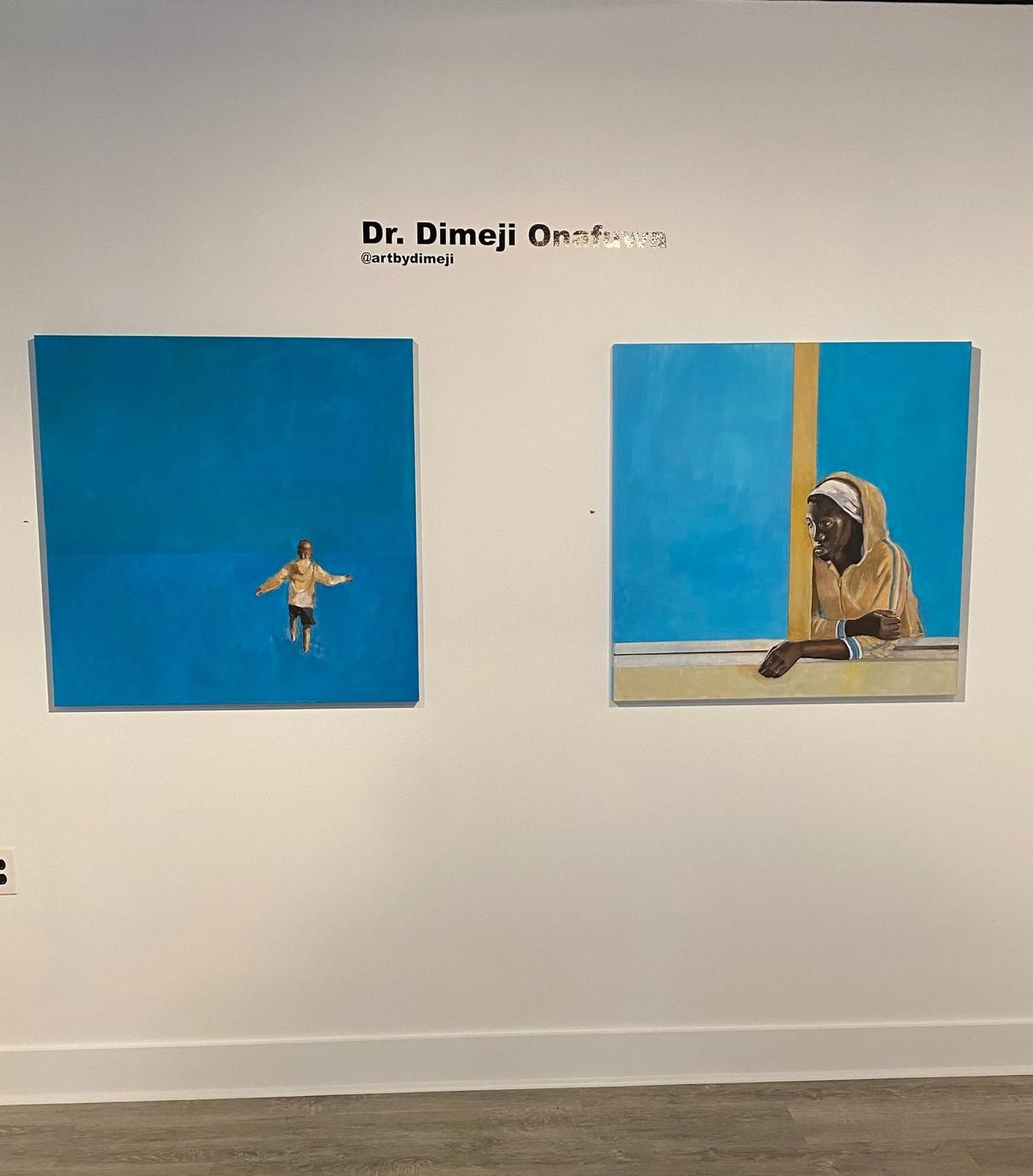
Dimeji Onafuwa’s work is also in the exhibit. Onafuwa, a designer, painter and senior researcher at Microsoft was born in Nigeria, but came to Charlotte to study the arts. Onafuwa, who splits his time between Charlotte and Seattle, typically features one subject in his paintings, with a large amount of space and vibrant colors surrounding them.
Onafuwa, who uses his work to tell the stories that go untold, is inspired by an African proverb: “Until the lions have their own historian, the story of the hunt will always glorify the hunter.”
“That really excites me about what is being done,” he said. “The minority voices, particularly Black and African-American voices that have been silenced for a long time, this group is kind of choosing to tell their story.”
Building an inclusive future
Brooklyn was once the city’s largest Black neighborhood, as discriminatory policies prevented Black people from residing in many other parts of the city.
Like other cities, Charlotte demolished Brooklyn and other once-thriving Black neighborhoods through the federal urban renewal program. It was described as a “slum-clearance” program, but is now largely regarded as a way to move Black people off of valuable land near downtown areas.
Former residents describe the neighborhood as socioeconomically diverse, with both professionals and working class residents, and a strong sense of community. In the end, more than 1,400 homes, businesses, churches and other buildings were razed. While leaders promised to replace the housing, they never did.
Now, Mecklenburg County is selling the land, which houses aging buildings, Marshall Park and parking lots, to BK Partners for redevelopment. The plans call for about 1,200 homes, as well as offices, hotels, shops and restaurants. Around 114 of the homes will be affordable for those earning as much as 80% of the area median income, about $66,800 for a family of four.
But the development has sparked a debate about how to remedy the harm done to the Black community through urban renewal, through a concept known as restorative justice.
In August, Charlotte Mayor Vi Lyles apologized for the city’s role in systemic racism, and pledged to address racism through supporting Black businesses, neighborhood revitalization and violence interruption programs, and other initiatives.
Amid nationwide protests calling attention to racial inequity, Onafuwa said Brooklyn is part of a painful past the country needs to wrestle with.
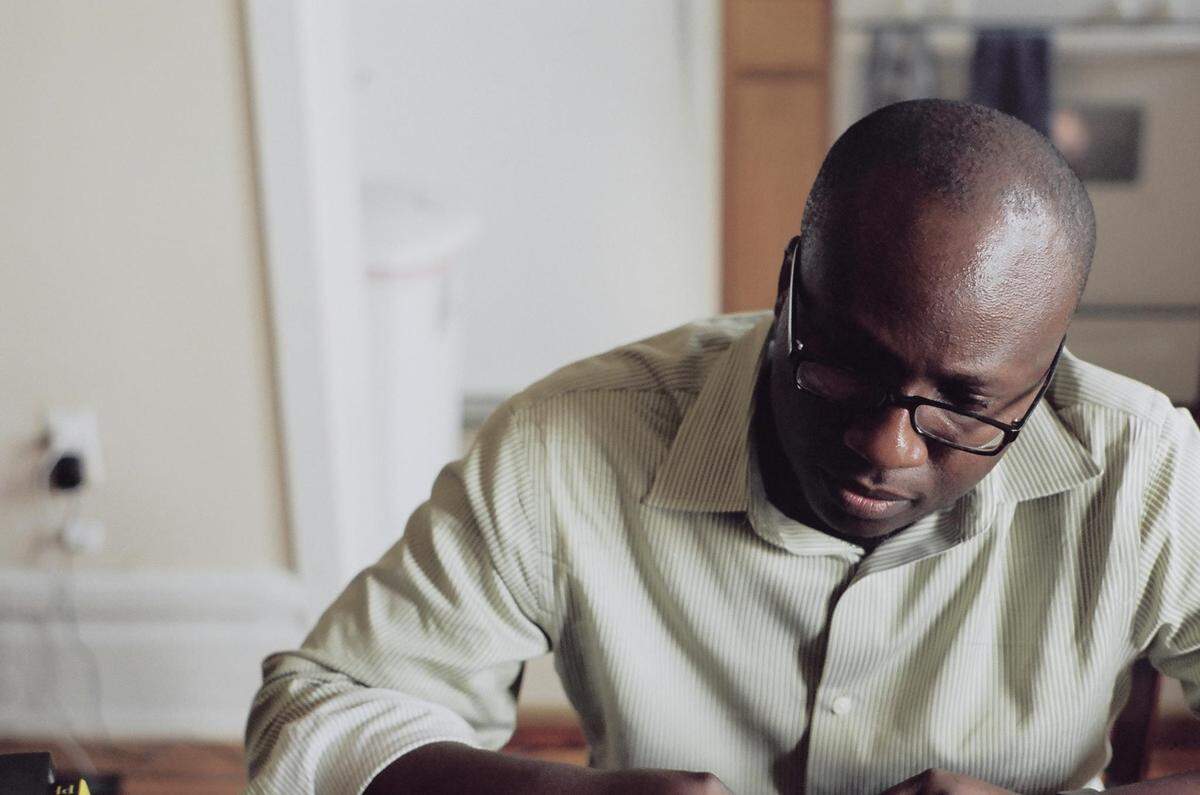
“For me, (Brooklyn) represents a vibrancy and a sense of community that was taken away through potentially a rush for profit and through selfish interests,” he said. “When I think of a Brooklyn, I see that as a missed opportunity, but then also maybe a potential opportunity now to build that new world together, and to actually do that by telling the stories of those that their world was taken away. ...
To say, ‘how do we avoid those mistakes of the past, and to make sure that we build a future that is more inclusive and more representational?’ “
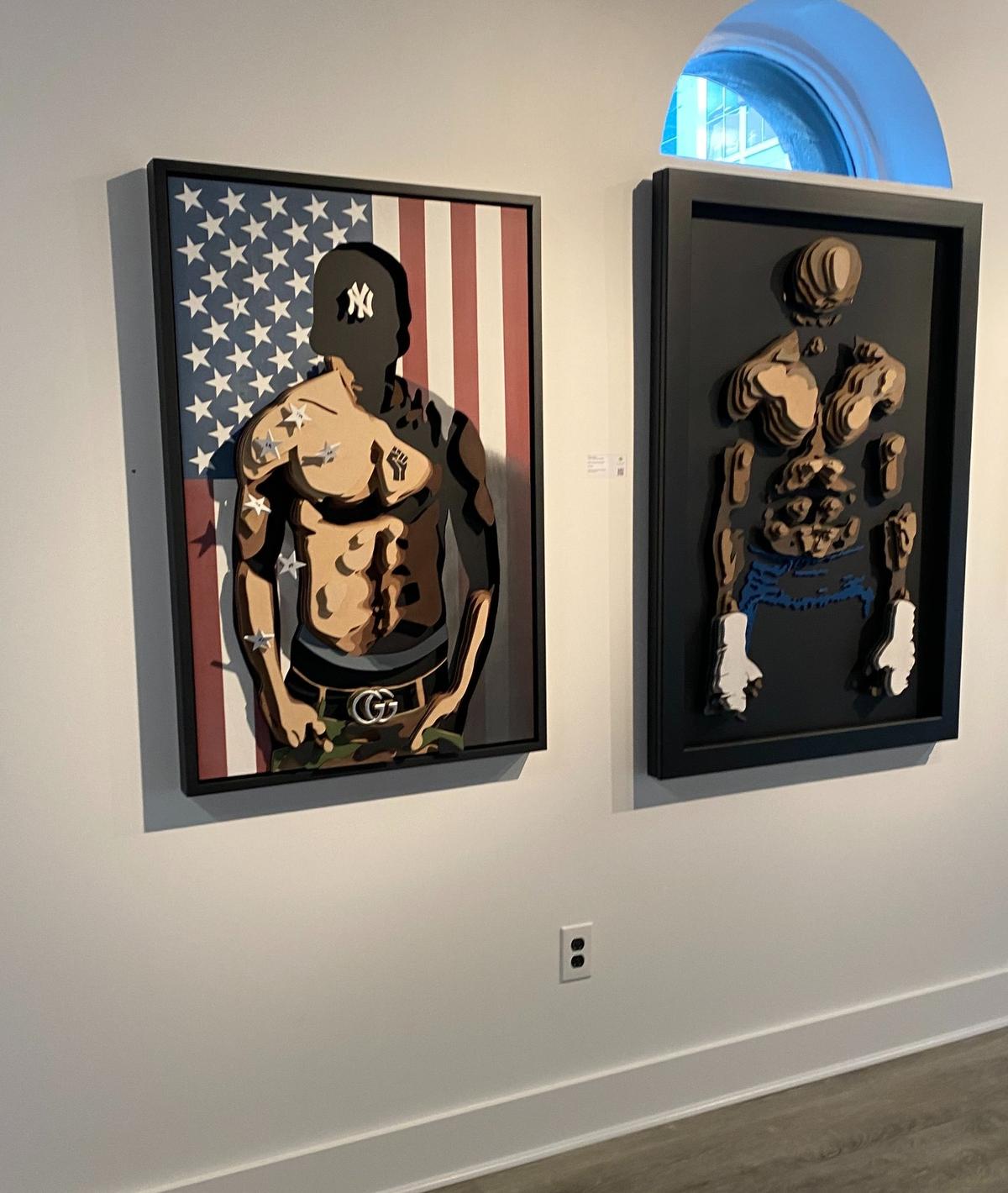
Robinson said as Charlotte faces struggles with economic mobility, the exhibit brings to life the Black entrepreneurs of the past, on what was once a main street in the Brooklyn neighborhood.
“It seems like the very notion, or the very spirit of prosperity, and making something out of nothing,” he said. “To think, a town that was kind of seen as nothing grew to being a city within a city. And then of course, has been gentrified or has been changed over the years, and now we’re talking about the same things again.”
The exhibit is open through Dec. 31 at 229 South Brevard St.
More arts coverage
Want to get more arts stories like this delivered to your inbox? Sign up for the free “Inside Charlotte Arts” newsletter at charlotteobserver.com/newsletters
You can also join our Facebook group, “Inside Charlotte Arts,” at https://www.facebook.com/groups/insidecharlottearts/
This story was originally published October 9, 2020 at 12:57 PM.