
Veteran Charlotte artist is sculpting Billy Graham statue destined for the US Capitol
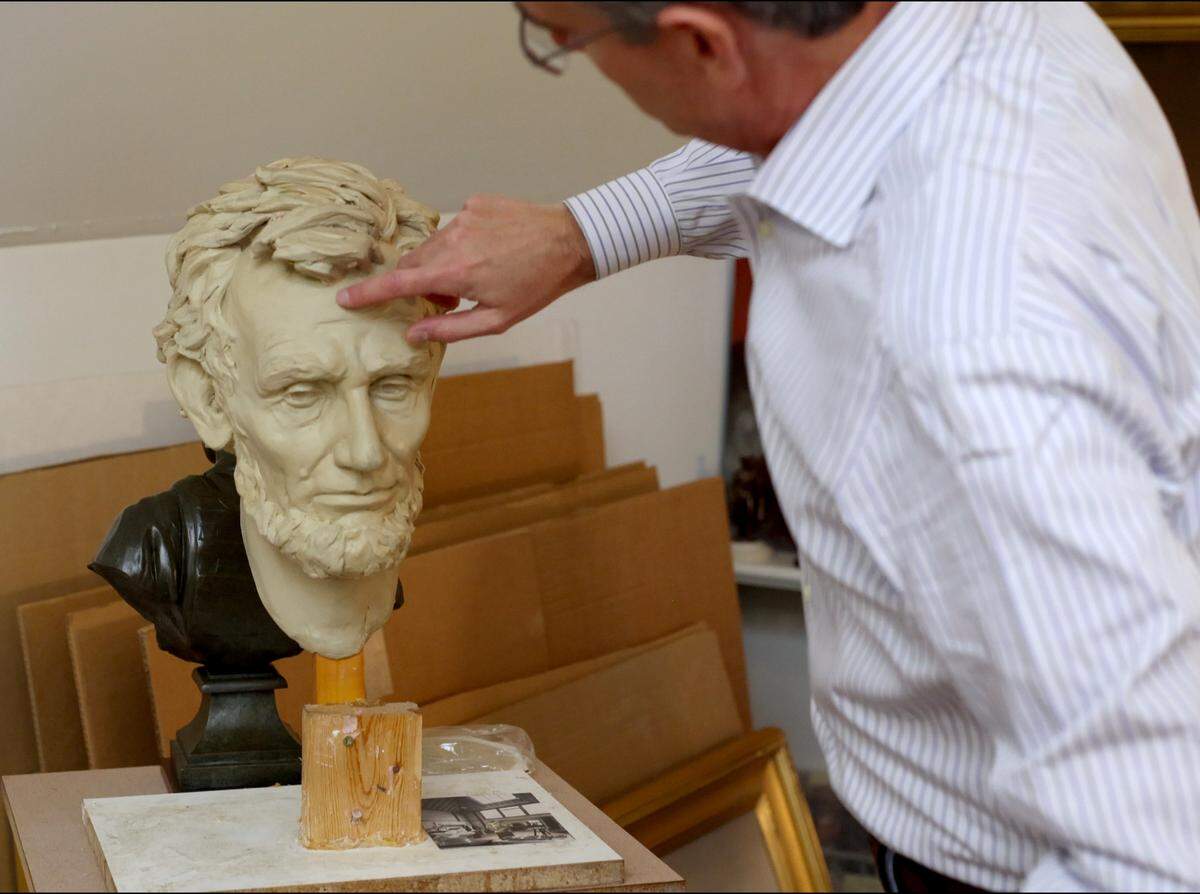
Inside artist Chas Fagan’s modest home studio in Myers Park, dozens of little maquettes — one-eighth size sculpture models — mingle with busts of past presidents, a pilot and even a pope.
Throughout his prolific career, Fagan has blended his love of history and attention to detail with raw talent and self-taught technique. His portraits and sculptures, conveying some of the most highly respected public figures in the world, are admired from Charlotte to Rome.
Major works include oil portraits of every U.S. president, a statue of President Ronald Reagan in the U.S. Capitol rotunda and Rosa Parks, whose likeness was carved into part of Washington’s National Cathedral.
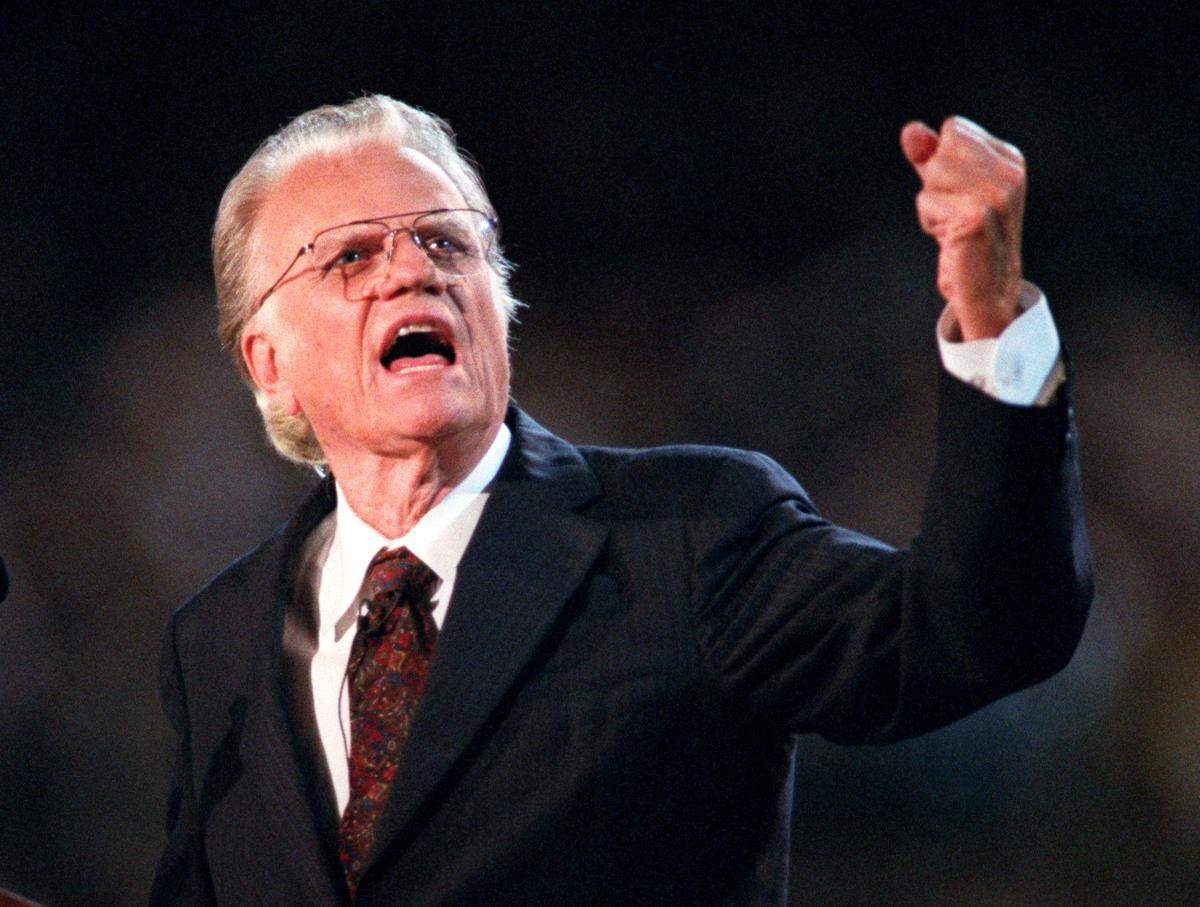
Though the Covid-19 pandemic has slowed down production, Fagan is continuing to work on a sculpture of Charlotte native Billy Graham that is poised for prominence — it ultimately is headed to the National Statuary Hall Collection in the U.S. Capitol. Graham died in 2018 at age 99.
Fagan was selected from 40 artist submissions worldwide, said Garrett Dimond, the project’s Raleigh-based contract administrator. “He gets into the mind of and learns everything he can about (a person). It’s very impressive.”
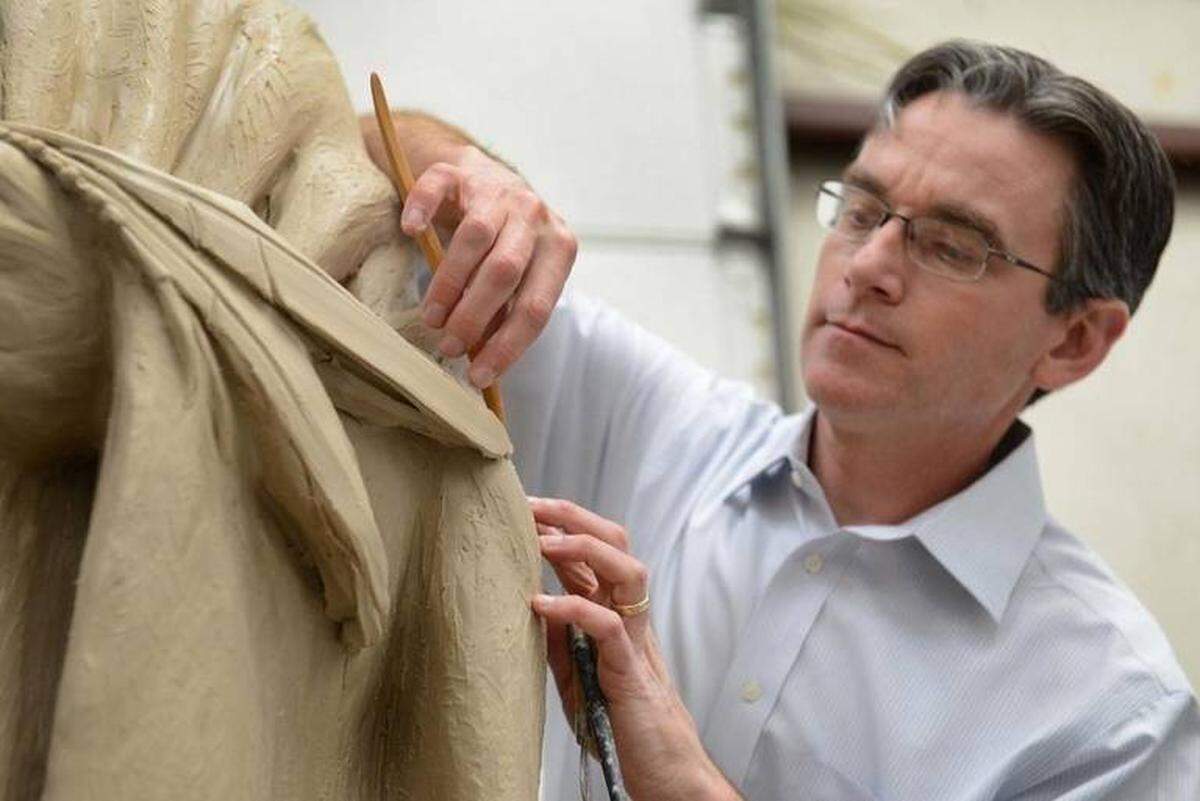
During the pandemic, Fagan has limited access at Carolina Bronze Sculpture in Seagrove, the foundry where he casts his final works. But he’s now working on the third phase of the Graham statue.
Fagan is creating a full-length statue of Graham, which he will cast in bronze, based on research through a collection of photographs and interactions with Graham’s relatives.
Working closely within parameters from the Capitol architect, Fagan is crafting an over-life-size likeness of Graham, 7 feet tall on a 3-foot stone pedestal. Combined weight of the statue and pedestal will be up to 5,000 pounds.
“Once I get the next go-ahead from the committee on Capitol Hill, I will begin to sculpt the larger clay version of the model at the final scale,” Fagan said.
The statue was scheduled to be unveiled next summer, but due to Covid-19, the timing is up in the air for now.
The sculpture of Graham will replace one of Charles Aycock, a North Carolina governor and white supremacist, who has represented the state since 1932. (Though mounting pressure has increased across the country to remove monuments dedicated to Confederate leaders and white supremacists, the plan to replace Aycock began roughly five years ago.)
From LBJ to Mother Teresa
At Fagan’s home studio, a patchwork of subject photographs, posted on a kind of inspiration board, lean against an easel. Papers and folders clutter the desk.
“Just before the (Covid-19) lockdown, I figured that I needed to have a bunch of stuff to work on here in the studio and not at the foundry,” Fagan, 54, said. He recalls a particular foam section of one current project: “My buddy was LBJ,” he said. “I had the eight-foot scaled head of LBJ with me for lockdown.”
The Lyndon Johnson sculpture, commissioned by the city of Houston, pays homage to the late president who taught high school in the city as a young man. It’s just one of dozens of Fagan’s creations.
Purdue University commissioned a bronze sculpture of alumnus Neil Armstrong, and Fagan painted the portrait of Mother Teresa for her canonization at St. Peter’s Basilica in Rome.
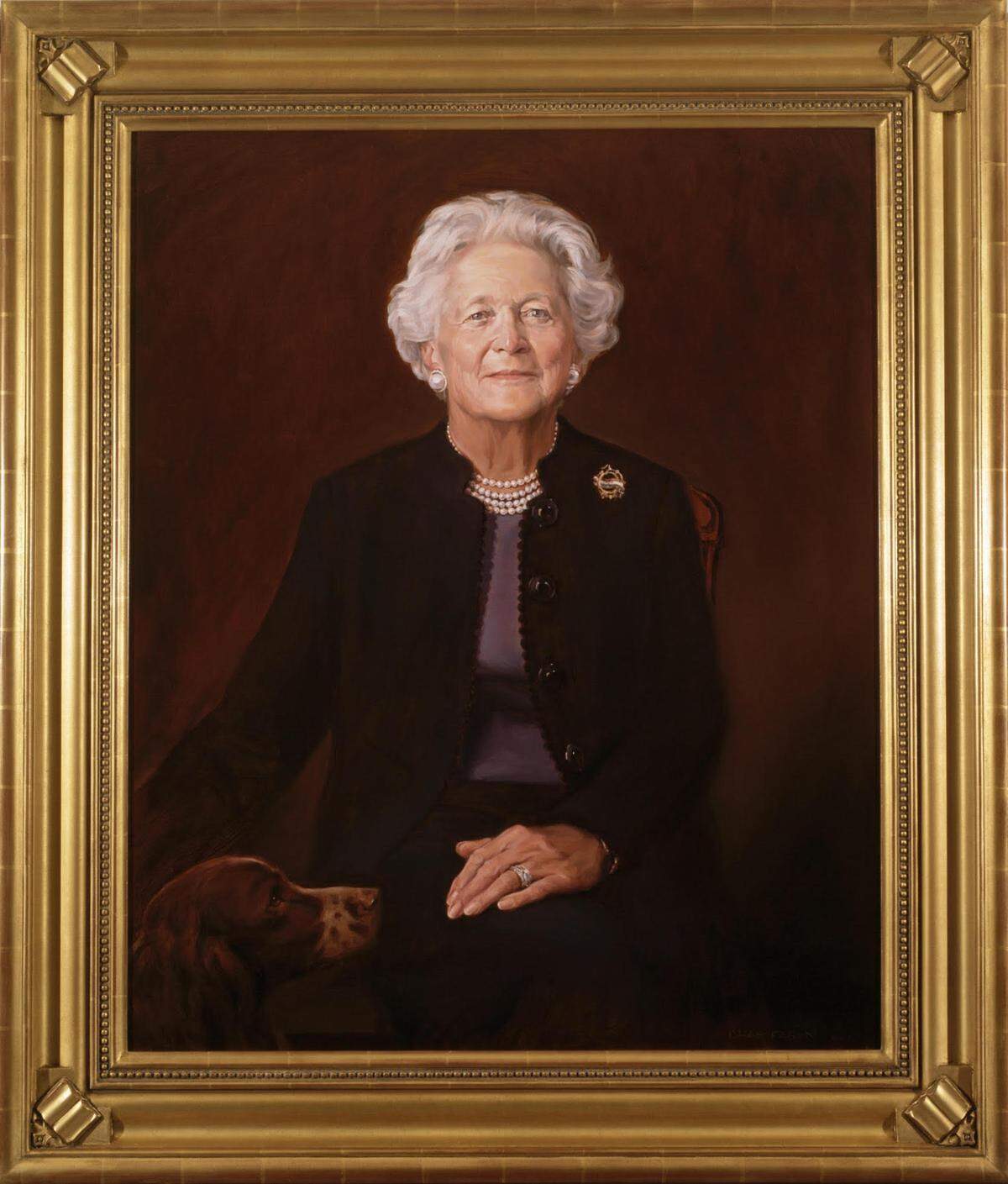
His commission to paint the official White House portrait of first lady Barbara Bush is part of the exhibit, “Every Eye Is Upon Me: First Ladies of the United States,” on display at the Smithsonian’s National Portrait Gallery.
Early influences
Fagan grew up in Ligonier, a small town in western Pennsylvania. When he was a child, his father, who was a diplomat, moved his family to Brussels, where he lived until age 12. Inspired by the natural surroundings, he taught himself how to draw and paint, at first, predominantly landscapes.
“I was always drawing, but never thought I would do it as a career at all,” he said. A portrait artist who was a friend of his parents would give him materials and drawing assignments when she visited.
“She gave me a stick of charcoal and showed me how to use it,” he said. “She’d give me drawing assignments... and whenever I’d see her, I’d show her my stuff.
“She pounded into my head that I was an artist and I should never stop.”
He never did. After returning to Pennsylvania, though, Fagan went on to pursue Soviet Studies at Yale University, a track that took him back abroad. This time the destination was Leningrad State University in the Soviet Union, in 1988.
“I was there in the Cold War, and the perspective (I gained from) people on the street was scary sobering,” he said. “It hit me very hard.
“If you have no personal control over your future, your day-to-day life becomes just existence,” Fagan said. When he returned to the U.S., he changed course from studying Russian history and focused more on sharing stories through art.
While at Yale, he had enjoyed some success in drawing editorial cartoons.
“My last experience in college was being paid for one of my cartoons for the New Haven Register,” he said. “So, I figured there might be a way to make money in it.”
Cartoons led to paintings, and eventually commissioned sculptures. Lots of them. Some subjects are well-known, like George Washington and Abraham Lincoln but others, like Captain James Jack, less so.
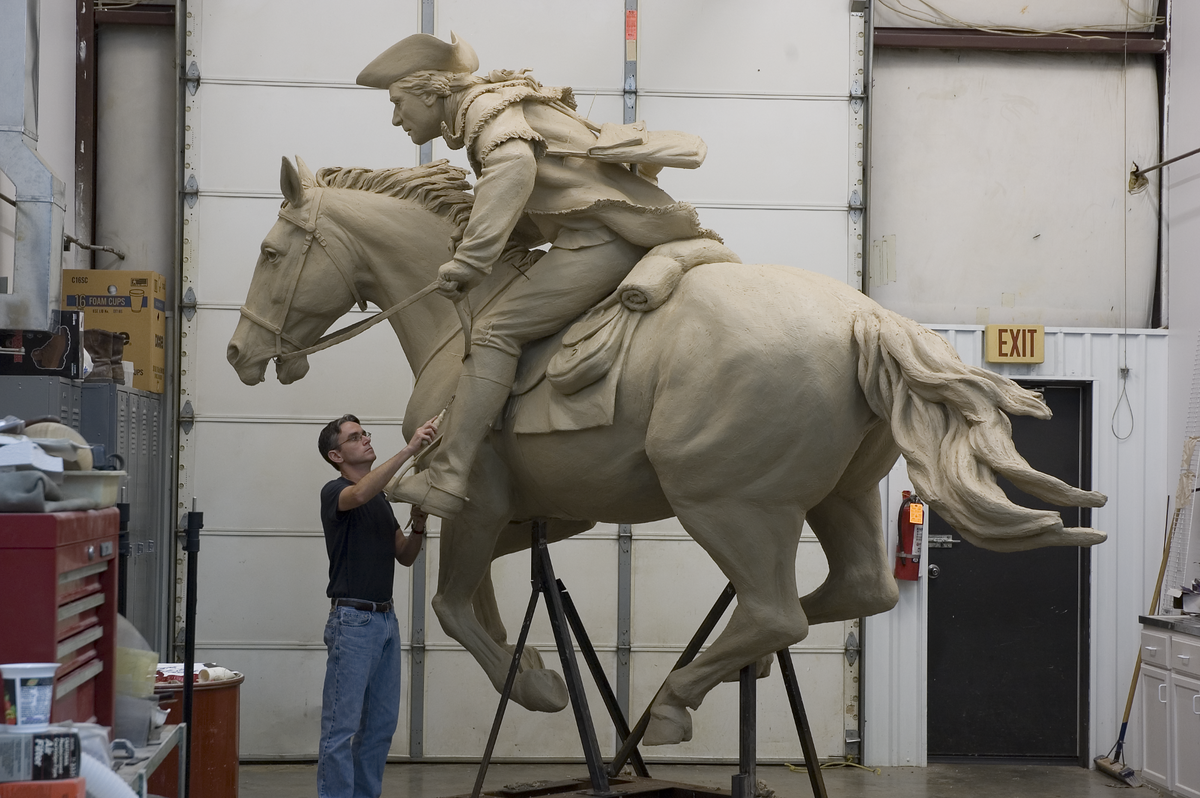
“He was just an ordinary guy,” Fagan said. But his mission, a treasonous ride to deliver the Mecklenburg Resolves to the Second Continental Congress in Philadelphia in 1775 — which Fagan captured in “The Spirit of Mecklenburg” at the corner of 4th Street and Kings Drive in Charlotte — was one of the most consequential moments in the region’s history.
On tearing down history
The messages he teaches through his works, Fagan said, are that of “people in their own times doing great things that we still benefit from today. When I have a chance to do a historical piece that has meaning, I want to make sure that that’s not forgotten. I want people to learn.”
He also calls the removal of historical art “very dangerous.” “During my experience abroad … history was erased, churches were demolished or changed into concert halls. Very dramatic things were done on purpose, and the results were not good.”
When the Soviet Union fell, he noted that multiple generations were looking for their history, their commonality, according to Fagan. “We share our history,” he said. “Erasing it doesn’t help anybody. Reimagine it, and look at it from a new lens.”
He suggested creating more art, even right next to controversial pieces, works that share the history of a more current time.
“Certainly more storytelling is highly beneficial,” he said. “If you can show the other perspective, or feature someone who embodied that better perspective, then you’ve got the best counter answer to anything.”
More arts coverage
Want to see more stories like this? You can join our Facebook group, “Inside Charlotte Arts,” at https://www.facebook.com/groups/insidecharlottearts/
You can find all of our arts season preview stories in one place: https://www.charlotteobserver.com/topics/charlotte-fall-arts-2020
This story was originally published November 24, 2020 at 2:36 PM.