
Charlotte art museums adopt new augmented reality app to enhance visitor experience
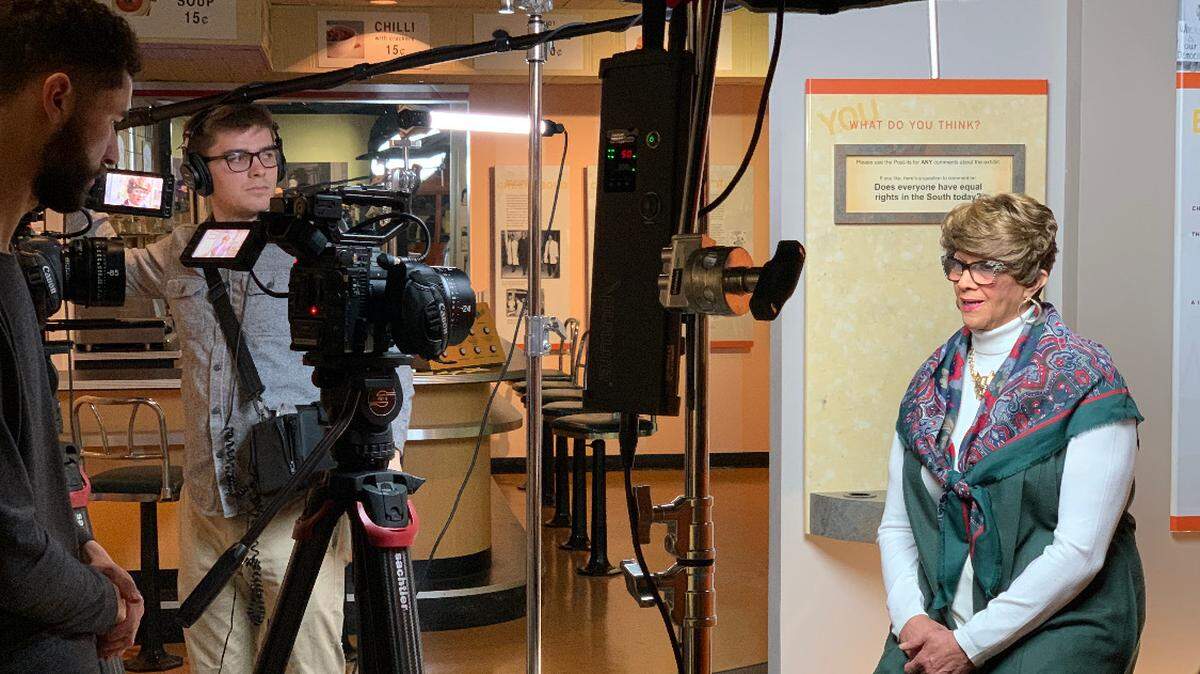
In a historic photograph at the Levine Museum of the New South, a young Dorothy Counts-Scoggins makes her way up the auditorium stairs to enter her new school.
A mob of white students crowd her, some noticeably jeering, others wielding scowls. It was the fall of 1957, and she was the first Black student to integrate Harding High School. She was 15 years old.
Looking at that photo, museum visitors today may wonder, How must she have felt in that pivotal moment in history?
Now, through a new program designed in partnership with the Arts & Science Council and Charlotte tech company AVO Inisghts, they no longer need to wonder. Interactive CLT, a new augmented reality initiative, is intended to engage museum-goers in deeper conversations with local art and exhibits through an app people download onto their phones.
Stories behind the art
In the app, Counts-Scoggins shares how she felt at that moment in her own words: “There was no fear. I wasn’t really nervous,” she says in the video. “I just wanted to be able to get inside, and that way, I would feel safe.”
But that wasn’t the case. She continues, “... the adults did nothing. For me, that was disappointing, because I had a lot of respect for educators … and my parents had always taught us to respect adults.”
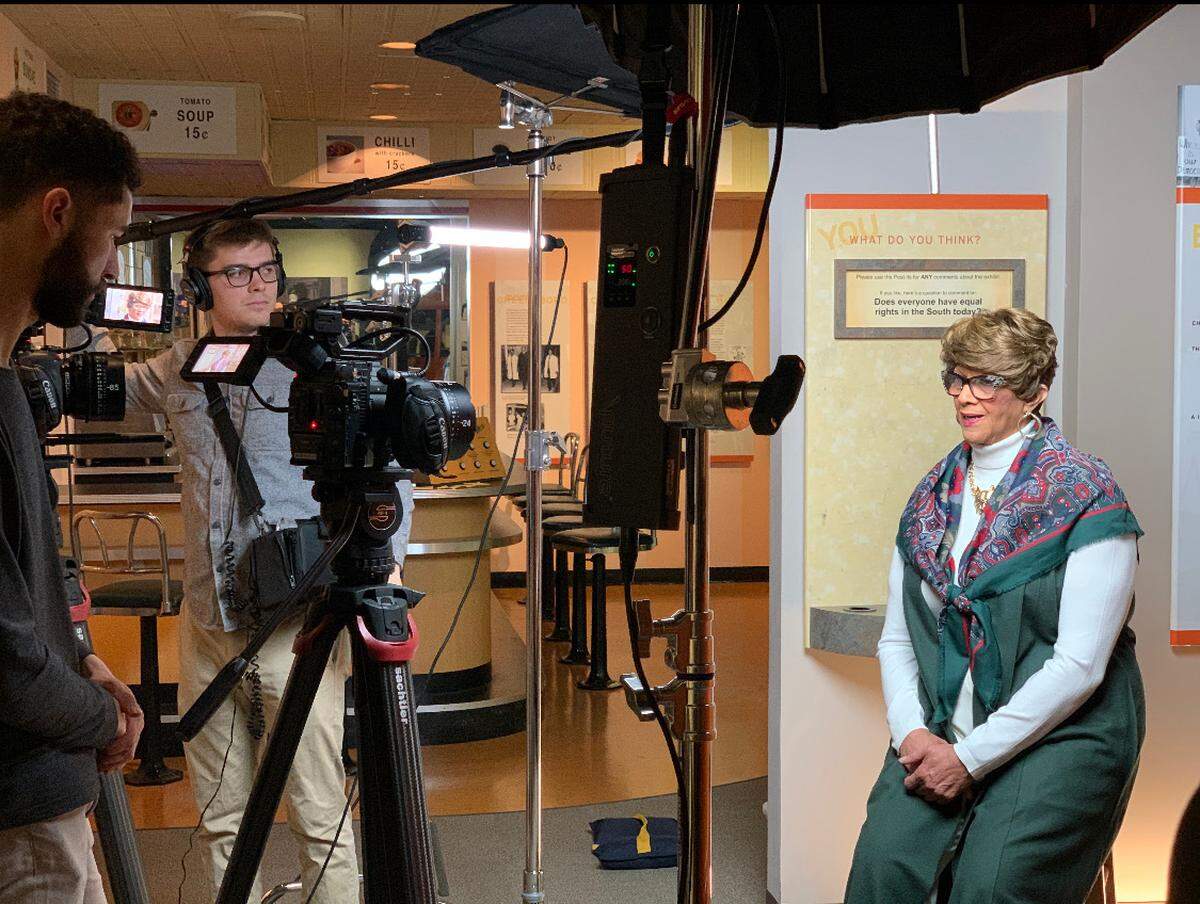
Conversations around the Interactive CLT program began 18 months ago with AVO Insights founder Bradley Smith, who developed the app.
Here’s how it works: “You point the (phone) to a painting, for example, and when the app identifies it, a video pops up to augment your experience,” Smith said. “It comes to life and shows either the artist or curator or public speaker from that moment and tells the story behind it.”
Other Levine Museum video interviews include former Bank of America CEO Hugh McColl, who speaks to how he helped build Charlotte into the financial hub it is today, and Harvey B. Gantt, who discusses the experience of being Charlotte’s first African-American mayor.
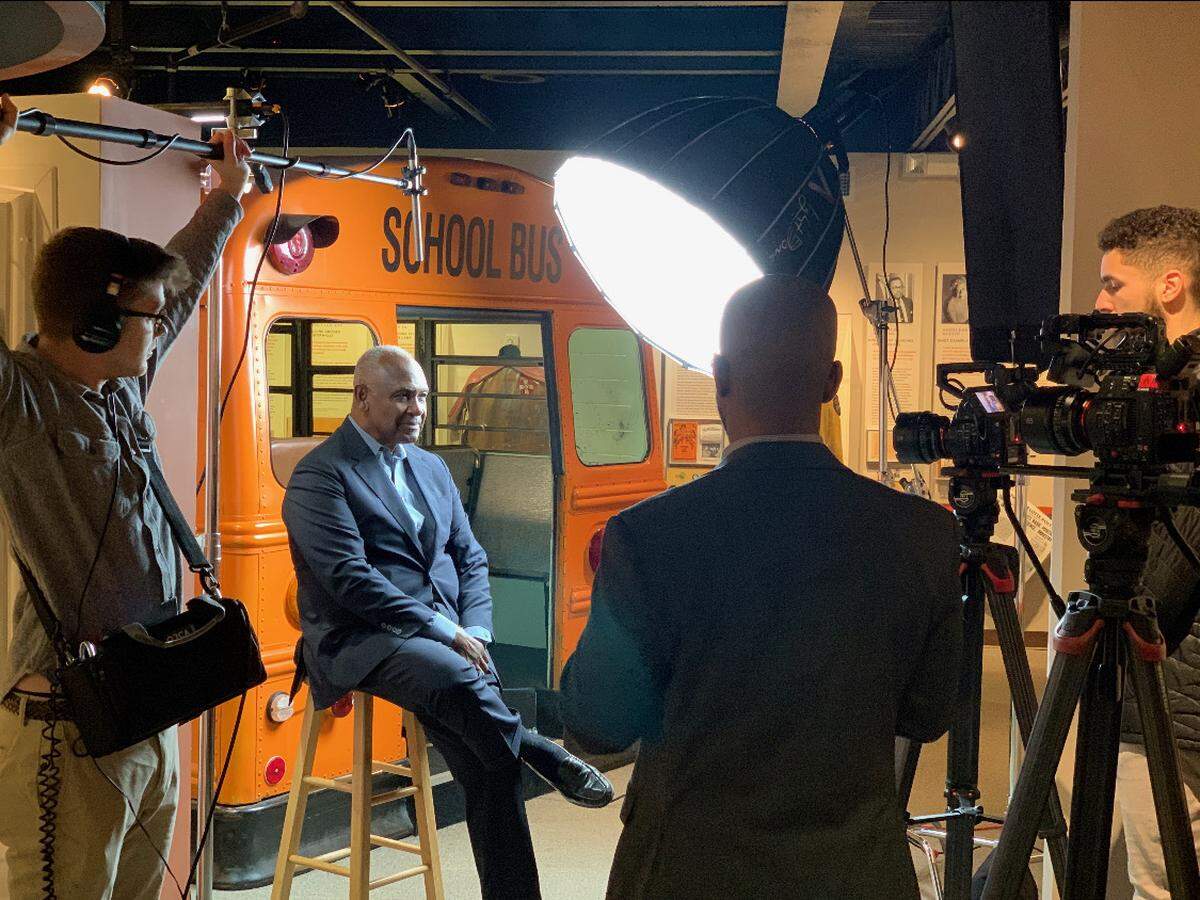
“As you’re looking at Gantt’s picture, to be able to take out the app and actually hear him tell you the story, “ Smith said. “It’s so much different than reading it on a plaque.”
Other app experiences are currently available at the Bechtler Museum of Modern Art, the Harvey B. Gantt Center for African-American Art + Culture and the Mint Museum.
Gantt Center videos honor Dr. Mary T. Harper and Dr. Bertha Maxwell-Roddey, the founders of the Afro-American Cultural and Service Center in the 1970s, which merged into the Gantt Center.
At the Mint, Jonathan Stuhlman, senior curator of American Art, and Rubie Britt-Height, director of community relations, discuss inspirations behind several works related to Black history and race relations in the galleries. The Bechtler’s experiences center on the design and engineering feat of its building, designed by Swiss architect Mario Botta.
‘Just the beginning’
Kama Pierce, chief operating officer with the Levine Museum, says the museum is no stranger to technology, and the museum intends to do even more in years to come.
Upstairs, an app developed by a UNC Charlotte professor in 2019, offers augmented reality experiences in the #HomeCLT exhibition. And the museum’s signature “Cotton Fields to Skyscrapers” exhibit is being filmed in 3-D in partnership with Google’s street-view tours.
“With the 3-D rendering, we can add commentary, videos and language and make it very real to people,” Pierce said. “AVO was just the beginning for us.”
Smith sees the trend in museums, too.
“There’s a big push for museums to use AR in their exhibits and experiences,” he said.
As for visitors using the app, Pierce said, “It’s made them interact in a new way. For the core exhibit, we used to have cotton out for people to touch. But we can’t because of COVID,” she said. “I’ve been impressed at our visitors’ willingness to do this. It’s been great to see.”
This story is part of an Observer underwriting project with the Thrive Campaign for the Arts, supporting arts journalism in Charlotte.
More arts coverage
Want to see more stories like this? You can join our Facebook group, “Inside Charlotte Arts,” at https://www.facebook.com/groups/insidecharlottearts/
You can find all of our arts season preview stories in one place: https://www.charlotteobserver.com/topics/charlotte-fall-arts-2020
This story was originally published December 14, 2020 at 9:00 AM.