
Activist artist weaves stories of Charlotte’s Latin American people into her work
Rosalia Torres-Weiner spent four weeks in the dreamy, swirly world of Immersive Van Gogh in Charlotte.
She was one of 10 artists in residence at the exhibit of Vincent van Gogh’s works, painting live and meeting guests inside the historic Ford building at Camp North End. The exhibition is on tour in 20 North American cities, featuring large-scale animated projections of the Dutch post-Impressionist’s landscapes, night scenes, portraits and still-life works.
Torres-Weiner, 59, who uses her art and other creative endeavors to connect with Charlotte’s Latin American community, said she found inspiration at the Van Gogh exhibit.
“We’re lucky to be in this residency with people from different social, economic and cultural backgrounds,” Torres-Weiner said. Because the muralist and painter speaks Spanish, she has been able to talk with visitors from Puerto Rico, Ecuador and her native Mexico. “People are just so excited to talk to real artists and to see artists painting live.”
Bree Stallings, a multimedia artist who joined Immersive Van Gogh’s local partner Blumenthal Performing Arts as director of artistic experiences in March, oversaw the selection of the featured artists.
“Some people were connected (to van Gogh) in the way that (their work is) very colorful and textured and has an aesthetic quality that’s similar,” Stallings said. “And some people are more connected to his life and his struggle, and his mental health issues.”
Torres-Weiner worked alongside artists Zaire McPhearson and Laura Sexton during her four weeks there. Each of the artists received stipends and have dedicated studio space for the length of their residency They can also showcase and sell original art during the exhibit, which has now been extended until Oct. 31
“The goal is for audience members to have an experience... and know what it’s like to know an artist and to see a process,” Stallings said.
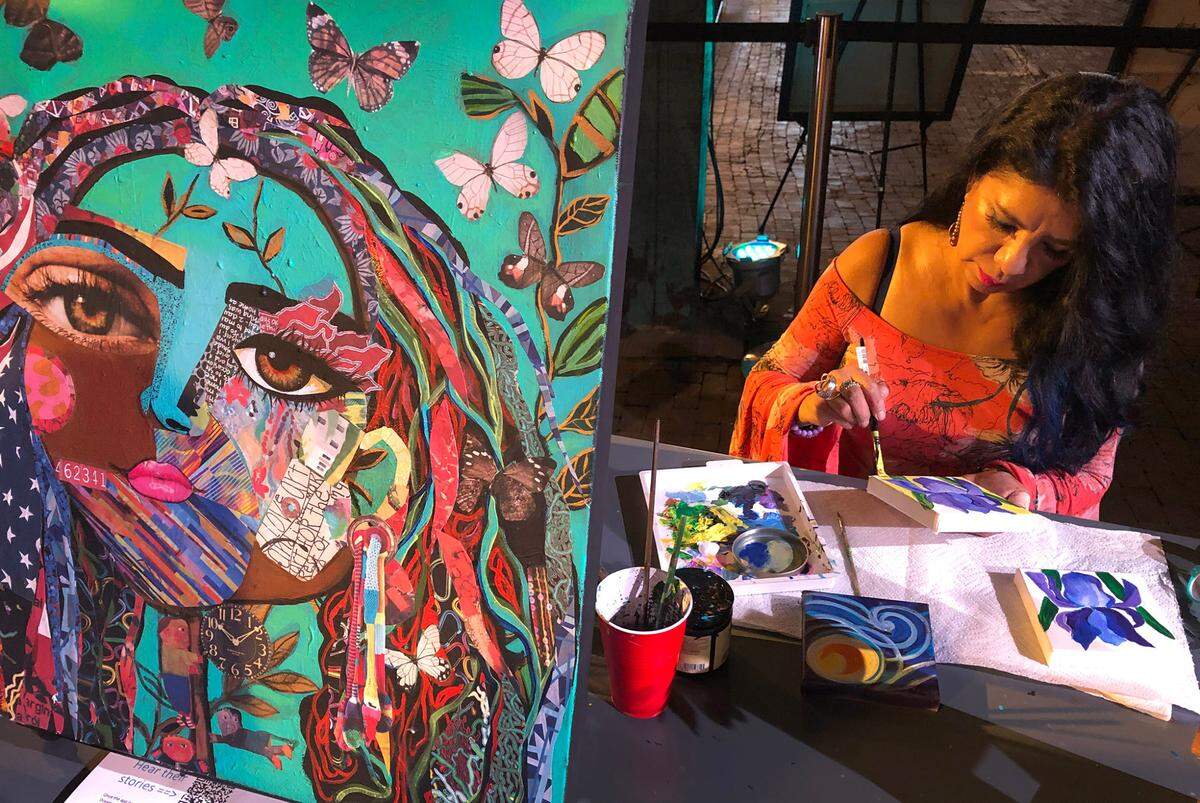
Torres-Weiner, said she left the exhibit full of energy, inspired by the people. “I’m a painting machine,” she said. “I’m there, and then I’ll come home and paint more.”
Sharing Latin American stories
A self-described “artivist,” Torres-Weiner employs art to share the stories of Charlotte’s Latin American community.
Originally from Mexico City, Torres-Weiner moved to Charlotte 26 years ago with her husband, Ben, who works in tech. They have two children.
“There was a church on every corner and people playing baseball in the fields,” she recalled. “I thought, this is the place for us.”
For 15 years, Torres-Weiner worked as a commercial artist, collaborating with interior designers and painting murals in private wine cellars and foyers. But in the aftermath of the 2008 recession, she found herself drawn more to social justice issues.
She started offering art workshops to children who lost a parent to deportation, helping them learn how to express themselves through art. “I knew I had a tool that would help these children,” she said.
One day, one of her clients inquired about her work. “She asked me if I had to travel to the border to work with these children,” Torres-Weiner said. “I said no, these children are here — they’re here in Charlotte. That’s when I realized that I needed to also educate my community.”
Art as a connection
Torres-Weiner shifted her work from commercial art to activism, helping the Charlotte community and others understand the human impact of the issues surrounding immigration.
“Art brings people together and heals and helps,” she said. “Art is powerful.”
Her art has been exhibited across the South, including at the McColl Center for Arts and Innovation and Levine Museum of the New South in Charlotte, along with the Leyland Gallery at Georgia College, the City of Raleigh Museum and the Birmingham Civil Rights Institute.
In Washington, D.C., Torres-Weiner’s work has also been featured at the Mexican Cultural Institute at the Mexican Embassy and in the permanent collection of the Smithsonian’s Anacostia Community Museum.
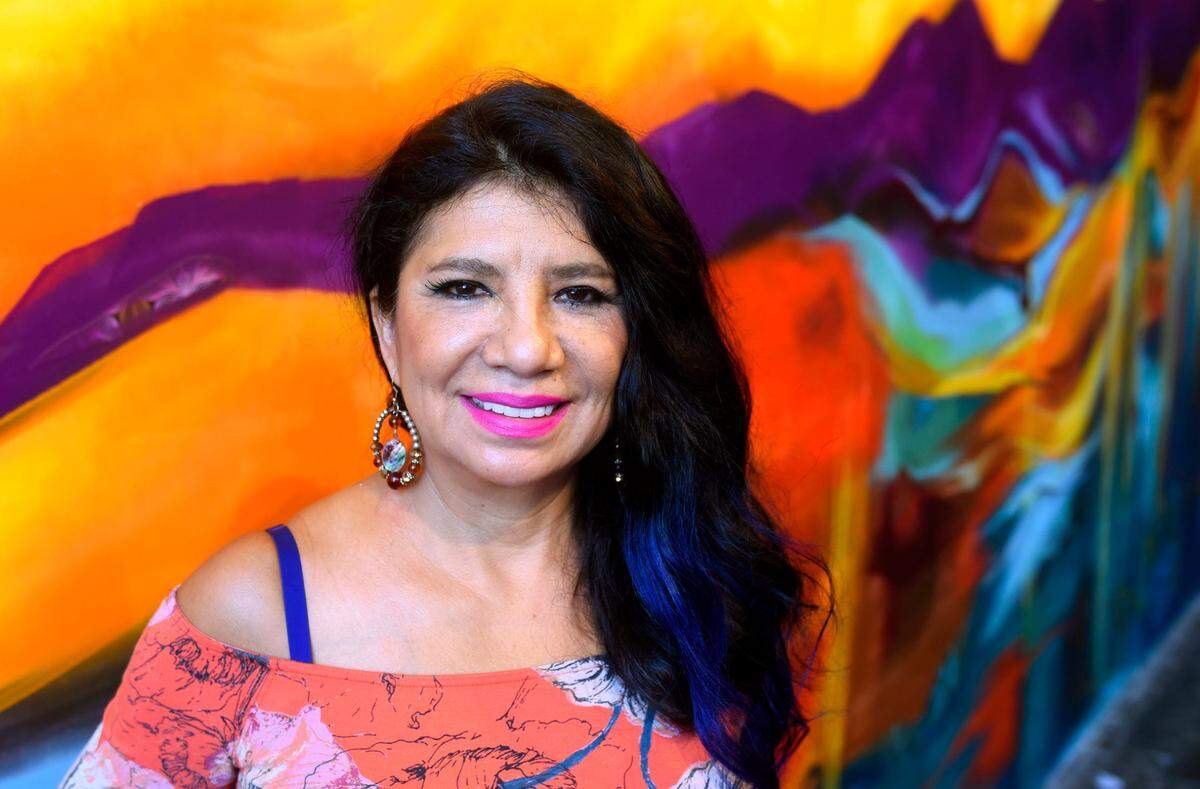
During the COVID-19 lockdown, Torres-Weiner partnered with Creative Mornings Charlotte to create 100 flower paintings, leaving them in areas across Charlotte where she thought members of the Latinx community would see them — park benches, bus stops and laundromats, among other spots.
Instructions on the back of the art led people to Compare Foods in east Charlotte, where each recipient received a $50 grocery gift card.
She’s also engaged in a long-term effort, the Papalote Project, to give children affected by deportation a voice to express their emotions through kite-making.
She has worked with children removed from their parents, mothers who have lost their support systems and fathers being torn from their families. That work inspired the story “The Magic Kite,” which Children’s Theatre of Charlotte adapted into a play.
Torres-Weiner also teamed up with her husband to create the Red Calaca app, where, through The Dreamers project, young people affected by the Deferred Action for Childhood Arrivals policy can share their stories.
“My work is very colorful and vibrant and makes people happy, but that is also the honey that attracts people to my art,” she said. “That’s when I tell my stories.”
This story was originally published August 11, 2021 at 6:30 AM.