
In new novel, Charlotte doc tackles pandemics, her COVID fight and what’s around the corner
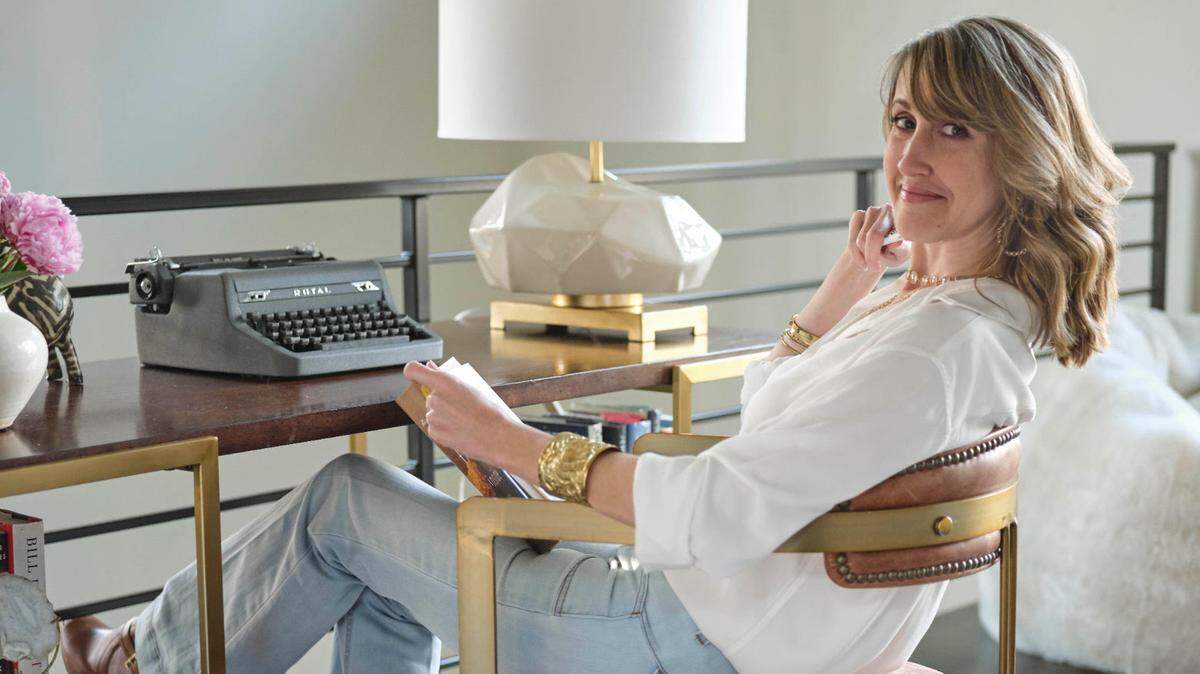
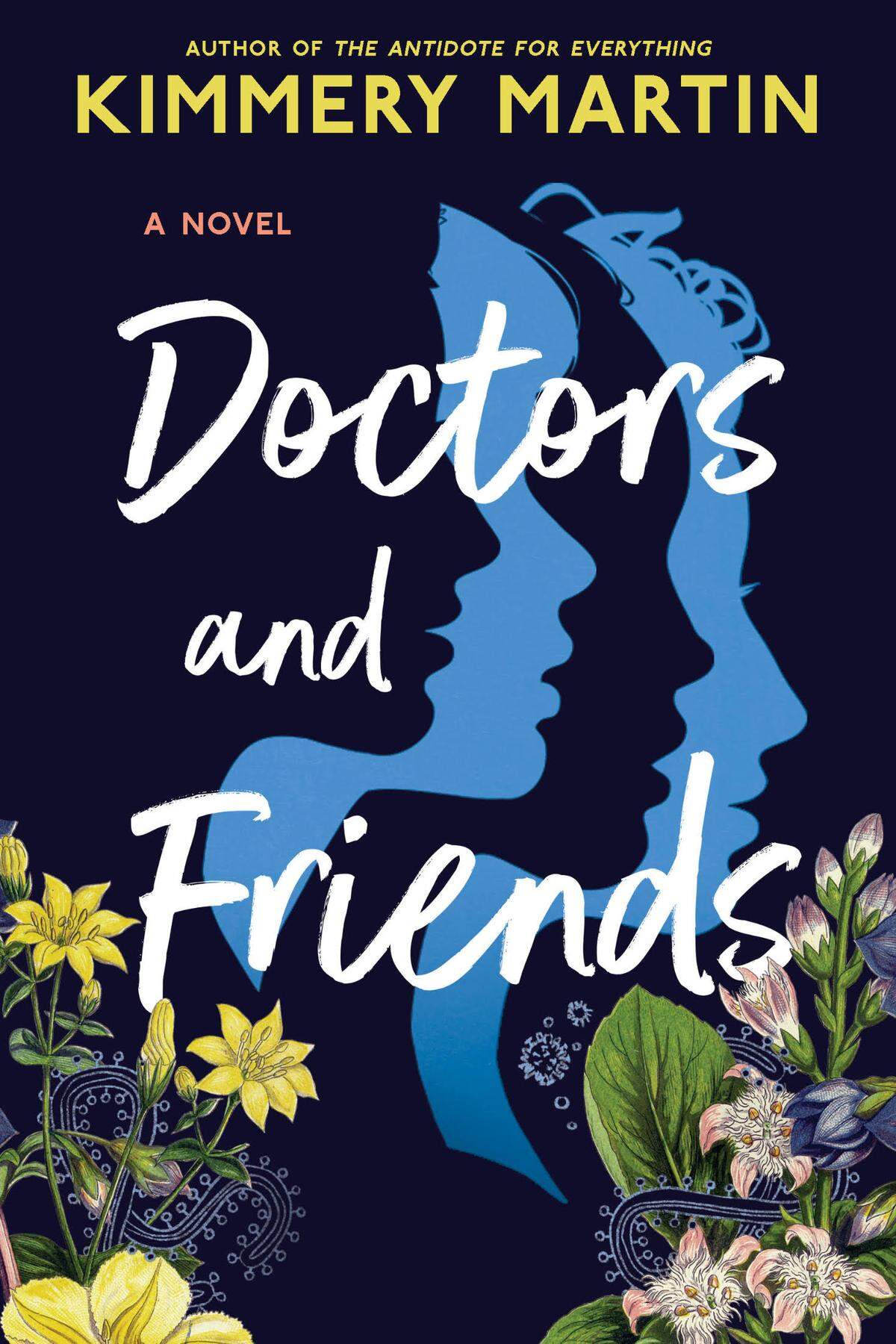
“Compelling to its core,” says Booklist in its starred review of Kimmery Martin’s “Doctors and Friends” (Berkley, $27). The Charlotte emergency medicine doctor’s third medical novel spins like a comet of shock and horror as people along the East Coast begin to fall to a virus so deadly it makes pink mush of the lungs before it decimates completely.
Soon a stealthy variant appears, turning on the unsuspecting survivor — typically young — and inducing rapid-onset dementia.
Add to that drama a cast of characters — friends from medical school turned practicing doctors, along with their partners and children — rendered so poignantly in Martin’s empathetic hands that their joys and sorrows become our own.
And, in a heart-stopping scene, a mother who is also a doctor, has in her possession one dose of an untested serum — and must choose between her two dying children.
With starred reviews also from Library Journal and Publishers Weekly, Martin’s third novel is her most terrifying. And her most tender.
The Observer’s Dannye Romine Powell sat down with Martin to talk about, among other things, how she wrote this book before COVID-19 was real, her own battle against the virus and what the next pandemic will be.
A surprise for me is that this novel was not inspired by COVID-19. You finished your first draft of “Doctors and Friends” before we ever donned the first mask. Your inspiration was reading media accounts of other epidemics, especially of the 1918 flu epidemic and of the 2014 Ebola outbreak in Western Africa.
It’s true that most of this novel predates Covid. I wrote an essay in 2018 about my plan to write a novel centered around an innovative infectious disease doctor. My editor liked the idea, and I spent the latter part of 2019 researching and outlining.
By the end of January 2020, I had a rough first draft and was completely immersed in my own personal fictional pandemic, oblivious to what was bearing down on us in real life. Meanwhile, of course, the real novel coronavirus was just beginning to worm its way into our collective consciousness – and our bloodstreams.
Then, bingo! During your research, you happened on Richard Preston’s non-fiction book, “Crisis in the Red Zone,” in which two medical workers in 2014 contract a deadly strain of Ebola. The medical director has an untested, experimental medication – but enough for only one worker and is forced to choose between two dying colleagues. Did your novel take on its “Sophie’s Choice” shape in that instant?
I read those passages and immediately thought: What if those two people had been his own children? This idea maximized the ethical quandary of my main character but writing those scenes turned out to be such a wrenching process, I almost quit.
You contracted Covid in mid-2020, and you developed multiple long-term symptoms, the worst of which has been parosmia. It’s horrible. Do you mind sharing your other symptoms, and if they’re improving?
I’m still bowled over by the irony. I wrote about a novel virus causing a bizarre neurologic side effect and shortly thereafter I contracted a novel virus causing a bizarre neurologic side effect. Parosmia is a toxic post-viral distortion of smell.
It’s disgusting and disruptive. I got Covid from one of my kids before we had vaccines available. If people are curious about the effects of long Covid, I’d invite them to wear a bowl of rotting meat around their necks. It’s inescapable and revolting. I cuddle my kids, and that’s what I smell. I slice a lemon or put on lotion or sip a drink, and they all reek.
The other long-term health condition I’ve experienced after Covid is called dysautonomia. My symptoms are a fast heart rate when I stand and a drop in blood pressure. This makes me lightheaded and fatigued. I’m often exhausted, and my exercise tolerance is diminished, and my muscles feel noodle-y. I hate this because I am otherwise an active, healthy person.
I love your idea of lapel pins to show immunity. In the novel, a vaccinated person’s pin glows green. And cell phones: If one comes within a 20-foot radius of a non-immune person – a yellow signal. If your phone comes within a 50-foot radius of a known active infection – a red signal and an alarm. Is this doable in the near future?
I wrote these chapters long before our response to Covid devolved into a politicized tsunami of disinformation. Even so, I debated how my fictional society would handle the intersection of privacy and safety. Even though I share a lot about myself in public, I’m fiercely independent about certain things.
So, while it’s already possible to utilize Bluetooth and other technologies depicted in the novel, I’m personally a little uncomfortable with the idea of immunity pins and cell phone warnings — because I don’t always trust big corporations and the government to do what’s right. But that’s me; that’s not the perspective of the characters. Understandably, they prioritize survival.
You write of a disease called AAROD – an artiovirus-associated rapid-onset dementia. This fictional freak occurs only among a small percentage of young and healthy survivors of the first variant who then go on to develop dementia. Were you trying to frighten us or to warn us what might be possible as the viruses we actually know begin to mutate?
I have to give my husband credit for this, which is funny because he’s an orthopedic surgeon. But he came up with the idea of a long-term neurologic side effect that doesn’t manifest itself right away. As you’ll read in the novel, some real viruses — herpes and chickenpox, for example — can hide out in the nerve roots of infected people and reactivate decades later with strikingly different symptoms.
Other viral illnesses can cause delayed autoimmune damage where the body attacks itself, even long after the person has recovered from their initial sickness.
It’s ironic because people are often fearful of delayed long-term effects of vaccines, even though serious reactions to vaccines are incredibly rare. When they do occur, it’s basically always within six to eight weeks or so, but not years later.
Serious and delayed reactions to viral illnesses are more common. But people don’t seem to harbor the same desire to avoid them – even though we know little virally-mediated time bombs like shingles and encephalitis can detonate years later. So yeah: most fear of vaccines is irrational compared to the risk of the diseases they prevent.
You have hot-wired this novel with drama. Several of the most dramatic scenes involve children, even including an unborn child. You are the mother of three young children. Do you think your own maternal sensibilities allowed you to deliver emotional gold in these scenes, painful as they must have been for you to write and heart-wrenching as they are for readers to read?
To be fair to the book, it’s not all grim. I tried to inject humor and sweetness and hope whenever I could. That being said, my children were quite intrigued by the idea that the mom in the book has to choose between her kids.
They bring it up all the time, usually right after one of their siblings has landed in trouble. Obviously, NOW you’d pick me, right??? But of course that scenario in real life would be hellish beyond anything I can imagine.
I did tap into my love for my children as I wrote some of the scenes in the book, and it wrung me out. But that’s the beauty of fiction: it allows us to vicariously experience the immeasurable breadth of human emotion. Reading — and writing — truly does make you a more empathetic person.
Compton, one of your characters, like you an emergency medicine doctor, watches a woman seize to death and marvels, “This woman raged. …Each breath sounded like a last stand, a desperate, futile howl against extinction.” Compton thinks: “We burn with the desire to exist.” As a physician, are you in awe of the body’s will to live?
Being present as someone dies was one of the most impactful elements of my career in emergency medicine. You’re there, furiously tending to their body, yet unable to prevent some indefinable spark of humanity dimming down until it’s gone.
That’s a brutal thing to witness, especially for healthcare workers who’ve experienced senseless loss over and over in these last months. Many times I’ve marveled at how hard we battle death, not just biologically, but also psychologically. Life is such a precious gift.
Speaking of the next pandemic: When a graduate of the Epidemic Intelligent Service, Dr. Wally Katz, alerts the character Dr. Kira Marchand to a viral illness that has felled a young man with a healthy immune system, he says, “The world is overdue for something catastrophic.” Do you think Covid has been our catastrophe? Or are we still overdue?
As terrible as Covid has been, throughout history we’ve endured plenty of pandemics with higher mortality rates. I’d guess the next big one will be another respiratory viral pathogen — a deadlier form of influenza, or another coronavirus, or another novel virus altogether — but whatever it is, we need to be prepared to combat a microscopic enemy that is both highly contagious and significantly lethal.
We are intelligent, and these bugs are not. We can’t waste our advantage by failing to cooperate to protect ourselves. We screwed up a lot this time… next time, we need to do better.
This story was originally published November 3, 2021 at 6:00 AM with the headline "In new novel, Charlotte doc tackles pandemics, her COVID fight and what’s around the corner."