‘Sorry-grateful’: 10 things I miss and admire about theater titan Stephen Sondheim

I gasped when I heard the news. Stephen Sondheim, the genius composer and lyricist of Broadway musicals dating to the 1950s, had died peacefully at age 91 the day after Thanksgiving.
Despite his place among the pantheon of 20th-century artists, his shows rarely were hits. But Sondheim’s words, his music, his elevation of the art form, those are his legacy.
And what a legacy it is, starting in 1957 with his first Broadway show, when he wrote the lyrics for “West Side Story,” and followed that up two years later in the same role in “Gypsy.” He went on to work as composer and lyricist for such shows as “Sweeney Todd,” “Into the Woods,” “Sunday in the Park with George” and “Company,” to name just a few. Along the way, he collected multiple Tony awards, a Grammy, an Oscar and a Pulitzer Prize for drama for “Sunday.”
I think of his prolific and protean word play, always the unexpected, imbibed with feeling, wit, economy and verve. I never met the man, but his voice, his shows, his art meant so much to me, just as it did to countless other theater fans around the country and the world.
In his honor, here are 10 ways I remember Sondheim, the man and his music.

What do you say, old friend?
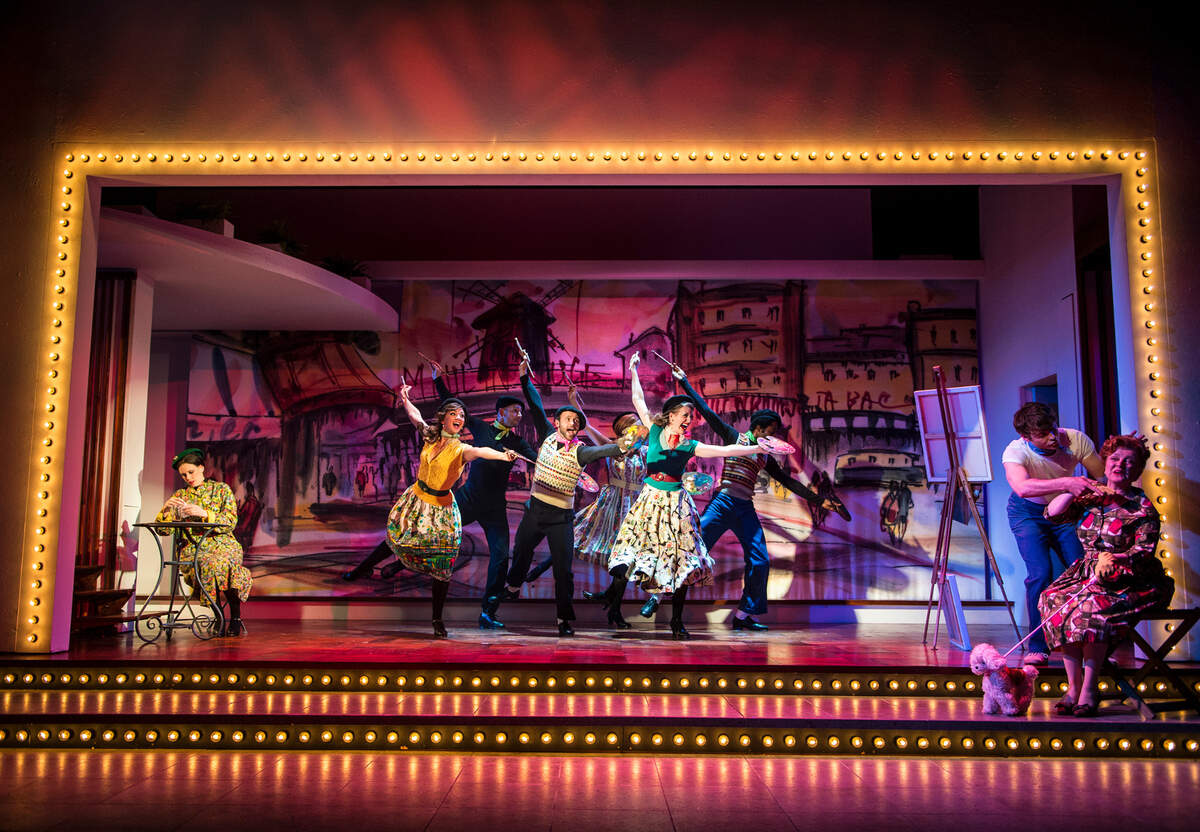
One of my earliest exposures to Sondheim came in middle school back in suburban Philly, where I tried not to go off-key too much as part of the “Double Octaves” singing group. One of our songs, “Old Friends,” was from a notorious Sondheim flop, “Merrily We Roll Along.” The show, which chronicled the ups and downs of three friends in reverse chronological order, from embittered middle age to idealistic youths, closed soon after it opened. I recall the song as wistful and sweet.
“Most friends fade/ Or they don’t make the grade./ New ones are quickly made/ And in a pinch sure they’ll do./ But us, old friend./ What’s to discuss old friend?/ Here’s to us — Who’s like us? Damn few.”
Nothing’s gonna stop us ‘til we’re through
As Sondheim stated in the first of two music memoirs, “Finishing the Hat” — “Content dictates form. God is in the details. Less is more. All in the service of clarity.”
Good advice for any writer. Context is key, especially in a song like “Everything’s Coming Up Roses” from “Gypsy”. This is not a cheery pick-me-up, despite the title. This is, after all, Momma Rose, the stripper Gypsy Rose Lee’s domineering stage mother and one of the all-time great musical theater roles.
Before she was Gypsy, she was Louise, a second banana to her sister, the star of their faded vaudeville act who later ran off with a boy. While Louise and Herbie, Rose’s boyfriend, want her to settle down, Rose is already pivoting to make Louise the star — no matter what. “You can do it/ All you need is a hand./ We can do it — Momma is gonna see to it!”
Side note: One of my all-time favorite Sondheim lyrics came in the song for the trio of strippers trying to educate Louise about their craft. “You Gotta Get a Gimmick” gave birth to this little pairing: “Once I was a schlepper/ Now I’m Miss Mazeppa/ With my revolution in dance./ You gotta have a gimmick/ If you wanna have a chance!” I don’t know, it just makes me smile.
All I really need is the girl
This one’s personal.
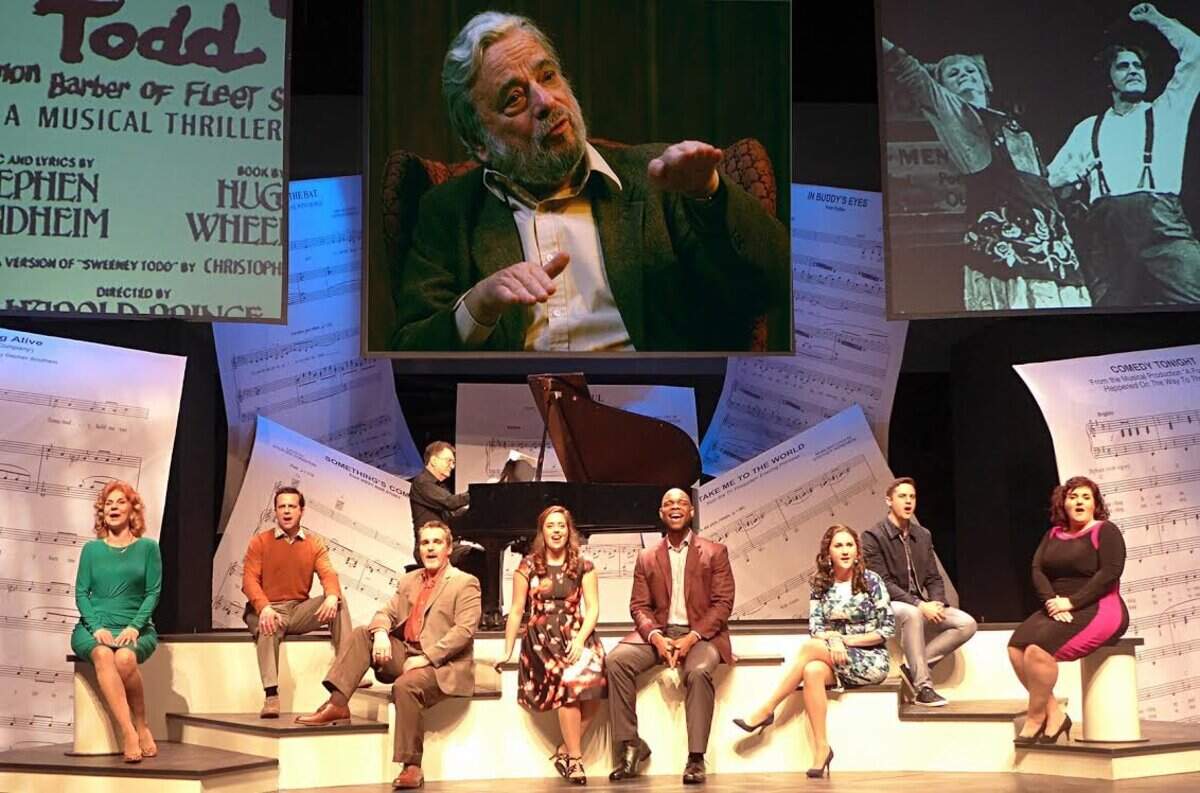
Also in “Gypsy,” a smitten Louise listens as her friend Tulsa extols the virtues of how he’s “Got the time and the place/ And I got rhythm/ Now all I need is the girl to go with ‘em.” Well, I snagged great seats for the 2008 revival of “Gypsy” with the one and only Patti LuPone as Rose, and intended to propose to my girlfriend right after the show at our favorite Broadway theater district restaurant.
Planned it for months. The house lights went down. A voice over the loud speakers said, “Ladies and gentlemen, Patti LuPone is not feeling well tonight...” (My cue to start cringing and shrinking in my seat.) “...But in keeping with true theater tradition, she and the show will go on tonight.” Whew. I exhaled and enjoyed the knockout performances by LuPone, and Laura Benanti in the title role. As for the proposal, well, we’ve been happily married for more than a dozen years now.
In the meanwhile
I don’t know how people sing some Sondheim songs without feeling like, “I’m losing my mind.” But the wordplay, always in the service of character, is otherworldly. Take this ditty from Petra, one of the minor players in “A Little Night Music,” which Sondheim and Hugh Wheeler adapted from an Ingmar Bergman film. The show also gave us Sondheim’s biggest hit song, “Send in the Clowns.”
But I like to focus on “The Miller’s Son.” At warp speed, Petra contrasts marital stability with the pleasures to be had beforehand: “It’s a very short road/ From the pinch and the punch/ To the paunch and the pouch and the pension./ It’s a very short road/ To the ten thousandth lunch/ And the belch and the grouch and the sigh.../ In the meanwhile/A girl ought to celebrate what passes by.”
And a happy ending, of course!
Sondheim wasn’t known for happy endings. (Witness the body count in “West Side Story,” “Into The Woods,” “Assassins” and of course, “Sweeney Todd.”)
That doesn’t mean he didn’t have a light touch. But that’s not why I’m touting “Comedy Tonight,” the opening number of “A Funny Thing Happened On the Way to the Forum.” Rather it’s the story behind that song.
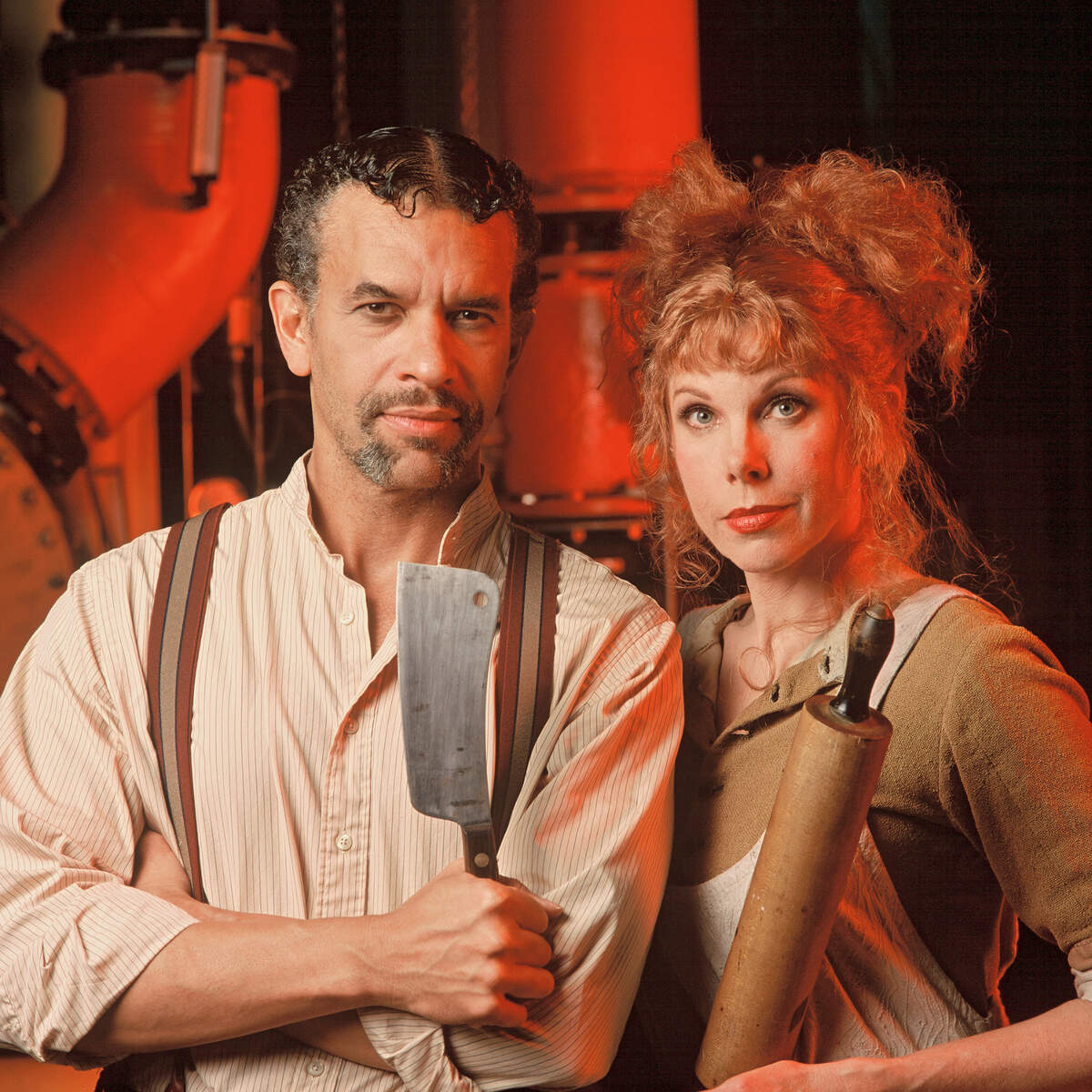
The show’s initial opening wasn’t working. Neither was the next opener. So over the course of a single weekend, while “Forum” was in out-of-town tryouts, Sondheim delivered “Comedy Tonight.” If that’s not deadline pressure, I don’t know what is. And being a journalist for over three decades, I can relate to such pressures.
Not that I could deliver lines like this: “Something familiar, something peculiar./ Something for everybody — comedy tonight!/ Something’s that’s gaudy/ Something’s that’s bawdy/ Something for everybawdy — comedy tonight!”
Putting it together
When you combine one of my favorite paintings — pointillist Georges Seurat’s “A Sunday Afternoon On the Island of La Grande Jatte” — with Sondheim’s score and a book written by director James Lapine, the effort is sublime. Sondheim really deconstructed the “art of making art,” as he paints his own masterpieces with words and musical notes in “Sunday In The Park With George.”
That reaches its zenith in the second act’s “Putting It Together.” Mandy Patinkin originated the role of Seurat, along with Bernadette Peters as his lover, Dot. In the second act, she’s Marie, Dot’s daughter and the grandmother of George, an artist also played by Patinkin.
“Bit by bit/ Putting it together./ Piece by piece — Only way to make a work of art./ Every moment makes a contribution/ Every little detail plays a part./ Having just the vision’s no solution/ Everything depends on execution:/ Putting it together/ That’s what counts.”
I’m just a Broadway baby
Yes, I am. “Broadway Baby” also was one of the numbers in “Follies,” which had showgirls and their Stagedoor Johnnies sharing scenes with older versions of themselves, looking back on their lives with a range of emotions at a reunion of Ziegfeld-esque dancers. This paean to pastiche was forcefully adopted by Elaine Stritch. In the original Broadway cast, it belonged to Ethel Shutta, who had appeared in Ziegfeld shows in the 1920s, and belted out the number in 1971.
“I’m just a Broadway baby/ Walking off my tired feet./ Pounding Forty-second Street/ To be in a show./ Broadway baby/ Learning how to sing and dance./ Waiting for that one big chance/ To be in a show... At/ My tiny flat/ There’s just my cat/ A bed and a chair./ Still,/ I’ll stick it till/ I’m on a bill/ All over Times Square.”
Losing My Mind
Again with the context. Also from “Follies.” On the face of it, one of the older leading ladies, Sally, sings an ode to her husband, how “In Buddy’s eyes/ I’m young, I’m beautiful./ In Buddy’s arms, On Buddy’s shoulder/ I won’t get older./ Nothing dies.” But she sings it to Ben, the man who got away.
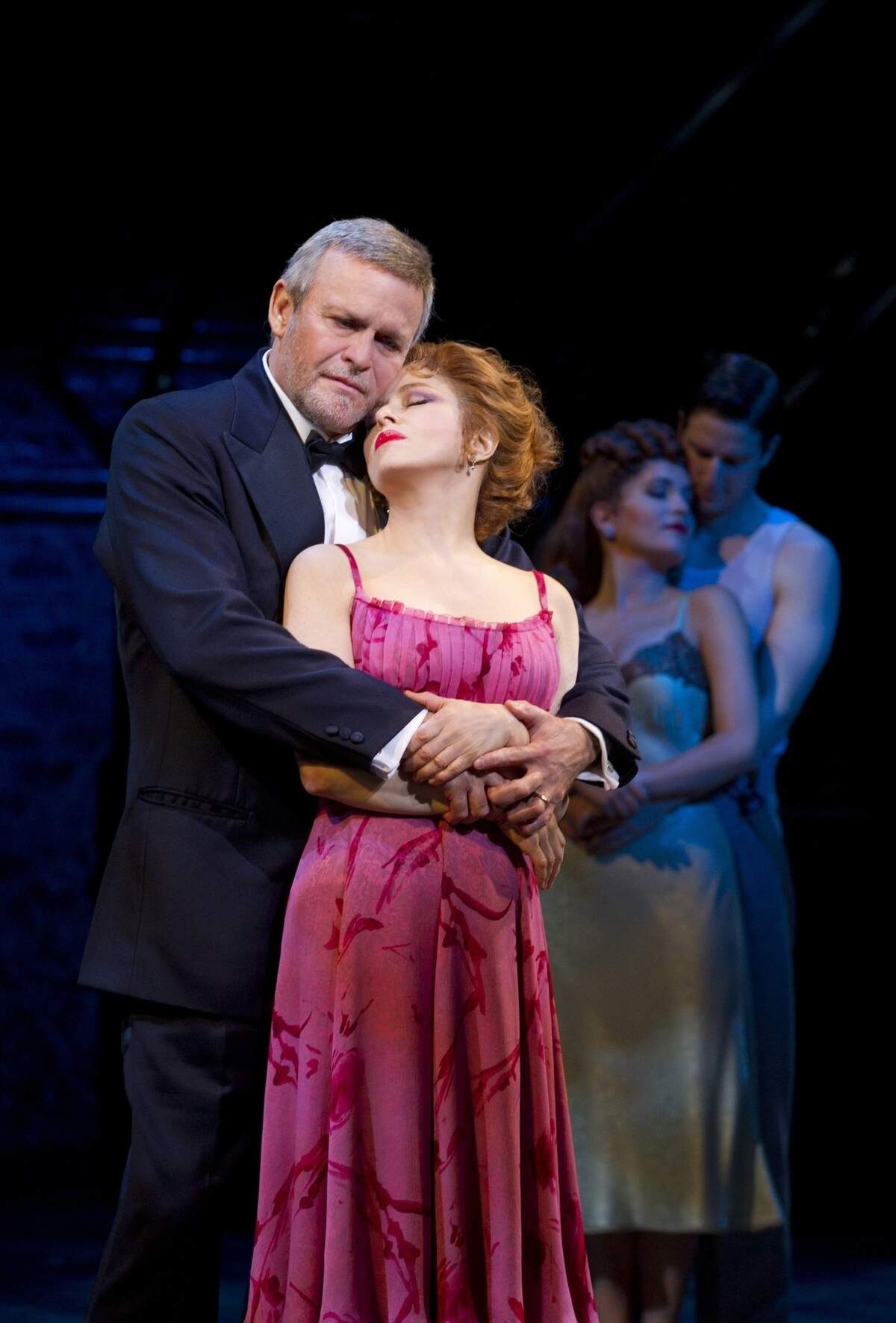
(I saw the 2011 “Follies” revival on Broadway with the always-radiant Peters as Sally.) Later, Sally continues her obsession with Ben: “I dim the lights/ And think about you./ Spend sleepless nights/ To think about you./ You said you loved me./ Or were you just being kind?/ Or am I losing my mind?”
Contrast that with the more straightforward, but equally yearning, “Somewhere” from “West Side Story,” where, “There’s a place for us./ Somewhere a place for us./ Peace and quiet and open air./ Wait for us, somewhere.”
Children will listen
Something else I’ve always admired about Sondheim was his interest and ability to serve as a mentor for the generation that followed him, including Jonathan Larson, who wrote “Rent,” and “Hamilton” creator Lin-Manuel Miranda.
Sondheim’s earliest mentor, and father figure, was none other than Oscar Hammerstein II (of Rodgers and Hammerstein). The Hammersteins had a family farm in Doylestown, Pennsylvania, near where a young Sondheim and his mother had relocated after her divorce. (For good measure, Doylestown is in the county neighboring my own hometown.)
Sondheim often spoke of how Hammerstein helped set the course of his life, honestly critiquing his work and encouraging him to find his own voice. Sondheim also has said how he had asked a dying Hammerstein for a photo and to inscribe it. Hammerstein wrote, “For Stevie, my friend and teacher.”
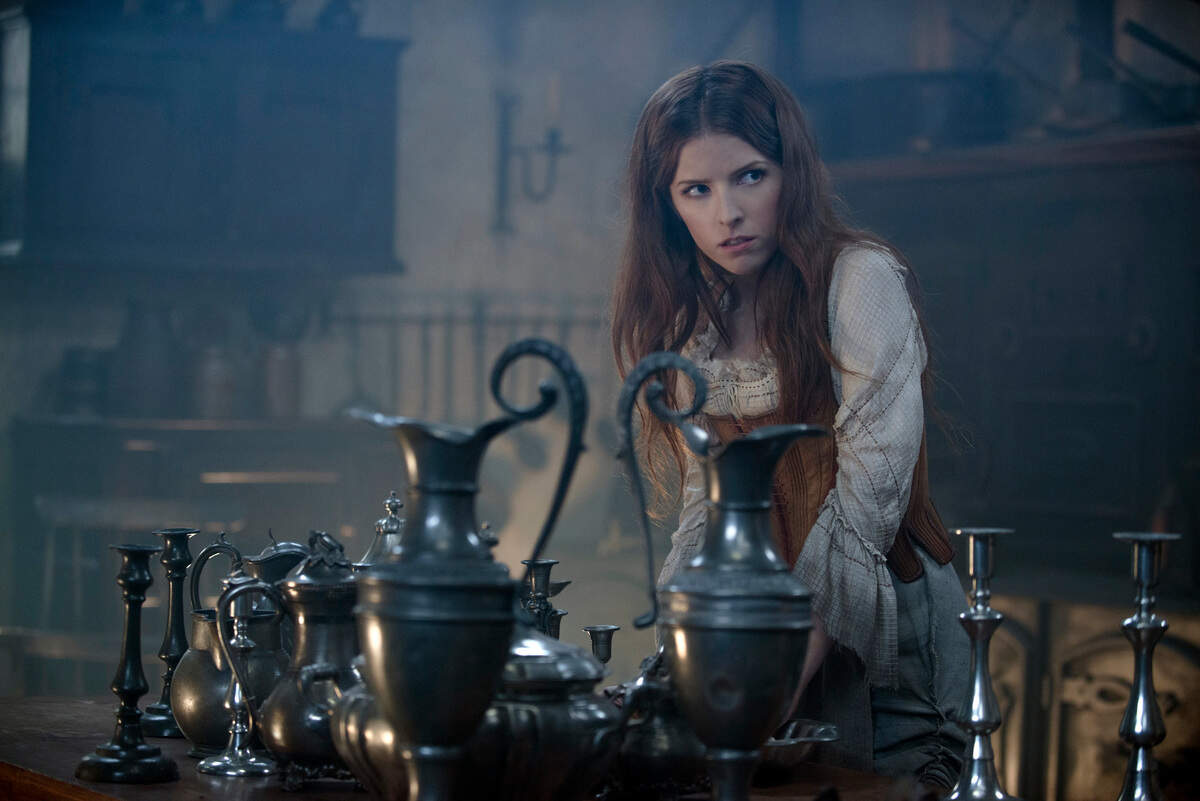
Such devotion and care can also be found in the finale of “Into the Woods,” my daughter’s favorite show, which we’ve seen about a million times from a version that aired on PBS.
As the fairy-tale characters try to make sense of what happened after the events following their supposed happily ever after, the witch reemerges (also played by Peters) with a warning: “Careful the things you say/ Children will listen./ Careful the things you do/ Children will see/ And learn.../ Careful before you say/ ‘Listen to me.’/ Children will listen.”
Move on
Finally, let’s visit the “Sunday” finale, “Move on.”
In the second of his two-volume musical memoir, “Look, I Made a Hat,” Sondheim writes how the number between Dot and George has “all the musical themes of the love story culminate and intertwine.” He called the last line one of his favorite endings, and that “sometimes it’s a good idea not to rhyme, even when the music calls for it.”
After Dot and George sing “We will always belong together,” Dot continues, “Just keep moving on./ Anything you do/ Let it come from you/ Then It will be new/ Give us more to see.”
Thank you Mr. Sondheim, for giving us so much more to see and hear and love. So many possibilities.
This story was originally published December 1, 2021 at 7:52 AM.